What This Guide Covers
- Why choose a 10 seater outdoor dining set
- Table dimensions and seating geometry
- Table shapes: rectangular, oval, and round
- Chair styles and configuration for ten guests
- Materials and durability tiers
- Patio space planning and clearance
- Shade and umbrella compatibility
- Care and seasonal maintenance
- How to evaluate quality before buying
- Frequently asked questions
A ten seater outdoor dining table and chairs set transforms a patio into a true entertaining destination. It is the centerpiece for family reunions, holiday meals, neighborhood gatherings, and long summer evenings. Unlike smaller bistro or four-person sets, a ten-seat configuration demands careful planning — from the footprint of the table to the walking clearance around each chair — so that the space feels generous rather than cramped.
This guide is written for buyers who already know they want a large outdoor dining set but need clarity on dimensions, materials, chair styles, and layout. By the end, you will understand how to match a ten-seat table to your patio, which material tier aligns with your climate, and what to inspect before completing a purchase.
Why Choose a 10 Seater Outdoor Dining Set
A ten-person dining set is the natural choice for large families, frequent hosts, or anyone who regularly gathers friends outdoors. It offers several practical advantages over buying two smaller sets:
- Unified design: A single set delivers consistent style, finish, and seating height across the entire table.
- Efficient footprint: One large table generally uses patio space more efficiently than two separate tables pushed together.
- Stable entertaining anchor: A permanent ten-seat layout avoids the scramble of rearranging furniture before each gathering.
- Better umbrella coverage: A single large table pairs naturally with one wide canopy umbrella, giving consistent shade to all diners.
If you are still comparing seating capacities, it helps to review how a 10 person outdoor dining table and chairs differs in footprint and chair count from a ten-seat configuration, and how a 10 person outdoor dining table with umbrella handles shade integration. For buyers who prefer a slightly smaller footprint with the same generous feel, a 4 seater outdoor dining table and chairs can serve as a useful baseline for comparing proportional spacing.
Table Dimensions and Seating Geometry
The single most important specification for a ten-seat table is its length. Each diner needs roughly 24 inches of table edge for comfortable place settings, elbow room, and serving space. Ten seats therefore require a table edge of at least 96 inches (8 feet), and preferably 108 to 120 inches for a relaxed dining experience.
Common ten-seat table dimensions fall into these ranges:
- Rectangular ten-seat tables: typically 94 to 120 inches long and 39 to 44 inches wide.
- Oval ten-seat tables: typically 94 to 108 inches long, with a narrower center width that improves flow around corners.
- Round ten-seat tables: typically 60 to 72 inches in diameter, accommodating ten chairs at a tighter but social spacing.
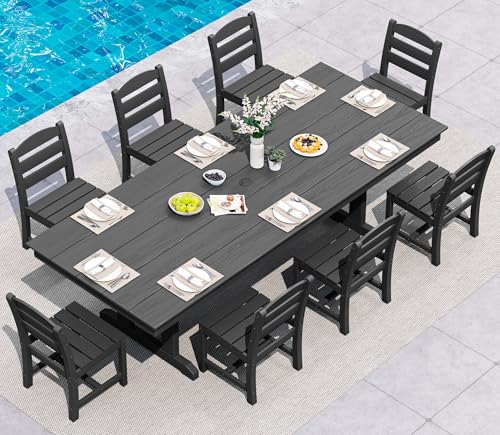
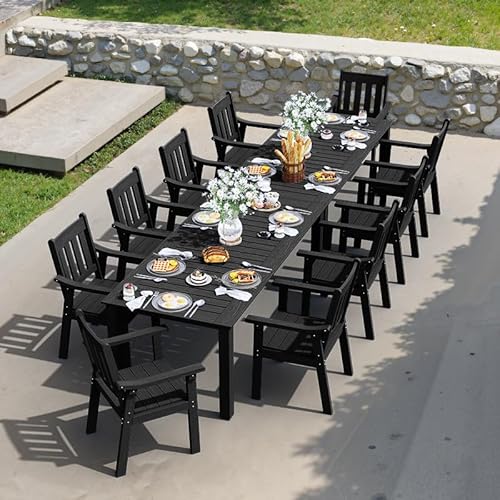
Seating distribution matters as much as raw length. A rectangular table usually seats three chairs along each long side and two at each end, totaling ten. An oval table distributes seats more evenly and can reduce corner crowding. A round table encourages conversation but needs a larger diameter to avoid shoulder-to-shoulder seating.
| Table Shape | Typical Length / Diameter | Best For | Layout Consideration |
|---|---|---|---|
| Rectangular | 94–120 in long, 39–44 in wide | Formal and family dining, long patios | Three chairs per side plus two ends; needs wide clearance at ends |
| Oval | 94–108 in long | Conversational dining, tighter corners | Smoother traffic flow; slightly less usable center width |
| Round | 60–72 in diameter | Social, intimate gatherings | Ten chairs fit snugly; requires generous radial clearance |
Table Shapes: Rectangular, Oval, and Round
Rectangular Tables
Rectangular tables are the most common choice for a ten-seat outdoor dining set. They maximize seating along straight runs, pair naturally with patio umbrellas, and work well on long decks or rectangular patios. The trade-off is that corner seating can feel disconnected from the opposite end, so consider whether your gatherings are more conversational or more service-oriented.
Oval Tables
Oval tables soften the lines of a patio and improve circulation around the ends. They still accommodate ten chairs comfortably and are a strong option when your patio has curved landscaping or when you want a more organic visual flow. Buyers planning a ten-person dining table with umbrella often favor oval shapes because the umbrella's round canopy aligns well with the rounded table edge.
Round Tables
A round ten-seat table is the most social configuration. Everyone can see everyone, which suits conversation-driven meals. The limitation is spatial: a 72-inch round table with ten chairs requires a wide, unobstructed circular clearance. Round tables are best for patios with open footprints and fewer hard boundaries.
Chair Styles and Configuration for Ten Guests
The chairs are half of the equation. A ten-seat set typically includes either ten dining chairs or a combination of chairs and a bench. Bench seating along one long side can seat three to four people and often feels more casual and communal, while individual chairs offer better back support and easier entry and exit.
Common chair configurations for ten diners include:
- Ten individual dining chairs: maximum flexibility and support; ideal for mixed-age groups.
- Eight chairs plus one bench: a casual, space-efficient arrangement that seats ten along a rectangular table.
- Six chairs plus two benches: the most communal layout, often used with farmhouse-style tables.
- Armchairs at the ends: four armchairs plus six side chairs creates a host-and-hostess feel at the table ends.
Chair height must match table height. Standard dining height is about 28 to 30 inches at the table apron, pairing with chairs whose seat height is roughly 17 to 19 inches. Avoid mixing bar-height and dining-height pieces in a ten-seat set unless you are deliberately building a two-tier layout.
Configuration tip: If your guest list often includes children or older relatives, favor individual chairs over benches. Chairs with arms at the two table ends make it easier for guests to push back and stand up without disturbing neighbors.
Materials and Durability Tiers
Material choice determines how your ten-seat set ages in sun, rain, and temperature swings. Rather than thinking in terms of specific numbers, it helps to classify materials by durability tier so you can match the set to your climate and intended lifespan.
| Material | Durability Tier | Best For | Maintenance Note |
|---|---|---|---|
| Powder-coated aluminum | Mid-range to premium | Humid and coastal climates | Rust-resistant frame; wipe clean seasonally |
| Cast aluminum | Premium to high-end tier | Windy patios and long-term use | Heavy and stable; occasional touch-up of finish |
| Teak and acacia hardwood | Mid-range to high-end tier | Natural, warm aesthetic | Periodic oiling; cover in extreme weather |
| Wicker and rattan (resin or natural) | Entry-level to mid-range | Covered patios and screened porches | Keep dry; resin wicker resists moisture better |
| HDPE and recycled plastic | Essential tier to mid-tier | Low-maintenance family patios | Soap-and-water cleaning; no sealing needed |
| Steel with protective coating | Mid-range | Structured, stable frames | Inspect for chips; touch up promptly to prevent rust |
For a ten-seat table, frame rigidity is critical because a long span carries more weight and stress than a small table. Look for reinforced aprons, welded or bolted joints, and a tabletop that is thick enough not to flex under serving dishes. Models in the premium and high-end tier generally use heavier gauge frames and better hardware — differences that matter most on large tables.
For buyers comparing structural details, the frame and finish notes in a 48 inch round outdoor dining table and chairs review can illustrate how joint quality scales with table size. If you are considering a more formal layout, a 11 piece cast aluminum outdoor dining set shows how cast aluminum handles a comparable seat count with an extra serving piece.
Patio Space Planning and Clearance
A ten-seat table is only comfortable if the surrounding clearance allows guests to pull chairs out, walk behind them, and serve food without squeezing past. The planning rule is straightforward: allow at least 36 inches of clearance between the table edge and any wall, railing, or planter, and preferably 42 to 48 inches where people will walk behind seated guests.
Calculate the total footprint before you shop:
- Measure your patio's usable dimensions, excluding fixed planters and steps.
- Add the table length plus 36 inches on each end for chair pull-out.
- Add the table width plus 36 inches on each side for side clearance.
- Check that the resulting rectangle or circle fits with margin for foot traffic.
For example, a 108-inch rectangular table with 44-inch width needs roughly 180 inches by 116 inches of practical patio space to feel comfortable. If your patio cannot accommodate that, consider an oval table or a smaller ten-seat footprint with a tighter chair profile.
If you are still deciding on overall patio proportions, reviewing a ten-person dining table and chairs layout guide can help you visualize the clearance zones. For patios that also need shade coverage, a ten-person table with integrated umbrella arrangement shows how the canopy diameter interacts with chair clearance.
Shade and Umbrella Compatibility
Ten diners need meaningful shade. A single patio umbrella over a ten-seat table should have a canopy diameter of at least 10 feet, and many ten-seat setups are better served by an 11 to 13 foot offset or cantilever umbrella. Center-post umbrellas must align with the table's umbrella hole and base, while offset umbrellas require dedicated base space beside the table.
Key considerations for shade on a ten-seat table:
- Canopy coverage: the canopy should extend beyond the table edge to shade seated guests, not just the tabletop.
- Base stability: large cantilevers need weighted bases; check that the base footprint does not intrude on chair clearance.
- Wind exposure: if your patio is windy, a center-post umbrella with a heavy base is often more stable than a cantilever.
- Umbrella hole: confirm the table's hole diameter and placement before buying a canopy.
For shade planning, the canopy and base notes in a 10 ft cantilever umbrella with weighted base guide are directly applicable to ten-seat tables. Buyers who want evening ambiance may also want to review a 11 ft cantilever umbrella with LED lights, since lighting integrated into the canopy is a natural fit for large dining sets used after sunset.
Care and Seasonal Maintenance
A ten-seat set represents a large surface area to maintain. A simple seasonal routine keeps it looking sharp and extends its service life:
- Weekly during season: wipe the tabletop and chair arms with a mild soap solution; rinse and dry.
- Monthly: check fasteners and tighten any loosened bolts, especially on the table apron and chair legs.
- Before off-season: clean thoroughly, dry completely, and cover with breathable furniture covers.
- Wood furniture: re-oil teak or acacia once or twice a year depending on climate and exposure.
- Metal furniture: touch up any chips in the powder coating promptly to prevent corrosion.
Cushions on ten chairs add up, so plan storage. A deck box or dedicated cushion storage bin sized for ten seat cushions and back cushions is worth considering. The storage and care notes in a 48 inch round patio table cover with umbrella hole guide are useful for understanding how covers are cut around umbrella posts, a detail that matters on a ten-seat table with a center pole.
How to Evaluate Quality Before Buying
When comparing ten-seat sets, focus on the details that separate durable construction from short-lived builds:
- Frame joints: welded joints generally outlast bolted joints on large tables, though quality bolted construction with locking hardware is acceptable.
- Tabletop thickness: thicker tops resist flexing under heavy serving dishes and reduce wobble.
- Chair weight and stability: heavier chairs with wide feet resist tipping and wind.
- Finish quality: even powder coating with no thin spots or overspray suggests better corrosion resistance.
- Hardware: stainless or coated hardware resists rust far better than bare steel.
- Weight capacity: published capacity ratings are a reliable proxy for structural confidence.
Features vary by tier: entry-level sets often prioritize lightweight frames and simpler joins, while mid-range and premium sets add heavier gauge metal, better cushions, and more refined finishes. The relative differences are consistent across the category — for example, models in the mid-range tier typically offer smoother hardware and more consistent coating than entry-level pieces.
Frequently Asked Questions
How long should a 10 seater outdoor dining table be?
Plan for at least 96 inches of table length, with 108 to 120 inches preferred for comfortable place settings. Each diner needs roughly 24 inches of edge space.
How much patio space do I need for a ten-seat dining set?
Allow at least 36 inches of clearance around the table edge, and 42 to 48 inches where guests will walk behind seated diners. A 108-inch table typically needs about 180 inches of practical patio length.
Is a bench or individual chairs better for a ten-seat table?
Individual chairs offer better back support and easier entry and exit. Benches are more communal and space-efficient. Many ten-seat sets combine eight chairs and one bench for a balance of both.
What umbrella size works over a ten-seat table?
A canopy of at least 10 feet is the practical minimum, and 11 to 13 foot offset or cantilever umbrellas are common for full coverage of ten diners. Confirm the table's umbrella hole diameter and the base footprint before buying.
Which material is best for a large outdoor dining set?
Powder-coated aluminum and cast aluminum are strong choices for humid or coastal climates. Teak and acacia suit natural aesthetics with regular oiling, while resin wicker works best under cover.
Can a ten-seat dining set stay outside year-round?
Most quality sets can remain outdoors with proper care, but protective covers and seasonal cleaning are recommended. In extreme climates, storing cushions and covering the frame extends its life.