Outdoor Rugs: The Complete Buying Guide for Patios & Decks
Transform your outdoor space with a weatherproof rug that anchors your furniture, adds comfort underfoot, and protects your patio surface. Learn how to choose the right material, size, and style for your backyard.
START EXPLORINGWhy outdoor rugs matter: A well-chosen outdoor rug does more than decorate. It defines distinct zones in open-plan patios, keeps feet cool on hot decking, reduces slipping on wet surfaces, and protects expensive hardscaping from furniture scratches. This guide walks you through every decision point so you can buy with confidence.
Why Invest in an Outdoor Rug
An outdoor rug is one of the most impactful additions you can make to a patio, deck, or porch. Unlike indoor rugs, these are engineered to handle sun exposure, rain, humidity, and heavy foot traffic. Here is what a quality outdoor rug brings to your space:
- Zone definition: Rugs visually separate a dining area from a lounge zone on a large, open patio — no walls required.
- Comfort and safety: Soft fibers cushion bare feet and provide traction on slick surfaces like tile or composite decking.
- Surface protection: A rug acts as a barrier between furniture legs and your patio, reducing scratches and stains.
- Design cohesion: Color and pattern tie together your furniture, cushions, and planters into one cohesive look.
- UV protection: Many outdoor rugs shield decking from sun damage and help keep surface temperatures lower.
Whether you are furnishing a compact balcony or a sprawling backyard, an outdoor rug is a foundational piece that works alongside your outdoor patio furniture and outdoor sectional to complete the space.
Outdoor Rug Materials Compared
The material determines durability, cleaning ease, comfort, and how the rug handles weather. Below is a breakdown of the most common outdoor rug materials and their strengths.
| Material | Tier | Best For | Key Traits |
|---|---|---|---|
| Polypropylene | Essential Tier | High-traffic patios, poolside areas, family homes | Water-resistant, UV-stable, mold-resistant, easy to hose clean, lightweight |
| Polyester | Essential Tier | Covered porches and sunrooms | Soft feel, vibrant color retention, quick-drying, less UV-resistant than polypropylene |
| PET (Recycled Plastic) | Balanced Tier | Eco-conscious buyers, busy outdoor living areas | Made from recycled bottles, durable, fast-drying, good UV resistance, sustainable choice |
| Natural Fibers (Jute, Sisal, Seagrass) | Balanced Tier | Covered patios, screened porches, transitional style | Earthy texture, biodegradable, not fully weatherproof — best in sheltered spots |
| Wool-Blend Outdoor | Premium Tier | Luxury covered patios, high-end outdoor lounges | Soft underfoot, naturally stain-resistant, must be kept dry, premium look |
| Performance Synthetic (Solution-Dyed) | Luxury Tier | Designer patios, full-sun exposure, commercial-grade use | Colorfast to the core, fade-proof, heavy-duty construction, long-term investment |
How to Choose the Right Size
Size is the most common mistake buyers make. A rug that is too small makes furniture look disconnected; one that is too large can overwhelm a compact patio. Use these guidelines based on your furniture arrangement.
Measure Your Zone
Mark the area your furniture occupies, then add 12–24 inches on each side.
Seating Areas
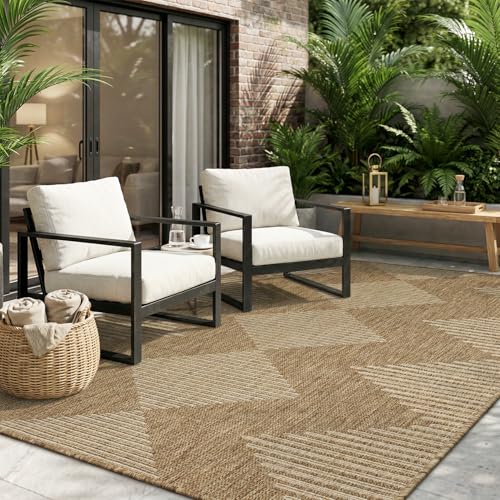
All front legs of chairs and sofas should sit on the rug. A 5x8 or 6x9 works for most conversation sets.
Dining Sets
Rug must extend at least 24 inches beyond the table edge so chairs stay on it when pulled out.
For a patio table and chairs set, measure the table plus the full chair pull-out distance. For L-shaped outdoor sectional couch layouts, a rectangular rug that mirrors the L-shape works best. If you have a round daybed, consider a round or square rug to echo the shape.
Placement and Style Tips
Layering and Placement
Outdoor rugs work best when placed directly on hard surfaces like concrete, stone, composite decking, or tile. Avoid placing them on top of grass or loose gravel, where they can shift and trap moisture. On windy patios, use a rug pad or double-sided tape to prevent curling.
- Under dining tables: Choose a flat-weave rug for easy chair movement — thick pile makes chairs wobble.
- Under lounge seating: A slightly plusher polypropylene rug adds comfort for bare feet.
- Poolside: Use a quick-drying, non-slip rug rated for chlorine and salt water exposure.
- Layering: Layer a smaller patterned rug over a larger neutral one to add depth without visual clutter.
Matching Rug to Your Patio Style
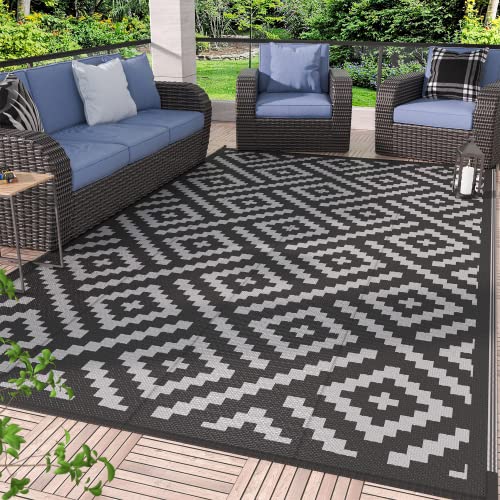
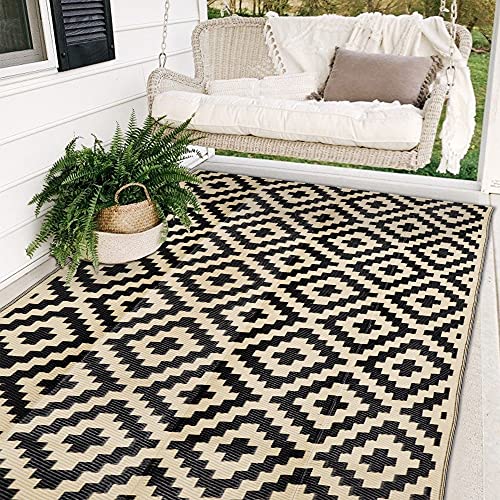
Your rug should complement — not compete with — your furniture. If your patio furniture with umbrella hole is neutral, a bold geometric rug adds personality. If your swivel chairs with cushions are already patterned, choose a solid or subtly textured rug. For a relaxed, coastal look, pair a striped rug with a rocking chair set and natural planters.
For a cohesive outdoor living room, combine your rug with an outdoor patio sectional, a serving station and storage cabinet, and accent pieces like outdoor pillows. The rug becomes the visual floor that ties every element together.
Cleaning and Maintenance
Outdoor rugs are low-maintenance, but a simple routine keeps them looking fresh season after season.
- Weekly: Vacuum or sweep both sides to remove grit that can abrade fibers.
- Monthly: Rinse with a garden hose and mild soap; air-dry completely before use.
- Stains: Blot (don't rub) with a mild detergent solution, then rinse thoroughly.
- Rotation: Rotate the rug every few months for even sun fading and wear.
- Seasonal: In harsh winters, clean and roll the rug for indoor storage. For patio table and chairs with umbrella setups, move the rug when heavy snow is forecast.
Avoid power washing, bleach, and harsh solvents — they break down UV coatings and shorten the rug's lifespan. If your rug sits near a patio set with fire pit table, keep embers and ash off the surface and vacuum frequently.
What to Look For Before Buying
Use this quick checklist to evaluate any outdoor rug before you commit:
- UV resistance rating: Look for "fade-resistant" or "UV-stabilized" labeling, especially for full-sun patios.
- Moisture and mold resistance: Polypropylene and PET are naturally mold-resistant; natural fibers require treatment.
- Backing type: A non-slip rubber or latex backing prevents sliding on smooth surfaces. Avoid backings that trap water.
- Pile height: Flat-weave (low pile) is best under dining tables; medium pile adds comfort for lounge areas.
- Edge binding: Reinforced, stitched edges resist fraying and curling in wind.
- Weight: Heavier rugs stay flat in wind; lighter rugs are easier to move and clean.
- Colorfastness: Solution-dyed fibers hold color best under intense sun.
If you are outfitting a full patio from scratch, pair your rug choice with a storage cabinet with shelves for cushions and accessories, and consider a patio set with gas fire pit to extend your outdoor season into cooler evenings.
Frequently Asked Questions
What is the best material for an outdoor rug?
Polypropylene is the most popular choice because it resists moisture, UV fading, and mildew. Other durable options include polyester, PET (recycled plastic), and natural fibers like jute or sisal that are treated for outdoor use. For high-traffic areas, polypropylene and PET offer the best balance of durability and easy cleaning.
How do I clean an outdoor rug?
Most outdoor rugs can be hosed down with mild soap and water, then air-dried. Vacuum regularly to remove debris. For stubborn stains, use a soft brush and a solution of mild detergent and water. Avoid harsh chemicals and power washing, which can damage fibers. Rotate the rug periodically for even fading.
What size outdoor rug do I need for my patio?
A good rule of thumb is to choose a rug that is at least 6 to 12 inches wider than your furniture grouping on all sides. For dining sets, the rug should extend far enough that chairs remain on the rug when pulled out. Common sizes include 5x8, 6x9, and 8x10 for seating areas, and 8x10 or larger for dining spaces.
Can outdoor rugs be left outside in winter?
It depends on the material and climate. Polypropylene and PET rugs can generally withstand freezing temperatures, but heavy snow and ice can cause wear. In regions with harsh winters, it is best to clean and roll up the rug for storage. Natural fiber rugs should always be brought indoors during winter to prevent rot and mildew.
Do outdoor rugs fade in the sun?
All outdoor rugs fade gradually over time, but solution-dyed synthetic rugs and UV-stabilized polypropylene resist fading the longest. Natural fiber rugs fade fastest. Rotating the rug and using a patio umbrella or pergola for partial shade helps extend color life. Look for products labeled "fade-resistant" or "UV-stabilized" for the best results.
Ready to complete your outdoor space? An outdoor rug is the finishing touch that makes a patio feel like an outdoor living room. Pair it with the right outdoor patio set, patio table and chairs, and outdoor patio furniture to create a backyard you will love spending time in. Browse our recommended outdoor rugs below to find the right fit for your space.