Outdoor Patio Set with Gas Fire Pit: The Complete Buying Guide
Everything you need to choose an integrated seating group with a built-in gas burner — layout, materials, burner types, and safety essentials explained.
Why this guide matters: An outdoor patio set with a gas fire pit merges three purchases into one coordinated decision: seating, a table surface, and controlled flame ambiance. Buyers who research the burner, frame material, and footprint before ordering end up with a setup that stays usable through every season. This guide walks you through each of those decisions in plain language.
What Makes a Patio Set a "Gas Fire Pit" Set?
A gas fire pit patio set is a matched furniture group arranged around a central table that houses a propane or natural gas burner. Unlike a standalone fire bowl you drag out for cool evenings, the burner is built into the table itself, so the flame, the tabletop, and the seating are designed as one unit. That integration is what separates it from a standard outdoor patio set paired with a separate fire feature.
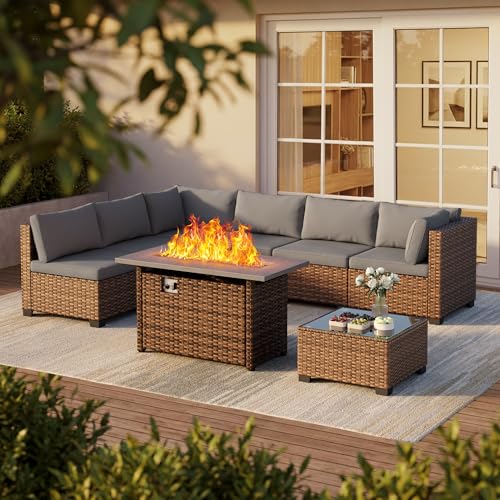
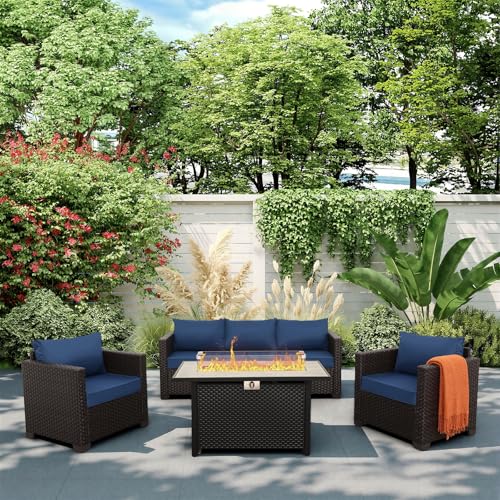
The result is a single footprint that serves as dining surface by day and gathering point by night. Most sets include a low-profile table with a flush or slightly recessed burner and four to six seats, though configurations vary widely — from compact four-seat bistro arrangements to full outdoor sectional builds. If you are comparing layouts more broadly, the patio set with fire pit table guide covers the table-centric variants in more depth.
Why Homeowners Choose a Gas Fire Pit Set
The appeal is practical as much as aesthetic. A built-in gas burner gives you instant, controllable flame without ash, smoke, or firewood storage. You can light it for twenty minutes on a cool evening and shut it off just as quickly. Because the table is part of the set, there is no awkward gap where a separate fire bowl would sit, and no tripping hazard from a loose unit sliding out of place.
Gas also extends the usable season of your patio. Spring and autumn evenings that would otherwise send guests indoors become comfortable. For households that entertain regularly, that extra usability is often the deciding factor between a plain dining set and one with an integrated flame. If you want to explore how a fire pit reshapes a whole yard rather than just one corner, the outdoor patio with fire pit overview is a useful companion read.
Quality Tiers: How to Read the Market
Patio sets with gas fire pits fall into three broad market positions. Rather than chasing numbers, use these tiers to understand what each level of construction typically delivers. The descriptors below are used consistently throughout this guide.
Starter Tier
Frames are usually lighter aluminum or resin with a basic burner and a simple control knob. Suitable for covered porches and occasional use. Expect fewer reinforcement points at joints and a more modest flame output.
Balanced Tier
Powder-coated aluminum or high-grade steel frames with welded joints, thicker table tops, and burners with adjustable flame and integrated ignition. This tier is the most common choice for year-round residential patios.
High-End Tier
Heavy-duty frames, rust-proof finishes, sealed burners with wind guards, and heat shields between burner and tabletop. Built for daily use and full exposure to weather, with the most refined flame control.
A useful rule of thumb: mid-range models usually offer noticeably smoother ignition and more stable flame height than entry-level units, while high-end models add the structural reinforcement that matters most on exposed decks. If your patio is fully uncovered and used frequently, the mid-range and high-end tiers are where most buyers land.
Propane vs. Natural Gas: Choosing Your Burner
This is the single decision that shapes installation, placement, and long-term convenience. Both options produce the same clean flame; the difference is how fuel reaches the burner.
- Propane (LP) burners. Self-contained, usually fed by a hidden tank inside the table base or a nearby cylinder. No gas line needed, so the set can be repositioned or taken to a new home. Refilling is a routine task, and a hidden-tank design keeps the cylinder out of sight. Sets built around this approach are often described as a propane fire pit with hidden tank configuration.
- Natural gas burners. Connected to a permanent household gas line, so there is no tank to refill or swap. Best for fixed decks where the set will not move. Installation requires a licensed professional and a line routed to the exact location before the furniture is placed.
If you rent, move frequently, or want flexibility in how you arrange the patio each season, propane is the practical choice. If your deck is permanent and you want the lowest ongoing maintenance routine, natural gas removes the refill chore entirely. Whichever you choose, confirm the set ships with the matching orifice — burners are fuel-specific and cannot be swapped without a conversion kit.
Frame and Tabletop Materials That Hold Up Near Heat
A gas burner produces radiant heat, so the furniture immediately around it needs to tolerate warmth as well as weather. The following materials are the most reliable choices for this category.
| Material | Best For | Heat & Weather Notes |
|---|---|---|
| Powder-coated aluminum | Mid-range to high-end sets | Lightweight, rust-resistant, and holds up well to radiant warmth when properly coated. |
| High-grade steel | Structured, heavy-duty frames | Very stable and solid, but requires a rust-proof finish and periodic inspection at welds. |
| Resin wicker over aluminum | Traditional and transitional styles | Comfortable texture and good weather resistance; keep the weave clear of direct flame contact. |
| Concrete composite / stone-look top | Table surfaces around burners | Heavy and heat-tolerant, ideal as a tabletop; needs sealing to resist staining. |
| Untreated or thin wood | Decorative accents only | Can warp or discolor near sustained heat; avoid directly adjacent to the burner. |
Cushions deserve equal attention. Outdoor-rated fabrics with solution-dyed fibers resist fading, and quick-dry foam cores prevent the soggy-seat problem after rain. If you plan to reconfigure seating over time, look for sets that accept standard cushion sizes so replacements remain easy to source. The broader outdoor patio furniture guide covers fabric ratings in more detail.
Common Configurations and Which Patio They Suit
The right layout depends on how many people you seat regularly and how much room the burner needs to breathe. These are the configurations you will encounter most often.
- Four-seat square or round set. The most compact option and the easiest to place on a small deck. A round table keeps conversation even and the burner centered. Ideal for couples and small families.
- Six-seat rectangular set. A longer table with the burner positioned centrally or offset. Suits patios that host dinner parties and doubles as a dining surface. Requires a longer footprint and careful clearance at the ends.
- Sectional with integrated fire table. A corner or L-shaped sofa paired with a fire table in the open angle. This is the most lounge-oriented format and works well on larger decks. The sectional with fire pit dining table layout is a popular hybrid that keeps a dining surface while adding deep seating.
- High-top or bar-height set. Elevated seating around a taller fire table. Good for patios with a view or for standing gatherings, though clearance rules still apply around the burner.
If you are still deciding between a lounge-focused and dining-focused arrangement, comparing a patio table set with fire pit against a sectional format will clarify which better matches your entertaining style.
Sizing and Clearance: Getting the Footprint Right
Clearance is the detail buyers most often underestimate. Plan for at least 36 inches of open space on every side of the burner so guests can move safely and heat can dissipate. Seat cushions should sit far enough back that they are not exposed to sustained radiant warmth.
As a planning guide, a four-seat set typically needs a footprint of roughly 10 by 10 feet including walkways, while a six-seat or sectional arrangement often needs 12 by 12 feet or more. Measure your deck before ordering, and account for door swings and traffic paths. If your space is tight, a compact outdoor patio set with a smaller burner is often the smarter fit than forcing a large sectional into a narrow area.
Pre-Purchase Checklist
- Confirm the burner fuel type matches your site (propane tank access or natural gas line).
- Verify the set includes a matching regulator, hose, and cover for the burner.
- Check that the tabletop has a heat shield or gap between burner and surface.
- Measure deck clearance on all four sides before ordering.
- Confirm cushion covers are removable and outdoor-rated.
- Check whether ignition is push-button, electronic, or manual.
- Look for wind guards if the patio is exposed.
- Confirm the frame finish is described as rust-proof or weather-resistant.
- Check assembly requirements and whether tools are included.
- Verify the warranty covers frame, burner, and finish separately.
Safety and Placement Essentials
Gas fire pits are safe when installed and used correctly, but placement matters. Keep the set on a level, non-combustible surface such as stone, concrete, or composite decking rated for the purpose. Never place a gas fire pit set under a low, enclosed ceiling or beneath fabric that could catch radiant heat. Maintain the clearance the manufacturer specifies, and keep the burner covered when not in use to protect the ignition components from moisture.
Store propane cylinders upright and outdoors, and check hoses for cracks at the start of each season. If you notice a yellow, sooty flame instead of a clean blue one, the air mixture needs adjustment — consult the manual before continued use. These habits keep the flame clean and the set usable for many seasons.
Frequently Asked Questions
Can a gas fire pit patio set be used for dining?
Yes. Most sets include a flat table surface around a central or offset burner, so plates and drinks can be placed safely away from the flame. Choose a rectangular six-seat layout if dining is the primary use.
Do I need a professional to install a natural gas set?
Yes. Natural gas lines must be routed and connected by a licensed professional. Propane sets require no line work and can be placed by the homeowner.
How do I protect the set in winter?
Use a fitted cover, disconnect and store the propane cylinder upright outdoors, and bring cushions indoors or into a dry storage box. Check the burner and hose for moisture before the first use of the season.
Can cushions stay outside year-round?
Outdoor-rated quick-dry cushions tolerate weather well, but storing them during heavy rain and winter extends their life considerably. Removable covers make cleaning easier.
Ready to Compare Features?
Review the recommended sets below and check availability for the configuration that fits your patio.
View Recommended SetsFor readers still refining the broader layout, the patio furniture with umbrella hole guide explains how shade and flame can coexist on the same table, while the outdoor patio sectional overview is helpful if you are leaning toward a lounge-first arrangement.