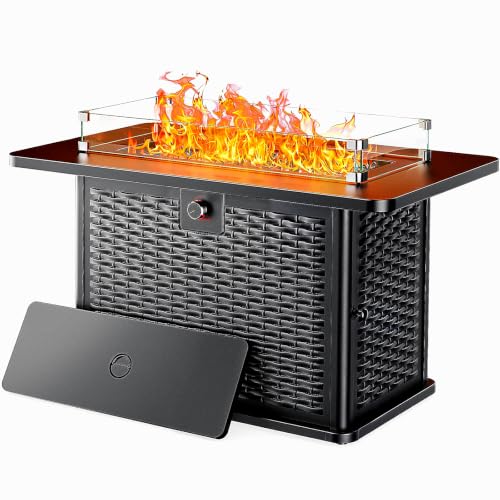
Outdoor Propane Fire Pit With Hidden Tank
Everything you need to know about concealed-tank propane fire pits — how they work, what to look for, safety considerations, and which design features matter most before you bring one home.
Explore Buying FactorsQuick overview: An outdoor propane fire pit with a hidden tank stores the fuel cylinder inside its base or a concealed compartment. This design delivers a cleaner silhouette, protects the tank from the elements, and removes the visual clutter of an exposed cylinder — making it a popular choice for homeowners who want a polished, permanent-looking fire feature on their patio.
Why Choose a Hidden Tank Propane Fire Pit?
If you have been researching fire features for your backyard, you have likely noticed that propane models offer instant flames, precise control, and no ash cleanup. The trade-off is the fuel tank — a standard 20-pound cylinder is bulky and visually distracting when left out in the open. A fire pit with a concealed tank solves this by integrating storage directly into the unit's body.
This design approach is especially valuable if your outdoor space is part of a coordinated layout. Whether you are building around an outdoor patio or planning a complete seating arrangement with an outdoor patio set with gas fire pit, a hidden tank keeps the focus on the flames and the furniture rather than the fuel source. It also reduces the chance of the tank being knocked over or exposed to direct weather.
How a Concealed Tank Design Works
In most hidden tank models, the propane cylinder sits inside a dedicated compartment at the base of the fire pit — often accessed through a side door or a lift-off panel. The burner is connected to the tank via a hose and regulator, and the whole assembly is enclosed within the unit's frame.
Because propane is heavier than air, enclosed compartments must be designed with ventilation openings. Reputable manufacturers engineer these vents into the base so that any trace gas can escape rather than accumulate. This is a critical safety feature, and it is one of the first things to verify when comparing models.
- Integrated compartment: The tank sits within the fire pit's footprint, so there is no separate side table or external housing needed.
- Ventilated base: Proper airflow prevents gas buildup and is a non-negotiable design requirement.
- Access door or panel: Makes tank swaps and leak checks straightforward without disassembling the unit.
- Regulator and hose routing: Internal plumbing should be protected from sharp edges and moisture.
Key Benefits of Hiding the Tank
The most obvious advantage is aesthetic — a clean, uninterrupted profile that looks intentional rather than improvised. But the benefits go beyond appearance.
- Cleaner visual line: No exposed cylinder interrupting the design of your fire feature.
- Weather protection: The tank is shielded from rain, snow, and direct sun, which can degrade hoses and regulators over time.
- Safer placement: The tank is stabilized inside the unit rather than sitting loose on the patio surface.
- Better space efficiency: No need for a separate tank cover or side housing, which frees up floor space in compact areas.
- Child and pet resistance: A concealed compartment is harder to tamper with than an exposed tank valve.
These advantages are particularly relevant on smaller patios and balconies where every square foot matters. If your space is tight, you may also find our guide to outdoor patio table set with fire pit helpful for combining dining and warmth in one footprint.
Common Types of Hidden Tank Fire Pits
Hidden tank designs are available across several formats, each suited to different patio layouts and usage patterns.
1. Fire Pit Tables
These combine a flat tabletop with a central burner, and the tank hides in the base below. They work well as a focal point in a seating group and can double as a surface for drinks or decor when the flame is off. Many models pair naturally with a full outdoor patio set or a dedicated outdoor patio table set with fire pit arrangement.
2. Column and Square Fire Pits
Tall, column-style units often house the tank in a lower compartment, giving a modern, architectural look. These are popular in contemporary patios and pair well with an outdoor patio sectional or low-profile lounge seating.
3. Integrated Seating Units
Some designs build the fire pit into a bench or sectional base, with the tank concealed underneath. If you are planning a complete lounge layout, this approach can be combined with an outdoor patio set with fire pit table to create a cohesive gathering zone.
4. Convertible Dining Fire Tables
A growing category includes tables that switch between a dining surface and a fire feature, with the tank concealed in the pedestal. These are ideal if you want one piece of furniture to serve multiple functions. Our article on outdoor patio table and chairs covers related layout considerations.
Hidden Tank vs. Exposed Tank: Feature Comparison
The table below uses universal tier descriptors to help you compare design approaches without relying on specific figures. Use it as a framework when evaluating models in your research.
| Feature | Hidden Tank Design | Exposed Tank Design |
|---|---|---|
| Aesthetic profile | Clean, integrated look | Visible cylinder at base or side |
| Tank protection | Shielded from weather and UV | Exposed to elements |
| Footprint efficiency | Single-unit footprint | May require extra clearance |
| Tank swap access | Via door or panel | Direct access |
| Typical market position | Mid-range to premium | Entry-level to mid-range |
| Best for | Design-focused patios, permanent setups | Portable or temporary arrangements |
What to Look For Before You Choose
Since you are likely already set on a propane fire pit and are now narrowing down specific models, the following factors will help you evaluate quality and suitability.
Ventilation and Safety Engineering
This is the single most important design element. Look for clearly engineered vents in the base or compartment, a secure tank retention system, and a regulator that is protected from moisture. Avoid any unit where the enclosure appears fully sealed with no airflow path.
Build Material and Finish
Powder-coated steel, stainless steel, and cast aluminum are common choices. A rust-proof finish and weather-resistant coating extend service life, especially in humid or coastal environments. If you are comparing materials across categories, our outdoor patio furniture guide provides a useful baseline.
Burner Output and Flame Control
Higher BTU output delivers more warmth but uses fuel faster. Look for a unit with adjustable flame control so you can run a low, ambient flame for atmosphere or a higher flame on cooler evenings. Match the output to your patio size — a large open deck benefits from more heat, while a compact balcony may only need modest output.
Tank Access and Swap Convenience
A hidden tank is only practical if you can change the cylinder without frustration. Check whether the access door is hinged, sliding, or lift-off, and whether the hose connection is easy to reach. Some premium models include a tank pull-out tray, which simplifies swaps considerably.
Ignition System
Push-button electronic ignition is standard on mid-range and premium models. Match-light or manual ignition appears more often on entry-level units. Electronic ignition is more convenient and generally more reliable in windy conditions.
Size and Clearance
Measure your intended location before committing. Check the manufacturer's recommended clearance from combustible surfaces, furniture, and overhead structures. If your layout includes a outdoor sectional with fire pit dining table, confirm that the fire pit's heat radius does not conflict with cushion materials.
Included Accessories
Lava rocks, fire glass, a cover, and a conversion hose are commonly bundled. Fire glass tends to produce a more contemporary look, while lava rocks offer a more traditional appearance. A fitted cover is a meaningful inclusion for any outdoor unit.
Understanding Market Tiers
To help you orient your research without relying on figures, here is a general framework for how hidden tank fire pits are positioned across the market.
| Tier | Typical Characteristics | Best For |
|---|---|---|
| Entry-level | Basic powder-coated steel, manual or simple push-button ignition, straightforward compartment access | Occasional use, first fire pit purchase |
| Mid-range | Better finish quality, electronic ignition, improved ventilation design, included fire media | Regular use on a primary patio |
| Premium | Stainless or high-grade construction, refined burner design, tank pull-out tray, fitted cover | Design-focused permanent installations |
| Luxury / commercial-grade | Architectural integration, high-output burner systems, premium materials throughout | Custom builds and hospitality settings |
As a rule, mid-range models tend to offer the most balanced combination of build quality, convenience features, and design refinement. Entry-level units are serviceable for light use, while premium and luxury tiers focus on longevity and visual integration.
Safety Best Practices
Propane fire pits are generally safe when used as directed, but a few habits matter more than any single feature.
- Always perform a leak check on the hose and regulator connection after changing the tank.
- Keep the compartment vents clear of debris, leaves, and snow.
- Never store a spare propane tank inside the fire pit compartment.
- Place the unit on a level, non-combustible surface and observe the manufacturer's clearance distances.
- Turn off the gas supply at the tank when the fire pit is not in use.
- Keep children and pets at a safe distance, and never leave a lit fire pit unattended.
If you are planning a broader safety review of your outdoor area, the same principles apply to other furniture and structures around your patio.
Placement and Design Integration
A hidden tank fire pit works best when it is treated as part of the overall patio composition rather than an afterthought. Consider the following when positioning it:
- Seating radius: Allow enough room for chairs to pull back comfortably without tipping toward the flame.
- Wind exposure: Place the unit where prevailing wind will not push flame toward seating.
- Overhead clearance: Verify clearance if you have a pergola, canopy, or umbrella nearby.
- Surface material: Use a heat-resistant mat on composite decking or other sensitive surfaces if the manufacturer recommends it.
- Visual balance: A fire pit often anchors a seating group. Position it centrally within the conversation area.
If your layout includes a sectional or lounge arrangement, pairing a fire pit with an outdoor sectional with fire pit dining table can create a natural gathering hub. For more compact configurations, a patio table set with fire pit combines dining and warmth efficiently.
Maintenance and Longevity
Hidden tank designs are low-maintenance overall, but a few routines keep them performing well.
- Wipe down the exterior regularly with a mild cleaner to prevent surface staining.
- Inspect the hose and regulator seasonally for cracking or wear.
- Clear burner ports of dust and debris to maintain an even flame.
- Cover the unit when not in use to protect both the finish and the internal compartment.
- Check ventilation openings after storms or heavy leaf fall.
Durable construction and a rust-proof finish are the strongest predictors of long-term performance. Treat the fire pit as a long-term investment in your outdoor space and it will reward you with years of reliable use.
Frequently Asked Questions
What does a hidden tank fire pit mean?
A hidden tank fire pit stores the propane cylinder inside the base or a concealed compartment, so the tank is not visible from the outside. This creates a cleaner, more polished look while keeping the fuel source protected from weather and accidental contact.
Are outdoor propane fire pits with hidden tanks safe?
Yes, when used correctly. Concealed compartments are engineered with ventilation to prevent gas buildup. Always follow the manufacturer's instructions, perform a leak check after each tank change, and never modify or block the enclosure vents.
How long does a propane tank last in a fire pit?
A standard 20-pound tank typically provides several hours of burn time on a medium setting. Larger tanks or lower flame settings extend runtime. Exact duration depends on the burner's output and how high you run the flame.
Can I use a hidden tank fire pit on a wooden deck?
Many propane fire pits are deck-friendly because they produce no embers or sparks. However, always check the manufacturer's clearance requirements and use a heat-resistant mat if recommended. Never place the unit directly against combustible materials.
Do hidden tank fire pits come with a cover?
Cover inclusion varies by model and tier. Mid-range and premium units frequently include a fitted cover, while entry-level models may not. A cover is a worthwhile addition regardless, as it protects both the finish and the internal compartment.
Ready to Compare Hidden Tank Fire Pits?
Use the framework above to evaluate ventilation, build material, ignition type, and tank access. When you have narrowed your shortlist, explore the recommended models below to check availability and detailed specifications.
Explore Recommended Models