Canopies: The Complete Guide to Outdoor Shade & Shelter
Whether you need a pop-up shelter for weekend gatherings or a semi-permanent shade structure for a sun-drenched patio, this guide breaks down frame types, fabric performance, sizing, anchoring, and maintenance so you can choose with confidence.
START WITH THE BASICSWhat a Canopy Actually Does for Your Outdoor Space
A canopy is a fabric roof supported by a metal or composite frame, designed to block direct sunlight, light rain, and debris while keeping the area underneath ventilated. Unlike a permanent roof, a canopy is usually modular: the frame stays put or folds away, and the fabric top can be replaced, tightened, or removed for cleaning.
For homeowners, the practical benefits are straightforward. A canopy lowers surface temperatures on patios and decks, protects furniture finishes from UV fade, extends usable hours in the afternoon, and creates a defined zone for dining or lounging. It also adds visual height to flat outdoor areas without requiring structural permits in most residential settings.
Because canopies sit at the intersection of furniture and structure, they pair naturally with other shade solutions. If you are still comparing overhead options, our guides to cantilever umbrellas with tilt and rotation and cantilever umbrellas with weighted bases explain when an umbrella is the smarter pick instead of a full canopy frame.
Types of Canopies Explained
Canopies are usually grouped by how they are installed and how long they are meant to stay up. Understanding these categories prevents the most common mistake: buying a portable shelter for a permanent job, or a heavy frame for a space that needs flexibility.
Pop-Up Canopies
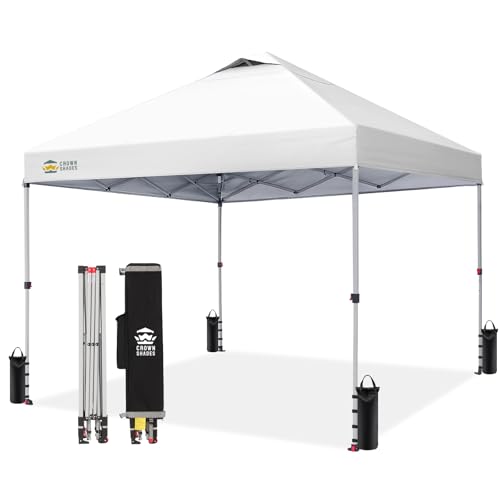
These use a scissor-style folding frame that expands in minutes. They are the go-to choice for tailgates, craft fairs, and temporary backyard events. Entry-level pop-ups use thinner legs and lighter fabric, while mid-range and premium models add reinforced joints, wheeled bags, and thicker gauge steel. They are not intended to stay up through storms.
Patio and Deck Canopies
These are semi-permanent structures that span a seating or dining area, often with straight or peaked roofs and legs that anchor to the deck surface. They bridge the gap between a pop-up and a gazebo. Many homeowners install them over a dining set or lounge zone and leave them up for the season, removing the fabric top in winter.
Gazebo-Style Canopies
A gazebo canopy uses a rigid frame with four or more posts and a fabric or hard roof. It reads as architecture rather than equipment. These are heavier, usually anchored permanently, and often include side walls or mosquito netting. They suit dedicated entertaining areas where the structure becomes part of the design.
Carport and Vehicle Canopies
These are wider-span canopies with high clearance, designed to shelter cars, boats, or equipment. They prioritize frame strength and snow-load ratings over decorative fabric. If your goal is protecting a vehicle rather than creating a seating zone, the engineering priorities shift toward heavy-duty steel and reinforced connectors.
Shade Sails and Fabric Canopies
Shade sails are tensioned fabric panels anchored to posts or walls. They are not framed canopies in the traditional sense, but they solve the same problem with a more sculptural look. They offer excellent airflow and UV blocking but provide limited rain protection.
If your space is small or you are weighing overhead structures against other shade options, our guide to camping chairs with canopy shows how integrated shade works at the personal scale, which is useful context when sizing a larger canopy footprint.
Key Buying Factors Before You Choose
Most canopy regrets trace back to one of five decisions: frame gauge, fabric quality, footprint size, anchoring method, and expected lifespan. Work through these in order rather than starting with appearance.
1. Intended Use and Duration
Ask how many days per year the canopy will be up. A few weekends a season calls for a portable pop-up. Six months of continuous sun exposure calls for a semi-permanent frame with UV-stabilized fabric. Year-round installation calls for commercial-grade construction and a hard roof or heavy-duty fabric.
2. Frame Gauge and Joint Quality
Thicker steel legs and reinforced nylon or metal joints resist twisting and bending. Look for powder-coated finishes that resist rust, and check whether the frame uses push-button locks or pin locks, since the latter tend to hold tension better over time.
3. Fabric Weight and Coating
Fabric is rated by denier and by coating. Higher denier means a denser weave and better tear resistance. A UV-resistant top coat and a water-repellent underside extend service life. Solution-dyed fabrics hold color far longer than surface-dyed ones.
4. Footprint and Height
Measure the furniture footprint first, then add clearance on all sides. Peak height matters for airflow and for avoiding head contact. Eave height matters for whether people can walk under the edge comfortably.
5. Anchoring and Wind Rating
Every canopy needs a anchoring plan. Weighted bases, ground stakes, sandbags, or permanent brackets all serve different surfaces. A canopy without an anchoring plan is a safety hazard in gusty weather.
Frame Materials Compared
Frame material determines weight, rust resistance, and how much wind the structure can tolerate. The three common options behave very differently.
| Frame Material | Strengths | Trade-offs | Best For |
|---|---|---|---|
| Powder-Coated Steel | High strength-to-weight ratio, rigid under wind load, holds tension well | Heavier to move, chips can expose bare metal if not maintained | Semi-permanent patio and gazebo canopies |
| Aluminum | Rust-resistant, lighter, easier to reposition | Lower tensile strength than steel at the same gauge; may flex more | Portable and mid-range canopies where weight matters |
| Composite and Fiberglass | Will not rust, resistant to denting, low maintenance | Less common in large spans, limited replacement parts | Small shade structures and decorative canopies |
For decks and patios exposed to coastal air or frequent rain, powder-coated steel with a rust-proof finish and aluminum frames are the two practical options. Entry-level canopies often use thinner aluminum or steel with minimal coating, which is fine for occasional use but will show wear faster under continuous sun and moisture.
If you are coordinating the canopy with other metal furniture, our notes on cast iron garden furniture and cast aluminum patio furniture explain how finish colors and metal tones can be matched across a space.
Fabric and UV Performance
The fabric top is the part that fails first. Understanding fiber type and coating helps you predict how long the canopy will look presentable under sun exposure.
Polyester with UV Coating
The most common canopy fabric. It is lightweight, packs down well, and accepts water-repellent coatings. Mid-range and premium versions use higher denier and solution-dyed pigments for better fade resistance. Entry-level polyester tends to thin and fade within a season or two of continuous exposure.
High-Density Polyethylene (HDPE)
Often used in shade sails and woven canopies. It blocks UV effectively, resists mold, and breathes well. It does not provide full rain protection because of the woven construction.
Solution-Dyed Acrylic
A premium canopy fabric with excellent color retention and water repellency. It is heavier and tends to be used in high-end patio canopies and gazebos where long service life is the priority.
Vinyl and PVC-Coated Fabrics
Fully waterproof and easy to wipe clean, often used on carports and commercial canopies. They are heavier and less breathable, so condensation can form underneath in humid climates.
Sizing a Canopy for Your Space
Canopy dimensions are usually given as width by depth. The goal is to cover the furniture footprint plus a margin so that sun does not cut under the edge at mid-morning and mid-afternoon.
Common Footprints and What They Cover
- 10x10: a small bistro set or two lounge chairs with a side table. Suitable for balconies and compact patios.
- 10x13: a four- to six-person dining set with room to walk around.
- 12x12: a larger dining arrangement or a lounge grouping with a coffee table.
- 10x20: two distinct zones, such as dining plus a seating area, or a vehicle plus a work area.
Height Considerations
Peak height affects heat buildup, while eave height affects comfort at the edges. For dining use, aim for an eave height that lets people stand and move chairs without ducking. For lounging, a lower peak can feel cozier but traps more warm air.
If your space is tight, the layout principles in our small patio guide and balcony decor guide apply directly to canopy placement: define the zone first, then choose the smallest structure that covers it.
Anchoring and Wind Safety
Canopies fail in wind for predictable reasons: insufficient weight at the legs, loose fabric that catches air, or frames that were never designed for gust loading. Treat anchoring as part of the purchase, not an afterthought.
Anchoring Options by Surface
- Concrete and pavers: use weighted plates or bolt-down brackets. Avoid drilling into pavers without checking whether they are load-bearing.
- Decking: use deck brackets that attach to joists, or weighted bases if drilling is not acceptable.
- Grass and soil: use spiral ground stakes or auger anchors driven below the surface layer.
- Patio furniture: sandbags or water-weighted bases are a practical option for pop-ups that need to move.
When to Take It Down
Portable canopies should come down before storms, high-wind warnings, and winter snow. Semi-permanent canopies should have the fabric top removed or retracted when sustained wind is forecast above the manufacturer's rating. No canopy should be left up in conditions it was not engineered for.
For broader seasonal protection advice, see our weatherproofing guide and winter storage guide.
Care and Maintenance
A canopy that is cleaned and stored correctly will outlast one that is left up year-round without attention. The routine is simple but consistent.
Routine Cleaning
- Brush off loose debris before washing to avoid grinding dirt into the weave.
- Use mild soap and water with a soft brush; avoid harsh solvents that strip UV coatings.
- Rinse thoroughly and let the fabric dry fully before folding or storing.
- Inspect frame joints and leg locks each season for rust, cracks, or loose hardware.
Seasonal Storage
Remove the fabric top for winter, clean and dry it completely, and store it in a breathable bag rather than a sealed plastic one. Store the frame in a dry location. For portable canopies, loosen the fabric tension before folding to reduce stress on seams.
Our patio furniture covers guide and rust removal tips cover the adjacent maintenance tasks that keep a shaded patio area in good condition.
Tier Comparison: Matching Construction to Use
Rather than shopping by appearance, compare canopies by construction tier. The descriptors below are relative and describe how a model is positioned within its category, not an absolute measure.
| Tier | Frame Construction | Fabric | Best For |
|---|---|---|---|
| Entry-Level / Starter Tier | Thinner aluminum or steel legs, basic push-button joints | Standard polyester with light UV coating | Occasional weekend use, temporary events |
| Mid-Range / Balanced Tier | Thicker gauge steel or aluminum, reinforced joints, wheeled bag | Higher-denier polyester, water-repellent underside | Seasonal patio use, regular entertaining |
| Premium / High-End Tier | Heavy-duty powder-coated steel, professional-grade connectors | Solution-dyed fabric with strong UV and rain resistance | Semi-permanent patio installations, frequent use |
| Luxury / Commercial-Grade | Reinforced structural frame, engineered wind ratings | Architectural-grade fabric or hard roof | Permanent shade structures, high-wind areas |
Mid-range models usually offer the most sensible balance for a homeowner who wants a canopy up for a full season. The jump from mid-range to premium is most noticeable in fabric fade resistance and joint durability, while the jump to commercial-grade is about engineered wind ratings and permanent installation.
Ready to Compare Canopy Options?
Use the checklist above to narrow the field: footprint, frame gauge, fabric rating, and anchoring plan. Then compare specific models with confidence.
EXPLORE CANOPY OPTIONSFrequently Asked Questions
What is the difference between a canopy and a gazebo?
A canopy is typically a fabric roof over a lightweight metal frame, and it can be portable or semi-permanent. A gazebo is a more rigid structure with permanent posts and often a hard or heavy fabric roof. Canopies favor flexibility and quick setup, while gazebos favor durability and architectural presence.
How do I anchor a canopy on a windy patio?
Use weighted bases, ground stakes, or sandbags on each leg, and avoid setting up when high winds are forecast. For semi-permanent installations, anchor the feet into concrete or decking with appropriate hardware, and add guy lines if the manufacturer supports them.
What fabric is best for an outdoor canopy?
Polyester with a UV-resistant and water-repellent coating is the most common balance of durability and weight. Solution-dyed acrylics and high-density polyethylene are premium options with better fade and mold resistance. Entry-level polyester is lighter and may need replacing sooner under continuous sun.
Can I leave a canopy up all year?
Most portable canopies are not designed for permanent year-round use and should come down during storms or winter. Semi-permanent and commercial-grade canopies with reinforced frames and heavy-duty fabric can stay up longer, but regular inspection and seasonal maintenance remain essential.
What size canopy do I need for a patio dining set?
Allow at least 2 to 3 feet of overhang beyond the furniture footprint on each side. A 10x10 canopy generally covers a small four-person set, while a 10x13 or 12x12 canopy suits six- to eight-person arrangements with comfortable walk-around space.
Do canopies block UV rays?
Most outdoor canopy fabrics are rated for UV blocking, often expressed as UPF. A UPF 50+ rating blocks the vast majority of direct UV radiation. Lower-rated fabrics block less, and worn or thinned fabric loses effectiveness over time.
Can a canopy be used over a hot tub or pool area?
Yes, but choose a fabric rated for high humidity and check that the frame finish is rated for moisture exposure. A canopy provides shade and some privacy, but it does not replace a proper pool safety enclosure or comply with local barrier requirements.
Final Checklist Before You Decide
Before confirming a canopy choice, run through this list one more time:
- Measure the furniture footprint and add clearance on all sides.
- Confirm the frame material and gauge suit the length of time the canopy will be up.
- Check the fabric UV rating and whether it is water-repellent.
- Decide on an anchoring method before setup day.
- Plan where the canopy will be stored off-season and whether the fabric top is removable.
- Read the wind rating and commit to taking the canopy down when conditions exceed it.
With those answers settled, the rest is comparison. Browse the recommended canopy options below and match them to your tier and footprint.