Outdoor Patio with Fire Pit: The Complete Guide to a Cozy, Functional Backyard Retreat
An outdoor patio with a fire pit transforms an ordinary backyard into a year-round gathering place. The flicker of flames, the gentle warmth on a cool evening, and the natural focal point a fire pit provides make it one of the most sought-after features in outdoor living design. Whether you are planning a new patio build or retrofitting an existing space, this guide walks you through every decision — from layout and materials to fuel type and safety — so you can create a patio that is both beautiful and built to last.
Homeowners researching this topic typically already know they want a fire pit; what they need is clarity on how to integrate it correctly. This guide is designed to answer those deeper questions: How much clearance is safe? Which fuel type suits your lifestyle? What seating works best? By the end, you will have a confident, actionable plan for your own outdoor patio with a fire pit.
Why an Outdoor Patio with a Fire Pit Is Worth the Investment
A fire pit extends the usable season of your patio well into cooler months. Beyond warmth, it creates a natural conversation circle, anchors the visual design of the space, and adds ambiance that string lights and decor alone cannot replicate. From a lifestyle perspective, a fire pit patio becomes the default setting for evening gatherings, quiet reading sessions, and family time.
From a property standpoint, a well-designed fire pit area is a recognized outdoor living enhancement that appeals to buyers who value usable, low-maintenance outdoor space. It is a long-term investment in how you experience your home, not just a decorative add-on. If you are still mapping out the broader furniture plan, our guide to outdoor patio essentials provides a solid foundation before you commit to a fire pit-centered layout.
Choosing the Right Fire Pit for Your Patio
The fire pit market spans several fuel types and construction tiers. The table below compares the main categories using neutral quality tiers so you can match the product to your patio's context and your maintenance preferences.
| Fire Pit Type | Tier Positioning | Best For | Key Consideration |
|---|---|---|---|
| Wood-Burning Steel Bowl | Entry-level to mid-range | Rustic, open-air patios with good ventilation | Requires ash cleanup and a spark screen |
| Propane Fire Pit Table | Mid-range to premium | Covered patios, urban decks, low-maintenance households | Instant ignition; needs a fuel supply plan |
| Natural Gas Fire Pit | Premium to luxury | Permanent installations with a gas line | Professional installation strongly advised |
| Cast Concrete or Stone Fire Pit | Premium tier | Design-forward patios where the pit is a centerpiece | Heavy; requires a level, reinforced base |
| Portable Bio-Ethanol or Gel Fire Pit | Starter tier | Renters, balconies, temporary setups | Lower heat output; best for ambiance |
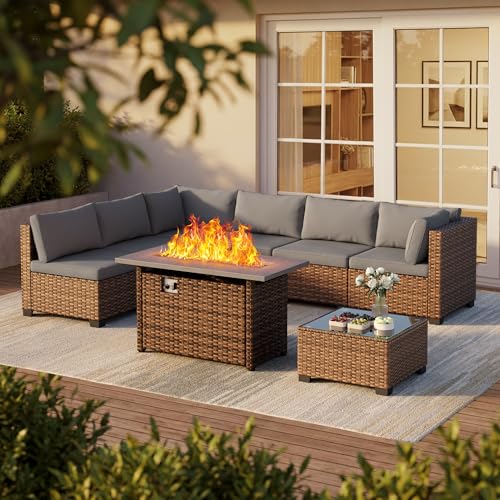
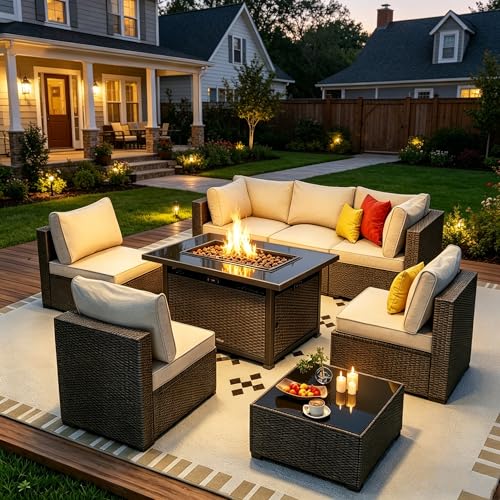
For a dedicated fire pit experience integrated into a full seating arrangement, an outdoor patio set with a fire pit table offers a cohesive solution that pairs seating and flame in one coordinated design. If you prefer a dining-centric layout, an outdoor patio table set with fire pit lets you combine meals and warmth in a single footprint. And for a round conversation layout, an outdoor round dining table with fire pit keeps every seat equidistant from the flames.
Patio Layout and Seating Arrangement Around a Fire Pit
The layout determines both comfort and safety. A circular or U-shaped arrangement is the gold standard because it gives every guest a clear line of sight to the fire and equal access to warmth. Straight-line or L-shaped layouts work on narrow patios but can leave some seats too far from the heat.
Clearance and Spacing Rules
- Fire pit to seating: Allow at least 36 inches (about 90 cm) between the fire pit edge and the front of any seat. This prevents accidental contact and gives legs room to stretch.
- Fire pit to structure: Maintain a minimum of 10 feet from walls, fences, pergola posts, and overhanging branches unless the manufacturer specifies otherwise.
- Walkway clearance: Keep a 36-inch path behind seating so guests can move without stepping over chairs.
- Table surface: If using a fire pit table, confirm the flame opening leaves enough usable surface for drinks and small plates.
Seating choice matters as much as spacing. Deep lounge chairs encourage lingering, while a outdoor patio sectional wraps a fire pit zone in comfort for larger groups. For a more traditional conversation circle, a set of outdoor patio swivel chairs with cushions lets guests turn toward the fire or toward each other with ease. Rocking chairs add a relaxed rhythm to the evening; see our guide to outdoor patio rocking chairs with cushions for options that hold up outdoors.
Hardscaping and Materials for a Fire Pit Patio
The patio surface must handle radiant heat and occasional embers. Stone, concrete, brick, and porcelain pavers are the most reliable choices. Wood decks can work if the fire pit is raised, shielded, and placed well away from deck boards — but composite decking can scorch, so verify manufacturer heat ratings.
For the fire pit surround, choose materials that match the patio for a seamless look. A raised stone or concrete ring adds a visual anchor and can double as a small ledge for drinks. Gravel and decomposed granite are good for the immediate zone around a wood-burning pit because they are non-combustible and drain well.
If your patio also serves as a dining area, consider a table with an umbrella hole to keep daytime shade options open. Our overview of outdoor patio furniture with an umbrella hole explains how to plan that feature without interfering with the fire pit zone.
Safety and Practical Considerations
Fire safety is non-negotiable. Follow these baseline practices regardless of fuel type:
- Keep a fire extinguisher or a bucket of sand within reach of the patio.
- Never use a wood-burning fire pit under a covered roof, in a garage, or on a screened porch.
- Check wind direction before lighting; embers can travel farther than expected.
- Allow ashes to cool for at least 48 hours before disposal for wood-burning pits.
- Install a spark screen and use a heat-resistant mat or fire-resistant pad beneath portable pits.
- Confirm local ordinances — some municipalities restrict wood-burning fire pits or require specific setbacks.
Practicality matters too. A propane fire pit with a hidden tank compartment is easier to live with on a covered patio, while a wood-burning pit suits an open lawn-adjacent layout. If you are building a larger entertainment zone, a outdoor patio serving station and storage cabinet keeps fire-starting supplies, blankets, and servingware organized and out of the weather.
Accessories and Finishing Touches
The fire pit is the anchor, but the finishing layers make the patio feel complete. Outdoor rugs define the seating zone and soften hardscape; choose a low-pile, weather-resistant rug placed at least 3 feet from the flame. Lighting should be layered — string lights overhead, lanterns on side tables, and path lights at the patio edge. Cushions and throw pillows add color and comfort, but confirm they are labeled fire-resistant or store them away when the pit is in use.
For daytime use, shade is essential. A patio umbrella or a pergola with a retractable canopy keeps the space usable in full sun. If you plan to add shade over or near the fire pit, ensure the canopy is rated non-combustible or positioned so that no fabric hangs within the fire pit's heat radius.
For larger properties, a fire pit patio pairs naturally with a poolside lounge area. Browse outdoor pool furniture options to coordinate materials and colors across zones. And if you are still refining the overall furniture mix, the outdoor patio furniture hub covers seating, tables, and storage in one place.
Frequently Asked Questions
What is the best seating arrangement for an outdoor patio with a fire pit?
A circular or U-shaped arrangement is ideal. It keeps every seat within comfortable range of the flame and encourages conversation. Maintain at least 36 inches of clearance between the fire pit edge and the front of each seat, with a clear walkway behind.
Should I choose a wood-burning or propane fire pit for my patio?
Wood-burning pits deliver authentic ambiance but require ventilation, ash cleanup, and more careful placement. Propane fire pits offer instant ignition, cleaner operation, and easier control, making them the more practical choice for covered patios and low-maintenance households.
How far should a fire pit be from the house?
Keep at least 10 feet between the fire pit and any structure, fence, or overhanging branch. Always verify the manufacturer's clearance requirements and local fire codes, which may impose stricter distances.
What materials work best for a patio surrounding a fire pit?
Heat-resistant materials such as natural stone, concrete, brick, and porcelain pavers are the most dependable. Avoid resin, plastic, and low-grade composites near the fire zone, as radiant heat can cause warping or discoloration.
Can I use a fire pit on a covered patio?
Only with a propane or natural gas fire pit that is rated for covered use, and only if the space has adequate ventilation and the manufacturer permits it. Never operate a wood-burning fire pit under a roof, in a screened enclosure, or in a garage.