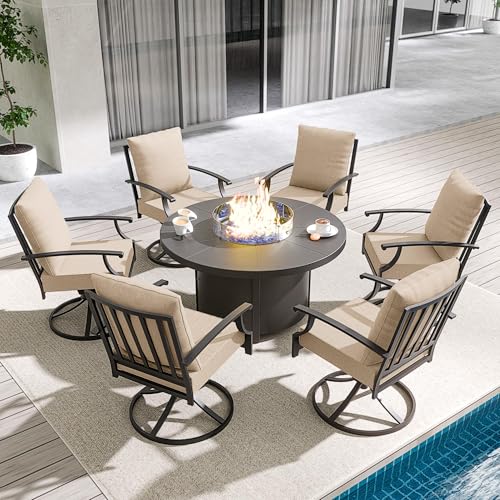
Outdoor Round Dining Table with Fire Pit
Everything you need to choose, place, and maintain a round fire pit dining table that turns your patio into a year-round gathering space.
Why a round fire pit dining table earns its place: A circular table with an integrated fire pit solves two outdoor living needs at once — it gives everyone an equal seat at the table and adds a natural focal point that extends usable hours well past sunset. Unlike rectangular models, the round silhouette encourages conversation, fits neatly onto compact patios, and eliminates awkward corner seating.
This guide walks you through the decisions that matter most: burner type, tabletop materials, seating capacity, safety clearances, and long-term care. By the end, you will know exactly which configuration suits your space and how to use it safely season after season.
How a Fire Pit Dining Table Works
A fire pit dining table combines a full-size dining surface with a central burner recessed into the tabletop. The burner is surrounded by a heat-resistant ring — usually metal, stone, or composite — that isolates the flame from the dining area. Most models include a matching lid or cover that converts the fire pit into a flat serving surface when the flame is off, so the table functions as a conventional dining table during daytime meals.
The result is a single piece of furniture that handles breakfast, dinner, and evening conversation without requiring a separate fire bowl. For homeowners weighing how to anchor a patio layout, this dual-purpose design is often more space-efficient than pairing a standalone dining set with a separate fire feature — a point worth considering when comparing a patio set with a fire pit table against a dedicated dining table.
Choosing the Burner: Gas vs. Wood vs. Bio-Ethanol
The burner is the component that most affects daily usability. Each fuel type carries distinct trade-offs in ignition speed, cleanup, heat output, and placement requirements.
| Burner Type | Best For | Key Strengths | Considerations |
|---|---|---|---|
| Propane / Natural Gas | Frequent dining and entertaining | Instant ignition, consistent flame, no ash, adjustable heat | Requires fuel line or tank; hidden-tank designs simplify placement |
| Wood-Burning | Authentic ambiance and crackle | Traditional feel, high radiant heat, no fuel infrastructure | Ash cleanup, smoke management, larger clearance requirements |
| Bio-Ethanol | Small patios and smoke-free zones | Clean-burning, no venting, lightweight | Lower heat output; fuel refilled per use |
| Gel Fuel | Occasional or portable use | Simple setup, no installation | Short burn duration; best as a secondary option |
For most households, a gas burner delivers the best balance of convenience and control at the dinner table. If you want the visual warmth of a real flame without a fuel line, a propane fire pit with a hidden tank keeps the base clean and the table easy to reposition. Homeowners who prioritize ambiance over convenience often lean toward wood, provided the patio meets the clearance requirements covered below.
Sizing the Table for Your Guest Count
Round tables are measured by diameter, and the fire pit occupies the center. That means usable dining space is the ring between the burner edge and the table rim. As a rule of thumb, allow at least 24 inches of tabletop width per seated guest and 15 inches of clear ring depth in front of each place setting.
48–54 inch diameter
Seats four comfortably. Suited to balconies, small courtyards, and breakfast nooks where a single conversation circle works best.
60 inch diameter
Seats four to six. The most versatile size for typical residential patios, leaving room for plates, serving pieces, and elbow space.
66–72 inch diameter
Seats six to eight. Ideal for households that host regularly; verify patio depth allows chairs to pull out without obstruction.
If your guest list fluctuates, a mid-size round table paired with stackable chairs offers the most flexibility. For layouts that already include a larger seating zone, a round dining table set for six keeps the footprint predictable while matching the fire pit's circular geometry.
Tabletop and Frame Materials That Last
Because the tabletop sits directly above a heat source, material selection matters more here than on a standard dining table. Look for components explicitly rated for proximity to flame and UV exposure.
Powder-Coated Aluminum
Lightweight, rust-resistant, and easy to reposition. Aluminum frames are the standard for mid-range and premium fire pit tables because they resist corrosion in humid climates without the weight of steel.
High-Grade Stainless Steel
Heavy-duty and heat-tolerant, stainless steel suits high-use patios and coastal environments. It is heavier and typically positioned at the high-end tier, but the solid build rewards long-term ownership.
Stone and Composite Tops
Slate, travertine, and porcelain composite tops resist heat and scratches while adding visual weight. Composite surfaces are generally more forgiving against thermal shock than natural stone, which can crack if heated unevenly.
Teak and Sealed Hardwood
Warm and traditional, hardwood tops require periodic sealing to resist moisture and heat cycling. They pair well with rustic and coastal design themes but demand more maintenance than metal or composite.
Rope and Wicker Accents
Woven surrounds on the chair or base add texture, but the dining surface itself should remain a hard, heat-rated material. If you like the woven look, choose chairs with rope chairs to echo the table's circular form without compromising the fire-adjacent surface.
Placement, Clearance, and Patio Layout
A fire pit dining table needs breathing room. Plan for at least 36 inches of clearance between the table edge and any wall, railing, or planter so chairs can pull out and guests can move safely behind seated diners. For wood-burning models, increase the buffer to 10 feet from flammable structures, low-hanging branches, and fabric awnings.
Position the table so the prevailing breeze carries smoke or heat away from the seating side, and avoid placing it directly beneath an umbrella canopy unless the manufacturer rates the canopy for proximity to flame. If shade is a priority, choose a table with a central umbrella sleeve rather than an overhead canopy — a round dining table with an umbrella hole lets you add shade without crowding the fire zone, though most fire pit models route the burner through the center and instead rely on offset umbrellas or pergolas.
On compact patios, a round table often fits more naturally than a rectangular one because the circular footprint leaves curved walkways clear. Homeowners planning a full layout refresh can review outdoor patio design principles before finalizing the table's position.
Safety Essentials Before First Use
- Keep the burner lid and any fabric items at least 3 feet from an active flame.
- Never use a wood-burning table under a covered roof or on a combustible deck surface without a heat shield.
- Check local ordinances — some areas restrict open flames on balconies and covered patios.
- Store propane tanks upright and outdoors, never in a garage or shed.
- Supervise children and pets around the table whenever the fire is lit, and let the burner cool fully before replacing the lid.
Pairing Chairs and Accessories
Chair choice affects both comfort and safety. Choose seats with heat-resistant frames and cushions rated for outdoor use, and leave a gap between chair backs and the table edge so guests can lean in without contacting the burner ring.
Swivel chairs work especially well with round tables because guests can rotate toward the fire and back toward their plate without pushing the chair out. If you prefer a lounge feel, swivel chairs with cushions pair naturally with a circular layout. For a more relaxed, low-profile look, some homeowners mix dining chairs with outdoor seats around the perimeter, though dining-height chairs remain the safer choice for a table with a central flame.
Finish the setting with a weather-resistant rug placed at least a foot beyond the chair footprint, and add soft lighting at the patio edge rather than directly over the table. A cohesive arrangement — table, chairs, rug, and lighting — is what separates a functional fire pit dining area from a collection of separate pieces. If you are building the wider layout at the same time, the principles in our outdoor seating set guide help keep proportions consistent.
Seasonal Care and Long-Term Maintenance
Routine care keeps both the dining surface and the burner performing well. Wipe the tabletop after meals with a mild soap solution, and avoid abrasive pads on powder-coated or composite surfaces. For gas burners, inspect the burner ports and ignition element at the start of each season and clear any debris or insect nests before the first lighting.
Wood-burning tables need the ash emptied after each cool-down and the fire bowl inspected for corrosion. During off-season months, cover the table with a fitted, breathable cover that allows moisture to escape — trapping humidity under a non-porous tarp accelerates rust on steel frames. Store removable cushions indoors, and check fasteners and leveling feet annually, since heat cycling can loosen connections over time.
Quick Reference: Matching the Table to Your Priorities
| Priority | Recommended Configuration | Why It Works |
|---|---|---|
| Low-maintenance evenings | Gas burner, aluminum frame, composite top | Instant ignition, no ash, resists heat and moisture |
| Authentic campfire feel | Wood-burning bowl, steel frame, stone top | Radiant heat and crackle with a heat-tolerant surface |
| Compact balcony | 48–54 inch diameter, bio-ethanol burner | Small footprint with smoke-free operation |
| Frequent entertaining | 66–72 inch diameter, gas burner, six to eight chairs | Generous seating ring and consistent flame control |
| Coastal or humid climate | Stainless steel frame, sealed composite top | Corrosion resistance and stable finish |
Frequently Asked Questions
Ready to Build Your Fire Pit Dining Area?
Browse recommended tables, chairs, and accessories selected for round fire pit dining setups — then compare features and confirm availability before you commit.
Explore Recommended OptionsWhether you are replacing an aging dining set or designing a patio from scratch, a round fire pit table is one of the few pieces that genuinely changes how often you use your outdoor space. Choose the burner around your entertaining habits, size the diameter around your guest list, and respect the clearance guidelines — the result is a table that works as hard at noon as it does at midnight.