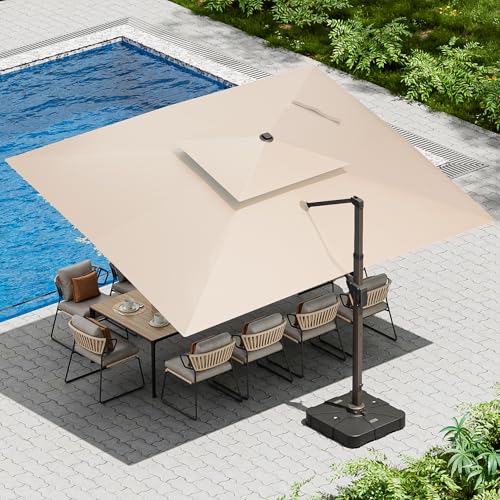
10 x 13 Rectangular Cantilever Patio Umbrella: The Complete Buyer's Guide
Everything you need to know about sizing, frames, canopies, bases, and wind strategy before choosing a large rectangular offset umbrella for your outdoor space.
START EXPLORINGPatioFocus Philosophy: A 10 x 13 rectangular cantilever umbrella is a significant outdoor investment. This guide breaks down the specs that actually matter — canopy coverage, frame grade, base stability, and tilt mechanics — so you can choose with confidence.
Why Choose a 10 x 13 Rectangular Cantilever Umbrella?
A 10 x 13 rectangular cantilever patio umbrella solves a specific problem: shading a wide, long outdoor area without a center pole cutting through the middle. The side-mounted mast and offset canopy free up the space beneath, making this format ideal for long dining tables, sectional seating arrangements, and poolside loungers. Compared with round umbrellas of similar span, the rectangular canopy distributes shade more efficiently over rectangular furniture footprints, reducing wasted coverage at the corners.
The 10 x 13 size sits firmly in the large-canopy category. It is best suited to spacious patios, decks, and pool decks where the umbrella can be positioned without crowding walkways. Because the canopy is expansive, frame strength, rib reinforcement, and base weight become even more important than on smaller models. This guide walks through each of those factors in detail.
Sizing and Coverage: What a 10 x 13 Canopy Really Shades
A 10 x 13 canopy provides roughly 130 square feet of coverage when fully open. In practical terms, that footprint comfortably shades a long rectangular dining table with seating on all sides, or a pair of chaise lounges with room to spare. The shape also works well beside a seating group where you want shade to extend over a sofa and coffee table without the mast interrupting conversation.
Placement matters as much as raw dimensions. Position the base so the canopy extends over the furniture rather than over open walkways. Allow clearance for the tilt range — a cantilever umbrella rotates and tilts, and the canopy sweeps through an arc as it moves. Check that the canopy will not collide with walls, pergola posts, or low-hanging branches when rotated. If your space is tighter, a smaller offset model may fit better; explore options like the 10 ft outdoor cantilever hanging patio umbrella for more compact footprints.
For dining layouts specifically, the rectangular canopy pairs naturally with long tables. If you are still planning your dining arrangement, our guides on a 10 person outdoor dining table with umbrella and a 10 person outdoor dining table and chairs can help you match table dimensions to canopy coverage.
Frame Materials and Construction Grades
The frame determines how the umbrella performs over time. Cantilever frames are typically built from aluminum, steel, or a combination. Aluminum resists rust and keeps the umbrella lighter to operate, while steel offers stiffness at the cost of weight and corrosion risk if the finish is compromised. Look for powder-coated finishes and stainless hardware on any model you consider, especially in coastal or humid climates.
Rib count and rib thickness matter on a canopy this large. More ribs distribute wind load across the canopy more evenly, reducing stress at the joints. Reinforced hubs, welded corner plates, and double-walled mast sections are hallmarks of sturdier builds. In tier terms, entry-level models often use lighter tubing and fewer ribs, mid-range models add reinforced joints and smoother crank mechanisms, and premium and commercial-grade models typically feature heavy-duty frames with professional-grade hardware designed for hospitality use.
If you want to compare frame approaches across sizes, our overview of the 10 ft cantilever umbrella with weighted base discusses base-and-frame integration, and the 11 ft cantilever umbrella with LED lights guide covers lighting-integrated frames.
Canopy Fabrics: Performance and Longevity
Canopy fabric on a 10 x 13 umbrella takes constant sun exposure, so UV resistance and colorfastness are critical. Solution-dyed fabrics hold color longer than surface-dyed alternatives because the pigment runs through the fibers. Look for fabrics described as fade-resistant and water-repellent, with reinforced stress points at the rib pockets. Venting — a wind vent or double vent at the top — allows hot air to escape and reduces lift during gusts, which is especially important on a canopy this wide.
Fabric weight and weave tightness affect both durability and shade density. A tighter weave blocks more light and offers better privacy from neighboring properties. If your priority is evening ambiance as well, models with integrated lighting are worth considering; our guide to the 10 ft cantilever umbrella with solar lights explains how solar panels integrate with the canopy structure.
Base Types and Stability Requirements
Base stability is the single most overlooked factor in cantilever umbrella ownership. A 10 x 13 canopy behaves like a sail, and the offset mast creates leverage that multiplies wind force at the base. Manufacturers specify minimum base weights for each model, and those specifications are not suggestions. Common base designs include fillable plates (filled with sand or water), solid steel or concrete plates, and cross-foot bases that can be bolted to the patio.
For a canopy this large, expect to need a base in the heavy-duty range. Some models ship with a base included; others require a separate purchase. Confirm compatibility before buying, and check whether your patio surface can accommodate anchoring hardware if you plan to bolt the base down. For context on base integration on a slightly smaller canopy, see the 10 ft cantilever umbrella with weighted base guide. If you prefer a complete umbrella-and-base package, the 10 ft round offset umbrella and base overview explains what bundled setups typically include.
Tilt and Rotation Mechanics
Cantilever umbrellas earn their keep through adjustability. Most models offer crank-operated height adjustment and a tilt range that lets you angle the canopy toward the sun as it moves across the sky. Rotation around the mast lets you reposition shade without moving the base. On a large canopy, smooth mechanisms matter more because the canopy is heavier — look for geared cranks, locking tilt joints, and rotation collars that engage firmly without wobble.
Entry-level models may offer limited tilt positions or stiffer cranks, while mid-range and premium tiers typically deliver smoother multi-position tilt and full rotation. Test the mechanisms in person if possible, or read owner reviews that specifically mention crank smoothness and joint play after a season of use.
Wind Strategy: Living With a Large Canopy
No cantilever umbrella should be left open in a storm, regardless of tier. The practical wind strategy is simple: open the umbrella when you are using it, close and secure it when you are not, and during gusty days keep it in the lowest, most vertical position. Venting helps, but it does not replace common sense. If your location is routinely windy, prioritize models with reinforced ribs, heavier frames, and bases that can be anchored.
Placement also plays a defensive role. Position the umbrella so prevailing winds hit the canopy edge-on rather than broadside where possible, and keep the base away from deck edges where a toppled umbrella could fall to a lower level. A storage cover protects both canopy and frame during off-season months.
Maintenance and Seasonal Care
Routine care extends the life of any outdoor umbrella. Clean the canopy with mild soap and water, rinse well, and let it dry completely before closing to prevent mildew. Wipe down the frame and lubricate crank and tilt mechanisms according to the manufacturer's schedule. Inspect ribs, welds, and fabric pockets for wear at the start of each season. Touch up scratches on powder-coated frames promptly to prevent corrosion from spreading.
During winter or extended disuse, remove the canopy if the model allows it and store it in a breathable cover. Store the base plates securely and check anchoring hardware before the next season. For umbrella care alongside broader patio maintenance, browse our outdoor care section.
Matching Your Umbrella to Your Space
The right 10 x 13 rectangular cantilever umbrella depends on three variables: the furniture footprint you need to shade, the wind exposure of your site, and your tolerance for operating a heavier canopy. If your priority is long dining coverage, pair the umbrella with a rectangular table sized to the canopy. If your priority is lounging shade by a pool, confirm the base can be placed on a stable, level surface away from water runoff.
If you are comparing offset formats, our guides to the 10 ft patio offset cantilever umbrella with solar lights and the 10 ft cantilever umbrella with weighted base cover smaller and differently equipped alternatives. For larger canopies with lighting, the 11 ft cantilever umbrella with LED lights and 12 ft cantilever umbrella with LED lights pages explore the next size steps up.
Comparison at a Glance
| Tier | Frame Build | Best For | Mechanism Feel |
|---|---|---|---|
| Entry-level | Lighter aluminum tubing, basic joints | Sheltered patios, occasional use | Basic crank, fewer tilt positions |
| Mid-range | Reinforced aluminum, more ribs | Family patios, regular seasonal use | Smoother crank, multi-position tilt |
| Premium | Heavy-duty frame, welded joints | Exposed sites, frequent use | Geared rotation, firm locking tilt |
| Commercial-grade | Professional-grade hardware, stainless fasteners | Hospitality and high-wind locations | Heavy-duty mechanisms, serviceable parts |
Frequently Asked Questions
What is the difference between a cantilever umbrella and a center-pole umbrella?
A cantilever umbrella mounts its pole on the side and suspends the canopy overhead, leaving the area beneath completely free of obstructions. A center-pole umbrella places the mast in the middle of the table, which limits seating and table space.
How much wind can a 10 x 13 cantilever umbrella handle?
Wind tolerance depends on frame grade, canopy venting, and base weight. Mid-range models generally handle light breezes with the umbrella closed or in a low-tilt position, while high-end tier and commercial-grade models with reinforced ribs and heavy bases withstand stronger gusts. Always close and secure the canopy during storms.
What base weight is recommended for a 10 x 13 cantilever umbrella?
A canopy this large acts like a sail, so manufacturers typically recommend a base in the heavy-duty range, often using fillable plates or solid plates. Follow the manufacturer's specified minimum base weight for your model, and consider anchoring plates to the patio surface for additional stability.
Can a 10 x 13 rectangular cantilever umbrella cover a dining table?
Yes. The rectangular shape is designed to shade long dining tables and seating rows. A 10 x 13 canopy generally suits large dining arrangements, such as an eight- to ten-person table, when positioned so the canopy extends over the seating area without tilting into walkways.
How do I maintain a cantilever umbrella?
Clean the canopy with mild soap and water, rinse thoroughly, and allow it to dry fully before closing. Lubricate the crank and tilt mechanisms periodically, inspect ribs and welds for wear, and store the umbrella in a cover during off-season months. Touch up any scratches on the frame to prevent corrosion.