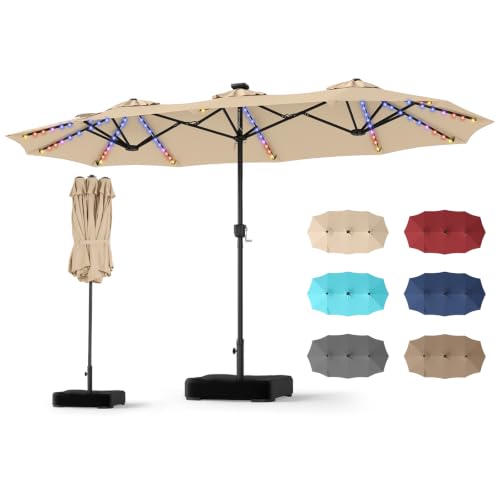
13 Foot Patio Umbrella With Solar Lights: The Complete Buying Guide
Everything you need to know about choosing a large solar-powered patio umbrella. Compare canopy materials, lighting systems, frame designs, and stability options before you buy.
START READINGWhy this guide matters: A 13 foot patio umbrella is a serious shade investment. It covers a large dining or lounge area, and when you add solar lighting, it also becomes the centerpiece of your evening outdoor space. This guide walks you through every decision point so you can choose the right umbrella with confidence.
Why a 13 Foot Solar Umbrella Deserves a Place on Your Patio
A 13 foot patio umbrella sits in the large-format category. It is significantly bigger than the common 9 or 10 foot models, which means it delivers shade coverage that can genuinely transform how you use your backyard. For homeowners with a spacious deck, a long dining table, or a deep lounge zone, this size class solves a problem that smaller umbrellas simply cannot.
The solar lighting component adds a second layer of usefulness. Instead of packing up when the sun goes down, you can keep the conversation going under soft LED light powered by a panel mounted on top of the canopy. No cords, no outdoor outlets, and no need to run extension cables across the patio.
If you are still comparing umbrella sizes, our guide to the 10 ft cantilever umbrella with solar lights is a useful reference point for how coverage scales. Moving up to 13 feet is a meaningful jump in shaded square footage, and it changes what kind of base and placement you need.
Understanding Shade Coverage and Placement
The first thing to get right is where the shade will actually fall. A 13 foot canopy provides a wide circle of protection, but the angle of the sun throughout the day shifts that circle. Center-pole umbrellas cast shade directly beneath and slightly around the pole, while offset and cantilever designs can push the canopy over a seating area that the pole cannot occupy.
Consider your table. A large rectangular dining table for eight to ten people pairs well with a 13 foot umbrella because the canopy extends past the table edges. If your table has an umbrella hole, measure the hole diameter and confirm the umbrella pole fits. For tables without a hole, a cantilever or offset model is the better match.
Wind exposure is the other half of placement. A 13 foot canopy acts like a sail. Position the umbrella where it has some natural windbreak, and avoid leaving it open during gusts. If your patio is on an open corner, plan for a heavier base and a model with a vented canopy to reduce lift.
Key Features to Evaluate Before You Buy
Not all 13 foot solar umbrellas are built to the same standard. The differences show up in the frame, the fabric, the lighting system, and the mechanism. Here is what to look at, feature by feature.
Canopy Fabric and UV Resistance
The canopy is the largest surface area and the first thing to wear out. Solution-dyed fabrics hold color and UV resistance longer than surface-dyed alternatives. Look for a canopy rated for UPF 50+ protection and described as fade-resistant. A vented top improves airflow and reduces wind lift, which matters more at this size than on smaller umbrellas.
Canopy shape also affects coverage. Round canopies distribute shade evenly, while rectangular canopies align better with long dining tables. If your seating is long and narrow, a rectangular canopy often makes more efficient use of the shade.
Solar Lighting System
The solar lights are the feature that sets this category apart. Pay attention to where the panel is mounted, how the battery is stored, and how the LEDs are arranged. Rib-mounted LED strips spread light across the underside of the canopy, while a central hub light concentrates illumination over the table.
Battery capacity determines how long the lights run after sunset. Mid-range models typically deliver several hours of evening light from a full day of sun. Premium models add dimming, color temperature control, and a USB charging option for cloudy stretches. The panel itself should be positioned to catch direct sun without being shaded by the canopy.
Frame Material and Build Quality
Aluminum frames resist rust and keep weight manageable. Powder-coated steel is strong but heavier and requires more attention to finish integrity. High-grade aluminum with a reinforced hub and ribs is the sweet spot for large canopies because it balances strength and portability. Check the rib count as well. More ribs generally mean better canopy support and a more even stretch across a 13 foot span.
Opening, Tilting, and Rotation Mechanism
A crank system is standard, but the quality of the crank and the smoothness of the tilt mechanism separate entry-level from premium builds. Cantilever models often add a foot pedal or hand crank for rotation, letting you track the sun without moving the base. Test the mechanism mentally against your daily routine. If you will open and close the umbrella every day, a smooth crank and a reliable tilt lock are worth prioritizing.
Base and Stability
This is where large umbrellas demand respect. A 13 foot canopy needs a substantial base. Center-pole models typically call for a base filled with sand or water, and the filled weight should meet or exceed the manufacturer's recommendation. Cantilever and offset models need even more counterweight because the canopy hangs away from the support.
If you are comparing offset designs, our breakdown of a 10 ft cantilever umbrella with weighted base shows how base weight and canopy size interact. Scaling that logic up to 13 feet means taking the base requirement seriously from day one.
Comparing Umbrella Tiers at a Glance
Use this tier comparison to match features to your priorities. The tiers describe relative market position and build quality, not absolute figures.
| Tier | Frame & Canopy | Solar Lighting | Mechanism | Best For |
|---|---|---|---|---|
| Entry-level | Steel or basic aluminum frame, standard polyester canopy | Single-mode LED strip, basic panel | Manual crank, limited tilt | Occasional use, covered patios |
| Mid-range | Powder-coated aluminum, solution-dyed canopy with vent | Multi-mode LEDs, larger panel, longer battery life | Smooth crank, reliable tilt lock | Daily use, family dining areas |
| Premium | High-grade aluminum, reinforced ribs, fade-resistant fabric | Dimmable LEDs, color temperature control, USB backup | Crank plus rotation, precision tilt | Full-sun exposure, entertaining-focused patios |
| Luxury / commercial-grade | Heavy-duty aluminum, commercial fabric rating | High-lumen system with smart controls | Powered or assisted opening, full rotation | Large estates, hospitality settings |
Center-Pole vs Cantilever: Which 13 Foot Design Fits Your Space
Center-pole umbrellas are the classic choice. The pole runs through the middle of the table or stands beside the seating, and the canopy opens symmetrically. They are straightforward to set up and typically need a heavy base directly beneath the pole. The trade-off is that the pole occupies the center of the table, which can complicate seating and serving.
Cantilever and offset umbrellas move the pole to the side and suspend the canopy over the seating area. This frees up the table surface and allows shade to reach places a center pole cannot. The trade-off is a larger footprint at the base and a greater need for counterweight. If you have a long dining table and want uninterrupted table space, a cantilever design is often the better fit.
For a sense of how cantilever designs handle solar lighting and large canopies, our look at the 10 ft patio offset cantilever umbrella with solar lights is a useful comparison. The 13 foot version amplifies both the benefits and the stability requirements.
Setup, Season Care, and Long-Term Maintenance
Getting a 13 foot umbrella set up correctly the first time saves headaches later. Assemble the frame on a flat surface, attach the canopy before raising the umbrella, and confirm the base is filled and positioned before opening the canopy fully. If the model has a rotation feature, test it before the canopy is under load.
Seasonal care keeps the solar system working. Clean the panel regularly so charging stays efficient. Inspect the battery compartment for moisture before and after the rainy season. Lubricate the crank and tilt joints annually. When the off-season arrives, remove the canopy if your climate brings heavy snow or severe storms, and store the solar panel and battery indoors.
If you are planning a full outdoor dining zone around the umbrella, our guide to a 10 person outdoor dining table with umbrella shows how table size and umbrella placement work together. A 13 foot canopy pairs naturally with a table in that size range.
Common Mistakes to Avoid
- Underestimating the base requirement. A 13 foot canopy needs more counterweight than most homeowners expect. Check the recommended filled weight and meet it.
- Ignoring wind exposure. A vented canopy helps, but the umbrella should still be closed during strong gusts. Do not leave it open unattended in windy conditions.
- Placing the solar panel in shade. The panel needs direct sun to charge the battery. Position the umbrella so the panel is not blocked by the canopy or nearby structures.
- Skipping the canopy measurement. Measure your table and seating area before ordering. A 13 foot canopy is generous, but it still needs to fit the space without crowding walkways.
- Neglecting seasonal storage. The solar components are the most weather-sensitive parts. Protect them during the off-season to extend the umbrella's useful life.
Ready to Compare 13 Foot Solar Umbrella Options?
Browse our curated selection of large solar-powered patio umbrellas and compare canopy styles, lighting features, and frame designs side by side.
VIEW RECOMMENDED PRODUCTSFrequently Asked Questions
What makes a 13 foot patio umbrella with solar lights different from a standard umbrella?
A 13 foot patio umbrella with solar lights combines an extra-large canopy for wide shade coverage with integrated solar-powered LED lights built into the ribs or canopy. This dual-purpose design means you get daytime sun protection and evening ambiance without running extension cords or replacing batteries frequently.
How much shade does a 13 foot patio umbrella actually provide?
A 13 foot umbrella typically covers a circular area roughly 130 square feet when fully open, depending on canopy shape. That is enough to shade a large outdoor dining table with six to eight chairs, or a broad lounge arrangement. Offset and cantilever designs can shift the canopy to cover seating areas that a center-pole umbrella cannot reach.
Are solar lights on a patio umbrella bright enough for evening use?
Solar LED strips on patio umbrellas are designed for ambiance and task lighting rather than floodlight-level brightness. Mid-range and premium models typically offer multiple brightness settings and warm-to-cool color options. For reading or dining after dark, look for models with higher lumen output and a rechargeable battery that stores enough solar charge for four to six hours of continuous use.
What type of base does a 13 foot umbrella need for stability?
A 13 foot umbrella has a large wind sail area, so stability is critical. Center-pole models usually require a heavy base filled with sand or water, often in the 100 to 200 pound range when filled. Cantilever and offset umbrellas need even more counterweight because the canopy extends away from the pole. Always check the manufacturer's recommended minimum base weight and use a cover or store the umbrella during high winds.
Can I leave a solar patio umbrella outside all year?
Most solar patio umbrellas are weather-resistant but not fully weatherproof. The solar panel and battery are the most vulnerable components. In mild climates, a high-end tier umbrella with a rust-proof aluminum frame and solution-dyed canopy can stay out year-round with occasional cleaning. In regions with heavy snow, freezing temperatures, or severe storms, remove the canopy and store the solar panel indoors to protect the battery and wiring.
How do I clean and maintain a 13 foot solar umbrella?
Clean the canopy with mild soap and water, then rinse thoroughly and let it dry fully before closing. Wipe the solar panel with a soft damp cloth to keep charging efficiency high. Inspect the LED wiring and battery compartment seasonally for moisture or corrosion. Lubricate the crank and tilt mechanism annually, and store the umbrella closed and covered during off-season months to extend its lifespan.