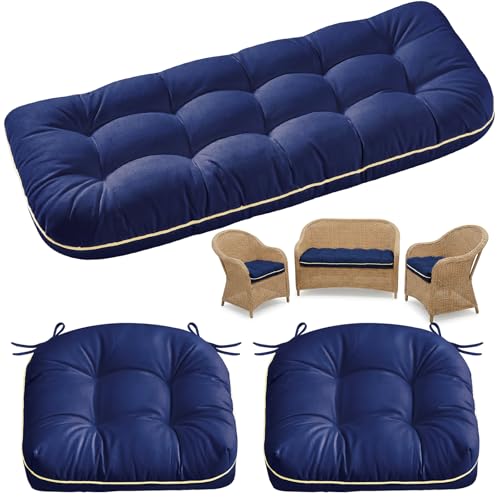
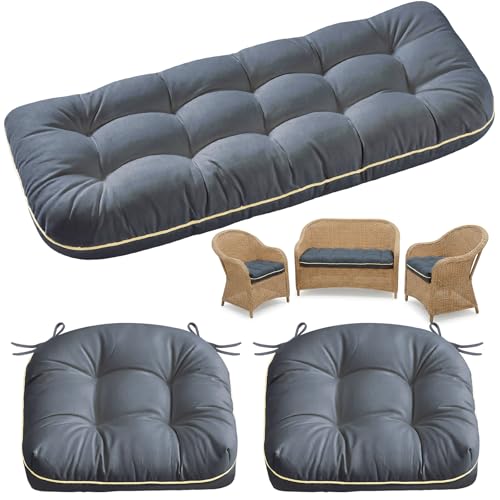
3 Piece Cushion Set for Wicker Furniture: The Complete Buyer's Guide
Everything you need to know before choosing replacement or upgrade cushions for your wicker chairs, loveseat, or three-seat sofa — sizing, fill, fabric, fit, and long-term care.
Explore Recommended SetsWhy this guide matters: A 3 piece cushion set for wicker furniture is one of the most common replacement purchases in outdoor living, yet it is also one of the most frequently returned. The reason is almost never quality — it is fit. Wicker frames vary wildly in seat depth, curvature, and arm clearance. This guide walks you through the measurements, materials, and construction details that separate a set that looks right from a set that actually stays in place and holds its shape season after season.
What Exactly Is a 3 Piece Cushion Set for Wicker Furniture?
The term "3 piece cushion set" is used loosely across the market, and that ambiguity causes most buying mistakes. In practice, it refers to one of two configurations. The first is a two-chair-plus-loveseat bundle, where each of three seating positions receives one seat cushion. The second is a three-seat sofa set, where a single wicker sofa is divided into three individual seat pads rather than one long bench cushion. Some sets add back cushions on top of the three seat pieces, while others are strictly seat-only.
If you are replacing cushions on an existing set, count the actual seating positions before you shop. A wicker conversation set with two chairs and one loveseat needs three seat cushions — but if the loveseat is wide enough for two adults, you may need a four-piece configuration instead. If your wicker sofa is a single continuous bench, a three-piece set will create visible seams where the individual pads meet, which is a design choice rather than a defect.
For homeowners upgrading a full seating group, it often makes sense to coordinate cushion purchases with the broader frame. If you are also refreshing the table and shade, browse our guides on a 3 piece patio set and a 3 piece wicker patio set to keep proportions consistent across the whole arrangement.
The Three Components Explained
Seat Cushions
The load-bearing layer. These take the most wear, so prioritize foam density and a removable, washable cover over decorative stitching. Thickness of 3 to 4 inches suits most wicker seats; deeper frames can take 5 inches without crowding the arms.
Back Cushions
Not always included. Wicker backs are often curved or woven in a fan pattern, so back cushions need a contoured or tapered shape to sit flush. Loose fiber fill feels plush but needs daily fluffing; foam-backed backs hold their silhouette better.
Tie-Backs & Grippers
The detail that decides whether the set stays put. Fabric ties anchor to the wicker frame; silicone grip dots or a textured underside prevent creeping on smooth resin wicker. On sloped seats, a rear strap is more effective than front ties alone.
How to Measure Wicker Furniture for a 3 Piece Cushion Set
Measure the seat platform, not the outer frame. Wicker frames flare outward, so a tape run along the outside of the arms will overstate the cushion size by several inches. Follow this sequence for each seating position:
- Seat width: measure seam to seam at the widest usable point, inside the arms.
- Seat depth: measure from the front edge of the seat to the base of the backrest, following the slope if the seat is angled.
- Thickness clearance: measure the vertical gap between the seat platform and the lowest point of the arm or back rail. Subtract half an inch for compression.
- Curvature: for rounded wicker chairs, measure both the straight chord across the back and the arc along the front edge. A rectangular cushion will bow on a curved seat.
- Tie anchor points: note where the wicker frame has crossbars or legs that a tie can wrap around.
Write the three sets of measurements down side by side. It is common for the two chairs to match while the loveseat differs by an inch or two in depth. A set sold as a matched trio assumes identical seats, so verify before ordering. If your measurements diverge significantly, consider pairing a standard set with individual pieces from a 3 piece cushion set for outdoor furniture range that offers per-piece sizing.
Quick Fit Check Before You Order
Lay a tape measure across your wicker seat and compare it to the listed cushion dimensions — but also check the diagonal. On curved wicker seats, a cushion that matches width and depth can still overhang at the corners. If the diagonal of your seat is shorter than the diagonal of the cushion, the corners will curl upward. When in doubt, size down by one inch rather than up.
Filling Types: What Determines Comfort and Lifespan
The fill inside a cushion determines how it feels on day one and how it looks in year three. Four fill families dominate the market, and each suits a different tier of use.
| Tier | Fill Type | Best For | Trade-Off |
|---|---|---|---|
| Entry-level | Standard polyurethane foam | Covered porches, light seasonal use | Compresses noticeably within a season of daily sitting |
| Mid-range | High-resilience (HR) foam | Primary family seating, uncovered patios | Firmer initial feel; benefits from a fiber wrap |
| Premium | Quick-dry reticulated foam | Humid climates, poolside, frequent rain exposure | Higher cost tier; slightly less plush without a wrap |
| Luxury | Wrapped HR foam core with fiber or gel layer | High-end wicker sets, daily lounging | Heavier; requires more careful cover maintenance |
For most households, mid-range HR foam is the sweet spot. It holds shape through a full season, resists the sagging that plagues entry-level sets, and does not carry the premium-tier cost of quick-dry reticulated foam unless you genuinely leave cushions out in the rain. If your wicker furniture sits under a pergola or on a covered porch, standard foam with a good cover performs adequately — but expect to replace it sooner than an HR set.
Back cushions follow a different logic. Fiber fill feels softer and recovers with a shake, while foam-backed backs keep a cleaner line. A common premium configuration pairs an HR foam seat with a fiber-wrapped back, giving support where weight lands and softness where you lean.
Fabric Choices for Wicker Cushions
Solution-Dyed Acrylic
The benchmark for outdoor cushions. Color is locked into the fiber, so UV fade is minimal over multiple seasons. Resists mildew when allowed to drain and dry. Typically found in premium and luxury tiers.
Olefin
Strong, lightweight, and naturally water-resistant. Common in mid-range sets. Holds color well but can pill under heavy abrasion. A solid choice for family seating on covered patios.
Polyester Blends
Soft hand-feel and broad color range at entry-level and mid-range tiers. Less UV-stable than acrylic, so expect gradual fading if left in direct sun. Best for shaded or seasonal setups.
Indoor Upholstery Fabrics
Cotton and linen blends feel premium but absorb water and mildew quickly. Suitable only for screened porches or indoor wicker. Avoid on uncovered patios regardless of tier.
Two fabric features deserve specific attention. First, cover removability: zippered covers that can be machine-washed on a gentle cycle dramatically extend cushion life. Second, seam sealing: stitched seams without a welded or taped backing let water wick into the foam core. On premium sets, look for bar-tacked stress points and a water-repellent backing layer behind the seams.
Color choice interacts with heat as well as style. Dark cushion fabrics absorb more solar heat and can feel uncomfortably warm on bare legs, while light neutrals stay cooler and hide dust less well. A mid-tone taupe or sage is a practical compromise for wicker frames in natural, espresso, or gray resin weaves.
Matching Cushions to Wicker Weave Color
Natural and honey-toned wicker pairs cleanly with cream, sand, and soft green cushions. Espresso and dark brown resin wicker benefits from contrast — off-white, light gray, or muted teal — because tonal browns blend into the frame and flatten the silhouette. Gray resin wicker is the most flexible and accepts both cool and warm palettes. If you plan to add shade or lighting later, pick a cushion tone that will not clash with a future umbrella canopy; our guide to a 10 ft cantilever umbrella with weighted base covers how canopy colors read against common patio palettes.
Attachment Systems: Keeping Three Pieces in Place
A three-piece set has three independent opportunities to slide. The attachment method matters more than most buyers expect, particularly on resin wicker, which has a smoother surface than natural rattan.
- Rear tie-backs: the most reliable option. Ties loop around the wicker back frame and hold the cushion against the backrest, preventing forward creep when you stand up.
- Corner ties: effective on chairs with exposed frame corners, less so on fully woven arms.
- Silicone grip dots: a low-profile underside pattern that adds friction without visible straps. Works well on flat seat platforms, less so on sloped or curved seats.
- Elastic bands: quick to install and remove, but degrade faster in UV exposure than fabric ties.
- Hook-and-loop strips: strong hold on flat surfaces, but the adhesive backing can fail on textured wicker if not applied to a smooth insert panel.
For a three-seat sofa configuration, check that each of the three pads has its own attachment point. Sets that rely on a single long strap across all three pieces tend to bunch at the seams and are difficult to re-align after washing.
Indoor vs. Outdoor Wicker: Same Set, Different Rules
Wicker furniture spans both environments, and the cushion requirements diverge sharply. Indoor wicker — often natural rattan or tightly woven synthetic — tolerates cotton and linen covers, standard foam, and decorative trims that would degrade outdoors. Outdoor wicker needs UV-stable fabric, drainage-friendly foam, and mildew-resistant thread.
If your wicker sits on a screened porch, you can split the difference: an outdoor-rated set gives durability without sacrificing comfort, and it survives occasional rain when a screen is left open. If the furniture is fully exposed, quick-dry foam and solution-dyed acrylic are not optional upgrades — they are the baseline for a set that lasts more than two seasons. Homeowners furnishing a small balcony often pair compact wicker seating with a 3 piece patio set for small space to keep the footprint controlled while still gaining full cushion support.
Care and Maintenance That Extends Cushion Life
Even a premium set will fail early without basic care. The routine is simple but must be consistent:
- Brush off debris weekly. Wicker weave traps pollen and leaf litter, which hold moisture against the cushion underside.
- Stand cushions upright after rain. Water drains from the edges; leaving cushions flat traps moisture in the core.
- Wash covers seasonally. Remove covers, machine-wash on gentle with a mild detergent, and air-dry fully before refitting. Never tumble-dry outdoor fabric.
- Store or cover in off-season. A breathable cover beats a fully sealed tarp, which traps condensation. For winter, bring cushions indoors if storage space allows.
- Rotate seating positions. On a three-piece set, swap the two chair cushions periodically so wear distributes evenly across all three pieces.
Spot-clean spills promptly with a damp cloth and mild soap. Avoid bleach on solution-dyed acrylic, which can weaken the fiber over repeated exposure. If mildew appears, a diluted white vinegar solution followed by full sun drying is usually sufficient; persistent mildew inside the foam core means the cushion should be replaced rather than treated.
When to Replace Rather Than Refresh
If the foam core has lost more than roughly a third of its original loft, or if the cover fabric has become brittle at the seams, replacement is more sensible than cleaning. Compressed foam cannot be restored by fluffing, and brittle seams fail shortly after washing. Cushions are consumable components of wicker furniture — planning a replacement cycle every few seasons is normal, not a sign of poor quality.
Common Buying Mistakes to Avoid
- Measuring the outer frame instead of the seat. The single most common cause of returns. Measure inside the arms and account for backrest slope.
- Assuming three pieces means three chairs. Confirm whether the set is two chairs plus loveseat, or three sofa pads.
- Ignoring thickness clearance. A 5-inch cushion in a 4-inch gap pushes the backrest forward and makes the chair uncomfortable.
- Choosing indoor fabric for an exposed patio. Fading and mildew appear within one wet season.
- Skipping attachment hardware. A set without ties or grippers will need re-seating every time someone stands up.
- Overlooking cover removability. Non-removable covers cannot be properly cleaned and shorten the set's usable life.
Cross-checking against related configurations helps calibrate expectations. A 4 piece wicker patio set with cushions typically includes a fourth seating position or a table, and comparing its cushion specification sheet with a three-piece set reveals how manufacturers scale foam density and fabric weight across a collection.
Ready to Compare Real Sets?
Use the measurement checklist above, then review the recommended 3 piece cushion sets below — filtered for wicker compatibility, outdoor-rated fabric, and secure attachment.
View Recommended OptionsFrequently Asked Questions
What is included in a 3 piece cushion set for wicker furniture?
A typical set includes one seat cushion for each of two chairs and one for a loveseat, or three seat pads for a three-seat wicker sofa. Some sets add back cushions; others are seat-only. Confirm the component count and dimensions before ordering.
How do I measure wicker furniture for a 3 piece cushion set?
Measure seat width and depth seam to seam at the widest usable point, inside the arms — not the outer frame. Check vertical clearance between the seat platform and the lowest arm or back rail, and note any curvature on rounded wicker chairs.
Can 3 piece cushion sets be used on both indoor and outdoor wicker furniture?
Yes, but check the fabric rating. Indoor-only sets use lighter fabrics that fade and mildew outdoors. Outdoor-rated solution-dyed acrylic or olefin covers work in both environments; indoor wicker tolerates standard foam and softer covers.
How do I keep wicker furniture cushions from sliding?
Choose cushions with rear tie-backs, silicone grip dots, or a textured underside. On curved or sloped seats, a cushion with a contoured back edge grips better than a flat rectangle. A gripper pad between cushion and platform adds friction.
What filling is best for a 3 piece wicker cushion set?
Quick-dry polyurethane foam is standard for outdoor sets. High-resilience foam holds shape longest in daily use. A wrapped HR foam core with a fiber layer balances support and softness; entry-level standard foam compresses faster.