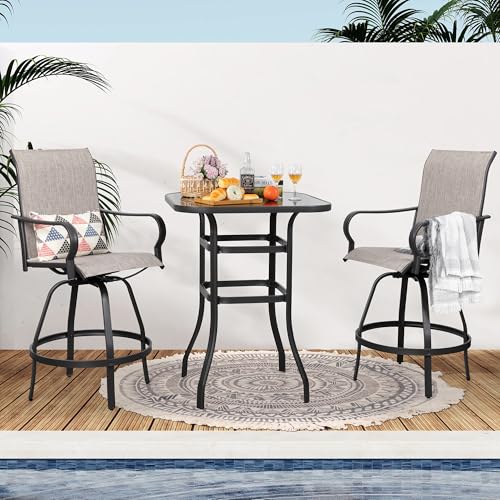
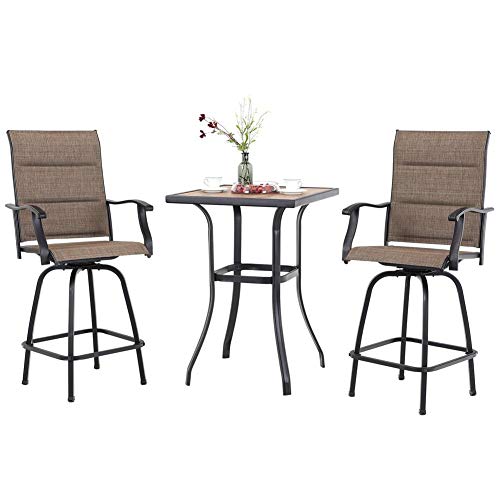
3 Piece Outdoor Bistro Set Bar Height: The Complete Buying Guide
Everything you need to know about high-top bistro sets — sizing, materials, stability, and styling — so you can choose with confidence for balconies, patios, and decks.
START WITH THE VERDICTWhy bar height? A 3 piece outdoor bistro set bar height brings dining up to eye level with standing guests, frees up valuable floor space, and turns even a narrow balcony into a social spot. This guide walks you through the measurements, materials, and safety details that matter most before you commit.
What Exactly Is a 3 Piece Bar Height Bistro Set?
A three-piece bistro set is the classic compact outdoor dining trio: one table and two chairs or stools. When that set is built at bar height, the tabletop rises to roughly 40 to 42 inches, and the seats follow to about 28 to 30 inches. That elevation changes both the feel and the function of the set.
Compared with standard dining height — where tables sit around 28 to 30 inches — a high-top bistro set behaves more like a pub table. It works beautifully as a standing conversation hub, a morning coffee perch, or a two-person al fresco dinner spot. The compact footprint is the real draw: a bar height bistro set can fit on a balcony or a tight patio corner where a full dining set simply would not go.
If your space is larger and you want a fuller setup, our 3 piece bistro set outdoor guide covers standard-height options. But for narrow balconies, small decks, and standing social setups, bar height is often the smarter pick.
Bar Height Sizing: The Numbers That Actually Matter
Getting the proportions right is the single most important step. A table that is too tall for its seats causes shoulder strain; a table that is too short makes the chairs feel cramped. Use this reference to sanity-check any set you are considering.
| Element | Typical Bar Height Range | Why It Matters |
|---|---|---|
| Tabletop height | 40–42 inches | Keeps food and drinks at a comfortable reach for seated guests |
| Seat height | 28–30 inches | Leaves roughly 10–12 inches of clearance below the tabletop |
| Table diameter (round) | 24–32 inches | Fits two place settings without crowding the balcony |
| Tabletop footprint (square) | 24–30 inches per side | Square tops offer slightly more usable surface at the corners |
| Footrest height | 8–12 inches above floor | Essential for comfort and posture on taller seats |
The 10 to 12 inch gap between seat and tabletop is the golden rule. If a set lists a 30-inch seat with a 39-inch table, that is workable. A 30-inch seat with a 36-inch table will feel tight and is worth avoiding.
Also measure your space before buying. A round 28-inch table with two chairs typically needs a clearance circle of about 5 to 6 feet to allow chairs to pull out comfortably. On a narrow balcony, consider placing the set against a railing so only one side needs pull-out room.
Materials: Which High-Top Bistro Set Holds Up Best?
Bar height furniture carries more leverage than standard-height pieces, so material choice affects both durability and stability. Here is how the common options compare.
Powder-Coated Aluminum
Lightweight, rust-resistant, and easy to move. A solid choice for balconies where weight limits or repositioning matter. Look for a reinforced frame and a thick powder coating for UV resistance.
High-Grade Steel
Heavier and very stable in wind, ideal for exposed decks. Requires a rust-proof finish and occasional care at welds. Best when the set will stay in one place.
Teak & Acacia Wood
Naturally weather-resistant when sealed. Teak is the premium hardwood pick; acacia is a strong mid-range alternative. Re-oil annually to keep the finish and prevent cracking.
Resin Wicker over Metal
Balances a softer, more decorative look with a sturdy metal core. Check that the weave is UV-stabilized and tightly wrapped at stress points like armrests and legs.
Whatever material you choose, prioritize weather-resistant coatings and a rust-proof finish on any metal hardware. For high-top models specifically, a heavier base or a wider leg stance matters more than it does at dining height — that extra center of gravity needs managing.
Stability and Safety: The Bar Height Difference
Taller furniture naturally has a higher center of gravity, so stability deserves a closer look. These are the details that separate a confident, safe set from one that wobbles every time someone leans forward.
- Wide-set legs or a pedestal base. The footprint should feel planted, not tippy. A table with a lower crossbar or stretcher adds rigidity.
- Footrests on every chair. Bar height seats without a footrest are uncomfortable and encourage awkward postures. A sturdy footring also helps distribute weight.
- Weighted bases on swivel chairs. If you choose a 3 piece outdoor bistro set with swivel chairs, confirm the base is wide and heavy enough to resist tipping.
- Anchor or stow in high wind. On exposed decks, move the set to a sheltered corner or use furniture anchors during storms.
- Check the weight rating. Bar stools and chairs should be rated for the adults who will use them, with a margin of safety.
Quick test: Once assembled, gently press down on one corner of the table and rock it. If there is noticeable flex or lift at the opposite leg, the set is too light or needs leveling. A stable high-top set should feel solid with minimal movement.
Why Bar Height Shines in Small Spaces
If your outdoor area is a balcony, a narrow side patio, or a compact city deck, a bar height bistro set is often the most efficient dining solution available. The vertical design concentrates the footprint while keeping the top surface usable.
Round tops suit tight corners because there are no sharp edges to navigate. Square tops squeeze slightly more usable surface into a given footprint, which helps if you want to set down plates, drinks, and a small centerpiece. Either way, two chairs tuck in neatly, and the set can sit against a wall or railing without blocking walkways.
For a broader look at compact outdoor layouts, pair this guide with our resources on small patios and balcony arrangements. The same principles apply: measure the pull-out zone, favor round or square over rectangular, and keep the chair count at two for everyday use.
Shade and Umbrella Considerations
Many compact bar height bistro tables skip the umbrella hole to keep the top clean and the footprint small. If shade is a priority for your morning coffee or afternoon reading, decide early whether you need a table with a pre-drilled hole.
If your chosen set does not include an umbrella hole, a freestanding cantilever umbrella positioned beside the table is the cleanest solution. It shades the set without adding weight to the tabletop and can be angled as the sun moves. If you do choose a table with a hole, pair it with a slim market umbrella and a weighted base.
This is also a good moment to think about the overall comfort of the spot. Shade, a small side table, and good lighting turn a functional bistro set into a space you actually use every day.
Styling Your High-Top Bistro Set
A bar height bistro set is small, so styling should stay deliberate rather than busy. A few well-chosen accents do more than a crowded arrangement.
- Keep the tabletop light. A small tray, a candle, or a single potted plant is plenty. Leave room for actual plates and glasses.
- Add texture at the base. A weather-resistant outdoor rug defines the zone and grounds the set visually, especially on hard surfaces like concrete or tile.
- Mix heights for interest. If space allows, a tall planter or a slim side table beside the set creates a layered look without eating floor space.
- Choose cushions that suit the tier. For entry-level resin sets, simple outdoor cushions protect the seats and add color. Premium aluminum frames pair well with tailored, quick-dry cushions.
Stick to a consistent palette — two or three colors is usually enough for a small set. A neutral frame with one or two accent cushions tends to look intentional and calm.
Bar Height vs. Counter Height vs. Standard Height
Bar height is not the only tall option. Counter height sits a few inches lower and suits people who prefer a slightly gentler climb into the seat. Standard height is the most relaxed for long meals. Here is how the three compare so you can pick the right one for your space and habits.
| Category | Typical Table Height | Best For |
|---|---|---|
| Standard height | 28–30 inches | Long meals, relaxed seating, larger patios |
| Counter height | 34–36 inches | Everyday casual use, gentler seat height |
| Bar height | 40–42 inches | Standing socializing, small balconies, pub-style feel |
A useful rule of thumb: if you plan to eat full meals at the set regularly, standard or counter height is more comfortable for long sittings. If the set is mainly for coffee, drinks, and conversation, bar height is hard to beat.
Pre-Purchase Checklist
Run through this list before you commit. It takes five minutes and saves a lot of second-guessing later.
- Measure the available footprint and the chair pull-out zone.
- Confirm the tabletop is 40–42 inches and seats are 28–30 inches.
- Check that every chair has a footrest or footring.
- Verify the frame material and its weather-resistant finish.
- Confirm the set arrives with clear assembly instructions and all hardware.
- Decide whether you need an umbrella hole or a freestanding shade option.
- Check the weight rating per seat if the set will be used by taller or heavier adults.
- Look for a warranty that covers frame and finish separately.
The Verdict: Who Should Buy a 3 Piece Bar Height Bistro Set?
A three-piece bar height bistro set is the right call if you have a compact balcony, a small patio, or a deck where you want to socialize standing or seated without dedicating floor space to a full dining table. It suits coffee mornings, evening drinks, and casual two-person meals.
It is less ideal if you regularly host long, seated dinners or need a full four-person dining setup. In those cases, a standard-height dining set or a larger outdoor dining table is a better fit. But for small-space living and social, pub-style setups, a well-built bar height bistro set is a long-term investment that earns its place every day.
The key is proportion and build quality: confirm the seat-to-table gap, choose a stable frame, and match the material to your climate. Get those three right, and the set will serve you for years.