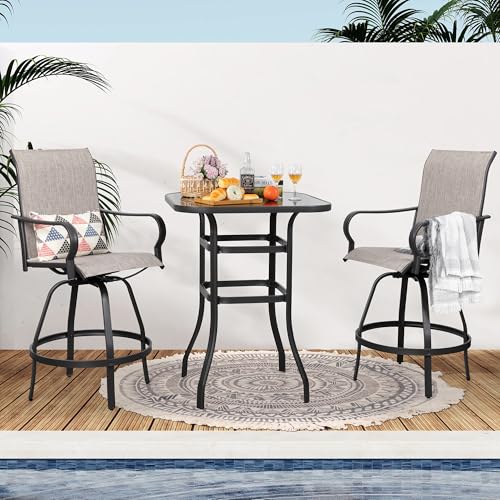
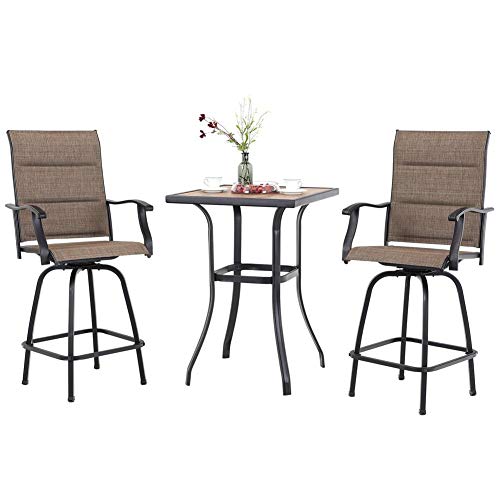
3 Piece Patio Bar Height Bistro Set: The Complete Guide
Everything you need to know before choosing a high-top bar height bistro set — seating dimensions, materials, space planning, and feature comparisons for confident outdoor entertaining.
Why this guide matters: A 3 piece patio bar height bistro set is one of the most efficient ways to add elevated seating to a small patio, balcony, or kitchen courtyard. It pairs two high chairs with a compact high-top table, creating a casual dining or cocktail spot without the footprint of a full dining set. This guide walks through the practical details — seat heights, table proportions, frame materials, cushion choices, and layout planning — so you can evaluate options with confidence and select a set that fits both your space and your lifestyle.
What Defines a Bar Height Bistro Set?
A 3 piece bar height bistro set typically includes one high-top table and two matching chairs or stools designed for elevated seating. The defining characteristic is the seating height: bar height seats usually measure around 28 to 30 inches from floor to seat, while the coordinating table stands roughly 40 to 42 inches tall. This is noticeably taller than standard dining height, which sits closer to 18 inches for the seat and 30 inches for the table, and also taller than counter height sets, which generally land near 24 to 26 inches for the seat and 36 inches for the table.
The compact three-piece configuration — two seats plus one table — makes this format especially well suited to balconies, side patios, breakfast nooks, and transitional spaces between indoor and outdoor living. Because the set is vertically oriented rather than horizontally expansive, it preserves walkway clearance while still giving two people a comfortable place to share a drink, a light meal, or a morning coffee.
Best Suited For
Balconies, small patios, courtyards, poolside corners, and covered porches where floor area is limited but a dedicated seating moment is desired.
Also Known As
High-top bistro set, outdoor bar set for two, pub height patio set, or elevated balcony bistro set — naming varies, but the two-seat plus high table format stays consistent.
Seat Height, Table Height, and Proportions
Getting the height relationship right is the single most important decision when shopping for a bar height bistro set. If the seat-to-table differential is off, guests will either hunch forward or reach awkwardly upward. As a general rule, the tabletop should sit roughly 10 to 12 inches above the seat surface for comfortable arm and hand positioning.
| Category | Typical Seat Height | Typical Table Height | Best For |
|---|---|---|---|
| Standard Dining Height | ~18 inches | ~30 inches | Full meals, families, traditional patio dining |
| Counter Height | ~24–26 inches | ~36 inches | Transitional seating, casual breakfasts |
| Bar Height | ~28–30 inches | ~40–42 inches | Cocktail hours, small-space entertaining, elevated views |
Beyond vertical measurements, pay attention to the tabletop diameter. Most 3 piece bar height bistro tables fall in the 24 to 32 inch range across. A 28 to 30 inch round top comfortably holds two place settings, a small centerpiece, and a shared pitcher or bottle. Square and rectangular high-top tables can work in narrow spaces because they align flush against walls, but round tops generally feel more forgiving in tight circulation areas.
Material Comparison for Outdoor Use
The material of the frame determines how the set will age, how much maintenance it needs, and how well it handles seasonal weather. Each category below uses consistent tier descriptors so you can compare positioning across the market.
| Material | Market Tier | Weather Resistance | Maintenance Level | Best For |
|---|---|---|---|---|
| Powder-Coated Aluminum | Mid-range to premium | Excellent — rust-resistant finish | Low | Coastal areas, year-round exposure |
| High-Grade Steel | Entry-level to mid-range | Good with proper coating | Moderate — check for chips | Covered patios, sheltered decks |
| Resin Wicker / Rattan | Mid-tier to high-end tier | Very good — UV-treated weave | Low to moderate | Warm aesthetic, poolside settings |
| Teak or Acacia Wood | Premium to luxury | Good with seasonal sealing | Moderate to high | Covered porches, design-forward spaces |
| Cast Aluminum | High-end tier to flagship tier | Excellent — heavy-duty construction | Low | Windy locations, long-term investment |
Aluminum: The Practical Workhorse
Powder-coated aluminum is the most common frame material for bar height bistro sets because it balances weight, durability, and weather resistance. It will not rust through the way untreated steel can, and the coating protects against UV fading. Mid-range aluminum sets typically use lighter tubing, while premium and commercial-grade options use thicker gauge frames and reinforced joints. If the set will live outdoors year-round, aluminum is a sensible default.
Wicker and Rattan: Warmth Without the Weight
Resin wicker wrapped over a metal frame gives a bar height bistro set a softer, more residential look. Modern resin weaves are UV-stabilized and designed to resist fading, cracking, and moisture absorption. The weave can trap dust in the crevices, so occasional rinsing and a soft brush keep it looking fresh. For a coordinated aesthetic, pair the set with a woven or textured outdoor rug to ground the seating zone.
Wood: Character With Maintenance
Teak and acacia bring natural grain and a premium feel. Teak is the more weather-tolerant of the two, developing a silver patina over time if left untreated, while acacia tends to require more frequent sealing to prevent cracking and moisture damage. Wood sets are best suited to covered porches or sheltered patios where they are not exposed to constant rain and direct sun. A weatherproof cover during the off-season will protect the finish.
Key Features to Evaluate
Once the height and material are settled, the remaining decisions are about how the set functions day to day. The features below separate a basic set from one that feels well-specified for its class.
- Swivel chairs: A swivel mechanism lets guests turn toward each other or toward a view without pushing the chair back, which is especially useful on a narrow balcony. Models with a smooth swivel and a return spring feel more polished than basic rotating seats.
- Footrests and footrings: At bar height, feet need somewhere to rest. A built-in footrest on the chair or a footring around the table base dramatically improves comfort during longer conversations.
- Umbrella hole: If the set will sit in direct sun, a table with a pre-drilled umbrella hole gives you the option to add shade later. This is a small feature that has outsized value on exposed patios.
- Cushions and ties: Seat cushions with tie-downs stay put in wind. Look for quick-dry foam and solution-dyed fabric if the set will be exposed to rain or pool splash.
- Stackability or foldability: Folding chairs and nesting tables make it easy to clear the space for storage or for other uses during the off-season.
- Adjustable leveling feet: Slightly uneven patio surfaces are common. Leveling glides prevent wobble and protect both the frame and the flooring.
Space Planning and Layout
A 3 piece bar height bistro set is compact, but it still needs breathing room. The table itself may only occupy a couple of feet of floor space, yet guests need clearance to pull chairs out and stand up.
- Measure the footprint. Add the table diameter plus at least 24 inches on each side for chair pull-out. For a 30 inch round table, plan for a roughly 78 inch wide zone in the seating direction.
- Check the walkway. Keep at least 36 inches of clearance between the set and any railing, wall, or door so people can pass through without squeezing.
- Consider the view. Bar height seating elevates the sightline, which is a genuine advantage on a balcony facing a garden, street, or water feature. Position the set to take advantage of that raised perspective.
- Anchor the zone. An outdoor rug beneath the set helps define the seating area and prevents chairs from scraping the floor. Choose a low-pile, weather-resistant rug that can handle moisture.
- Layer the light. String lights or a small lantern overhead extends the set's usable hours into the evening. Keep cords and heat sources clear of the table and chairs.
Comfort and Safety Considerations
High seating changes the way people interact with a space, and a few practical details make the difference between a set that gets used daily and one that gets avoided.
First, check the stability of the chair base. Bar height chairs have a higher center of gravity, so a wider base or a splayed leg design distributes weight more safely. Second, confirm the weight capacity rating if the set will host a range of guests. Third, look at the seat depth and back height — a slightly contoured back and a seat depth of around 16 to 18 inches supports posture better than a flat stool. Finally, if the set is on a balcony, verify that the railing height and local building guidance allow for elevated seating near the edge; some jurisdictions have specific rules for balcony furniture.
Cushions, Fabric, and Long-Term Care
Many bar height bistro sets ship with bare seats, while others include cushions. If you are adding cushions separately, prioritize quick-dry foam and solution-dyed acrylic or polyester fabric. These materials resist fading and mildew better than standard upholstery. Tie-down straps or hook-and-loop fasteners keep cushions in place during breezy afternoons.
For long-term care, rinse frames with mild soap and water, dry them with a soft cloth, and inspect joints and welds at the start of each season. Touching up small chips in powder coating early prevents corrosion from spreading. Wood frames should be resealed annually, and wicker should be brushed out to remove debris from the weave. A fitted cover during extended wet or cold periods is a worthwhile investment for any outdoor set.
Quick Buying Checklist
- Confirm seat height is in the bar range (roughly 28–30 inches) and the table is 40–42 inches tall.
- Verify the tabletop diameter fits your space after accounting for chair pull-out.
- Choose a frame material that matches your climate and maintenance preference.
- Check for footrests, swivel mechanisms, and leveling feet.
- Decide whether an umbrella hole is needed for shade options.
- Confirm cushions are quick-dry and tie down securely if included.
- Review the weight capacity and base stability of the chairs.
- Plan storage or a cover for the off-season.
Related Reading
If you are still narrowing down the format, these related guides can help you compare adjacent options. For a slightly lower seating profile, explore the bar height three-piece bistro set overview. If you want the same compact footprint with swivel seating, see the three-piece bistro set with swivel chairs. For a taller table profile, review the outdoor high-top bistro set, and for a broader look at the category, start with the outdoor three-piece bistro set guide. If shade is a priority, the patio set with umbrella hole comparison is a useful next step.
Frequently Asked Questions
What is the standard seat height for a bar height bistro set?
Bar height seating typically measures around 28 to 30 inches from floor to seat, paired with tables roughly 40 to 42 inches tall. This is taller than counter height, which sits closer to 24 to 26 inches for the seat and 36 inches for the table. Always confirm the specific measurements of a set before buying to ensure comfortable legroom and a natural reach to the tabletop.
How much outdoor space do I need for a 3 piece bar height bistro set?
A typical 3 piece bar height bistro set needs a footprint of roughly 30 to 36 inches in diameter for the table plus clearance for chairs to pull out. Plan for at least 24 to 30 inches of open space around the set so guests can sit and stand comfortably. A balcony or small patio of about 5 by 5 feet can usually accommodate a compact round set.
Which materials work best for an outdoor bar height bistro set?
Powder-coated aluminum and high-grade steel offer durable construction with rust-resistant finishes for year-round exposure. Wicker and rattan over a metal frame provide a warmer look with good weather resistance. Teak and acacia are premium wood options that age gracefully when maintained. Match the material to your climate: coastal areas favor aluminum and resin wicker, while covered porches can support wood with regular sealing.
Can a 3 piece bar height bistro set stay outside in winter?
Many aluminum and resin wicker sets are designed for year-round outdoor use, but cushions should be brought inside or stored in a dry container during extended cold or wet periods. Wood sets benefit from a protective cover and seasonal sealing. If your region experiences heavy snow or freezing temperatures, a weatherproof cover and, where possible, sheltered storage will extend the life of the set.
Ready to Compare Bar Height Bistro Sets?
Use the checklist above to shortlist sets that match your space, climate, and seating preferences. Then browse our recommended options below to compare features side by side and find the set that fits your patio.