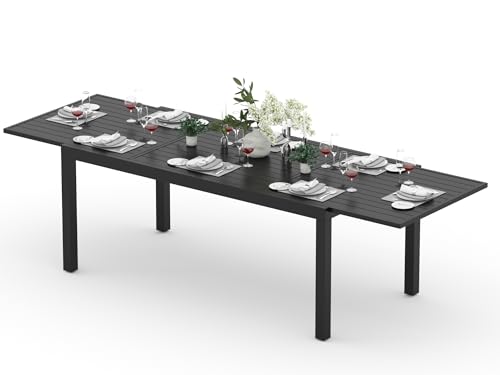
Aluminum Outdoor Dining Table with Umbrella Hole: The Complete Buying Guide
Everything you need to know before choosing a weather-resistant aluminum patio table with a built-in umbrella hole—materials, finishes, sizing, stability, and smart features explained.
Why this guide matters: If you are researching an aluminum outdoor dining table with an umbrella hole, you have likely narrowed your search to a specific product type and now need confidence in the details. This guide walks you through the engineering behind aluminum patio tables, how umbrella holes work, what separates quality tiers, and which features genuinely improve daily use. By the end, you will understand exactly what to look for so you can evaluate any listing with a trained eye and move forward with a purchase decision you will not regret.
What Is an Aluminum Outdoor Dining Table with Umbrella Hole?
An aluminum outdoor dining table with umbrella hole is a patio dining table constructed primarily from aluminum—either cast aluminum, extruded aluminum, or tubular aluminum—with a pre-drilled opening in the center of the tabletop. This hole allows a patio umbrella pole to pass through the table and anchor into a base beneath, providing overhead shade directly above the dining area without the footprint of a freestanding umbrella stand.
This design solves a common outdoor dining problem: without shade, a metal or glass tabletop can become uncomfortable during peak sun hours. By integrating the umbrella directly into the table, the shade stays centered over the food and seating, and the table itself often includes a stabilizing mechanism or collar around the hole to reduce umbrella wobble. For a broader look at how these tables fit into complete outdoor setups, explore our aluminum outdoor dining set with umbrella hole overview.
Why Aluminum Is the Preferred Material for Patio Dining Tables
Aluminum has become the dominant material in outdoor dining furniture for good reasons. Understanding these advantages helps you evaluate listings and distinguish genuine quality from marketing language.
Natural Corrosion Resistance
Aluminum forms a protective oxide layer when exposed to air, making it inherently resistant to rust. Unlike steel or iron, it does not require painting to prevent corrosion, though powder coating adds further protection against scratches and UV damage.
Lightweight Yet Strong
Aluminum weighs roughly one-third as much as steel, making it far easier to move, rearrange, and store. Quality frames use thicker gauge metal or reinforced welds to maintain structural rigidity while keeping weight manageable for one or two people.
Low Maintenance
A simple wipe-down with mild soap and water is usually sufficient. There is no need for annual sealing, staining, or oiling as with wood. Powder-coated finishes resist staining from food, drinks, and sunscreen.
Design Versatility
Aluminum can be cast into ornate patterns, extruded into clean modern profiles, or formed into slat and mesh designs. This allows manufacturers to produce everything from traditional lattice styles to minimalist contemporary tables.
Advantages and Limitations to Weigh
Strengths
- Excellent weather resistance in rain, humidity, and coastal air
- Lightweight construction simplifies moving and storage
- Powder-coated finishes available in a wide range of colors
- Does not rot, warp, crack, or attract insects
- Integrated umbrella hole keeps shade centered
- Minimal maintenance requirements
- Recyclable material with long service life
Considerations
- Can feel hot to the touch in direct sun without a shade or cover
- Lighter weight may shift in strong wind without anchoring
- Lower-tier models may use thin-gauge metal that dents
- Cast aluminum can develop surface pitting if finish is damaged
- Umbrella hole requires a compatible pole diameter and base
- Some designs prioritize aesthetics over heavy-duty stability
Understanding the Umbrella Hole: Sizing, Placement, and Stability
The umbrella hole is a defining feature of this table category, and the details matter more than most buyers realize. Here is what to evaluate:
- Hole diameter: Most tables use a standard opening between 1.5 and 2 inches. Confirm this measurement against your umbrella pole diameter; many tables include a reducer ring for smaller poles.
- Center placement: The hole should be perfectly centered so the umbrella canopy shades the table evenly. Off-center holes are rare but can indicate a design compromise.
- Collar and grommet: A metal or plastic collar around the hole protects the tabletop edge and helps stabilize the pole. Look for a collar that is firmly seated, not loosely fitted.
- Drainage: Some tables include a slight recess or drainage channel around the hole to prevent water pooling on the tabletop during rain.
- Base compatibility: The table itself does not anchor the umbrella—you still need a weighted base beneath the table or a through-table umbrella base system. Check that the table's understructure allows clearance for a base.
- Umbrella size match: A table measuring 60 inches across typically pairs well with an umbrella canopy in the 9-foot range. Undersized canopies leave diners in the sun; oversized canopies can overwhelm the table visually.
For readers considering a complete set rather than a standalone table, our guide to the 9-piece outdoor dining set with umbrella hole explains how tables, chairs, and umbrellas are typically bundled.
Quality Tiers: How Aluminum Dining Tables Compare
Aluminum dining tables span a wide range of construction quality. Rather than focusing on numerical figures, use this tier framework to position any table you are evaluating relative to the market.
| Tier | Best For | Typical Characteristics |
|---|---|---|
| Entry-level | Occasional use, covered patios, first outdoor furniture purchase | Thinner aluminum gauge, simpler welded or bolted joints, basic powder coating, lighter overall weight |
| Mid-range | Regular family dining, varied weather exposure, multi-season use | Thicker frame profiles, reinforced leg-to-tabletop connections, more consistent powder coating, better umbrella collar design |
| Premium | Frequent entertaining, exposed locations, long-term ownership | Heavy-duty cast or extruded aluminum, precision welds, multi-step finish processes, integrated stability features, refined design details |
| Luxury / commercial-grade | Hospitality settings, high-wind areas, design-forward landscapes | Architectural-grade aluminum, marine-rated finishes, exceptional weight and rigidity, designer collaborations, extended structural warranties |
Within any tier, look for consistent weld quality, smooth finish without drips or thin spots, and a tabletop that does not flex when pressed. A mid-range table with excellent construction often outperforms a premium table with questionable finishing. If you are comparing full sets, our aluminum outdoor dining set guide covers how tier differences play out across tables and chairs together.
Tabletop Options: Slat, Mesh, Glass, and Solid Surface
The tabletop material and design affect appearance, maintenance, and how the umbrella integrates with the table.
Aluminum Slat Top
Individual aluminum slats run across the frame, creating a classic patio look. Slats allow rainwater to drain through gaps, reducing standing water. The umbrella hole is typically framed by a solid ring that ties the slats together. Slat tops are durable and easy to clean with a brush.
Aluminum Mesh Top
A perforated or expanded metal surface offers a modern, industrial aesthetic. Mesh drains water effectively and stays cooler than solid surfaces. However, small items can tip through the openings, and the mesh can be less comfortable for writing or placing glassware directly.
Glass Top with Aluminum Frame
Tempered glass provides a smooth, easy-to-clean surface and a more formal appearance. Glass tops are heavier than bare aluminum and require careful handling. The umbrella hole is usually reinforced with a metal ring. Glass can chip at edges and may show water spots more readily.
Solid Aluminum or Composite Surface
Some premium tables use a solid aluminum sheet or composite panel for a seamless look. These surfaces are sturdy and easy to wipe clean but can become hot in direct sun. The umbrella hole is typically precision-cut and fitted with a protective collar.
Frame Construction: What Separates Durable from Disposable
The frame determines how stable the table feels, how well it handles wind, and how long it lasts. When evaluating an aluminum dining table, pay attention to these construction details:
- Material gauge: Thicker aluminum walls resist denting and flexing. Entry-level tables often use thinner tubing that can bow under weight over time.
- Joint method: Welded joints are stronger and more durable than bolted or riveted connections. Look for smooth, complete welds at leg-to-apron and apron-to-tabletop junctions.
- Leg design: Splayed legs provide a wider footprint for stability. Straight legs with cross-bracing or a lower shelf are also stable and offer storage space.
- Apron reinforcement: A sturdy apron (the frame beneath the tabletop) prevents the top from sagging and distributes weight evenly.
- Feet: Adjustable leveling feet or protective caps help the table sit flat on uneven patio surfaces and prevent scratching.
- Weight distribution: A heavier table is not automatically better, but a table that feels solid and does not shift when bumped is a good sign of proper engineering.
For a deeper look at aluminum furniture as a category, including care and material comparisons, see our aluminum outdoor furniture guide.
Finish and Coating: Protecting the Aluminum
While aluminum resists rust naturally, the finish determines how well it resists scratches, fading, and staining. The most common finish is powder coating—a dry finishing process that creates a hard, durable shell. Quality powder coating should be uniform, free of bubbles or thin patches, and properly cured.
Some premium tables use a multi-step finish with a primer layer and a topcoat, offering better adhesion and UV stability. Clear-coated or anodized aluminum is also available, providing a metallic look with enhanced surface hardness. If the table will be exposed to coastal salt air, prioritize finishes described as marine-grade or salt-resistant. For general care guidance that applies across aluminum furniture, the weatherproofing guide covers protective practices in detail.
Choosing the Right Size and Shape
Table size should be driven by your seating needs and patio dimensions. A common guideline is to allow about 24 inches of table width per diner and at least 36 inches of clearance between the table edge and walls or railings for chair pull-out.
| Table Shape | Best For | Umbrella Considerations |
|---|---|---|
| Rectangular | Long patios, family-style meals, six to eight diners | Center hole works well; ensure umbrella canopy is wide enough to cover the length |
| Round | Compact spaces, four to six diners, conversational seating | Center hole pairs naturally with round or octagonal umbrellas |
| Square | Symmetrical layouts, four diners, small to mid patios | Center hole provides even shade; square umbrellas are an option |
| Oval | Softening rectangular spaces, six diners, curved seating arrangements | Center hole typical; confirm the umbrella canopy shape complements the oval |
If you are furnishing a larger dining area or need seating for a crowd, our 9-piece outdoor dining set guide explores how large tables and chair counts are typically configured.
Pairing the Table with the Right Umbrella
The table's umbrella hole is only half of the shade solution. The umbrella itself determines coverage, adjustability, and wind performance. Consider these factors when pairing an umbrella with your aluminum dining table:
- Canopy span: The umbrella canopy should extend beyond the table edges by at least 12 inches on all sides for effective shade.
- Pole diameter: Confirm the pole fits the table's hole diameter; reducer rings can bridge small gaps but should fit snugly.
- Tilt mechanism: A tilting umbrella lets you angle the canopy as the sun moves, improving shade coverage throughout the day.
- Ventilation: A wind vent at the canopy top reduces wind uplift and improves stability.
- Base weight: The table does not anchor the umbrella. Use a properly weighted base or a through-table base system rated for your umbrella size.
- Fabric quality: Solution-dyed acrylic or polyester fabrics resist fading and mildew better than untreated fabrics.
For a full review of umbrella features and sizes, see our 9-foot patio umbrella with solar lights overview, which covers canopy sizing and integrated lighting.
Maintenance and Care for Long-Term Performance
Aluminum dining tables are among the lowest-maintenance outdoor furniture options, but a few habits extend their service life significantly:
- Wipe the tabletop weekly with mild soap and water; rinse and dry to prevent water spots.
- Avoid abrasive cleaners, steel wool, or scouring pads that can scratch powder coating.
- Clear debris from the umbrella hole and collar regularly to maintain drainage.
- Touch up scratches with matching touch-up paint to prevent moisture intrusion.
- Use a furniture cover during extended periods of non-use or harsh weather.
- Store or cover the table during winter in cold climates to protect the finish.
- Check and tighten any bolts or fasteners at the start of each season.
For seasonal care routines that apply to aluminum furniture, the outdoor care section covers cleaning products, covers, and storage strategies.
Final Buying Checklist
Before finalizing your choice, run through this checklist to ensure the table meets your practical needs:
- Measure your patio and confirm the table size leaves adequate chair clearance.
- Verify the umbrella hole diameter matches your umbrella pole or reducer ring.
- Check the table's weight and whether you can move it alone or with a helper.
- Inspect (or read reviews about) weld quality and frame rigidity.
- Confirm the finish is powder-coated or equivalently protective.
- Consider tabletop material—slat, mesh, glass, or solid—against your maintenance preferences.
- Plan for an umbrella base that fits beneath the table.
- Check whether the table is compatible with the chairs you own or plan to buy.
- Review the warranty and return policy for finish and structural coverage.
Ready to Compare Options?
Our curated selection of aluminum outdoor dining tables with umbrella holes brings together quality-tier models with the features covered in this guide. Browse the recommended products below to find the right fit for your patio.
Explore Recommended TablesFrequently Asked Questions
What is an aluminum outdoor dining table with umbrella hole?
An aluminum outdoor dining table with umbrella hole is a patio dining table built from aluminum, featuring a pre-drilled center hole that accommodates a patio umbrella pole. This design provides shade and comfort for outdoor dining without requiring a separate umbrella base that consumes floor space.
Is aluminum better than wood for an outdoor dining table?
Aluminum offers superior weather resistance, lighter weight, and minimal maintenance compared to wood. It will not rot, warp, or attract termites, and powder-coated finishes resist rust and fading. Wood provides a classic aesthetic but requires regular sealing and care. For humid or coastal climates, aluminum is generally the more practical choice.
What size umbrella hole does an aluminum dining table have?
Most aluminum outdoor dining tables feature a standard 1.5-inch to 2-inch umbrella hole, which fits the majority of patio umbrella poles. Some tables include a reducer ring to accommodate smaller poles. Always verify the hole diameter and pole compatibility before purchasing an umbrella separately.
How do I maintain an aluminum outdoor dining table?
Clean the table regularly with mild soap and water using a soft cloth or sponge. Rinse and dry thoroughly to prevent water spots. For powder-coated surfaces, avoid abrasive cleaners or steel wool. Periodically inspect the umbrella hole and drain for debris, and touch up any scratches with matching touch-up paint to maintain the protective finish.
Can I use any patio umbrella with an aluminum dining table?
Most patio umbrellas with a standard pole diameter will fit, but you should confirm the pole size matches your table's hole diameter. Consider the umbrella's canopy span relative to your table size—the canopy should extend beyond the table edges for effective shade. A tilt mechanism is helpful for adjusting shade throughout the day.