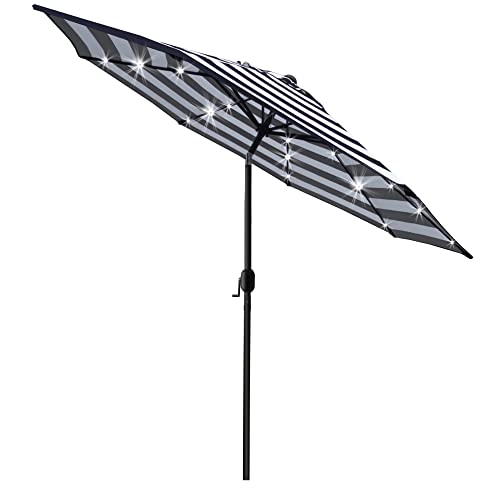
Black and White Patio Umbrella with Solar Lights: The Complete Buying Guide
Everything you need to know about choosing a black and white patio umbrella with built-in solar lighting — from fabric and frame construction to solar panel placement, base stability and evening ambiance.
Why this guide matters: A black and white patio umbrella with solar lights combines two jobs in one product: reliable daytime shade and effortless evening illumination. If you have already decided that this is the umbrella style you want, the remaining questions are usually about fabric quality, frame material, how the solar lighting actually works, and which base keeps everything stable.
This guide walks through each of those decisions in plain language so you can evaluate any listing with confidence and choose a model that fits your patio, your climate and your evening habits.
What Sets a Black and White Solar Umbrella Apart
A black and white patio umbrella with solar lights is more than a striped canopy. The monochrome palette is a deliberate design choice that pairs easily with neutral furniture, and the integrated solar lighting removes the need for separate string lights or lanterns around the seating area. Understanding the three core components helps you compare models on equal terms.
- The canopy: Black and white patterns — stripes, checks, polka dots or solid panels — are usually printed or woven solution-dyed fabric. Pattern alignment and colorfastness matter more than the pattern itself.
- The frame: Aluminum, steel and wood are the common choices. Aluminum resists rust well, steel is heavier and stiffer, and wood suits traditional settings but needs more care.
- The solar lighting system: A small panel on top of the canopy charges a battery during the day, and LED strips or bulbs along the ribs or hub switch on at dusk. The quality of the panel, battery and wiring determines how long the lights last each evening.
If you are still comparing lighting styles, the black and white outdoor umbrella with lights overview covers the broader category, while the patio umbrella with lights guide focuses on models where the lighting is the headline feature. This page concentrates specifically on the solar-powered variant.
Key Criteria When Comparing Models
Most buying mistakes with solar umbrellas come from overlooking one of the following areas. Use these criteria as a checklist when you read product listings.
Fabric and Colorfastness
Look for solution-dyed or acrylic fabric with a stated UV rating. Black panels absorb heat, so breathability and fade resistance are especially important in sunny climates.
Frame Material and Rib Count
More ribs generally mean better canopy support. Aluminum frames resist rust; steel frames are stiffer but heavier. Check for reinforced joints at the hub.
Solar Panel and Battery
A larger panel charges faster on cloudy days. Battery capacity determines runtime. Replaceable batteries are a long-term advantage.
Light Placement
Rib-mounted LED strips cast broad light; hub-mounted bulbs create a focal glow. Some models offer both. Consider whether you want task lighting or ambiance.
Base and Stability
Cross bases need weights; plate bases are heavier out of the box. Cantilever models need a substantial base. Wind exposure should drive this decision.
Opening Mechanism
Crank and tilt systems are the most common. Check whether the tilt direction suits your sun path and whether the crank feels smooth.
Market Tiers at a Glance
Solar umbrellas in this style fall into recognizable tiers. The table below uses universal quality descriptors rather than specific figures, so it stays useful regardless of when you read it.
| Tier | Typical Characteristics | Best For |
|---|---|---|
| Entry-level | Polyester canopy, lighter aluminum frame, basic solar panel and short runtime, simpler base | Occasional evening use, covered patios, first-time buyers |
| Mid-range | Solution-dyed fabric, reinforced ribs, larger panel and replaceable battery, sturdier base options | Daily use, family patios, mixed sun and shade exposure |
| Premium | High-grade acrylic, dense rib structure, efficient panel with longer runtime, smooth crank and tilt, weighted base | Full-season use, windy or exposed locations, design-focused spaces |
| Luxury | Flagship fabrics, commercial-grade frame, refined lighting with multiple modes, premium base and accessories | High-end outdoor living areas, hospitality-style setups |
Within any tier, the lighting system is often the differentiator. A mid-range model with a well-placed panel and a replaceable battery can outperform a premium-looking model with a sealed, non-replaceable unit. If evening light quality is your priority, read the lighting-focused umbrella guide alongside this page.
How the Solar Lighting Actually Works
Solar lighting on patio umbrellas is simple in principle but varies a lot in execution. A photovoltaic panel, usually mounted at the top of the canopy, converts daylight into electricity and stores it in a battery. At dusk, a light sensor or a manual switch activates the LEDs. The practical differences between models come down to four factors.
- Panel placement: Top-of-canopy panels get the most sun but can be shaded by trees or buildings. Panels mounted on the ribs or hub are less exposed but easier to angle.
- Battery type: Lithium-based batteries generally hold charge better and last more cycles than older chemistry. Replaceable batteries extend the useful life of the umbrella.
- LED configuration: Rib-mounted strips provide even, diffuse light across the table. Hub-mounted bulbs create a warmer focal point. Some umbrellas combine both for layered lighting.
- Runtime and modes: Entry-level units may run a few hours per charge. Mid-range and premium models often last most of an evening and may offer brightness settings or a warm/cool color option.
In practice, expect solar lighting to supplement rather than replace dedicated outdoor lighting. It is ideal for dining, conversation and reading at the table, but it will not illuminate a whole yard. Pairing it with path lights or a few coordinated striped cushions and other monochrome accents keeps the look cohesive.
Choosing the Right Black and White Pattern
The pattern you choose affects the visual weight of the umbrella and how easily it fits with existing furniture. A few practical guidelines:
- Stripes: Classic and versatile. Thin stripes read as subtle texture from a distance; wide stripes make a stronger statement and pair well with solid cushions.
- Checks and polka dots: Playful and casual. These patterns work best when the rest of the patio is relatively plain.
- Solid panels with black and white sections: Modern and architectural. These suit contemporary furniture and minimalist layouts.
If your seating already uses bold patterns, a solid-panel or thin-stripe umbrella keeps the space balanced. If your furniture is neutral, a wider stripe or a patterned canopy adds interest without overwhelming the area. Matching the umbrella to existing cushions is the easiest way to create a pulled-together look — the striped outdoor cushions guide covers compatible options.
Base, Stability and Wind Considerations
An umbrella is only as safe as its base. Solar umbrellas are often slightly heavier at the top because of the panel and wiring, so stability deserves extra attention.
- Cross bases: Flexible and easy to move, but they require weight plates or sandbags to stay put in wind. Suitable for sheltered patios.
- Plate bases: Heavier and more stable out of the box. A good choice for open decks and exposed locations.
- Cantilever bases: Needed when the umbrella is offset from the table. These bases are substantial and should be matched to the arm length and canopy size.
If you expect wind, choose a model with a reinforced hub and a base that can be weighted. Some buyers also add a dedicated stand — the patio umbrella with base guide covers base pairing in more detail. For a different mounting approach, the outdoor umbrella with stand overview compares stand styles.
Setup, Placement and Care Tips
Proper placement and a simple care routine extend the life of both the fabric and the solar lighting system.
- Place the panel where it gets direct sun: Even a few hours of direct light each day noticeably improves evening runtime.
- Clean the panel regularly: Dust and pollen reduce charging efficiency. A soft cloth and water are usually enough.
- Close the umbrella in strong wind: Solar umbrellas are not designed to stay open in storms. Use the crank or tilt mechanism as intended.
- Store the battery-friendly way: If you store the umbrella for the off-season, charge the battery fully first and keep it in a dry place.
- Check the fabric seasonally: Spot-clean stains early and re-treat fabric if the manufacturer recommends it.
For broader seasonal routines, the striped outdoor furniture guide includes care notes that apply to matching pieces. If your umbrella uses a rectangular canopy, the rectangular patio umbrella guide covers shape-specific placement advice.
Common Buying Mistakes to Avoid
- Ignoring the panel's exposure: A solar umbrella placed under a tree canopy will underperform. Check the sun path before you commit to a spot.
- Choosing pattern before function: Fabric and frame quality matter more than the stripe width. Start with construction, then choose the pattern.
- Underestimating wind: Lightweight cross bases are fine on sheltered patios but risky on open decks. Match the base to the exposure.
- Assuming all solar lighting is equal: Panel size, battery type and LED placement vary widely. Compare these details, not just the canopy.
- Overlooking replacement parts: Canopy and battery replacements extend the umbrella's life. Check whether the manufacturer offers them.
Frequently Asked Questions
How long do the solar lights last on a full charge?
Runtime depends on panel size, battery capacity and the number of LEDs. Entry-level models may run a few hours, while mid-range and premium models often last most of an evening. Direct sunlight during the day is the biggest factor in real-world performance.
Can the solar lights be replaced if they stop working?
On many mid-range and premium umbrellas, the battery and LED components are replaceable. Entry-level models sometimes seal the electronics into the canopy or hub. Check the product details before buying if long-term serviceability matters to you.
Will a black and white canopy fade in the sun?
Solution-dyed and acrylic fabrics resist fading better than basic polyester. Black panels absorb more heat, so breathability and UV ratings matter. Following the manufacturer's cleaning and storage guidance also helps preserve color.
What base do I need for a solar umbrella?
Choose a base that matches the umbrella's mounting style and your wind exposure. Cross bases need weights, plate bases are heavier by design, and cantilever umbrellas require substantial offset bases. When in doubt, choose the more stable option.
Can I leave the umbrella open overnight?
It is generally better to close the umbrella when it is not in use, especially in wind. Leaving it open overnight exposes the canopy and frame to unnecessary stress and can shorten the life of the solar components.
Ready to Compare Black and White Solar Umbrellas?
Use the checklist in this guide — fabric, frame, panel, battery, light placement and base — to evaluate any model you are considering. The curated selections below show a range of tiers so you can compare like with like.
Explore Top Picks