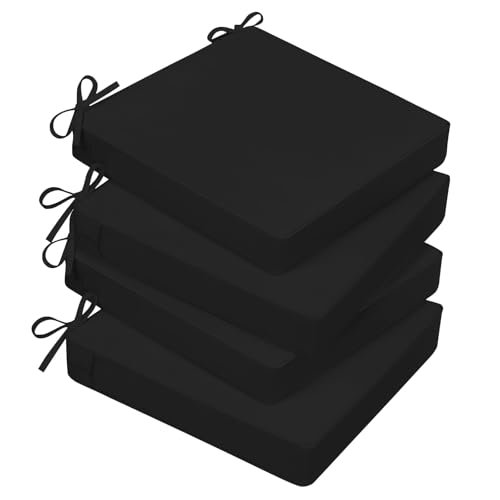
Black Seat Cushions for Outdoor Furniture: The Complete Buyer's Guide
Everything you need to know about choosing, fitting, and caring for black outdoor seat cushions — from fabric performance to thickness, ties, and maintenance.
Why black seat cushions? Black is one of the most practical and versatile choices for outdoor seating. It hides everyday dirt and pollen better than light colors, pairs effortlessly with wood, metal, wicker, and rattan frames, and gives any patio a clean, modern look. This guide walks you through the practical decisions — fabric, fill, thickness, fit, and care — so you can choose black cushions that look great and last through the seasons.
Why Black Cushions Work Well Outdoors
Outdoor cushions take a beating from sun, rain, dust, and daily use. Black fabric has a practical advantage: it masks the small marks, pollen dust, and light stains that would show immediately on cream or pastel cushions. That means fewer deep cleans and a patio that looks tidy with less effort. From a design standpoint, black is a grounding color — it creates contrast against light decking and pale walls, and it makes colorful accessories like throw pillows or rugs stand out.
Black also works as a neutral anchor for nearly any outdoor style. If your frames are dark, black cushions create a seamless, monochromatic look; if your frames are light wood or white metal, black cushions add crisp definition. You can see this contrast in action across our black outdoor furniture collection guide, where cushion pairing is a central design decision.
One honest caveat: black fabric absorbs heat, so cushions in direct afternoon sun can feel warmer than lighter tones. This matters most for dark-colored metal frames that also heat up. In shaded areas, covered porches, or climates with moderate summers, the heat difference is minor.
Fabric Types: What Actually Holds Up Outdoors
The single biggest factor in how long black cushions last is the fabric. Not all "outdoor" fabric is equal, and the shell matters far more than the color.
Solution-Dyed Acrylic
This is the top-tier standard for outdoor cushions. The color is added to the fiber before it is spun, so the dye is part of the thread rather than painted on the surface. That means it resists fading from UV exposure far better than surface-dyed fabrics. Solution-dyed acrylic is also breathable, which helps moisture escape instead of getting trapped inside the foam. It is typically the most durable option and a long-term investment for high-sun patios.
Polyester
Polyester is the most common mid-range option. Modern outdoor polyester blends offer good water resistance and reasonable fade resistance, especially when treated with UV inhibitors. It is softer to the touch than acrylic in many cases, and it holds up well for covered patios and moderate climates. The trade-off: lower-tier polyester may fade or weaken faster under intense, year-round sun than solution-dyed acrylic.
Olefin
Olefin is a durable, moisture-resistant synthetic that resists mildew well and dries quickly. It is a solid mid-tier choice for humid climates and poolside settings. Olefin can feel slightly rougher than acrylic, and its colorfastness is good but not always equal to the best acrylics.
Canvas and Cotton Blends
Natural canvas has a beautiful texture and a classic look, but it absorbs water, dries slowly, and is prone to mildew and fading. Treat canvas as an indoor or covered-porch option only. For exposed patios, it is a poor fit no matter how good it looks on day one.
Pros of Black Outdoor Cushions
- Hides dirt, pollen, and light stains well
- Pairs with virtually any frame material
- Creates high-contrast, modern styling
- Doesn't show yellowing or age marks as quickly
- Neutral base for colorful accessories
Cons to Consider
- Absorbs heat in direct sun
- Can fade to a soft charcoal over many seasons
- Dark color shows light-colored lint and pet hair
- Fabric quality varies widely — the shell matters most
Cushion Fill: Foam, Fiber, and Hybrids
The fill determines comfort, how the cushion holds its shape, and how it behaves when wet.
| Fill Type | Tier | Best For | Notes |
|---|---|---|---|
| High-Density Polyurethane Foam | Essential tier | Firm, structured seating | Holds shape well; look for open-cell foam so water drains |
| Reticulated (Open-Cell) Foam | Mid-tier | Exposed patios and rainy climates | Water passes through instead of pooling; dries faster |
| Polyester Fiber Fill | Starter tier | Soft, plush accent cushions | Comfortable but compresses over time; needs frequent fluffing |
| Foam Core with Fiber Wrap | Premium tier | All-day comfort with structure | Combines support and softness; a balanced upgrade |
| Quick-Dry Foam | High-end tier | Poolside and uncovered patios | Engineered channels move water out fast; ideal for heavy rain exposure |
As a general rule, mid-range and premium cushions use open-cell or quick-dry foam, while entry-level cushions often use standard foam wrapped in a water-repellent shell. If your patio is fully exposed to rain, prioritize the fill as much as the fabric — trapped water is what causes mildew and sagging.
Thickness and Comfort: How Much Cushion Do You Need?
Cushion thickness is a comfort and proportion decision. Common outdoor seat cushion thicknesses fall into a few practical ranges:
- Thin profiles (roughly 1–2 inches): best for dining chairs and bistro sets where you want padding without raising seat height too much.
- Mid profiles (roughly 2–4 inches): the versatile choice for lounge chairs, rocking chairs, and benches — comfortable without feeling bulky.
- Deep profiles (roughly 4–6 inches): suited to deep-seat sofas, sectionals, and chaise lounges where a plush feel is the priority.
Thicker is not automatically better. A very thick cushion on a standard dining chair can make the table feel too high and push your knees into the apron. Measure your seat depth, width, and the height you want before choosing, and account for any slope or curve in the frame. A cushion that is too wide will bunch at the arms; one that is too deep will push you forward off the backrest.
Fit and Attachment: Ties, Straps, and Grippers
Outdoor cushions slide, especially on smooth metal or resin frames and in windy conditions. Attachment details are small but they matter:
- Corner ties: the most common and reliable option. Look for reinforced stitching at the tie attachment points, not just a sewn-on ribbon.
- Back ties or straps: useful on dining chairs and rocking chairs where the cushion meets the backrest.
- Non-slip gripper underside: helpful on bench and sofa seats, and a good backup for frames without tie points.
- Zippered covers: a practical bonus for washing, but check that the zipper is covered by a fabric flap to keep water out.
Measure the seat at its widest and deepest points, and note whether the back of the seat is square or tapered. Many cushion listings include a size guide; use it rather than guessing. If you are outfitting a complete seating set, matching the cushion scale to the frame is easier when you buy as a coordinated set — our guide to black patio chairs covers how cushion proportions affect the overall look.
Matching Black Cushions to Your Furniture
Black cushions are flexible, but the pairing still changes the mood of the space.
Black Frames
Black-on-black is sleek and contemporary. To keep it from looking flat, add texture — a woven throw, a patterned outdoor rug, or lighter wood accents. If you want a softer monochrome look, a charcoal or graphite frame with true black cushions creates subtle depth. See how this plays out in our black wicker patio furniture overview, where dark frames and dark cushions are styled together.
Light Wood and Natural Wicker
Black cushions against honey-toned teak, acacia, or natural rattan create a crisp, high-contrast look. This pairing works especially well on porches and covered patios. It is also very forgiving, since the wood tone softens the visual weight of the dark cushions.
White and Light Metal Frames
Black cushions on white or light grey metal frames give a modern, almost graphic look. It suits minimalist and coastal-modern styles. Keep accessories simple and let the contrast do the work.
Mixed with Other Cushion Colors
Black seat cushions can anchor a scheme where accent pillows or a second seating piece introduce color. For example, black seat cushions with white accent pieces create a clean contrast, as shown in our black outdoor furniture with white cushions ideas. If you prefer warmth, black cushions paired with red or rust accents add energy without losing the practical benefits of a dark base.
Care and Maintenance for Black Cushions
Black cushions are low-maintenance, but a small routine keeps them looking sharp and extends their life.
- Brush off loose dirt and pollen weekly with a soft brush. On black fabric, light-colored dust is the most visible issue, so a quick pass makes a big difference.
- Spot clean with mild soap and water. Avoid harsh bleach or abrasive cleaners, which can dull the fabric finish and weaken fibers over time.
- Rinse and air-dry fully. Stand cushions on edge in the sun so water drains and both sides dry. Never store cushions damp.
- Use covers or store cushions during off-season. Covers reduce UV exposure and keep rain out. Breathable covers are better than fully sealed plastic, which can trap condensation.
- Rotate cushions periodically so wear and sun exposure are distributed evenly.
If your cushions are part of a larger dark-frame setup, our broader outdoor care guides cover weatherproofing, rust prevention, and seasonal storage in more depth.
Common Mistakes to Avoid
- Buying by color alone. The fabric and fill determine longevity; black is only the finish.
- Ignoring seat measurements. A cushion that is slightly too large will bunch and wear at the seams.
- Choosing closed-cell foam for exposed patios. Water pools inside and causes mildew. Choose open-cell or quick-dry fill instead.
- Skipping attachment points. Ties or grippers are what keep cushions in place on windy days.
- Storing cushions damp. Even the best fabric will develop mildew if packed away wet.
- Overlooking the frame. Cushions are only as comfortable as the seat underneath. Check that the frame slats or mesh support the cushion evenly.
Frequently Asked Questions
Do black outdoor cushions get too hot in the sun?
Black fabric does absorb more heat than lighter colors, so cushions in direct afternoon sun will feel warmer. In shaded areas, covered porches, or moderate climates, the difference is small. If your patio gets intense all-day sun, consider a lighter accent pillow on top of black seat cushions, or look for breathable acrylic covers that dissipate heat better.
How do I stop black cushions from fading?
Choose solution-dyed acrylic or UV-treated polyester, which hold color far longer than untreated fabrics. Beyond fabric choice, use breathable furniture covers when the patio is not in use, and rotate cushions so one side does not take all the sun. Fading on quality outdoor fabric is usually a gradual softening to charcoal rather than a patchy color loss.
Can I leave black cushions outside in the rain?
Water-resistant outdoor fabric can handle occasional rain, but standing water and prolonged soaking shorten cushion life. If your patio is uncovered, choose quick-dry or open-cell foam fill and make sure the cover has drainage-friendly construction. Standing cushions on edge after a storm helps them dry fully and prevents mildew.
What is the best cushion thickness for dining chairs versus lounge chairs?
For dining chairs, thin to mid profiles keep the seat at a comfortable height relative to the table. For lounge chairs, rocking chairs, and benches, mid profiles are the versatile sweet spot. Deep profiles suit sofas, sectionals, and chaise lounges where a plush, low-slung feel is the goal. Always check the frame's seat depth before choosing.
How many cushions do I need for a typical patio set?
It depends on the seating. A four-chair dining set needs four seat cushions; a sofa needs one long cushion or two to three seat cushions depending on its width; a bench usually takes one long cushion. Coordinated sets are easier to match in fabric and thickness, and buying together helps ensure consistent color across pieces.
How do I clean black cushions without leaving water spots?
Use a mild soap solution and a soft brush, rinse thoroughly, and dry on edge in the sun. Avoid leaving suds to dry on the surface, which can leave light rings. For spot cleaning, dab rather than scrub, and rinse the whole panel so the cleaned area blends with the rest of the fabric.
Putting It All Together
Choosing black seat cushions for outdoor furniture comes down to four decisions: fabric that suits your sun and rain exposure, a fill that dries properly, a size that fits your frame, and attachment points that keep everything in place. Get those right and the black color works in your favor — hiding daily grime, grounding your design, and letting you spend more time enjoying the patio and less time cleaning it.
If you are still mapping out the full seating arrangement, start with the frame and build outward. Our black outdoor furniture buying guide and patio buying guides cover the broader planning steps, from measuring your space to choosing materials that match your climate.