Cast Aluminum Outdoor Dining Set for 6: The Complete Buyer's Guide
Everything you need to know before choosing a six-seat cast aluminum dining set — construction, finishes, table shapes, care, and how to match a set to your patio.
START WITH THE VERDICTWhy cast aluminum for a six-person outdoor table? If you are researching a dining set for six, you have likely narrowed your options to metal, wood, or wicker. Cast aluminum sits in a sweet spot: it is molded into detailed, ornamental shapes, it resists rust far better than wrought iron or steel, and it stays noticeably lighter than either — a real advantage when you need to move six chairs around a table for cleaning, re-arranging, or seasonal storage. This guide explains what separates a solid set from a weak one, so you can evaluate any listing with confidence.
What Makes Cast Aluminum Different From Other Metals
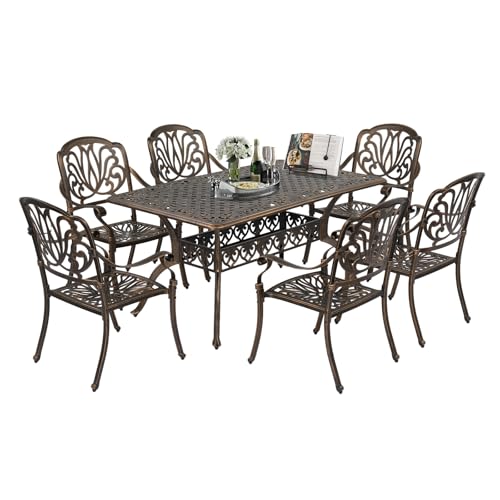
Cast aluminum is produced by pouring molten aluminum into a mold, which allows manufacturers to create intricate scrollwork, lattice patterns, and textured surfaces that would be difficult or impossible to form from tubular metal. That is why cast aluminum sets often look like traditional wrought iron at a fraction of the weight. Compared with tubular aluminum, cast pieces are thicker at stress points and feel more substantial in the hand.
The material's natural oxide layer protects it from rust, so a cast aluminum frame will not corrode the way steel or iron does when exposed to rain and humidity. Most quality sets add a powder-coated finish on top of that for color, UV stability, and scratch resistance. If you are comparing materials broadly, our overview of cast aluminum patio furniture covers how it stacks up against resin, teak, and wicker.
Rust Resistance
Aluminum forms a protective oxide layer naturally. Powder coating adds a second barrier, making cast aluminum one of the most weather-tolerant metals for year-round patios.
Manageable Weight
Lighter than iron or steel, so a six-seat set can be repositioned by one or two people rather than a moving crew.
Ornamental Detail
Casting captures fine scrollwork and texture. You get the look of classic garden furniture without the maintenance burden of iron.
Low Maintenance
Soap, water, and a soft cloth handle most cleaning. No annual oiling or sealing routine is required.
Choosing the Right Table Shape for Six
A six-seat set is defined as much by the table footprint as by the chair count. The two dominant shapes each solve a different problem, and the right answer depends on your patio dimensions and how you entertain.
Round Tables
A round table for six encourages conversation because everyone can see everyone else, and it usually offers more usable elbow room per person than a rectangular table of similar seat count. Round tables work well on square patios and in corner nooks. One caveat: a large round table can be awkward to walk around if your patio is narrow. If you like the round format, our guide to a black round outdoor dining table for six walks through placement and chair pairing.
Rectangular Tables
Rectangular tables suit long, narrow patios and linear layouts along a house wall. They also make it easy to add a centerpiece or serving platters without crowding individual place settings. A common pairing is a cast aluminum table with an umbrella hole so you can add shade without a freestanding base. Our article on a cast aluminum patio table with umbrella hole explains the pole clearance and base considerations.
| Table Shape | Best For | Trade-Off to Consider |
|---|---|---|
| Round, 6 seats | Conversation-driven dining, square patios, corner placement | Needs clearance on all sides; harder to fit along a wall |
| Rectangular, 6 seats | Narrow patios, long decks, buffet-style serving | End seats feel farther from the center; less intimate |
| Oval, 6 seats | Softening hard rectangular patios, mixed layouts | Fewer options on the market; check chair tuck-in depth |
Construction Details That Separate Tiers
Two cast aluminum sets can look similar in a product photo and behave very differently after three seasons outdoors. The differences show up in frame thickness, joint construction, finish quality, and how the chairs are built.
Frame Thickness and Weight
Entry-level cast aluminum sets use thinner castings that can feel light and hollow. Mid-range and premium sets use thicker sections at the arms, legs, and back supports, which translates to less flex when a heavier guest leans back. A well-built six-seat set should feel solid without being immovable.
Joint Construction
Look for welded or reinforced joints rather than pieces held together with visible screws at high-stress points. Welded cast joints resist wobble over time. Bolted assembly is fine for flat-pack convenience, but check that bolts are stainless steel and that the connection points are reinforced.
Finish Quality
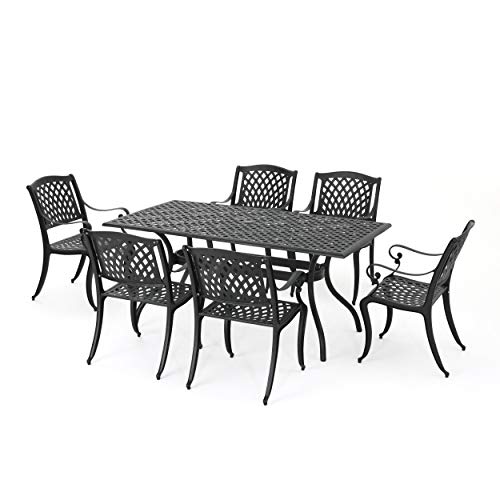
Powder coating is the standard for outdoor metal, and a thicker, evenly applied coat resists chipping better than a thin one. Dark finishes show scratches more readily than lighter tones, which is worth knowing if you are considering a black outdoor furniture look. Whichever color you choose, confirm the finish is described as UV-stable so it will not chalk or fade.
Chair Design
The chairs often determine long-term comfort. Cast aluminum chairs are typically offered in three formats: solid cast seats, slatted seats, and cushion-ready frames. Solid cast seats are the most durable but can feel firm during a long dinner. Slatted seats drain rain well and breathe better in heat. Cushion-ready frames give you the option to add pads, though you should plan to store cushions when not in use. If you are buying chairs separately, our guide to cast aluminum patio chairs covers these formats in more depth.
Market Tiers: How to Read Quality Without Guesswork
Because listings rarely describe build quality in consistent terms, it helps to think in tiers. The descriptors below are relative positions in the market, not absolute judgments — a well-chosen mid-range set can outperform a poorly made premium one.
| Tier | Typical Characteristics | Best For |
|---|---|---|
| Entry-level / starter tier | Thinner castings, simpler patterns, lighter chairs, basic powder coat | Covered patios, seasonal use, first outdoor dining set |
| Mid-range / balanced tier | Thicker frames, welded joints, better finish, more chair styles | Year-round exposure with moderate care; most households |
| Premium / high-end tier | Heavy cast sections, refined detailing, multi-layer finishes, reinforced seats | Full-sun patios, heavy entertaining, long-term investment |
| Luxury / flagship tier | Designer patterns, hand-finished details, commercial-grade construction | Statement patios and hospitality-grade durability |
A practical rule: mid-range models usually offer noticeably smoother joints and more consistent finishes than entry-level sets, while the jump from mid-range to premium is mostly about frame mass and detailing. If your patio is uncovered, the step up to at least mid-range is a sensible long-term investment.
Sizing a Six-Seat Set to Your Patio
The most common post-purchase regret with dining sets is not quality — it is fit. A six-seat table with chairs pulled out for sitting needs substantially more floor area than the table alone.
- Allow roughly 24 to 30 inches of clearance behind each chair so guests can push back and stand without bumping a wall or railing.
- Measure the table's full footprint including chair tuck-in. Chairs that tuck under the table save space when not in use, but guests still need room to sit down.
- Leave a walkway of at least 36 inches between the dining area and doors, grills, or pool edges.
- Check the umbrella arc. If you plan to add shade, the canopy needs clearance above and around the table — our guide to cast aluminum patio furniture covers umbrella-compatible configurations.
If your space is tight, a round table often fits better in a square footprint, while a rectangular table maximizes seating along a wall. For patios on the smaller side, consider whether a four-seat set paired with a bench might serve you better than forcing a six-seat arrangement.
Care and Maintenance for Long-Term Performance
Cast aluminum is forgiving, but a small maintenance routine keeps the finish and the joints in good condition for years.
- Routine cleaning: Wash with mild soap and water using a soft cloth or sponge. Rinse and dry thoroughly, especially around joints and hardware.
- Avoid abrasives: Steel wool and harsh chemical cleaners can dull the powder coat and expose bare metal.
- Touch up chips promptly: A small chip in the coating is an entry point for moisture. A matching touch-up paint keeps the barrier intact.
- Protect hardware: Check bolts and fasteners at the start of each season and tighten as needed. Stainless hardware resists corrosion best.
- Cover or store cushions: Cushions trap moisture against the frame and fade in UV. Bring them inside when not in use.
- Winter care: A fitted cover keeps debris and standing water off the set. Cast aluminum can stay outdoors in winter, but covering it reduces cleaning in spring.
If your set has a table with an umbrella hole, make sure water can drain freely through the hole and that the base does not collect standing water. For a deeper maintenance routine, see our broader guide on weatherproofing outdoor furniture.
Matching a Cast Aluminum Set to Your Patio Style
Cast aluminum is stylistically flexible because it can be molded into both traditional and modern forms. The finish and chair silhouette do most of the work in determining which design language a set fits.
Traditional & Garden
Scrollwork, lattice backs, and antique finishes suit cottage, English garden, and classic patio settings. Pair with neutral cushions and planted borders.
Modern & Minimal
Clean-lined cast frames with simple slat backs work in contemporary spaces. Choose matte finishes and avoid ornate detailing.
Coastal & Breezy
Light finishes, slatted seats, and airy chair backs fit coastal and porch settings. Light-colored cushions reinforce the look.
Rustic & Farmhouse
Textured cast finishes and darker tones pair well with wood decks and natural materials. Add woven accents for warmth.
If you are still deciding on an overall direction, our patio styles section breaks down modern, rustic, coastal, and minimalist approaches with furniture pairings for each.
What to Check Before You Commit
Use this checklist when evaluating any six-seat cast aluminum set, whether you are reading a listing or viewing a floor model.
- Chair count and table capacity: Confirm the table is genuinely sized for six, not a four-seat table with two extra chairs squeezed in.
- Umbrella compatibility: If you want shade, verify the table has an umbrella hole and that the base is sized for the canopy.
- Assembly requirements: Some sets ship fully assembled; others require tools and time. Check what is included.
- Finish warranty: A warranty on the powder coat signals confidence in the finish's durability.
- Chair weight rating: Heavier guests and frequent use stress the frame. Look for reinforced seat construction.
- Return policy: Large furniture returns are costly to ship. Confirm the policy before ordering.
- Delivery access: A six-seat set arrives in multiple boxes. Check that the delivery path to your patio can accommodate them.
If you are comparing across seating counts, our guide to cast aluminum outdoor dining sets for eight explains when a larger table makes more sense, and the broader cast aluminum outdoor dining sets hub covers the full category.
Frequently Asked Questions
Is cast aluminum better than wrought iron for an outdoor dining set?
Cast aluminum is lighter and resists rust far better than wrought iron, while still offering a solid, detailed build. Wrought iron is heavier and prone to rust unless coated, so cast aluminum is generally the more practical choice for year-round outdoor use.
How many people can a 6-seater cast aluminum dining set accommodate?
A standard 6-seater set typically includes a table sized for six place settings, either round or rectangular, paired with six chairs. Round tables usually offer generous elbow room, while rectangular tables suit narrow patios and linear layouts.
Does cast aluminum furniture get hot in direct sun?
Metal surfaces can warm up in direct sunlight, but cast aluminum heats more slowly than steel and cools quickly in shade. Choosing lighter finishes and using cushions or a shade umbrella can keep seating comfortable during peak sun.
How do I maintain a cast aluminum dining set?
Rinse with mild soapy water, wipe with a soft cloth, and dry thoroughly. Avoid abrasive pads and harsh chemicals. Touch up any chips in the powder coating promptly and store cushions indoors when not in use.
Can a cast aluminum dining set stay outside in winter?
Yes, cast aluminum is highly weather-resistant and can remain outdoors in winter. A fitted cover and a quick clean before the cold season help protect the finish and keep the set ready for spring.
The Short Version
A cast aluminum outdoor dining set for six is one of the most practical choices for a patio that sees real use. Prioritize frame thickness, welded joints, and a UV-stable powder coat over ornamental flourishes. Match table shape to your patio footprint, confirm umbrella compatibility if you want shade, and plan a simple seasonal cleaning routine. Do those three things and the set will serve you for years.
EXPLORE RECOMMENDED SETS