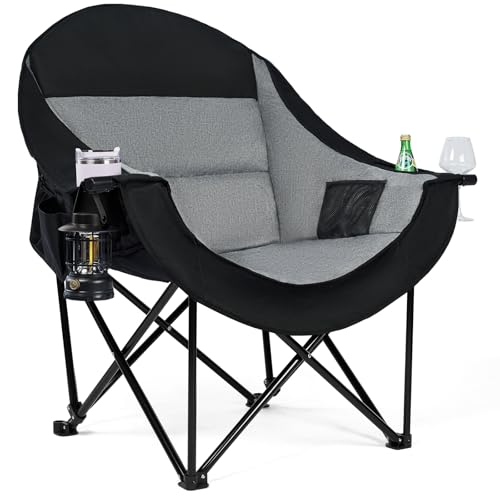
Folding Camping Chair for Heavy Person
A complete buying guide to weight capacity, frame strength, stability, and comfort. Learn exactly what to look for so you can choose a chair that supports you safely and comfortably outdoors.
START READINGWhy this guide matters: Standard camping chairs are often rated for 250 to 300 pounds and use thin-walled tubing that flexes and fatigues over time. If you are a heavier person, a generic chair can feel unstable, sag, or fail at the joints. This guide breaks down the engineering details that actually matter — frame material, wall thickness, weight capacity margin, base geometry, and fabric construction — so you can shop with confidence rather than guesswork.
Why a Standard Camping Chair Falls Short
Most entry-level folding chairs are engineered for occasional use by average-weight adults. When a heavier person sits down, several things happen simultaneously:
- Frame flex: Thin steel or aluminum tubing bends under load, which puts stress on rivets and weld points.
- Joint fatigue: The folding mechanism and cross-braces are the weakest points. Repeated flexing loosens them over time.
- Fabric stretch: Lower-grade polyester or nylon stretches, causing the seat to sag and the user to sink into an awkward posture.
- Narrow base instability: A narrow footprint on soft ground can cause the chair to tip or sink on one side.
A chair designed for a heavy person addresses all four issues with reinforced tubing, thicker wall gauges, wider base geometry, and higher-denier fabric. The difference is not cosmetic — it is structural.
Weight Capacity: The First Number to Check
Weight capacity is the single most important specification, but it is also the most misunderstood. Manufacturers list a maximum rated load, but that figure assumes ideal conditions: flat ground, static sitting, and no dynamic load from plopping down.
For a heavy person, the practical rule is to choose a chair with a rated capacity that exceeds your body weight by a comfortable margin — ideally 50 pounds or more. This margin accounts for dynamic forces, uneven terrain, and long-term material fatigue.
Here is how the market generally tiers out:
| Tier | Typical Rated Capacity | Best For |
|---|---|---|
| Entry-level heavy-duty | 300–350 lbs | Occasional use, lighter heavy adults |
| Mid-range | 350–400 lbs | Regular camping, tailgating, general outdoor use |
| Premium | 400–450 lbs | Frequent use, larger adults, long sitting sessions |
| High-end tier | 450–500 lbs | Heavy adults seeking maximum safety margin |
| Commercial-grade | 500+ lbs | Maximum durability, institutional or heavy daily use |
Always verify the capacity on the manufacturer's label. Some brands overstate capacity; look for chairs with third-party testing or clear load-rating disclosures.
Frame Materials and Construction
High-Grade Steel
Steel is the gold standard for heavy-duty folding chairs. It offers the highest tensile strength and resists bending better than aluminum. The trade-off is weight — a steel chair for a heavy person will be noticeably heavier to carry. Look for powder-coated or rust-proof finishes, especially if the chair will be exposed to moisture.
Reinforced Aluminum
Aircraft-grade aluminum alloys can approach steel-level strength at a fraction of the weight. Premium and high-end tier chairs often use thick-walled aluminum tubing with reinforced gussets at stress points. This is the best choice if portability matters and you are willing to move up in tier.
What to Look For in the Frame
- Wall thickness: Thicker tubing resists flex. Compare gauge specifications where available.
- Cross-bracing: An X-frame or double cross-brace distributes load more evenly than a single hinge.
- Reinforced joints: Welded or bolted gussets at the hinge points prevent the most common failure mode.
- Wide feet: Flat, broad feet or mud pads prevent sinking and improve stability on soft ground.
If you are comparing outdoor seating generally, the same principles apply to durable outdoor chairs designed for permanent patio use.
Comfort Features That Actually Matter
Comfort is not just about padding. For a heavy person, the way a chair distributes weight determines whether you can sit for an hour or five minutes.
- Seat width and depth: A wider seat prevents pressure on the hips; a deeper seat supports the thighs. Look for chairs with generous dimensions rather than standard compact sizing.
- Padded seat and back: High-density foam maintains support over time. Low-density foam compresses quickly and bottoms out.
- Lumbar support: A curved back panel or built-in lumbar cushion reduces lower-back strain during long sitting sessions.
- Breathable fabric: High-denier polyester or mesh panels allow airflow and resist stretching. Oxford-weave fabrics are common in premium and luxury tiers.
- Armrests: Padded armrests help you push up out of the chair, which is easier on the knees and safer for heavier users.
Stability on Uneven Ground
A chair that feels stable on a showroom floor can wobble on grass, sand, or gravel. Stability comes down to geometry and contact area.
- Wide footprint: The distance between the legs determines how resistant the chair is to tipping sideways.
- Low center of gravity: A seat height that is not excessively high keeps the load closer to the ground.
- Flat feet: Wide, flat feet spread load across a larger surface, reducing sinking on soft terrain.
- Anti-slip tread: Rubberized feet grip hard surfaces and resist sliding.
If you plan to use the chair on a deck or patio as well as outdoors, consider pairing it with a stable surface. The minimalist deck approach to outdoor layout keeps seating on firm, level ground, which improves safety for any chair.
Portability vs. Strength: Finding the Balance
Heavy-duty chairs are, by nature, heavier. A commercial-grade steel chair may weigh significantly more than a standard aluminum model. If you are carrying the chair any distance, prioritize reinforced aluminum over steel and look for a well-designed carry bag with shoulder straps.
For campers who also want lightweight gear, pairing a heavier primary chair with a lightweight folding table keeps the overall kit manageable. The same logic applies to outdoor furniture for small spaces, where folding and nesting designs maximize utility without adding bulk.
How to Choose: A Step-by-Step Checklist
Use this checklist before you commit to a purchase:
- Step 1 — Know your number: Confirm your body weight and add a safety margin of at least 50 pounds. That is your minimum capacity target.
- Step 2 — Check the frame: Look for high-grade steel or reinforced aluminum with thick walls and reinforced joints.
- Step 3 — Verify the base: Wide footprint, flat feet, and cross-bracing are non-negotiable for stability.
- Step 4 — Assess the fabric: High-denier polyester or Oxford weave, with padding that does not bottom out.
- Step 5 — Consider the use case: Car camping favors strength; backpacking favors lighter aluminum. Match the chair to how you will actually use it.
- Step 6 — Read the fine print: Check warranty terms, load-rating disclosures, and whether the capacity is independently tested.
Common Mistakes to Avoid
- Buying on capacity alone: A high rating on paper means little if the frame uses thin tubing or weak rivets.
- Ignoring dynamic load: Plopping down into a chair creates forces well above static body weight. Leave a margin.
- Overlooking the base: A narrow-legged chair on soft ground is a tipping hazard regardless of capacity.
- Assuming all steel is equal: Wall thickness and coating quality vary widely. Powder-coated, rust-proof finishes last far longer.
- Skipping the warranty: A solid warranty signals the manufacturer's confidence in the frame and fabric.
If you also maintain patio seating, the care principles in this weatherproofing guide for outdoor furniture covers apply equally to camping chairs stored outdoors between trips.
Frequently Asked Questions
Final Thoughts
Choosing a folding camping chair for a heavy person comes down to three pillars: a frame built from high-grade materials with reinforced joints, a rated capacity that exceeds your weight with a safe margin, and a base geometry that keeps you stable on real-world terrain. Comfort features — padding, lumbar support, and breathable fabric — turn a safe chair into a genuinely enjoyable one.
Take the time to verify specifications rather than relying on marketing language. A well-specified mid-range or premium chair will outperform a poorly built entry-level model every time. Once you have your chair, extend its life by storing it dry and inspecting the joints and fabric seasonally.