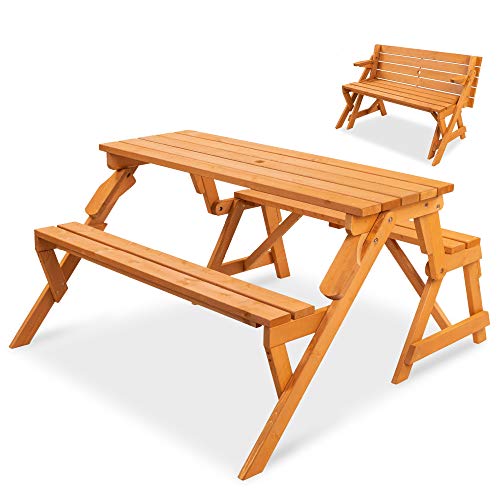
Garden Bench That Converts to Picnic Table: The Complete Guide
A garden bench that converts to a picnic table gives you two outdoor furniture pieces in one footprint. During quiet afternoons it is a comfortable bench for reading, morning coffee, or simply watching the garden. When family or friends arrive, the same frame transforms into a full picnic table for meals, games, and shared conversation. This guide explains how these convertible benches work, what to look for, and how to choose the right one for your outdoor space.
Outdoor furniture often asks you to make a trade-off: seating or dining, relaxation or entertaining. A convertible garden bench solves that problem by using a folding or sliding mechanism that changes the bench seat into a table surface, usually with benches on either side. The concept is popular among homeowners with compact patios, small backyards, and garden corners where a dedicated dining set would feel crowded.
If you are still exploring broader seating options, our guide to the garden bench covers classic styles, placement ideas, and material choices that pair well with convertible designs.
How a Convertible Garden Bench Works
Most convertible models rely on one of three mechanical approaches. Understanding these mechanisms is the fastest way to judge whether a specific bench will suit your routine.
1. Folding Backrest Conversion
The backrest folds down flat to become the tabletop, while the seat stays in place. Side benches may fold out from the frame or be stored underneath. This is the most common design because the transformation is quick and requires no tools. The hinge quality matters enormously: a reinforced hinge with a locking pin keeps the table surface stable when someone leans on it.
2. Sliding Tabletop Conversion
In this design, the table surface slides forward from behind the backrest and locks into place over the seat. It tends to feel more solid than a folding backrest because the tabletop is supported by rails rather than a hinge alone. Sliding models usually weigh more and take slightly longer to convert, but they are often a better fit for frequent dining use.
3. Flip-and-Lock Bench Conversion
The entire seating platform flips over to reveal a table surface on the reverse side. These designs are elegant and compact, often built from solid wood. Because the flip mechanism carries the full load, the pivot hardware must be heavy-duty. Flip benches tend to fall into the mid-range and premium tiers of the market.
Key Features to Evaluate Before Buying
Conversion Mechanism
Look for locking pins, reinforced hinges, and smooth sliding rails. A mechanism that wobbles during conversion will wobble at the table too.
Frame Material
Powder-coated steel and aluminum resist rust well. Solid acacia, teak, and cedar offer warmth but need seasonal sealing in wet climates.
Table Surface Area
Confirm the unfolded dimensions. A surface that seats two comfortably is very different from one that seats four or six.
Weight and Portability
Folding aluminum models are easier to move and store. Wooden flip benches are sturdier but usually stay in one place.
Weather Resistance
Check for rust-proof finishes, UV-stable coatings, and stainless or galvanized hardware. These details determine lifespan outdoors.
Storage Footprint
Some models fold nearly flat for winter storage. Others remain full-size. Measure your shed or garage before choosing.
Market Tiers: Entry-Level, Mid-Range, and Premium
Convertible garden benches fall into recognizable quality tiers. The table below describes what each tier typically delivers, without reference to specific figures.
| Tier | Typical Materials | Best For | Considerations |
|---|---|---|---|
| Entry-level | Powder-coated steel frame, resin or thin wood slats | Occasional use, balconies, seasonal setups | Lighter build; check hinge play and coating quality |
| Mid-range | Aluminum or heavier steel, acacia or fir wood | Regular family use, small patios, garden corners | Better hardware and more stable conversion; sealing extends life |
| Premium | Teak, cedar, marine-grade aluminum, stainless hardware | Frequent entertaining, exposed locations, long-term use | Heavier frame; smoother mechanism; superior weather resistance |
In general, mid-range models offer the smoothest balance of stability and portability. Entry-level designs are fine for light, occasional use, while premium benches are a long-term investment for households that entertain often.
Where a Convertible Bench Fits Best
These benches shine in spaces where flexibility matters more than having two separate furniture pieces.
- Small patios and courtyards: One footprint serves both lounging and dining, leaving room for planters and walkways.
- Garden corners: A bench that becomes a picnic table turns a quiet corner into a lunch spot under trees.
- Decks with limited storage: Folding designs stow away when the season ends.
- Family backyards: The table mode handles casual meals, crafts, and board games without a separate dining set.
- Vacation homes and cabins: Two functions in one piece simplify furnishing a secondary property.
If your yard centers on evening gatherings, pairing a convertible bench with a fire pit bench creates a natural social zone. For larger layouts, a full fire pit seating arrangement may work better alongside the bench. Homeowners planning a dedicated dining corner can also compare dedicated folding picnic table bench designs, which prioritize table function over bench comfort.
Materials: What Lasts Outdoors
Metal Frames
Powder-coated steel is strong and widely available in entry-level and mid-range models. Aluminum is lighter and naturally rust-resistant, making it a smart choice for coastal or humid climates. Look for stainless steel or galvanized hardware at every pivot point, since hinges are the first components to corrode.
Wood
Acacia is a popular mid-range wood with good density and natural water resistance. Teak and cedar sit in the premium tier thanks to natural oils that repel moisture and insects. Wooden convertible benches feel warmer and more traditional, but they benefit from annual sealing and indoor or covered storage during harsh winters. Our wood sealants guide covers protection options in detail.
Resin and Composite
High-density polyethylene and wood-plastic composites resist moisture, fading, and insects. They are heavier than wood of the same size and rarely match the look of natural timber, but they demand almost no maintenance. Composite models usually sit in the mid-range tier.
Practical Tips for Daily Use
- Test the conversion in both directions before your first outdoor season; a stiff mechanism often loosens with a small amount of lubricant on the hinges.
- Keep the pivot points clean of grit and sand, which accelerate wear on sliding rails.
- Use a breathable cover during off-season months rather than sealed plastic, which traps moisture.
- Reapply a weather-resistant coating to wooden surfaces every season in wet climates.
- Place the bench on a level surface so the locking pins engage fully in table mode.
- Check bolts and fasteners twice a year, especially after temperature swings.
Common Mistakes to Avoid
Ignoring unfolded dimensions. The table mode is often larger than buyers expect. Measure the space needed when fully converted, including clearance for people to sit on both sides.
Overlooking the locking mechanism. A table that shifts under plates and glasses is frustrating. Look for dual locking pins or a latch system rather than a single friction hinge.
Choosing weight over portability (or the reverse). A heavy wooden flip bench is stable but difficult to move. A lightweight folding bench is convenient but may feel less solid. Match the bench to how often you will reposition it.
Skipping surface treatment. Even weather-resistant wood benefits from sealing. Neglected surfaces gray and crack faster, especially in sunny or rainy regions.
Frequently Asked Questions
Is a convertible garden bench stable enough for everyday dining?
Yes, provided the locking mechanism is engaged fully and the frame is on level ground. Mid-range and premium models with dual locking pins feel notably more solid than entry-level friction hinges.
How many people can a converted picnic table seat?
Most designs seat two to four people comfortably. Larger models with fold-out side benches can seat four to six. Always check the unfolded dimensions rather than the bench dimensions.
Can it stay outside all year?
Metal and composite models generally handle year-round exposure well. Wooden benches last longer with a cover or seasonal storage, particularly in freezing or very wet climates.
How long does conversion take?
Folding backrest designs convert in seconds. Sliding and flip models may take ten to thirty seconds. The difference matters if you switch modes daily.
Do I need tools to convert the bench?
No. Convertible benches are designed for tool-free transformation. Tools are only needed for initial assembly and occasional bolt tightening.