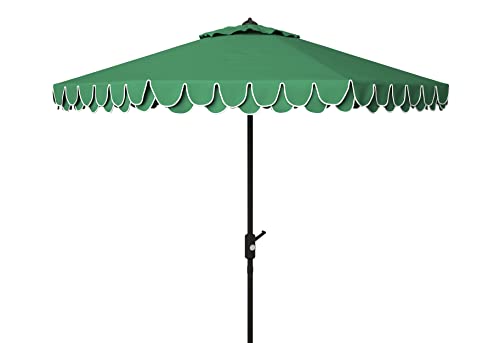
Hunter Green and White Striped Patio Umbrella: The Complete Buying Guide
Everything you need to choose a classic striped umbrella with confidence — canopy fabrics, frame types, base weight, wind ratings, and styling advice for a timeless backyard look.
Start the Buying GuideWhy this guide matters: A hunter green and white striped patio umbrella is one of the most versatile shade pieces you can add to an outdoor space. The deep green anchors the design, the white stripes brighten it, and the combination reads as classic coastal, preppy garden, or refined traditional depending on the surrounding furniture. But the stripe pattern also makes imperfections and fading more visible, so the fabric and frame you choose matter more than the look alone.
This guide is written for shoppers who already know they want this colorway and need help comparing construction, materials, and mounting options before committing. We walk through the decisions that actually affect longevity and usability, so you can match the right umbrella to your table, your climate, and how you plan to use the space.
What Makes a Hunter Green and White Striped Umbrella Distinct
The colorway is the headline feature, but it also shapes practical choices. Hunter green is a dark, saturated forest tone that hides dirt and pollen better than lighter greens, while the white stripes reflect light and keep the canopy from feeling heavy. Together they create a high-contrast look that pairs naturally with natural wood, white resin wicker, and dark metal frames.
Striped canopies are usually produced in one of two ways. Printed stripes sit on top of the fabric and can fade or crack over time; solution-dyed or woven stripes carry the color through the fiber and hold up far better under UV exposure. If you plan to leave the umbrella open for long stretches, prioritize woven or solution-dyed stripes over printed ones.
The stripe layout also affects perceived size. Narrow, dense stripes make a canopy feel more traditional and slightly busier, while wide block stripes feel more contemporary and resort-like. On smaller balconies, narrower stripes tend to read better because they add detail without overwhelming the space.
The Factors That Actually Matter Before You Buy
1. Canopy Fabric and UV Resistance
The canopy is the part that faces the sun all day, so fabric quality decides how long the stripes stay crisp. Solution-dyed acrylic is the benchmark for outdoor canopies: the color is engineered into the fiber, so it resists fading and holds up to repeated wetting and drying. High-grade polyester is a solid alternative and often feels slightly crisper, but it needs a UV-resistant finish to compete on fade resistance.
Entry-level canopies often use thinner polyester with printed stripes. They can look sharp out of the box, but the white stripes tend to yellow and the green can chalk within a season or two in strong sun. If the umbrella will live in a bright, exposed spot, the upgrade to solution-dyed fabric is the single most impactful choice you can make.
- Solution-dyed acrylic: best fade resistance, soft hand, breathable weave.
- UV-treated polyester: good balance of durability and crispness, widely used in mid-range canopies.
- Printed polyester: entry-level option; plan to store it when not in use to slow fading.
- Olefin: lightweight and quick-drying, common in value-focused canopies.
2. Frame Material and Rib Construction
Aluminum frames are the standard for residential patio umbrellas because they resist rust and stay manageable to open and close. Powder-coated aluminum adds a layer of corrosion protection and a cleaner finish. Wood frames suit traditional and cottage settings and pair beautifully with the green-and-white stripe, but they need seasonal sealing and should be stored or covered in harsh winters.
Ribs matter as much as the pole. Fiberglass ribs flex under wind and return to shape, which makes them the preferred choice in breezy locations. Steel ribs are strong but can rust if the coating chips. Look for reinforced joints at the hub and a crank or pulley mechanism that feels smooth rather than strained — that smoothness is usually a reliable signal of better internal hardware.
3. Market vs Cantilever vs Half-Umbrella
Market umbrellas use a central pole, usually through a table hole or a freestanding base. They are the classic choice for dining sets and offer even shade with a simple mechanism. If your table already has an umbrella hole, a market umbrella is the most straightforward fit. Our guide to high-top outdoor tables with umbrella holes covers the measurement details for bar-height setups.
Cantilever umbrellas place the pole to the side and hang the canopy over the seating area. They are ideal when there is no table to support a pole, when you want to shift shade across the day, or when the umbrella needs to cover a lounger or sofa. The trade-off is a heavier base and a more complex arm mechanism, so cantilever models sit firmly in the mid-range to premium tiers.
Half-umbrellas are designed to sit against a wall or railing, making them a smart fit for balconies and narrow patios where a full round canopy would crowd the space. For compact spaces, a half-umbrella paired with a high-top patio table and two chairs can shade the whole seating zone without blocking the walkway.
4. Canopy Shape and Size
Round canopies are the most common and suit round or square tables. Octagonal canopies offer slightly more coverage and a more traditional silhouette. Square canopies align neatly with rectangular tables and maximize shade over a defined footprint. For a rectangular dining table, a square or rectangular canopy usually shades the whole surface more efficiently than a round one of the same span.
Size should be driven by the shade footprint you need, not by the table alone. As a starting point, the canopy should extend past the table edge so seated guests stay shaded as the sun moves. On a compact balcony, a smaller canopy with a tilting mechanism often works better than a large fixed canopy, because you can angle the shade instead of oversizing the umbrella.
5. Base Weight, Wind Rating, and Anchoring
An umbrella is only as stable as its base. Freestanding bases for market umbrellas typically rely on weighted plates or water-fillable shells, while cantilever bases use heavy plates that sit under the side pole. In a sheltered patio, a modest base can be enough; in exposed yards or rooftop settings, you need a heavier base and an umbrella rated for higher wind.
Vented canopies let wind pass through the top instead of catching the whole canopy like a sail. That vent is not a substitute for closing the umbrella in a storm, but it noticeably improves stability in everyday breezes. If your space is windy, also check whether the frame uses fiberglass ribs and whether the manufacturer publishes a wind rating for the model.
Umbrella Tiers: What You Get at Each Level
Instead of comparing stickers, use construction and materials to place an umbrella in its tier. The classification below is a reliable way to judge relative positioning across brands, and it stays useful regardless of season or retailer.
Starter Tier
Printed polyester canopy, aluminum or steel pole, basic crank mechanism, lighter base.
Best for sheltered patios, seasonal use, and shoppers who want the striped look with a simple setup.
Balanced Tier
UV-treated polyester or solution-dyed acrylic, powder-coated aluminum frame, fiberglass ribs, vented canopy.
Best for year-round use in moderate climates and anyone who wants the stripes to stay crisp for several seasons.
Top-Tier
Solution-dyed acrylic with woven stripes, reinforced hub, smooth crank or pulley, wind-rated frame, heavier base options.
Best for exposed yards, cantilever setups, and shoppers who want a long-term piece that holds its color.
Side-by-Side Comparison by Category
| Tier | Canopy | Frame | Best For |
|---|---|---|---|
| Starter tier | Printed polyester | Steel or basic aluminum | Sheltered patios, seasonal shade |
| Balanced tier | UV-treated polyester or solution-dyed acrylic | Powder-coated aluminum, fiberglass ribs | Everyday use in moderate climates |
| Top-tier | Solution-dyed acrylic, woven stripes | Reinforced aluminum, wind-rated hub | Exposed yards, cantilever setups, long-term use |
Styling the Green and White Stripe
The stripe is a strong pattern, so the easiest way to style it is to repeat one color and let the other act as a neutral. Pairing the umbrella with white or cream cushions keeps the look crisp and coastal. Pairing it with natural wood, rattan, or dark metal leans more traditional and garden-like. Avoid introducing a second bold pattern nearby unless the scale is clearly different — a small-scale geometric cushion can work, but a competing wide stripe usually fights the canopy.
For dining areas, the stripe works well with a simple table and chairs in a single neutral finish. If you have a high-top outdoor dining set for six, a single large canopy centered over the table is usually cleaner than two smaller umbrellas, and it keeps the stripe pattern uninterrupted. On lounge-focused patios, a cantilever umbrella lets the stripe hang over seating without a pole in the middle of the conversation area.
If your furniture has a strong material story, let it lead. A high-quality wrought iron patio furniture set pairs beautifully with the green-and-white stripe because the dark metal echoes the deep green and the white stripes keep the overall look from feeling heavy.
Care and Storage to Keep the Stripes Looking New
Striped canopies show wear at the fold lines and along the white stripes first. Clean the canopy with mild soap and water, rinse thoroughly, and let it dry fully open before closing. Mildew is the main enemy of any outdoor fabric, so never store the umbrella closed while damp. A breathable storage cover protects the canopy during off-season months and keeps pollen and tree sap off the fabric.
Inspect the frame seasonally. Tighten the crank housing, check the ribs for cracks, and look for chips in the powder coating, which are the first step toward corrosion. Touching up small chips early is far easier than replacing a frame. If the umbrella lives outdoors year-round, a cover during the wettest months will extend the life of both the fabric and the mechanism.
Frequently Asked Questions
What is the difference between a market umbrella and a cantilever umbrella?
A market umbrella uses a central pole that passes through or beside the table, while a cantilever umbrella has an offset side pole with a hanging canopy. Cantilever designs free up the table center and work well over loungers or seating groups without a table.
How much wind can a striped patio umbrella handle?
Most market umbrellas are rated for light breezes only. Look for a vented canopy, fiberglass or aluminum ribs, and a wind-rated base. In exposed areas, close the umbrella during gusts and consider a cantilever model with a reinforced arm.
Does a hunter green and white striped umbrella fade in the sun?
Solution-dyed acrylic and high-grade polyester canopies resist fading far better than entry-level fabrics. Dark hunter green stripes hide minor fading well, but white stripes show wear sooner, so UV-resistant fabric and a storage cover matter.
What base weight do I need for a patio umbrella?
A common rule is at least 50 pounds of base weight for a standard market umbrella in a sheltered spot, and more for cantilever or exposed locations. Always follow the manufacturer's wind rating and base recommendation for your specific model.
Can I use a striped umbrella with a bar-height table?
Yes. Bar-height tables need a taller pole and usually a smaller canopy, and many are designed with an umbrella hole. Check the table's hole diameter and the umbrella's pole diameter before ordering, and choose a base that fits the table's footring or freestanding footprint.
Final Verdict: What to Prioritize
If you remember nothing else, remember the canopy fabric and the base. A solution-dyed or woven-stripe canopy is what keeps the hunter green and white stripes looking sharp season after season, and a properly weighted base is what keeps the umbrella upright when the weather turns. Frame material and rib construction come next, especially if your patio is breezy.
Choose a market umbrella for dining tables with a hole, a cantilever for lounge areas and pole-free shade, and a half-umbrella for balconies and narrow patios. Match the canopy shape to your table, and let the stripe do the styling work by keeping surrounding furniture and cushions in neutral or single-color finishes.
With those decisions settled, the hunter green and white striped umbrella becomes more than a seasonal accessory — it becomes the piece that defines the look of the whole outdoor space.