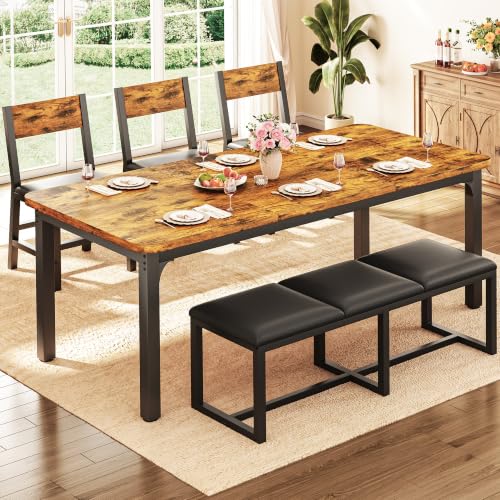
Kitchen Table with Bench and Chairs: The Complete Buying Guide
A bench-and-chair kitchen table is one of the most practical and family-friendly choices for a breakfast nook or eat-in kitchen. This guide explains seating capacity, bench placement, materials, and styling so you can choose the right set with confidence.
Start With the BasicsIf you have been searching for a kitchen table with bench and chairs, you already know the appeal: bench seating tucks neatly under the table, seats several people along one side, and gives a kitchen a warm, casual, family-style feel. The challenge is choosing a set that fits your room, your household, and the way you actually use the space every day. This guide walks through the decisions that matter most, from bench placement and table proportions to material durability and long-term care.
What This Guide Covers
Why Choose a Kitchen Table with Bench and Chairs?
Bench seating solves a common kitchen problem: it seats more people in the same footprint than individual chairs alone. A backless bench can slide entirely beneath the tabletop when not in use, which is especially valuable in compact kitchens, apartments, and breakfast nooks. On the chair side, you keep the comfort and back support that adults and older family members usually prefer.
The combination also creates a natural visual rhythm. The bench anchors one side of the table against a wall or window, while chairs on the opposite side keep the room open and easy to access. For households with children, benches are simple to climb onto and easy to wipe down, and they make homework, crafts, and casual meals feel relaxed rather than formal.
From a design standpoint, bench-and-chair sets sit comfortably between casual and polished. They suit cottage, farmhouse, coastal, and modern farmhouse kitchens, and they pair well with the same care principles you would apply to any solid wood furniture in a busy room. If your kitchen opens onto an outdoor area, the same family-style approach often carries through to large outdoor dining tables with bench and chairs.
Quick takeaway: A bench-and-chair set is the strongest choice when you need flexible seating for four to six people, want to conserve floor space, and prefer a relaxed family-dining look over a formal arrangement.
Seating Layout and Bench Placement
The single most important decision is which side the bench goes on. In most kitchens, the bench is placed against a wall, a window, or a low half-wall. This keeps the bench from floating in the middle of the room, reduces visual clutter, and leaves the chair side open for easy access. A wall-side bench also benefits from back support, which makes it comfortable for longer meals.
If the table sits in the center of the room or on an island, choose a backless bench. Backless benches do not block sightlines across the kitchen and can be pushed fully under the table. Keep at least 36 inches of clearance between the table edge and any counter, appliance, or doorway so chairs can slide out and people can walk behind the bench.
Seating capacity follows a simple rule: one adult per 24 inches of bench length, or one child per 18 inches. A 48-inch bench comfortably seats two adults or three children; a 60-inch bench seats three adults. Chairs on the opposite side should be spaced about 24 inches apart as well.
Wall-Side Bench
Bench against a wall or window with chairs on the open side. Best for breakfast nooks and narrow kitchens because it minimizes foot traffic behind the bench.
Freestanding Backless Bench
Bench on the side facing a walkway or island. Because it has no back, it slides fully under the table and keeps sightlines open across the kitchen.
Corner or L-Shaped Nook
Bench along two adjoining walls with chairs at the open edges. This seats five to six people and works well in a dedicated breakfast corner.
If your kitchen is genuinely tight, compare this layout with dedicated small-space furniture strategies and compact dining sets with a bench, which use similar space-saving logic in a smaller footprint.
Table Sizes and Room Dimensions
Table shape and size determine how many people a bench-and-chair set can seat and how comfortable the room feels. Rectangular tables pair most naturally with a long bench on one side and two chairs on the other. Round tables can work with a curved bench, but the bench must follow the curve or the seating will feel awkward.
As a general guide, allow 24 inches of table width per seated adult and at least 30 inches of table depth. Leave 36 inches of clearance from the table edge to the nearest wall or appliance so chairs can pull out and people can pass behind them.
| Table Size | Best For | Typical Seating Layout |
|---|---|---|
| 36 × 48 inches | Small breakfast nooks and two- to four-person households | 48-inch bench on one side, two chairs on the other |
| 36 × 60 inches | Most eat-in kitchens and family breakfast areas | 60-inch bench plus three chairs, or bench plus two chairs with extra room |
| 36 × 72 inches | Larger kitchens and households with children | 72-inch bench plus three or four chairs |
| Round 42–48 inches | Square kitchens and corner nooks | Curved bench on one arc, two or three chairs on the open side |
Height matters as much as width. Standard dining tables are about 30 inches high, and the bench seat should sit around 17 to 18 inches from the floor so adults and children can sit comfortably without knees hitting the apron. If you are working with a taller counter-style setup, compare a high-top table and chairs for the proportional relationship between seat height and table height.
Materials and Construction Tiers
Kitchen tables take daily wear: hot plates, spilled drinks, homework, and chairs being pushed in and out. The material you choose should match your tolerance for maintenance and the humidity level in your home. Rather than comparing specific figures, think in terms of market tiers, since construction quality within a tier is usually consistent across reputable makers.
| Tier | Typical Construction | Best For |
|---|---|---|
| Entry-level | Composite or painted engineered wood with basic joinery | Rentals, first kitchens, and short-term setups where light weight matters |
| Mid-range | Solid hardwood or hardwood-veneer tops with reinforced aprons and corner blocks | Everyday family kitchens and breakfast nooks with regular use |
| Premium | Kiln-dried hardwood, mortise-and-tenon joinery, and durable conversion finishes | Long-term family tables expected to handle years of daily meals |
| Luxury / professional-grade | Heirloom hardwood, hand-finished surfaces, and traditional joinery | Design-led kitchens and households that want a long-term investment piece |
Solid wood remains the most popular choice because scratches can be sanded and refinished, which makes it a long-term investment. Painted hardwood hides minor dings but can chip at edges. Composite and resin tops are easy to wipe and resist moisture, which matters in humid climates. Metal bases add rigidity and are a good match for farmhouse or industrial kitchens; if you like the look of metal, metal furniture construction guides explain how finishes age outdoors as well.
Whichever material you choose, check that the bench and table share the same frame material and finish. Mixed frames with mismatched expansion rates are the most common cause of wobble in bench-and-chair sets.
Bench Types and Back Options
Benches are not interchangeable. The backrest decision changes both comfort and how much space the bench requires.
Storage and Tuck-Under Benches
Slides fully under the table and keeps sightlines open. Best against an island or in a freestanding layout. Some backless benches include lift-up storage for napkins and small kitchen items.
Backrest Benches
Provides back support for long meals and homework sessions. Requires a wall or solid surface behind it, so it is best placed against a wall or window rather than in the middle of the room.
L-Shaped and Corner Benches
Maximizes seating in a corner nook and creates a cozy booth feel. Usually paired with a rectangular table and two chairs at the open edges.
Upholstered bench cushions add comfort but need removable, washable covers in a busy kitchen. For households with pets, choose a tightly woven fabric and check the same pet-resistance considerations used in pet-friendly outdoor and indoor furniture planning.
Style and Finish Considerations
Bench-and-chair sets sit naturally in farmhouse, cottage, coastal, and modern-rustic kitchens. A painted white or sage base with a natural wood top is the most versatile combination, blending with both warm and cool cabinet colors. Dark-stained wood with black metal legs leans industrial, while all-white painted sets feel crisp and traditional.
Match the table finish to the cabinet undertone rather than the exact color. If your cabinets are warm oak, choose a table with a warm undertone; if your cabinets are cool gray or white, choose a neutral or cool-toned wood. For kitchens that open onto a deck or patio, keeping the indoor set slightly more refined than the outdoor set is a reliable design rule, mirroring the way minimalist deck layouts use fewer, stronger pieces.
Chairs on the open side should be visually lighter than the bench so the room does not feel heavy. Slat-back or spindle-back chairs work well with a solid bench, while upholstered chairs suit a more polished kitchen.
Measurement and Safety Checklist
Before you commit to a set, run through this practical checklist. It prevents the most common fit and safety problems.
- Measure the room and confirm at least 36 inches of clearance on the chair side and 30 inches on any walkway side.
- Check that the bench length is 24 inches per adult or 18 inches per child.
- Confirm the bench seat height is 17–18 inches for a standard 30-inch table.
- Make sure the bench is stable when an adult sits on the end — look for center legs or a full apron.
- If the bench is against a wall, check that a backrest does not obstruct a window sill or radiator.
- Verify that chairs slide fully under the table without hitting the bench.
- Choose rounded corners and eased edges if young children will use the set.
- Check the finish for low-VOC or water-based coatings in small, poorly ventilated kitchens.
- Confirm that replacement parts or matching chairs are available for the set you choose.
Safety note: Benches without center support can tip when someone sits on the very end. Look for a center leg, a full-length apron, or a cross-brace before buying a long bench.
Once your kitchen set is in place, protect it the way you would any heavily used furniture. A protective table cover is useful for seasonal storage, and the same humidity-control habits that keep weatherproofed furniture in good condition apply to indoor wood in damp climates.
Frequently Asked Questions
Is a kitchen table with a bench and chairs good for small kitchens?
Yes. A bench can tuck completely under the table, which frees up floor space and makes the set feel less crowded in a small kitchen or breakfast nook. Pair a backless bench with a rectangular table to keep the center of the room open.
How many people can sit at a bench-and-chair kitchen table?
A typical set seats four to six people, with the bench on one long side and chairs on the other. Allow 24 inches of bench length per adult or 18 inches per child, and space chairs about 24 inches apart.
What is the best material for a kitchen table with bench and chairs?
Solid wood is the most popular choice for warmth and repairability. Painted hardwood, composite, and metal offer different levels of durability and maintenance. Choose based on humidity, cleaning needs, and the look of your kitchen, and keep the bench and table frame in the same material.
Should the bench be on a wall side or an open side?
Place the bench against a wall or window when possible to reduce visual clutter and keep chair access clear on the open side. In an island or freestanding layout, a backless bench works best because it does not block sightlines.
Can a bench-and-chair set work in an open-plan kitchen?
Yes, as long as the bench is backless or placed against a half-wall. Keep 36 inches of clearance from the table edge to any island or walkway, and choose a table finish that echoes the kitchen cabinetry so the set feels intentional rather than added on.
Ready to Compare Kitchen Table Sets?
Use the checklist above to narrow your options by layout, size, and material tier, then review the recommended sets below to find the bench-and-chair configuration that fits your kitchen.
View Recommended Sets