What "Bar Height" Actually Means in Patio Furniture
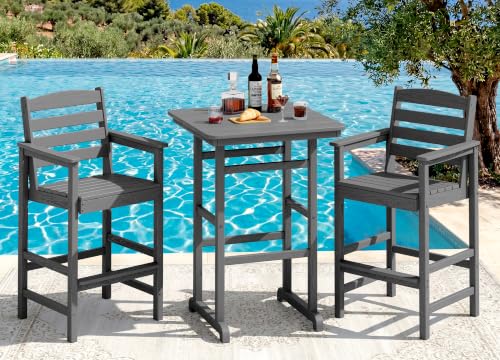
Bar height refers to a furniture elevation designed for standing-height or perching-style seating. In outdoor patio furniture, a bar height table typically measures between 40 and 42 inches from the ground to the tabletop, with matching chairs or stools offering a seat height of roughly 28 to 30 inches. This is taller than standard dining height, which sits around 28 to 30 inches at the tabletop, and taller than counter height, which lands near 34 to 36 inches.
The distinction matters because chair and table heights must be paired correctly. A bar height chair placed at a standard dining table leaves the sitter uncomfortably high, while a dining chair at a bar height table puts the tabletop near shoulder level. When shopping, always confirm that the set is sold as a matched pairing, or that the chair seat height falls within the recommended range for the table.
Bar height sets are sometimes labeled as "high top," "pub height," or "gathering height." These terms generally describe the same elevation family, though individual manufacturers may vary by an inch or two. Reading the listed dimensions rather than relying on the label alone is the safest approach.
Why Homeowners Choose Bar Height Patio Sets
Bar height dining has moved well beyond the pub-style table. For many outdoor spaces, the elevated format solves practical problems that standard dining sets cannot. Here are the most common reasons buyers gravitate toward this configuration.
Better sightlines and conversation flow
When seated at bar height, guests are closer to eye level with people standing nearby. That makes bar height sets especially social for gatherings where some people are standing, cooking at a grill, or moving between the patio and the house. Conversation feels more natural than when some guests are seated low and others are standing tall.
Smaller footprint for tight spaces
A high-top table with two or four chairs often occupies less floor area than a full dining set of the same seating capacity. On a narrow balcony or a compact deck, that saved space can mean the difference between a usable outdoor room and a cramped one. If your layout is tight, it is worth comparing a bar height option against a standard patio table and chairs set before deciding.
A natural fit for balconies and railings
On balconies, bar height tables often sit closer to the railing height, which lets seated guests enjoy the view without leaning forward or standing up. The elevated surface also feels less enclosed by solid balcony walls.
Defined zones on larger patios
On a larger patio, a bar height set can carve out a secondary zone separate from the main lounge or dining area. It works well as a casual drinks corner, a breakfast spot, or an overflow seating area near an outdoor kitchen.
Best for balconies
Compact footprints and railing-height sightlines make bar height sets a natural fit for small elevated outdoor spaces.
Best for entertaining
Guests can perch, mingle, and move around without the formality of a full seated dinner arrangement.
Best as a secondary zone
Pair a high-top set with a lounge area to create distinct spaces for dining, drinks, and conversation.
Best for views
Elevated seating brings eyes closer to the horizon, which matters on decks and upper-level patios.
Key Measurements to Check Before You Buy
Getting the dimensions right is the single most important step in choosing an outdoor patio table and chairs bar height set. A set that looks right in a product photo can feel cramped or oversized once it is on your patio. Bring a tape measure and verify the following numbers against your actual space.
Tabletop height and chair seat height
Confirm both figures from the product specifications. A matched set should place the seat roughly 10 to 12 inches below the tabletop. If the numbers are far outside that range, the set may feel awkward to use regardless of how it looks.
Overall footprint
Measure the full assembled footprint, including chairs pulled out far enough to sit down comfortably. A common mistake is measuring only the table and forgetting that chairs need pull-out room behind them. For a four-person set, allow at least 24 inches of clearance behind each chair for comfortable entry and exit.
Seating capacity versus chair spacing
Four chairs at a small round high-top can feel tight if the chairs have wide arms. If comfort matters more than maximum capacity, consider a set with slightly larger table dimensions or a shape that distributes seating more evenly.
Umbrella compatibility
If you want shade, check whether the table includes a pre-drilled umbrella hole and whether the base is rated for a bar height table. Many high-top sets offer this feature, and you can compare options in our guide to patio table and chairs with an umbrella hole. A freestanding umbrella with a weighted base is another route if the table lacks a hole.
| Measurement | Typical Bar Height Range | Why It Matters |
|---|---|---|
| Tabletop height | 40–42 inches | Defines the elevation and chair pairing requirement |
| Chair seat height | 28–30 inches | Must sit 10–12 inches below the tabletop for comfort |
| Chair pull-out clearance | 24 inches minimum | Room to sit down and stand up without squeezing |
| Umbrella hole diameter | 1.5–2 inches | Determines which umbrella poles will fit |
| Tabletop depth (round) | 32–40 inches | Affects elbow room and plate spacing |
Frame and Tabletop Materials Compared
Outdoor furniture lives through sun, rain, humidity, and temperature swings. The material choice affects how long the set lasts, how much maintenance it needs, and how it feels to use. Here is how the main categories compare for bar height patio sets.
Powder-coated aluminum
Aluminum is the most common frame material for mid-range and premium bar height sets. It resists rust, stays lightweight enough to move around, and accepts durable powder-coated finishes in a range of colors. High-grade aluminum frames with reinforced joints hold up well over many seasons. The main trade-off is that very lightweight aluminum can feel less grounded in strong wind, so a heavier base or weighted feet help.
Steel and wrought-style metal
Steel frames deliver heavy-duty stability and a substantial feel, which suits larger rectangular bar height tables. The critical requirement is a rust-proof finish, since untreated steel will corrode outdoors. Look for galvanized or powder-coated steel and check that the joints and welds are sealed. When properly finished, steel is a solid choice for high-wind areas and commercial-grade settings.
Resin and poly lumber
Resin and poly lumber sets are weather-resistant, low-maintenance, and available in a wide range of colors. They do not rust or splinter, and they handle sun exposure well without fading as quickly as some painted finishes. These sets tend to sit in the entry-level to mid-range bracket, and they are a practical option for households that want a set they can leave outside year-round with minimal fuss.
Wood: teak, acacia, and eucalyptus
Wood brings warmth and a natural look that synthetic materials struggle to match. Teak is the most weather-resistant option and develops a silver-gray patina over time if left untreated. Acacia and eucalyptus offer a similar look at a lower position in the market. All wood sets need periodic sealing or oiling to maintain their appearance and prevent cracking, so they suit buyers who do not mind a small amount of seasonal upkeep.
Tabletop surfaces
Slatted aluminum and slatted wood tabletops drain water well and stay cooler in direct sun. Glass tops are easy to wipe clean and reflect light, but they can get hot and require careful handling. Resin and composite tops resist staining and are simple to maintain. For a bar height table that will double as a drinks surface, a slatted or composite top tends to be the most forgiving.
Chair Styles and Comfort Factors
The chairs make or break a bar height set. Because the seating position is higher and often involves perching or footrest use, small differences in design have an outsized effect on comfort.
Footrests are essential
At bar height, your feet will not reach the ground when seated. A built-in footrest ring or bar is not optional for comfort. Check that the footrest sits at a height that keeps your knees at a relaxed angle rather than dangling. Sets without footrests are tiring to use for more than a few minutes.
Armrests and back height
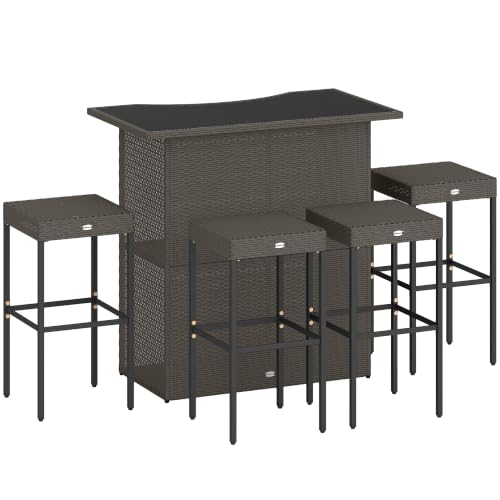
Bar height chairs with arms feel more supportive for longer meals, while backless stools are easier to tuck under the table and save space on a tight balcony. If the set will be used for full meals rather than quick drinks, prioritize chairs with supportive backs and arms.
Cushions and sling seats
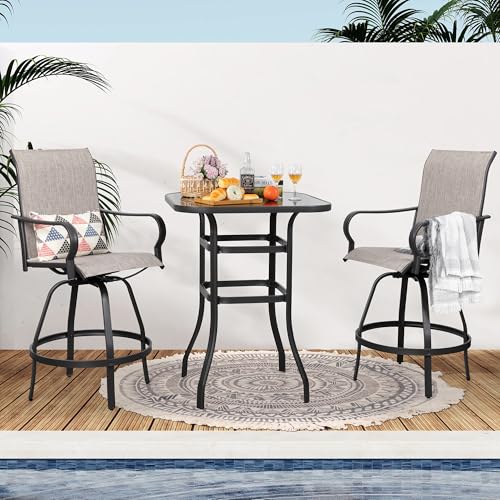
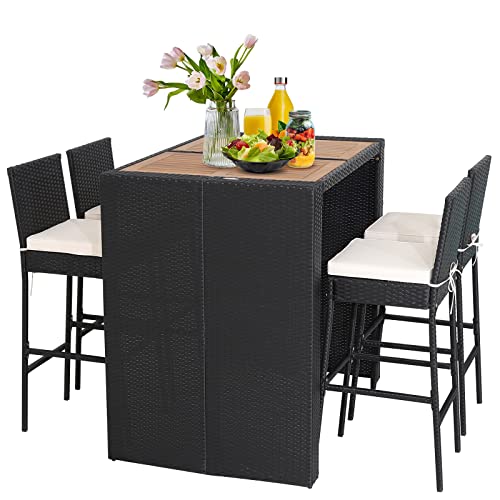
Sling seats dry quickly and need no cushion maintenance. Cushioned seats feel softer but require care, especially in humid climates. If you choose cushions, look for quick-dry foam and removable, washable covers, and consider a set with storage so the cushions can be tucked away during storms. A patio furniture set with cushion storage keeps the fabric protected and extends its lifespan.
Swivel and motion chairs
Swivel chairs make it easier to get in and out of a bar height seat and add a social, conversational feel. They are a popular upgrade on mid-range and premium sets. Motion chairs cost more within their tier but add real usability for entertaining.
Chair weight and stackability
If the set needs to be moved for cleaning or seasonal storage, check chair weight. Lightweight aluminum chairs are easy to shift, while steel and wood chairs offer more heft. Stackable chairs are worth considering for smaller patios where flexibility matters.
Table Shapes and Seating Capacity
The shape of the table determines how the set fits into your space and how conversations flow around it.
Round high-top tables
Round bar height tables are the most space-efficient option for two to four people. There are no corners to navigate, and everyone seated at the table can see each other. A round 32- to 40-inch tabletop typically seats two comfortably or four if the chairs are slim. This shape works especially well on balconies and in tight patio corners.
Square high-top tables
Square bar height tables offer slightly more usable surface area than round tables of similar width, which makes them a good fit for drinks, small plates, and a centerpiece. They seat two to four and fit neatly against a wall or in a corner when not in use.
Rectangular bar height tables
Rectangular high-top tables seat four to six and suit longer patios or decks where you want a defined dining zone. They pair well with a bench or with matching chairs along both sides. If you want a more traditional high-top layout, a high-top patio table and chairs set in a rectangular format is a strong choice for larger gatherings.
Specialty configurations
Some sets combine bar height seating with built-in features such as a fire pit table or a cooler compartment. These hybrid designs work well for buyers who want the elevated social feel plus a focal point. Just confirm that the added features do not compromise the table's stability or the seating clearance.
Round (2–4 seats)
Best for balconies and tight corners. Promotes conversation and minimizes footprint.
Square (2–4 seats)
More surface area per seat. Fits neatly against walls and works well as a drinks station.
Rectangular (4–6 seats)
Defines a dining zone on longer patios and decks. Pairs well with bench seating.
Matching a Bar Height Set to Your Space
Bar height sets are versatile, but they are not the right fit for every layout. Use the following guidance to decide whether an elevated set belongs on your patio, and how to size it.
When bar height works best
- The patio or balcony is compact and a full dining set would overwhelm it.
- You want a casual, social seating area rather than a formal dining zone.
- The space has a view, and you want seated guests to see over a railing.
- You are building a secondary zone alongside a lounge or dining area.
- Guests often stand and mingle, and you want seating that matches that energy.
When a standard height set may be better
- Young children or guests with limited mobility will use the set regularly. Bar height seating is harder to access and carries a higher fall risk.
- You plan to host full plated meals often. Standard dining height is more comfortable for long dinners.
- The space is large enough that footprint savings are not a concern.
- You want the table to double as a work surface for laptops or crafts, where a lower surface is ergonomically friendlier.
Placement tips
Place the set where chairs have pull-out room on every side. Avoid positioning it directly against a wall if that side will be used for seating. If the set will sit in direct afternoon sun, plan for shade through an umbrella or a pergola. And if wind is a concern on an upper balcony, choose a heavier frame and add weighted feet where possible.
Care and Weatherproofing for Bar Height Sets
Bar height sets have more exposed metal and more joints than lower furniture, which makes maintenance slightly more involved. A few habits will keep the set looking good and functioning smoothly for years.
Routine cleaning
Wipe frames and tabletops with mild soap and water every few weeks during the outdoor season. Pay attention to joints, footrests, and welds, where dirt and moisture collect. Avoid abrasive cleaners on powder-coated finishes, as they can dull the surface and open the door to corrosion.
Protecting the finish
Touch up any chips in the powder coating as soon as they appear. A small chip can become a corrosion point over a season of rain. For wood sets, apply a sealant or oil at the start of the season and again before winter storage.
Off-season storage
If the set will be stored, clean and dry it thoroughly first. Stack or cover chairs according to the manufacturer's guidance, and store cushions indoors. For sets that stay outside year-round, use a fitted cover that allows airflow rather than a tarp that traps condensation.
Hardware checks
Once or twice a season, tighten bolts and check the stability of the footrests and table legs. A loose footrest is both a comfort problem and a safety risk. Replacing worn footrest caps or glides is a simple fix that prevents wobbling.
Bar Height Patio Set Buying Checklist
Before you commit to a set, run through this checklist. It captures the factors that matter most once the furniture is on your patio rather than in a product photo.
- Verify the heights. Confirm tabletop height and chair seat height from the specifications, and check the 10- to 12-inch clearance rule.
- Measure the footprint with chairs pulled out. Do not measure the table alone.
- Check the material finish. Look for rust-proof or weather-resistant finishes on metal frames, and sealed surfaces on wood.
- Confirm footrest comfort. Make sure the chairs have footrests at a usable height.
- Decide on cushion care. If the set has cushions, plan how they will be stored during storms and the off-season.
- Check umbrella compatibility if shade matters. Confirm hole size and base requirements.
- Confirm seating capacity against chair spacing. Four chairs at a small round table can be tight with wide arms.
- Review the assembly requirements. Bar height sets can involve more assembly steps, especially chairs with footrests.
Ready to Compare Bar Height Sets?
Browse a curated selection of elevated patio dining sets, from compact two-seat balconies to six-seat rectangular arrangements, and compare the features that matter for your space.
View Recommended SetsFrequently Asked Questions
What is the standard height of a bar height patio table?
A standard bar height patio table stands between 40 and 42 inches tall at the tabletop, paired with bar stools or chairs that have a seat height of roughly 28 to 30 inches. This is distinct from counter height, which is typically 34 to 36 inches with seats around 24 to 26 inches.
How many people can a bar height patio set seat?
Most bar height patio sets seat between two and six people. Round or square high-top tables commonly accommodate two to four, while rectangular bar height tables can seat up to six or occasionally eight depending on the length and chair spacing.
Are bar height patio sets suitable for small spaces?
Yes. Bar height sets are particularly well suited to compact balconies, narrow decks, and tight patios because the vertical orientation keeps the footprint smaller than a full dining setup while still offering comfortable seating and a usable tabletop surface.
What materials work best for bar height patio furniture?
Aluminum frames with powder-coated finishes resist rust and stay lightweight, while high-grade steel offers heavy-duty stability. Resin and poly lumber deliver weather resistance with minimal maintenance, and teak or acacia wood bring natural warmth when properly sealed for outdoor use.
Should I choose counter height or bar height?
Counter height is slightly lower and easier for guests who may find bar height too tall, including children and older adults. Bar height offers more of an elevated, social perch feel and pairs well with balcony railings. If accessibility is a priority, counter height is the safer choice; if you want maximum visual separation from the ground and a more compact footprint, bar height is the better fit.
Do bar height tables work with umbrellas?
Many do, provided the table has a pre-drilled umbrella hole and the base is rated for the table's elevation. Because a bar height table is taller, confirm that the umbrella pole is long enough and that the base is sufficiently weighted. If the table has no hole, a freestanding umbrella with a heavy base is a practical alternative.
Last updated: November 2, 2026. This guide is reviewed periodically as product features and materials evolve.