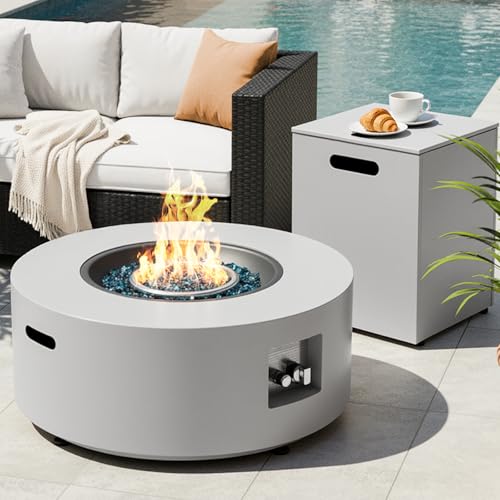
What Is a Round Fire Pit with Hidden Propane Tank?
A round fire pit with a hidden propane tank is a gas-powered outdoor fire feature where the fuel cylinder is stored inside the unit's base rather than exposed beside it. The result is a cleaner silhouette: instead of a visible tank and hose, you see a circular table with a burner in the center. When the flame is lit, it becomes a focal point; when it is off, the same surface works as a patio coffee table or side table.
This design solves one of the most common complaints about gas fire pits — the awkward tank. It also improves safety by keeping the cylinder enclosed and away from foot traffic. For homeowners researching before purchase, the main questions are usually about burn time, heat output, tabletop durability, and whether the unit is safe on a wood deck. The sections below address each of those points in practical terms.
How the Hidden Tank Compartment Works
The tank compartment is typically a dedicated chamber at the bottom of the fire pit, accessed through a hinged door or a removable side panel. Inside, a regulator and hose connect the propane cylinder to the burner assembly. A control knob — often positioned on the tabletop rim or just below it — lets you adjust flame height and turn the unit on and off.
Most models are sized for a standard 20-pound propane tank. A few compact designs accept smaller cylinders, which reduces burn time but keeps the footprint tighter. Ventilation matters: the compartment should have openings that allow propane vapor to escape if a leak occurs. Well-designed units include these vents as a standard safety feature, and you should confirm them before purchase.
Because the tank is enclosed, swapping cylinders takes a little more effort than with an open-frame fire pit. Look for a wide access door and a hose that is long enough to connect without strain. A tank that slides in on a tray is easier to manage than one that must be lifted into a deep chamber.
Why Choose a Round Shape
Round fire pits are the most popular shape for good reason. A circle has no head-of-table, so everyone seated around it gets a similar view and similar access to the flame. That makes round models a natural fit for conversation seating, where chairs are arranged in a ring rather than in rows.
Round designs also work well in smaller spaces. A 30- to 36-inch round table can anchor a compact patio or balcony without the visual weight of a long rectangular unit. If your seating area is built around a curved sofa or a cluster of lounge chairs, a round fire pit mirrors that geometry instead of fighting it.
For dining-adjacent setups, some homeowners pair a round fire pit with a separate bistro table. If you are still deciding between a fire feature and a dining surface, it helps to compare the two formats directly. A round fire pit table with hidden tank inside the base is a different category from a standard round fire pit table, and each has its own trade-offs in surface area and heat placement.
Key Features to Compare
Burner Output and Heat
Burner output is usually listed in British thermal units per hour. Entry-level models tend to produce a modest flame that takes the edge off cool evenings. Mid-range and premium units generally offer higher output and a more even flame pattern across the burner ring. If you plan to use the fire pit in shoulder seasons or cooler climates, prioritize a model with a higher output rating and a burner that distributes heat evenly rather than concentrating it in one spot.
Tabletop Material
The tabletop takes the most wear, so material matters. Common options include:
- Powder-coated steel or aluminum: durable construction with a rust-proof finish when maintained; suited to mid-range and premium tiers.
- Cast aluminum or cast iron: heavier and more stable, often found on high-end tier models; resists wind movement.
- Stone or concrete composite: a solid, premium look with good heat resistance; heavier and harder to move.
- Resin or composite: lighter and often seen on entry-level models; acceptable for sheltered patios but less resistant to long-term sun exposure.
For any model, confirm that the tabletop finish is rated for the burner's heat. A heat shield or a raised burner ring helps protect the surface and extends its lifespan.
Ignition Type
Push-button ignition is the most common and is convenient for daily use. Electronic ignition offers more consistent starts, especially in damp conditions. Match-light models are simpler and have fewer parts to fail, but they require a lighter or match. For frequent use, push-button or electronic ignition is the more practical choice.
Safety and Clearance
If the fire pit will sit on a wood deck or near a railing, check the manufacturer's clearance specifications for combustible surfaces. Some units include a heat shield or a raised base designed for deck use. Also confirm that the tank compartment is ventilated and that the unit ships with a regulator rated for propane. A built-in thermocouple or flame-sensing safety shutoff is a worthwhile feature on higher-tier models.
Size and Seating Capacity
A 30-inch round fire pit generally suits two to four people. A 36- to 42-inch model supports four to six. Beyond 42 inches, the fire pit becomes a central anchor for a larger seating arrangement. Measure your seating circle before choosing: you want roughly 18 to 24 inches of clearance between the table edge and each chair for comfortable access.
Covers and Accessories
A fitted cover protects the burner and tabletop from debris and moisture between uses. If you plan to leave the fire pit outside year-round, a cover is close to essential. Replacement parts such as burner rings and ignition components are also worth checking for availability, since a fire pit is a long-term fixture. A round fire pit cover is a straightforward accessory that pays for itself in surface protection.
Comparing Quality Tiers
Fire pits in this category fall into recognizable quality tiers. The table below uses relative positioning rather than any specific figures, so it stays useful regardless of market changes.
| Tier | Typical Build | Best For |
|---|---|---|
| Entry-level | Lighter gauge steel or resin shell, basic push-button ignition, simpler tabletop finish | Occasional use, sheltered patios, first-time buyers |
| Mid-range | Powder-coated steel or aluminum, improved burner design, better heat distribution, sturdier tank door | Regular evening use, mixed-weather patios, families |
| Premium | Heavy-duty cast aluminum or stone composite, electronic ignition, heat shield, refined finish | Frequent use, deck installations, design-focused spaces |
| Luxury | Solid cast construction, commercial-grade burner components, integrated safety shutoff, detailed craftsmanship | Year-round entertaining, statement patios, long-term investment |
Editorial Note on Value
Mid-range models usually offer the most balanced mix of durability and features for typical residential use. Entry-level units are a solid choice for occasional use, while premium and luxury tiers make sense when the fire pit will be used frequently or will anchor a high-visibility outdoor room. The right tier depends on how often you light it, not on any single specification.
Placement and Patio Integration
Where the fire pit sits matters as much as which model you choose. On a wood deck, confirm clearance to railings and overhead structures. On a concrete patio, a round fire pit can serve as the center of a lounge arrangement or as a side table beside a sofa. If your patio already has a dining table, consider whether the fire pit will compete for the same footprint or complement it.
Wind is another factor. Open patios and elevated decks experience more airflow, which can affect flame stability. A model with a slightly recessed burner and a higher tabletop rim tends to hold a flame better in breezy conditions. For patios that also include a dining table with an umbrella, keep the fire pit a safe distance from fabric and canopy edges.
Homeowners often plan the fire pit alongside other outdoor upgrades. If your patio furniture is due for a refresh, replacement cushions and fabrics can extend the life of existing seating while you add a fire feature. Matching new cushions to the fire pit's finish keeps the overall palette coherent without a full furniture replacement.
Safety and Maintenance Essentials
- Check for leaks before first use: apply a soapy water solution to the hose and regulator connections and watch for bubbles.
- Keep the tank compartment ventilated: never block the vents, and store the cylinder upright.
- Disconnect propane when not in use for extended periods: especially before winter storage.
- Clean the burner regularly: debris and insect nests can block ports and cause uneven flames.
- Use a fitted cover: protects the burner and tabletop from moisture, leaves, and pollen.
- Inspect the hose annually: replace any hose that shows cracking or stiffness.
For winter, disconnect the tank, store it in a well-ventilated area away from living spaces, and cover the fire pit. If the tabletop is stone or composite, check the manufacturer's guidance on freeze-thaw exposure.
How to Choose the Right Model
- Measure your seating circle. Confirm the fire pit diameter leaves enough room for chairs and walking clearance.
- Decide on use frequency. Occasional use favors entry-level or mid-range; frequent use favors premium or luxury tiers.
- Check deck compatibility. Look for heat clearance specifications and heat shields if installing on wood.
- Confirm tank access. A wide door and a tray or strap make cylinder swaps easier.
- Review ignition and safety features. Push-button or electronic ignition and a flame-sensing shutoff add convenience and peace of mind.
- Plan for storage. A fitted cover and a disconnect routine keep the unit in good condition between seasons.
Frequently Asked Questions
How does a round fire pit with a hidden propane tank work?
The propane tank sits inside the base, concealed behind a door or panel. A hose connects the tank to the burner, and a control knob regulates the flame. Because the tank is enclosed, the fire pit doubles as a table surface when the burner is off.
How long does a hidden propane tank last?
Most models accept a standard 20-pound propane tank, which typically provides several hours of burn time on a medium setting. Actual duration depends on flame height, wind exposure, and burner efficiency.
Can a round fire pit with a hidden propane tank be left outside in winter?
Many models are weather-resistant, but the propane tank should be disconnected and stored properly during freezing months. A fitted cover protects the burner and tabletop from debris and moisture.
Is a hidden propane tank fire pit safe on a wood deck?
Yes, when installed correctly. Choose a model with a heat shield or clearance specifications for combustible surfaces, keep the tank compartment ventilated, and follow the manufacturer's clearance guidance for overhead structures and railings.
What size round fire pit fits a small patio?
A 30- to 36-inch round fire pit is a practical fit for small patios and balconies, seating two to four people. Measure the clearance to walls, railings, and furniture before finalizing the size.