Outdoor Tool Storage: The Complete Buying Guide
Protect your garden tools, power equipment, and outdoor essentials from rain, rust, and theft. Compare storage types, materials, and security features before you choose the right unit for your yard.
Explore Recommended OptionsIf you have ever pulled a rusted trowel or a waterlogged extension cord out of a soggy cardboard box, you already understand why proper outdoor tool storage matters. Tools left exposed to the elements degrade quickly — metal edges pit and seize, wooden handles crack, and power equipment quietly corrodes from the inside out.
This guide is written for homeowners who already know they need a dedicated storage solution but are unsure which type, material, and security level fits their yard. We break down every category from entry-level deck boxes to commercial-grade sheds, so you can make a confident, informed decision.
Why Invest in Dedicated Outdoor Tool Storage?
An outdoor storage unit does far more than keep your patio tidy. It extends the working life of every tool you own and protects the investment you have already made in your garden and outdoor living space.
Moisture is the primary enemy. Even a brief overnight rain can introduce water into tool joints, where it sits and oxidizes. A sealed, raised-floor storage unit prevents this entirely. UV exposure is the second concern — plastic handles and rubber grips become brittle and crack after a few seasons of direct sun. A covered or opaque unit blocks UV damage.
Security is the third pillar. Power tools and expensive pruning equipment are common targets for opportunistic theft. A lockable cabinet or shed with anchored feet provides a meaningful deterrent, especially when your outdoor area connects to a driveway or alley.
Finally, organization pays dividends. A dedicated unit with shelving, hooks, and labeled bins means you spend minutes finding a tool instead of an hour. If your patio is part of a larger outdoor living setup, keeping tools contained also protects adjacent furniture — a muddy shovel leaning against a teak outdoor furniture set is a recipe for staining.
The Five Main Types of Outdoor Tool Storage
Each storage type serves a distinct purpose. Match the category to your inventory and available space rather than trying to force one unit to do everything.
Deck Boxes
Low-profile, bench-style containers that sit on a deck or patio. Best for hand tools, gloves, twine, and small garden accessories. Many double as seating. Choose resin construction for weather resistance and confirm the lid has a sealing gasket.
Vertical Storage Cabinets
Tall, narrow units designed for long-handled tools such as rakes, shovels, and brooms. Their small footprint suits tight patios and side yards. Look for adjustable shelving and a lockable door if you store anything of value.
Storage Benches
A hybrid of seating and containment. Ideal for patios that need both function and aesthetics. Storage benches hold cushions, small tools, and pool accessories. Waterproof models with hinged lids are the most practical choice for exposed areas.
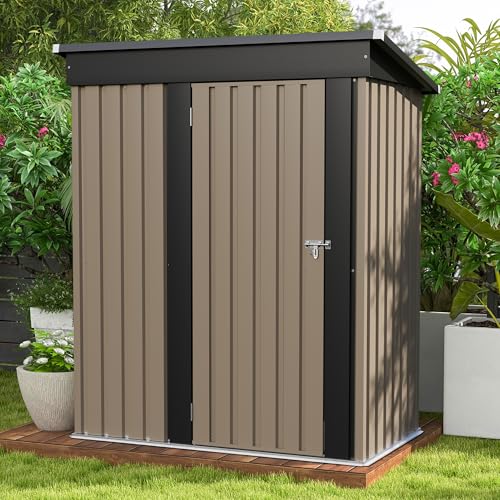
Metal Tool Sheds
Freestanding structures with full-height doors, heavy-duty shelving, and often a padlock hasp. The right category for lawnmowers, trimmers, and power tools. Galvanized steel with a rust-proof finish offers the best durability in humid climates.
Material Comparison: Resin, Metal, Wood, and Plastic
The material determines how long your storage unit will last, how much maintenance it needs, and how well it resists moisture. Use the comparison below to narrow your shortlist.
| Material | Tier | Weather Resistance | Security | Best For |
|---|---|---|---|---|
| High-density resin | Mid-range | Excellent — will not rot or rust | Moderate — lockable models available | Deck boxes, benches, everyday tool protection |
| Galvanized steel | High-end tier | Very good with rust-proof coating | High — accepts padlocks and hasps | Power tools, high-value equipment, full sheds |
| Aluminum | Mid-tier to premium | Excellent — naturally rust-resistant | High when reinforced | Coastal climates, lightweight cabinets |
| Teak or cedar wood | Premium | Good — naturally oils, needs annual sealing | Moderate | Aesthetic-forward patios, integrated bench storage |
| Polyethylene plastic | Entry-level to mid-range | Good — UV-stabilized grades resist cracking | Low to moderate | Light hand tools, seasonal accessories |
For most homeowners, resin is the sweet spot between durability and ease of maintenance. It never needs painting or sealing, and it does not attract termites. Metal units require occasional inspection of seams and hinges, but a high-grade steel shed with a rust-proof finish will outlast several resin boxes in a harsh climate.
If aesthetics matter as much as function — for example, if the unit sits beside a teak outdoor daybed on a styled patio — a teak storage bench blends naturally with wooden furniture. Just commit to annual oiling, because untreated wood in a wet climate will swell and warp.
Key Features to Evaluate Before Buying
Two units can look identical in a product listing yet perform very differently after a season outdoors. Check each of the following before committing.
- Sealed seams and gaskets: Water ingress usually happens at the lid line, not through the material itself. A rubber gasket around the lid is the single most important waterproofing feature.
- Raised floor: A floor lifted even a few inches above ground level prevents pooling water and improves airflow beneath the unit.
- Ventilation: Fully sealed units trap condensation. Louvered vents or breathable panels allow moisture to escape without letting rain in.
- Lockable latch: A hasp that accepts a padlock provides meaningful theft deterrence. Mid-range and premium units almost always include one.
- Anchoring points: Pre-drilled feet or brackets let you secure the unit to a deck or concrete slab so it cannot be tipped or carried away.
- Adjustable shelving: Fixed shelves rarely match real tool dimensions. Configurable shelves accommodate tall items and small bins alike.
- UV-stabilized construction: Plastic and resin units without UV stabilizers become brittle and chalky within two summers of direct sun.
Where to Place Your Outdoor Storage Unit
Location affects both convenience and longevity. Place the unit within easy reach of where you actually use your tools — usually the garden bed or lawn — rather than tucking it into a far corner where you will avoid walking to it.
Avoid direct sun for plastic and resin units, since prolonged UV exposure shortens their lifespan even with stabilizers. Shade from a pergola or the north side of a wall is ideal. Also avoid low spots where water collects after rain; standing water around the base accelerates corrosion and rot.
If your patio is small, a vertical outdoor storage cabinet can slot into a narrow gap between furniture pieces without dominating the layout. For larger properties, a shed placed near the property edge keeps bulky equipment out of the main entertaining area while remaining accessible.
Finally, consider the visual impact. A storage unit next to a carefully styled teak outdoor dining set should either match the aesthetic or be screened with planters. Resin boxes in neutral stone or charcoal tones disappear visually in most garden settings.
How to Protect Your Tools Once They Are Stored
The storage unit is only half the solution. What you do inside it determines how well your tools survive.
Start with moisture control. Place desiccant packs or a small rechargeable dehumidifier inside sealed units. This is especially important in humid climates where condensation forms on cool metal surfaces overnight. Wipe tools dry before storing them — a wet shovel left in a sealed box is worse than one left under a ventilated cover.
Coat metal tool heads with a thin film of oil or a dedicated rust-preventive spray at the end of each season. Wooden handles benefit from a light application of linseed oil once a year. Power equipment should have fuel drained before long-term storage to prevent carburetor gumming.
If you also store cushions or fabric items in the same unit, keep them separated from metal tools. A waterproof outdoor cushion storage container placed inside the shed adds an extra layer of protection and keeps fabrics from absorbing oil or dirt. Similarly, if your storage bench doubles as seating, use a waterproof bench cushion on top and reserve the interior strictly for dry goods.
Security Considerations for High-Value Tools
Entry-level deck boxes deter nothing more than casual curiosity. If you store power tools, chainsaws, or expensive hand tools, security must be a primary selection criterion rather than an afterthought.
A professional-grade metal shed with a padlock hasp and anchored feet is the baseline for valuable equipment. Reinforced hinges prevent prying, and a solid floor panel stops someone from simply lifting the unit. If theft is a genuine concern in your area, consider adding a motion-sensor light nearby — it is a low-effort deterrent that pairs naturally with any outdoor lighting scheme.
For smaller valuables, a lockable metal cabinet inside a larger shed creates a second layer of defense. This "shed within a shed" approach is standard practice in workshops and transfers easily to residential settings.
Frequently Asked Questions
What is the best material for outdoor tool storage?
Resin and high-density polyethylene are the most weather-resistant options for general use. Metal units with rust-proof finishes offer heavy-duty security for valuable equipment, while wood requires regular sealing to withstand moisture but delivers the best aesthetic match for wooden patio furniture.
How do I keep tools from rusting in outdoor storage?
Choose a unit with sealed seams and a raised floor, add moisture-absorbing desiccant packs, coat metal tools with a thin layer of oil before storage, and ensure the unit has ventilation to prevent condensation buildup. Wipe tools dry before placing them inside.
Are outdoor storage cabinets secure against theft?
Mid-range and premium cabinets typically include lockable handles and reinforced hinges. For high-value tools, choose a high-end tier unit with a hasp for padlocks and anchoring points that prevent the cabinet from being moved or tipped.
What size outdoor tool storage do I need?
A deck box suits small hand tools and garden accessories. A vertical cabinet fits long-handled tools like rakes and shovels. A full storage shed is appropriate for large equipment, power tools, and lawnmowers. Measure your longest tool and count your inventory before choosing.
Can I use an outdoor storage bench for tools?
Yes, if the interior is dry and the tools are small. Storage benches work well for gloves, hand trowels, twine, and pruning shears. Avoid storing heavy or oily equipment in a bench that also serves as seating, since leaks and stains are difficult to remove from upholstery.
Ready to Choose Your Outdoor Tool Storage?
Browse our curated selection of weatherproof cabinets, deck boxes, and storage benches below. Each option is chosen for durability and practical everyday use.
View Recommended Products