Umbrella Stands: The Complete Stability & Selection Guide
Everything you need to know about choosing a safe, durable, and wind-resistant base for your patio umbrella — from plate bases to cantilever systems.
START WITH THE CHECKLISTWhy the base matters most: An umbrella without a proper stand is a safety hazard waiting to happen. The stand is the foundation that keeps your shade secure through gusty afternoons and unexpected storms. This guide walks you through every base type, material, and stability feature so you can choose with confidence.
Why an Umbrella Stand Is a Safety-Critical Purchase
Most homeowners focus on the umbrella canopy — the fabric, the tilt mechanism, the color. But the stand is the component that determines whether your umbrella stays upright when a breeze picks up. A poorly matched base can tip over, damaging the umbrella, nearby furniture, or even injuring someone. That's why choosing the right umbrella stand deserves careful attention.
Modern stands are engineered to distribute weight and resist tipping through wide footprints, weighted compartments, and reinforced collars. Understanding how these features work together will help you match a base to your umbrella's size, your patio surface, and your local wind conditions.
Types of Umbrella Stands Explained
The right base type depends on your umbrella style and where you plan to place it. Here are the main categories you'll encounter:
Plate Bases
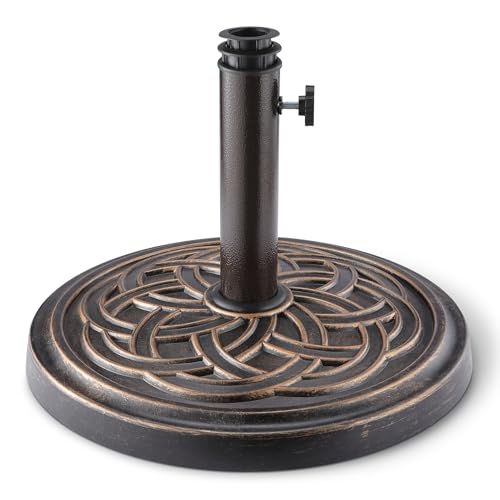
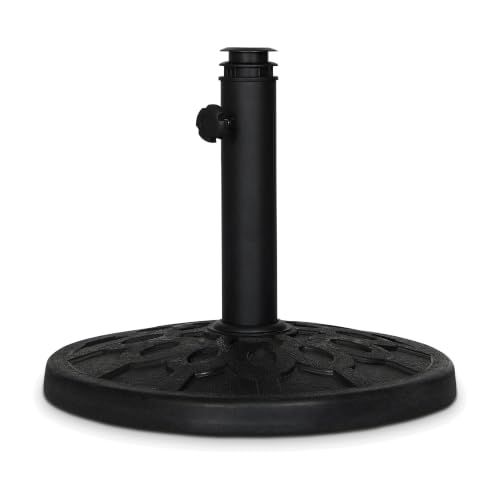
The classic cross-plate or round-plate base that sits under the pole. These use solid cast material plus removable weights to anchor the umbrella. Best for market umbrellas in sheltered patios. Often the most straightforward option for standard setups.
Weighted Cantilever Bases
Designed for offset umbrellas where the pole sits beside the seating area. These require a wide footprint and built-in weight compartments (often filled with sand or water). Look for models with lockable wheels for repositioning.
In-Ground Sleeves
For permanent installations in lawns or garden beds, an in-ground sleeve or ground spike secures the pole directly into the earth. These offer excellent stability but are not movable and not suited to hard surfaces.
Table-Integrated Stands
Some dining tables include a built-in umbrella hole with a supporting stand beneath. These rely on the table's structure plus a base plate. Ideal for dining sets but limited to specific table designs.
Freestanding Wheeled Bases
Heavy-duty bases with caster wheels for easy repositioning. Often used with large cantilever umbrellas. Choose models with locking casters so the base stays put once positioned.
Deck-Mounted Stands
Bolted or clamped to deck railings or posts for space-saving shade. These are ideal for balconies and small decks where floor space is limited. Ensure mounting hardware suits your railing material.
Matching the Stand to Your Umbrella
Umbrella size is the single most important factor in stand selection. A base that works for a compact 6-foot umbrella will not safely support a 10-foot canopy. As a general rule, the larger the canopy and the more exposed your location, the heavier and wider the base needs to be.
Canopy Size and Base Weight
Small umbrellas (6 to 7.5 feet) generally pair with lighter plate bases that can be moved easily. Mid-size umbrellas (8 to 9 feet) call for heavier bases or weighted compartments. Large umbrellas (10 feet and above) — especially cantilever styles — require substantial ballast and a wide stance to prevent tipping.
Pole Diameter Compatibility
Umbrella poles vary in diameter, typically from about 1.5 inches to 2.5 inches. Your stand's collar or sleeve must match the pole diameter, often with an adapter included. Confirm compatibility before ordering, especially when buying a base separately from the umbrella.
Wind Exposure
An open patio with no windbreak will demand a more substantial base than a sheltered courtyard. If your area experiences strong seasonal gusts, consider a base with a wider footprint, sand-fillable compartments, or a bolt-down option. Some cantilever bases allow you to add extra ballast for high-wind periods.
Stand Materials: What to Look For
The material affects durability, appearance, and how well the base resists weather over time.
Cast Iron and Steel
Heavy and inherently stable, cast iron and steel bases are excellent for wind resistance. Look for powder-coated or rust-proof finishes to prevent corrosion. These are a long-term investment and suit permanent setups.
Aluminum
Lighter than iron but often used with fillable weight compartments. Aluminum resists rust well and is easier to reposition. Ideal for mid-range cantilever bases where the empty weight is manageable.
Resin and Plastic
Common in entry-level plate bases. These are lightweight and rely on sand or water fill for stability. They are easy to move but may degrade faster under intense sun. Choose UV-stabilized resin for better longevity.
Concrete and Stone
Extremely heavy and stable, often used for permanent or semi-permanent installations. These are difficult to move and best suited to fixed positions where repositioning is not needed.
Comparing Umbrella Stand Tiers
Use this tier-based comparison to understand what each class of stand typically offers. Tiers reflect relative market positioning and build quality — not numeric values.
| Tier | Typical Construction | Best For | Stability Notes |
|---|---|---|---|
| Entry-level | Resin or light plastic plate base with fill port | Small umbrellas on sheltered patios | Relies on sand or water fill; move with care when empty |
| Mid-range | Powder-coated steel or aluminum with weight compartments | Standard 8–9 foot market umbrellas | Good balance of weight and portability; rust-resistant finish recommended |
| Premium | Cast iron or heavy steel with reinforced collar | Large umbrellas and exposed locations | High inherent weight; excellent wind resistance; long-term durability |
| Luxury / Commercial-grade | Cast aluminum or stainless steel cantilever systems with lockable wheels | Large offset umbrellas, hospitality settings | Wide stance, ballast compartments, professional-grade hardware |
Umbrella Stand Buying Checklist
Before you finalize your choice, run through these points to confirm the base suits your setup:
- Confirm the stand's collar or sleeve matches your umbrella pole diameter (check for included adapters)
- Verify the base meets or exceeds the umbrella manufacturer's recommended weight
- Measure your patio or deck space — cantilever bases need a wide footprint clearance
- Check whether the base includes protective feet for delicate deck surfaces
- Decide if you need wheels or casters for repositioning, and confirm they lock
- Confirm the finish is rust-resistant if the base will stay outdoors year-round
- For cantilever setups, check that the ballast compartments are easy to fill and drain
- Consider wind exposure at your location and size up the base accordingly
- Review the assembly requirements — some heavy bases need two people to position safely
- Confirm the return policy in case pole fit or weight is unsuitable
Placement & Setup Tips for Maximum Stability
Even the best base performs poorly if placed incorrectly. Follow these practical tips to get the most from your umbrella stand:
Choose Level Ground
Place the base on a flat, firm surface. Uneven pavers or soft lawn can cause the umbrella to lean and increase tipping risk. For cantilever bases, ensure the wheels are locked and the base sits flush.
Center the Load
For plate bases, position the umbrella pole dead center over the base plate. Off-center placement reduces stability and stresses the collar. Tighten the collar securely once the pole is positioned.
Use Sand or Water Fill Wisely
Fillable bases are lighter to move when empty but require proper filling to reach their rated stability. Sand is denser and heavier than water, offering better wind resistance. Follow the manufacturer's fill instructions and avoid overfilling beyond the marked line.
Retract During High Winds
No base can guarantee safety in extreme conditions. Close or remove the umbrella when strong winds are forecast. This single habit prevents most tip-over incidents.
Consider a Table Stand for Dining Sets
If your umbrella pairs with a dining table, an umbrella table stand integrates the base with the table structure for a tidy, stable result. This is especially useful for compact dining areas where a freestanding base would crowd the space.
Caring for Your Umbrella Stand
Simple maintenance keeps the stand stable and presentable season after season.
Routine Cleaning
Wipe metal and resin bases with a damp cloth to remove dust and pollen. For cast iron or steel, periodically inspect for chips in the finish and touch up with rust-resistant paint to prevent corrosion.
Seasonal Inspections
Before and after each season, check the collar, tightening knob, and any fill compartments for wear. Replace worn hardware promptly. If the base uses wheels, inspect the casters and locking mechanisms for smooth operation.
Winter Storage
In freezing climates, drain water-fill bases before winter to avoid cracking. Store lightweight resin bases indoors if possible. Heavier cast bases can remain in place if the finish is intact and the surface is stable.
Repositioning Safely
Never drag a heavy base across delicate surfaces — use a hand truck or lift with a helper. Wheeled bases should be unlocked only when moving, then locked firmly once in position.
Frequently Asked Questions
How heavy should an umbrella stand be?
The required weight depends on umbrella size and wind exposure. A standard 7–9 foot umbrella typically needs a base weighing at least 50 pounds for normal conditions. Larger umbrellas or exposed locations require substantially heavier bases, often 100 pounds or more. Always follow the umbrella manufacturer's weight recommendations.
What is the difference between a plate base and a cantilever base?
A plate base sits directly beneath the umbrella pole and relies on its own weight plus cross-plates for stability. A cantilever base supports an offset umbrella whose canopy extends away from the base, requiring a wider footprint and often wheels or weighted ballast compartments for stability.
Can I use an umbrella stand on a deck?
Yes, but choose a base with protective rubber or plastic feet to prevent scratching, and consider a deck plate or weighted base that distributes load evenly. Avoid very heavy concentrated loads on softwood decks without reinforcement beneath.
Do umbrella stands come with wheels?
Many cantilever and larger plate bases include wheels or casters for easier repositioning. Models without wheels can often be moved with a hand truck or by tilting and rolling on the base edge. Wheeled models typically include locking casters for stability once positioned.
Can I use a heavier base with a smaller umbrella?
Yes — using a heavier base than required is generally safe and increases stability. The main considerations are whether the collar fits your pole and whether the larger footprint suits your space. Over-specifying the base is a sensible approach for exposed locations.
Ready to Secure Your Shade?
Explore our recommended umbrella stands below, or browse related shade and patio essentials to complete your outdoor setup.
VIEW RECOMMENDED STANDS