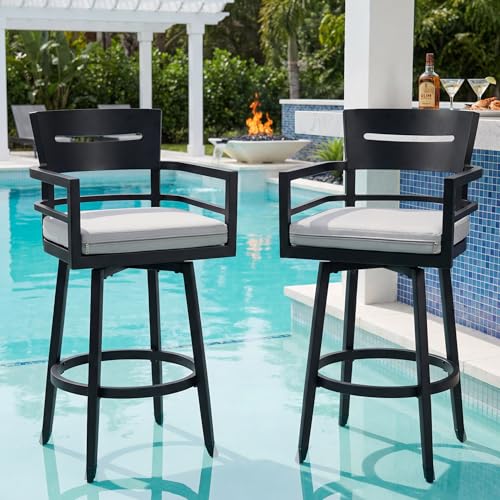
36 Inch Seat Height Outdoor Bar Stools: The Complete Buying Guide
Elevated seating for your outdoor bar, kitchen island, or high-top patio table. Learn how to choose the right 36-inch bar stools for comfort, durability, and style.
Explore Top PicksWhen you are outfitting an outdoor bar area, a poolside counter, or a high-top dining table, the seat height of your stools matters more than almost any other specification. Among the tallest standard options available, 36 inch seat height outdoor bar stools are purpose-built for elevated counters and bar surfaces that sit around 40 to 42 inches from the ground. Choosing the right pair can transform a purely functional space into a comfortable, stylish gathering spot that guests gravitate toward.
This guide walks you through everything you need to know before making a purchase: how to verify that 36-inch stools match your counter, which materials survive the elements, what comfort features are worth prioritizing, and how to style taller seating without overwhelming your patio. By the end, you will have a clear picture of which tier and style of stool fits your outdoor space — and you will be ready to shop with confidence.
Why 36-Inch Seat Height Stools Are Different
Bar stools generally fall into three height categories: standard counter height (around 24 to 26 inches), bar height (around 28 to 30 inches), and extra-tall or spectaator height (34 to 36 inches and above). A 36-inch seat height places the stool firmly in the extra-tall category, designed for counters and bars that measure roughly 40 to 42 inches from the floor.
This height is common in outdoor kitchen islands, built-in bar counters, and commercial-style patio bars. Because the stool is taller, the center of gravity is higher, which makes frame construction, leg splay, and footrest design far more important than on shorter stools. A well-built 36-inch stool feels planted and secure; a poorly built one can wobble, which is why this category rewards careful shopping.
Sizing and Counter-Height Matching
Before you fall in love with a design, measure twice. Grab a tape measure and check the exact height of your outdoor bar or counter from the ground to the top surface. Then confirm the available knee clearance — the vertical space beneath the counter — because a 36-inch stool with a tall backrest may not slide fully underneath a shallow overhang.
A Simple Height Matching Table
| Counter / Bar Surface Height | Recommended Seat Height | Typical Use |
|---|---|---|
| 34 – 36 inches | 24 – 26 inches (counter height) | Kitchen-style outdoor counters |
| 36 – 39 inches | 28 – 30 inches (bar height) | Standard patio bar counters |
| 40 – 42 inches | 34 – 36 inches (extra-tall / spectator height) | Elevated outdoor bars, pub-style counters |
| 42 – 44 inches | 36 inches with adjustable or footrest-assisted design | Tall built-in bars and viewing decks |
It also helps to think about who will use the stools. Taller family members and guests generally appreciate the extra legroom of a 36-inch stool, while shorter users benefit from a well-positioned footrest that lets them perch comfortably rather than dangle. If your household spans a wide range of heights, consider a set that pairs 36-inch stools with a slightly lower 34-inch seat height outdoor bar stool for a mix-and-match arrangement.
Materials: What Survives Outdoors
Outdoor furniture lives a harder life than indoor pieces. Sun exposure, rain, humidity, and temperature swings all take a toll. The material of your 36-inch bar stools is the single biggest predictor of how long they will last and how good they will look after a few seasons.
Aluminum and Powder-Coated Steel
Powder-coated aluminum is the workhorse of outdoor bar seating. It is lightweight enough to move around, will not rust like bare steel, and holds a crisp powder-coated finish that resists chipping. High-grade steel frames with a rust-proof finish are also common and tend to feel very solid underfoot. Look for reinforced welds at the joints, especially where the legs meet the seat frame.
Wicker and Rattan Weaves
Synthetic wicker wrapped over an aluminum frame delivers a warm, resort-style look that pairs beautifully with wooden bars and coastal decor. Quality weaves are UV-stabilized so they do not fade or become brittle. Check that the weave is tight and that the frame beneath is genuinely rust-resistant — that combination is what separates durable wicker stools from ones that sag within a season.
Teak and Acacia Wood
Wood brings natural warmth and is a strong choice if your outdoor space leans rustic or farmhouse. Teak is naturally weather-resistant and ages into a silver-gray patina; acacia is a solid alternative when finished with a protective sealant. Wooden 36-inch stools tend to be heavier, which actually helps stability at taller heights — a real advantage.
Resin and High-Density Plastic
Modern resin stools are surprisingly capable. They resist moisture, will not rust, and are easy to hose down. High-density plastic construction can be molded into comfortable contoured seats, making these a practical essential-tier option for poolside or beach-adjacent settings where salt and chlorine are factors.
Comfort and Ergonomic Features
At 36 inches, small comfort details make a big difference. Because users are perched higher, the seat shape and footrest placement determine whether guests settle in for a long evening or shift uncomfortably after twenty minutes.
- Contoured seat pan: A gently scooped seat distributes weight better than a flat slab, especially during long conversations.
- Footrest height: A well-placed footrest, ideally around 10 to 12 inches below the seat, lets users brace themselves and reduces pressure on the thighs.
- Backrest style: Low-back and backless designs are easier to tuck under counters; mid-back and full-back styles add support for lounging but need more clearance.
- Armrests: Optional on bar stools, but useful for anyone who likes to lean back with a drink in hand. Make sure armrests clear your counter overhang.
- Cushioning: If you choose padded seats, confirm the cushions are outdoor-rated with quick-dry foam and solution-dyed fabric so they survive rain and sun.
- Swivel function: A swivel seat is a joy at an outdoor bar because it lets guests turn toward the conversation without moving the stool — but check that the swivel mechanism feels smooth and secure at this height.
If you are planning a larger bar setup, it also helps to think about the counter itself. A 36-inch round patio table with umbrella hole or a dedicated outdoor bar counter will anchor the space and give your 36-inch stools a clear purpose. Matching the stool style to the table material creates a cohesive look.
Market Tiers: Entry-Level to Luxury
Rather than thinking in absolute terms, it helps to understand where a stool sits in the market. The classification below is based on construction quality, material grade, and finish detail — not on any specific figure. Use it to calibrate your expectations as you compare options.
| Tier | Typical Construction | Best For |
|---|---|---|
| Entry-level | Lightweight resin or basic powder-coated steel; simpler welds; shorter warranty | Casual poolside seating, seasonal use, starter outdoor bar setups |
| Mid-range | Powder-coated aluminum or quality wicker over metal frame; contoured seats; UV-stabilized finish | Everyday family patios, covered outdoor kitchens, regular entertaining |
| Premium | Heavy-duty aluminum or solid teak; reinforced joints; solution-dyed cushion fabrics; smooth swivel mechanisms | Full outdoor kitchens, uncovered patios in harsh climates, design-focused spaces |
| Luxury / Commercial-grade | Marine-grade hardware, thick-gauge frames, hand-finished details, extended structural warranties | High-traffic hospitality-style bars, coastal homes, long-term investment seating |
The sweet spot for most homeowners is the mid-range or premium tier. Mid-range stools are well-specified for the category and usually offer the best balance of durability and design flexibility. Premium and commercial-grade options are worthwhile investments if your bar area is uncovered, exposed to salt air, or used heavily year-round. Within each tier, look for a stool that is competitive within its class on joint construction and finish quality rather than chasing the lowest option available.
Stability, Weight Capacity, and Safety
Taller stools demand extra attention to stability. A 36-inch stool with a narrow base is more prone to tipping than a shorter one, so check the footprint of the legs relative to the seat. A wider leg splay, cross-bracing, or a weighted base all improve the planted feel.
- Weight capacity: Look for a stated capacity that comfortably exceeds the weight of your heaviest regular user. Commercial-grade stools typically publish higher capacities and are tested for repeated use.
- Non-marking feet: Rubber or plastic glides protect your patio surface and add grip. Replaceable glides are a plus for longevity.
- Assembly quality: Follow the instructions carefully and re-tighten hardware after the first few weeks of use. A wobble that appears early is usually a loose bolt, not a defective frame.
- Surface grip: On wet pool decks or smooth stone, choose stools with textured feet or consider an outdoor rug beneath the bar area to improve traction.
If your bar area is part of a larger entertaining zone, browse our outdoor living guides for layout ideas that keep traffic flowing safely around tall seating.
Styling Taller Stools on Your Patio
Taller seating can dominate a small space if you are not careful. The trick is to treat your bar stools as part of a vertical composition: pair them with a counter or bar table that has a slim profile, keep the surrounding area uncluttered, and repeat materials from elsewhere on the patio so the height feels intentional rather than accidental.
A few practical styling moves:
- Match the bar table to the stools. A 36-inch patio table with umbrella hole or a high-top bistro setup gives your stools a natural home and keeps the proportions balanced.
- Create a defined zone. Use a weather-resistant outdoor rug to visually separate the bar area from the rest of the patio.
- Layer in shade. A cantilever umbrella with weighted base provides shade without a center pole intruding on your bar setup.
- Warm up evenings. A fire pit or string lighting nearby extends the usable hours of your bar area.
- Keep sightlines open. Backless or low-back 36-inch stools preserve views and make the space feel larger.
If you are still shaping the broader design, our guides to patio styles and small patio ideas can help you choose a direction that makes the bar stools feel like a natural extension of your home.
Care and Maintenance
A little routine care keeps 36-inch bar stools looking sharp and structurally sound for years.
- Weekly: Wipe down frames and seats with a damp cloth to remove pollen and dust.
- Monthly: Check and re-tighten all bolts and screws, especially on swivel models.
- Seasonally: Deep-clean cushions with mild soap and water, then let them air-dry fully before use. Apply a wood sealant to teak or acacia stools once a year.
- Winter: Store cushions indoors and cover or move stools to a sheltered area if your climate brings heavy snow or ice.
For a deeper maintenance routine, see our weatherproofing guide and outdoor care hub.
Frequently Asked Questions
What counter height works best with 36-inch seat height stools?
A 36-inch stool is designed for counters and bars that measure roughly 40 to 42 inches from the floor. The 9 to 11 inch gap between seat and counter top is the sweet spot for comfortable seating and easy entry.
Are 36-inch bar stools too tall for a standard patio bar?
Only if your counter is shorter than about 40 inches. Measure your counter first. Standard patio bars often sit at 36 to 39 inches, which calls for a 28 to 30 inch stool. 36-inch stools shine on elevated or pub-style outdoor counters.
Should I choose backless or backrest 36-inch stools?
Backless stools tuck neatly under counters and preserve sightlines, making them ideal for compact bars. Mid-back and full-back designs add support for longer lounging sessions but require more clearance beneath the counter overhang.
How many 36-inch stools fit at a bar counter?
Allow roughly 24 to 30 inches of counter width per stool. A six-foot outdoor bar comfortably seats two to three 36-inch stools; a longer counter can seat more. Always leave a little breathing room between seats.
Can 36-inch bar stools be used indoors too?
Absolutely. If you have a tall kitchen island or home bar at 40 to 42 inches, 36-inch stools work indoors just as well. Choose a finish that suits your interior palette, and keep in mind that indoor use generally extends the lifespan of outdoor-rated materials.
What is the difference between 34-inch and 36-inch seat height stools?
The two-inch difference can matter at the margins. A 34-inch seat height outdoor bar stool suits counters around 38 to 40 inches, while 36-inch stools are better for 40 to 42 inch surfaces. Measure carefully — a comfortable seat-to-counter gap is what matters most.
Do I need a footrest on a 36-inch stool?
Yes, it is strongly recommended. At this height, legs dangle without support, which becomes uncomfortable quickly. A footrest roughly 10 to 12 inches below the seat lets users brace themselves and sit comfortably for longer.
Ready to Elevate Your Outdoor Bar?
Explore our curated selection of 36-inch seat height outdoor bar stools below, with options for every style and market tier — from essential-tier poolside picks to premium, commercial-grade designs.
View Recommended Stools