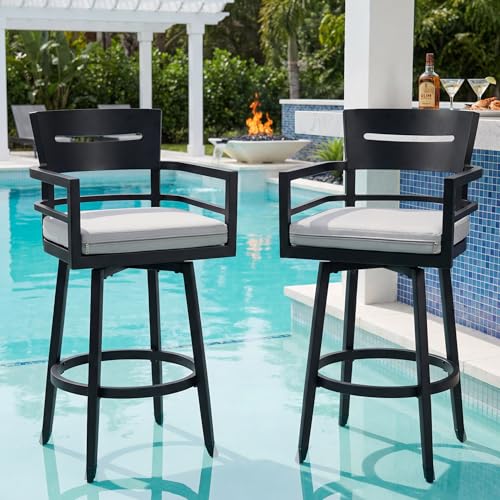
34 Inch Seat Height Outdoor Bar Stools: The Complete Buying Guide
Everything you need to know about bar-height patio stools — from sizing and clearance to materials, comfort, and long-term durability — so you can choose the right seating for your outdoor bar or high-top table with confidence.
Why 34 inches matters. A 34 inch seat height is the standard bar-height measurement that pairs with 40 to 42 inch high outdoor bar tables, kitchen islands used outdoors, and built-in patio bars. Choosing the correct seat height is the single most important decision for comfort, posture, and safety — yet it is also the one most shoppers overlook. This guide walks you through exactly how 34 inch outdoor bar stools fit into a real patio setup and what to look for before you commit.
What Does "34 Inch Seat Height" Actually Mean?
Seat height is measured from the floor to the top of the seat surface — not to the top of the backrest and not to the footrest. A 34 inch seat height outdoor bar stool sits in the standard bar-height category, which is taller than counter-height seating (typically 24 to 26 inches) and taller than standard dining chairs (typically 17 to 19 inches).
This measurement is the anchor for the entire seating arrangement. If your stool is too short, guests will feel like they are reaching upward to eat or drink. If it is too tall, knees will collide with the table apron and the stool may feel unstable. Getting the 34 inch measurement right is the foundation of a comfortable outdoor bar area.
Bar Stool Height Categories at a Glance
Use this reference table to confirm where 34 inch stools sit relative to other common heights. The "Best For" column reflects the typical outdoor table or counter each category pairs with.
| Category | Typical Seat Height | Pairs With | Best For |
|---|---|---|---|
| Standard dining chair | 17–19 in | 28–30 in dining tables | Traditional patio dining sets |
| Counter-height stool | 24–26 in | 34–36 in counter tables and islands | Casual kitchen-style outdoor counters |
| Bar-height stool | 28–30 in (short bar) / 34 in (standard bar) | 40–42 in bar tables and built-in bars | Outdoor bar counters, high-top pub tables |
| Extra-tall / spectator stool | 36 in and above | 44–46 in counters or standing-height bars | Spectator areas, commercial-style bars |
If you are still narrowing down the exact category, our guide to 34–36 inch spectator-height outdoor bar stools explains when a slightly taller seat is the better fit. For shorter bar setups, the 30 inch outdoor bar stool set is the more appropriate match.
The Clearance Rule That Makes or Breaks Comfort
The most reliable sizing rule in bar seating is the 9 to 13 inch gap between the seat surface and the underside of the table. With a 34 inch seat, the ideal table height falls between roughly 40 and 42 inches. That range gives enough knee room to sit comfortably while keeping the tabletop within easy reach.
A few practical checks before you commit:
- Measure the table underside, not the top. Aprons, support bars, and umbrella-hole collars can reduce usable clearance by an inch or more.
- Account for cushions. A thick seat cushion can add 1 to 2 inches of effective seat height. If you plan to add cushions, choose a stool at the lower end of the 34 inch range or plan for a slightly taller table.
- Check footrest placement. On a 34 inch stool, the footrest should sit roughly 9 to 12 inches below the seat so legs can rest naturally rather than dangle.
- Mind the backrest. A high backrest adds visual height. On a small balcony, a low-back or backless 34 inch stool keeps sightlines open.
Pairing 34 Inch Stools With the Right Outdoor Table
Bar-height seating is only as good as the surface it serves. The most common pairing is a high-top bistro or pub table in the 40 to 42 inch range. If you are building a complete setup, our guide to bar-height bistro sets covers table-and-stool combinations that are already proportioned correctly.
For larger gatherings, a dedicated high-top table set keeps the proportions consistent. The high-top outdoor table set breakdown is useful if you want to see how bar-height tables are matched to taller seating. If you are working with a compact balcony, the patio bar-height bistro set guide shows how to fit bar seating into a small footprint without crowding the space.
One more consideration: bar stools used at a counter attached to a grill station or outdoor kitchen should leave at least 30 inches of walkway behind them. Bar-height seating takes up more floor space than dining chairs, so plan the layout before ordering.
Materials: What Holds Up Outdoors
Outdoor bar stools face sun, rain, humidity, and temperature swings. The material choice drives durability, maintenance, and how the stool looks after several seasons. Here is how the main options compare.
Aluminum
Powder-coated aluminum is the most popular choice for 34 inch outdoor bar stools because it is lightweight, rust-resistant, and easy to move when rearranging the patio. High-grade aluminum frames with a reinforced weld at the footrest tend to hold up well. Look for a powder-coated finish rather than a painted one — powder coating resists chipping and fading far better over time.
Steel
Steel frames are heavier and very stable, which matters for tall stools that can feel tippy. The trade-off is weight and the need for a rust-proof finish. A galvanized or powder-coated steel frame with sealed welds is a solid choice for covered patios. Fully exposed steel requires more inspection for rust at joints and feet.
Wicker and Rattan
All-weather wicker over an aluminum frame gives a warmer, more textured look that suits coastal and bohemian patios. Synthetic resin wicker is the outdoor-safe version — natural rattan will not survive repeated rain. Wicker bar stools are comfortable and visually lighter, but the weave should be tight and uniform, and the frame underneath should be aluminum rather than steel to prevent hidden rust.
Teak and Acacia Wood
Solid wood bar stools bring a natural, premium feel. Teak is naturally weather-resistant and ages to a silver-grey patina. Acacia is a more budget-friendly hardwood that performs well with regular sealing. Wood stools are heavier and require seasonal oiling or sealing, but they are quiet, stable, and repairable — a long-term investment for a covered or semi-covered patio.
Material quick verdict
Aluminum for low maintenance and easy rearranging. Steel for maximum stability on exposed patios. All-weather wicker for a softer, design-forward look. Teak or acacia for a natural, premium feel when you are willing to maintain the finish seasonally.
Comfort Features That Actually Matter at Bar Height
At 34 inches, small comfort details have an outsized effect. Feet are further from the ground, so support under the legs becomes critical.
- Footrest integrity. The footrest carries real weight. A welded or bolted bar that spans the full frame is more dependable than a thin decorative rung. On wicker stools, check that the footrest is a solid bar rather than woven material.
- Seat depth and width. A seat roughly 15 to 17 inches deep and 16 to 18 inches wide fits most adults comfortably. Wider seats suit lounging; narrower seats suit compact bars.
- Backrest height. Low backs (around 8 to 12 inches above the seat) support the lower back without dominating the view. Full backs are more comfortable for long meals but add visual bulk.
- Cushion options. Removable, quick-dry cushions with tie-downs are the most practical for outdoor use. If the stool has a slatted or mesh seat, water drains instead of pooling.
- Swivel vs. fixed. Swivel seats make it easier to get in and out at bar height, but swivel mechanisms on outdoor stools need sealed bearings to avoid grit buildup.
If you are adding cushions, the same sizing logic applies to all outdoor seating. Our outdoor seat and back cushion sizing guide explains how to measure a stool seat correctly before ordering.
Stability and Safety at 34 Inches
A 34 inch stool has a higher center of gravity than a dining chair, so stability is not a minor detail. Look for these features:
- Wide base footprint. Splayed legs or a circular base ring distribute weight more evenly than narrow, straight legs.
- Non-slip feet. Rubber or plastic glides protect the patio surface and prevent sliding on smooth stone or composite decking.
- Weight rating. Reputable manufacturers list a weight capacity. Choose a stool rated well above the heaviest expected user — this is a structural indicator, not a style preference.
- Assembly quality. Bolted joints should use lock washers or thread-locking compound. Re-tighten all fasteners after the first two weeks of use and again at the start of each season.
Tall stools placed on uneven pavers are a common trip hazard. Add adjustable glides or leveling feet if your patio surface is not perfectly flat. For a fuller look at seasonal care, see our weatherproofing and outdoor furniture care guide.
How to Measure Before You Buy
A five-minute measurement session prevents most returns. Here is the sequence:
- Measure your table height from the floor to the top of the tabletop. Confirm it is in the 40 to 42 inch range for standard bar height.
- Measure the table underside clearance — floor to the lowest point under the tabletop. Subtract the stool seat height to find the actual gap.
- Confirm the target gap is 9 to 13 inches. If your table is 41 inches tall and the stool is 34 inches, the gap is 7 inches — too tight for comfortable legroom. In that case, a 30 inch stool is the better match.
- Check the walkway. Leave at least 30 inches of clearance behind stools that will be used regularly.
- Measure your doorways and storage. If you store stools indoors during winter, confirm they fit through the door and stack or nest if space is limited.
For counter-style setups rather than bar-style, our 30 inch outdoor bar stool guide covers the shorter category. If your table is taller than standard bar height, the 36 inch seat height outdoor bar stools page is the correct starting point.
Design and Style Considerations
Bar stools sit at eye level when guests are standing nearby, so they are more visually prominent than dining chairs. A few design guidelines help the seating feel intentional rather than added on:
- Match the frame finish to other metal on the patio. Black, charcoal, bronze, and warm grey frames integrate most easily. Bright white works well with coastal and modern schemes.
- Coordinate seat colour with the tabletop, not the chairs. Bar stools rarely match dining chairs exactly, so treat them as a separate group anchored by the bar surface.
- Choose backless for tight spaces. Backless stools tuck fully under the counter and keep sightlines open on balconies.
- Keep the style consistent. A farmhouse table with industrial stools can work, but only when one element is clearly dominant. Our rustic farmhouse patio style guide and modern patio design guide both cover bar seating placement in context.
Care and Maintenance for Tall Outdoor Stools
Bar stools take more wear at the footrest and at the leg-to-seat joints than lower seating because of the leverage involved. A simple seasonal routine keeps them stable and looking good:
- Monthly: Wipe the frame with mild soapy water; inspect footrest welds and seat bolts for looseness.
- Quarterly: Tighten all fasteners; apply a silicone spray to swivel mechanisms; check glides for wear.
- Seasonally: Deep-clean wicker with a soft brush; reseal wood frames; touch up any chips in powder coating before rust can start.
- Before winter: Store or cover stools. Stacking them indoors protects the finish and extends the life of the footrest joints.
For a full routine across all outdoor furniture, our weatherproofing guide covers cleaning recipes, cover selection, and off-season storage.
Common Mistakes to Avoid
- Buying 34 inch stools for a counter-height table. This is the most frequent mismatch. Counter tables are 34 to 36 inches tall and need 24 to 26 inch stools.
- Ignoring cushion height. A plush cushion can push effective seat height past the comfort zone.
- Choosing style over stability. Narrow, decorative legs look elegant but can feel unsteady at bar height on uneven pavers.
- Skipping the walkway check. Tall stools need more clearance behind them than dining chairs.
- Ordering without checking the footrest height. A footrest placed too low leaves legs dangling; too high crowds the knees.
Frequently Asked Questions
What table height pairs with a 34 inch seat height bar stool?
A 34 inch stool is designed for bar tables in the 40 to 42 inch range. The goal is a 9 to 13 inch gap between the seat surface and the underside of the tabletop. Measure the underside, not the top, because aprons and support bars reduce usable clearance.
Is 34 inches counter height or bar height?
It is bar height. Counter-height stools are typically 24 to 26 inches. Standard bar-height stools are 28 to 30 inches, and 34 inches is the taller standard bar height used with 40 to 42 inch bars. Some manufacturers label 34 inch stools as "tall bar height" to distinguish them from the 30 inch category.
Can I use 34 inch stools at a kitchen island?
Only if the island counter is 40 to 42 inches tall. Standard kitchen islands are 36 inches and require 24 to 26 inch counter stools. Using a 34 inch stool at a 36 inch counter leaves almost no knee clearance.
Are backless or backed stools better for outdoor bars?
Backless stools tuck under the counter, save space, and keep views open — ideal for balconies and tight patios. Backed stools are more comfortable for long meals and socializing. Many homeowners mix both around a single bar.
How much weight can a 34 inch outdoor bar stool hold?
Weight capacity depends entirely on the frame and construction, not the seat height. Reputable manufacturers list a rating. Choose a stool rated comfortably above the heaviest expected user and check that footrest welds and seat joints are reinforced.
Do 34 inch bar stools need cushions?
Not necessarily. Slatted, mesh, or contoured seats are comfortable without cushions and drain water better. If you prefer cushions, choose quick-dry foam with tie-downs, and account for the added 1 to 2 inches of effective seat height when sizing.
How do I stop tall outdoor bar stools from wobbling?
Check that all assembly bolts are tight and that the stool has non-slip glides. On uneven pavers, add adjustable leveling feet. A stool with a wider base footprint or splayed legs is inherently more stable at 34 inches than a narrow, straight-legged design.
What is the difference between 34 inch and 36 inch bar stools?
The 2 inch difference matters at the margin. A 36 inch stool pairs with a 44 to 46 inch counter and is often called spectator height. Standard patio bars at 40 to 42 inches should use 34 inch stools. Our 36 inch seat height bar stool guide covers the taller category in detail.
Ready to Choose Your Bar-Height Seating?
Browse our curated selection of 34 inch seat height outdoor bar stools, compare construction details, and find the configuration that fits your patio bar or high-top table.