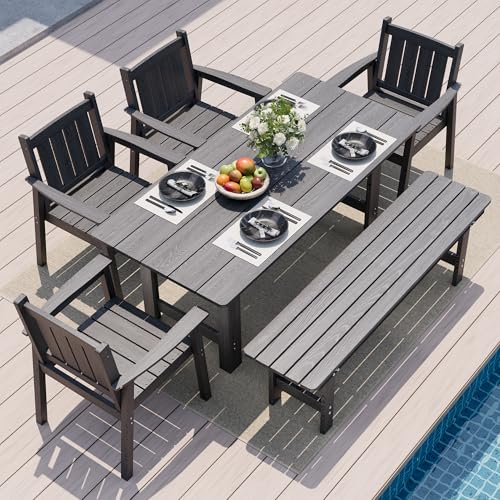
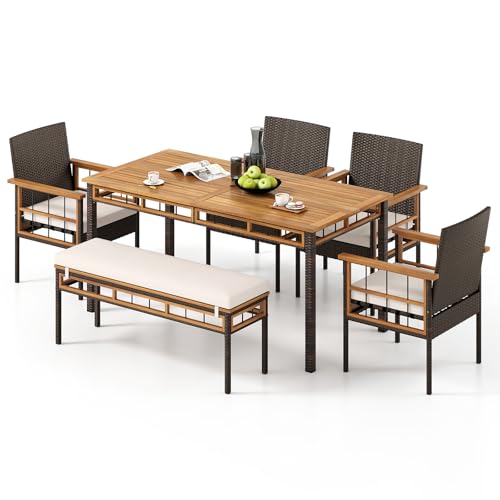
6 Piece Outdoor Dining Set with Bench: The Complete Buying Guide
A bench-style patio dining set balances generous seating with a compact footprint. Learn how to choose the right configuration, materials, and layout before you commit.
EXPLORE RECOMMENDED SETSWhy a bench configuration stands out: A 6 piece outdoor dining set with bench pairs a full-size dining table with one bench and four chairs, seating six people comfortably while keeping the walking lanes clear. Benches tuck under the table, cut visual clutter, and give the dining area a relaxed, family-style character that individual chairs rarely match.
If you have already decided that a six-seat dining arrangement is right for your patio, the next step is understanding what "6 piece" actually means from brand to brand. The label is not standardized. Some sets combine a table, one bench, and four chairs. Others pair a table with two benches and two chairs, or include a small side table in place of one seat. This guide walks through the composition, materials, dimensions, and maintenance realities so you can evaluate any listing with confidence.
What Is Included in a 6 Piece Outdoor Dining Set with Bench?
The most common arrangement is one rectangular or round dining table, one bench, and four dining chairs. This layout keeps one long side of the table open for bench seating, which is ideal against a wall, railing, or deck edge. The bench side becomes a natural focal point, while chairs on the opposite and end positions offer individual back support for guests who prefer it.
Variations you should watch for when comparing listings:
- Table + 1 bench + 4 chairs: the classic configuration, best for patios where one side faces a wall or view.
- Table + 2 benches + 2 chairs: maximizes seating density and works well for long, narrow decks.
- Table + 1 bench + 3 chairs + 1 side table: trades one seat for serving space, useful for entertaining-focused patios.
- Round table + curved bench + chairs: a space-efficient option for smaller patios and conversation-friendly dining.
Always confirm the exact piece count in the product title and specifications. A "6 piece" label that includes a side table or an umbrella does not necessarily mean six seats. If seating capacity is your priority, verify that the listing explicitly states six seats, and compare it against related options like a 6 seat dining table set with bench or a 6 piece dining table set with bench if you want a slightly different mix of chairs and bench seating.
Bench vs. Chairs: Which Seating Mix Suits Your Patio?
A bench is not simply a substitute for chairs. It changes how the table is used. Benches encourage side-by-side seating, which is excellent for families with children, casual weekend brunches, and groups that linger. They also slide fully under the table, freeing floor space on compact patios.
Chairs, on the other hand, provide individual backrests, armrests on some models, and easier access for guests with mobility considerations. A mixed configuration, one bench plus four chairs, is the most versatile compromise because it accommodates both seating styles without forcing the whole group into one format.
Consider these practical differences before deciding:
- Space efficiency: benches win on narrow patios and balconies because they eliminate the gaps between chair backs.
- Comfort: chairs win for long dinners, especially models with contoured backs and armrests.
- Accessibility: chairs are easier for older guests and anyone who needs to slide in and out frequently.
- Aesthetics: benches create a clean, built-in look that suits modern, rustic, and coastal designs alike.
If your priority is shade and flexibility, a set with an umbrella opening may matter more than the bench-to-chair ratio. In that case, browse a 6 piece outdoor dining set with umbrella to compare how bench seating integrates with a shaded layout.
Materials and Build Quality: What to Look For
Outdoor dining furniture lives through sun, rain, and temperature swings. The material determines how much maintenance the set demands and how long it retains its appearance. The table below compares the most common construction types using tier descriptors rather than absolute figures, so you can judge relative positioning within the market.
| Material | Market Tier | Best For | Maintenance Profile |
|---|---|---|---|
| Powder-coated aluminum | Mid-range to premium | Humid climates, coastal patios, lightweight rearrangement | Low; rinse and wipe, rust-resistant frame |
| Cast aluminum | Premium to luxury | Windy areas, ornate traditional designs, heavy-duty use | Low; occasional cleaning, touch-up paint for chips |
| Teak or acacia hardwood | Mid-tier to high-end tier | Natural warmth, rustic and farmhouse styles | Moderate; periodic sealing and oiling recommended |
| HDPE / resin | Entry-level to mid-range | Casual family patios, low-maintenance households | Low; soap and water cleaning, no sealing required |
| Wicker over aluminum frame | Mid-range to premium | Coastal and bohemian styling, covered patios | Moderate; keep covered during harsh weather |
Whichever material you choose, inspect the joinery and hardware. Welded frames outperform bolted joints on benches that see frequent foot traffic. Stainless steel hardware resists corrosion far better than untreated steel. A weather-resistant coating on the tabletop matters more than the frame finish for daily wear, especially on surfaces that receive direct sun.
Build-Quality Checklist
Look for reinforced bench aprons, leg levelers for uneven patios, non-marring glides that protect deck boards, and a tabletop edge that resists chipping. A solid build in the mid-range tier often outlasts a decorative high-end tier piece that skimps on hardware.
Measuring Your Space for a Bench-Style Dining Set
Bench sets are space-efficient, but they still need breathing room. A rectangular six-seat table generally measures about 60 to 72 inches long and 36 to 40 inches wide. A round six-seat table typically measures around 60 inches in diameter. Add at least 36 inches of clearance on every side for chair and bench pull-out, plus walking space.
As a rule of thumb, plan for a patio or deck zone of roughly 10 by 12 feet for a rectangular set. A round set with a curved bench can work in a slightly tighter footprint because the bench follows the table edge and eliminates corner gaps.
- Against a wall or railing: place the bench on the wall side and chairs on the open sides. This preserves circulation and makes the bench feel intentional.
- Freestanding on a large patio: center the table and use the bench as the visual anchor facing the main view.
- Small balcony or compact patio: a round table with a curved bench is often the most efficient arrangement. See the 6 piece outdoor dining set round table for layout examples.
- Covered porch: confirm bench height clears any railing or post before ordering.
If your space is tighter than expected, a five-piece arrangement may be more realistic. Compare a 5 piece outdoor dining set or a 5 piece outdoor dining set with cushions before downsizing the bench itself, since seating comfort matters more than the headline piece count.
Comfort, Cushions, and Long-Distance Usability
Bench comfort varies enormously. A flat wooden bench without a cushion is fine for quick meals but punishing for long dinners. Look for benches with slightly contoured seats, or plan to add outdoor cushions with ties and quick-dry foam. Cushions also soften the visual transition between table and bench, which helps smaller patios feel intentional rather than improvised.
For chairs, prioritize back height and seat depth over decorative details. A chair with a 17- to 19-inch seat height pairs correctly with a standard 28- to 30-inch dining table. Benches typically sit at the same height as chairs, so mixing a bench with chairs from the same set keeps everyone at a consistent level.
If your household entertains frequently, consider a set that pairs bench seating with swivel or cushioned chairs. A 6 piece wicker patio set with cushions shows how cushioning changes the feel of a bench-and-chair layout, while a 6 piece outdoor dining set with umbrella demonstrates how shade integrates without sacrificing bench seating.
Care and Seasonal Maintenance
Bench sets collect debris underneath more than chair-only sets because the bench blocks airflow and traps leaves. A monthly sweep under the bench prevents moisture buildup and keeps the frame dry. For metal frames, rinse with mild soap and water, dry thoroughly, and touch up any chips before rust can develop. For wood, apply a sealant at the start and end of the outdoor season, and store cushions indoors during prolonged rain.
Winter storage matters as much as summer care. Remove cushions, stack chairs and benches in a covered area if possible, and use breathable covers rather than plastic tarps, which trap condensation. If the set stays outside year-round, check hardware tightness after the first cold snap.
Quick Maintenance Rhythm
Weekly: sweep under the bench and wipe the tabletop. Monthly: rinse the frame, inspect hardware, and tighten bolts. Seasonally: deep clean, apply wood sealant if applicable, and store cushions in a dry space.
How to Compare Sets Before You Commit
Once you understand composition, materials, and dimensions, comparison becomes straightforward. Focus on four questions: does the piece count match the seat count, does the material suit your climate, does the footprint fit your patio with clearance to spare, and does the bench design match how your household actually eats outdoors?
If you are still deciding between a bench-centric layout and other six-seat configurations, compare a 6 piece outdoor dining set with bench against a 6 person outdoor dining set with umbrella hole or a 6 person dining table set with bench to see how table shape and shade options affect the final layout.
For homeowners who want a coordinated look across seating and dining zones, a broader 6 piece patio set may include lounge pieces alongside the dining table. That approach works well on large patios but can crowd smaller spaces, so measure twice before mixing categories.
Frequently Asked Questions
What usually comes in a 6 piece outdoor dining set with bench?
Most sets include one dining table, one bench, and four chairs. Some configurations swap a chair for a second bench or a side table, so confirm the exact composition in the product specifications before ordering.
Is a bench better than chairs for outdoor dining?
A bench is space-efficient and encourages communal seating, while chairs offer individual back support and easier movement. Many households mix one bench with four chairs to balance both styles.
Which materials are best for an outdoor dining set with a bench?
Powder-coated aluminum is lightweight and rust-resistant, cast aluminum is heavy-duty, teak and acacia offer natural warmth, and HDPE or resin are entry-level weather-resistant options. Choose based on climate and maintenance preference.
How much space do I need for a 6 piece outdoor dining set?
Plan for a table footprint of about 60 to 72 inches long or 60 inches round, plus 36 inches of clearance on all sides. A rectangular set generally needs a patio zone of at least 10 by 12 feet.
Do bench-style outdoor dining sets work on small patios?
Yes. Benches tuck under the table and eliminate gaps between chairs, making them efficient for compact patios and balconies. A round table with a curved bench is especially space-friendly.