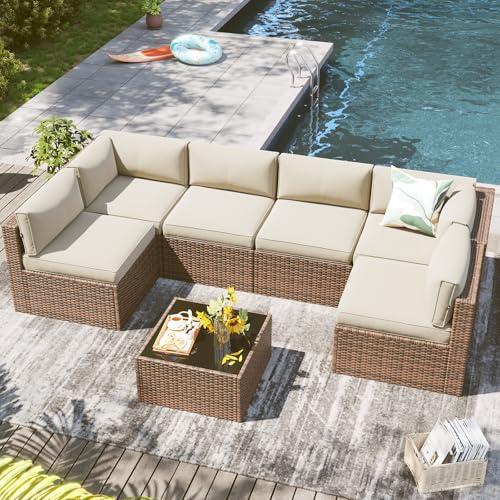
7 Piece Patio Set Buying Guide
Everything you need to choose a seven piece outdoor dining set: seating capacity, table shapes, materials, layout planning, and the details that separate a good set from one you will keep for years.
Start the GuideQuick summary: A 7 piece patio set almost always means one table plus six seats. The real decision is not the seat count — it is table shape, chair style, frame material, and whether the table includes an umbrella hole. This guide walks through each decision in order so you can narrow the field before you shop.
What a 7 Piece Patio Set Actually Includes
The label “7 piece” is a counting convention, not a standard. In practice, almost every set sold under this description breaks down into one table and six seats. The seats are usually six dining chairs, but some configurations swap two chairs for a bench — a layout that still seats six people while changing the look and the seating dynamic.
Before comparing models, identify which of these three configurations matches your space:
Table + 6 Chairs
The most common layout. Individual chairs give everyone their own seat and allow flexible positioning around the table. Works well for rectangular and round tables alike.
Table + 4 Chairs + Bench
Keeps the six-seat capacity with a more relaxed, casual feel. Benches are excellent for families with children and tuck neatly under the table to save visual space.
Table + 6 Swivel or Rocker Chairs
A more specialized layout where each chair rotates or rocks. Popular for high-top and counter-height configurations where guests want to turn away from the table.
Seating Capacity and Real-World Comfort
Six seats is the headline number, but comfort depends on table width and chair spacing. A 7 piece set built around a narrow table can feel crowded even though the seat count is correct. As a rule of thumb, plan for at least 24 inches of table edge per person, and closer to 28 inches if you regularly host adults for full meals.
This is where table shape matters more than any other single factor. Rectangular tables distribute six seats efficiently along two long sides, with the option of placing one person at each end. Round tables spread the same six seats evenly but demand a larger clear diameter. Oval tables sit in between and tend to work well in narrower spaces.
If your guest list often runs larger than six, consider whether the set can extend or whether a companion piece makes sense. A larger eight-person table is the natural upgrade, while a six piece set may be a better fit if six seats is the true upper limit of your household.
Table Shape: The Decision That Shapes Everything Else
Once you settle on six seats, the table shape becomes the primary constraint on layout, walkway clearance, and umbrella coverage.
| Table Shape | Best For | Space Consideration |
|---|---|---|
| Rectangular | Narrow patios, decks along a house wall, formal dining | Efficient per seat; needs clearance at the ends for head-of-table seating |
| Round | Square or open patios, conversation-heavy meals, smaller groups | Even seat distribution; requires a larger clear diameter to avoid crowding |
| Oval | Long but shallow spaces; a softer alternative to rectangular | Balances rectangular efficiency with round-table flow |
| Square | Compact footprints, symmetrical layouts, paired with benches | Seats six tightly; benches help maximize edge usage |
If you already know the shape you want, the buying path narrows quickly. Rectangular buyers can review seven piece dining table and chairs configurations, while round-table buyers should look at round table sets and patio dining sets with round tables.
Height Options: Standard, Counter, and Bar
Height is the second filter most buyers apply, and it changes both the feel of the set and the chairs required. Standard dining height sits around 28 to 30 inches at the tabletop and suits long, relaxed meals. Counter height runs roughly 36 inches and offers a more upright, pub-style experience. Bar height sits near 40 to 42 inches and creates a distinct entertainment-zone look.
Each height has trade-offs. Standard height is the most comfortable for extended sitting and for guests with mobility concerns. Counter height is a good middle ground that still feels social without the climb of a bar set. Bar height maximizes visual impact but can be less comfortable for older guests and young children.
Buyers leaning toward taller configurations can compare counter height sets, bar height sets, and outdoor dining sets at bar height. If the set will sit on a raised deck or patio with a view, high top sets and high dining sets with a fire table are worth a look.
Frame Materials Compared
Material choice determines maintenance, lifespan, and how the set handles your local weather. There is no universally best material — only the best match for your climate and willingness to care for it.
| Material | Market Tier | Durability Notes | Best For |
|---|---|---|---|
| Powder-Coated Aluminum | Essential tier to mid-tier | Lightweight, rust-resistant, low maintenance | Humid climates, frequent rearranging, covered patios |
| Cast Aluminum | Mid-tier to high-end tier | Heavy-duty construction, detailed cast patterns, very weather resistant | Windy locations, buyers wanting ornamental detail |
| Wicker & Rattan over Metal | Mid-tier to premium | Warm look; quality varies widely by weave density and frame | Coastal and transitional styles, covered outdoor rooms |
| Wrought Iron / Steel | Mid-tier to premium | Very solid build; requires rust protection and touch-ups | Traditional styles, sheltered patios, buyers who accept maintenance |
| Wood (Teak, Acacia, Eucalyptus) | Mid-tier to luxury | Natural aging; needs sealing or oiling depending on species | Rustic and farmhouse styles, dry climates |
| Resin / Plastic | Entry-level | Light and easy to clean; shorter service life in strong sun | Seasonal use, rental properties, casual setups |
Two material-specific guides are worth reading before you commit. Buyers comparing metal frames should review the differences between cast and tubular construction, while buyers drawn to woven looks should understand how frame quality drives wicker longevity. For buyers set on a classic metal look, wrought iron dining sets and cast aluminum outdoor dining sets cover the two main paths.
Chair Style: Standard, Swivel, and Rocker
The chairs in a 7 piece set do as much to define the experience as the table does. Standard dining chairs are the default and the most space-efficient. Swivel chairs let guests turn away from the table without pushing back, which is useful on tighter patios. Swivel rockers combine rotation with a gentle rocking motion and suit high-top layouts especially well.
Cushion availability is another fork in the road. Cushioned chairs are more comfortable for long meals but require storage or covers in wet weather. Sling and solid-seat chairs dry faster and demand less care. Buyers who prioritize comfort should focus on cushioned configurations, while buyers in rainy climates may prefer quick-dry designs.
Relevant paths for each style include cushioned seven piece sets, sets with swivel chairs, swivel chair patio dining sets, swivel chair patio sets, and sets with swivel rockers.
Shade and Umbrella Considerations
Most seven piece dining sets are designed for shade, but the umbrella itself is often sold separately. Check three things before buying: whether the table has a pre-drilled umbrella hole, what diameter hole it is, and whether the set includes a base. A table without a hole will need a freestanding cantilever umbrella, which changes the footprint requirements.
Umbrella size should match the table. For a rectangular table seating six, an umbrella in the 9 to 10 foot range typically covers the table and most of the seating. For round tables, match the umbrella canopy to the table diameter plus a small overhang. Buyers who want shade built into the purchase should prioritize sets with an umbrella, patio dining sets with umbrella, and sets with an umbrella hole.
Layout Planning and Clearance
Measure before you buy, and measure the walkway, not just the furniture. The table and chairs occupy a footprint, but people need room to move around it. The commonly cited minimum is 36 inches of clearance between the table edge and any wall, railing, or planter. That figure assumes chairs can pull out and someone can walk behind them.
For a rectangular seven piece set, a clear area of roughly 10 by 12 feet is a practical target. Round sets often need a similar square footprint because the chairs radiate outward. On a narrow balcony or a patio bounded by a wall on one side, an oval or rectangular table pushed toward the wall can free up usable space on the open side.
Also plan for circulation between the dining zone and other outdoor areas. A set that blocks the path to a grill or a door will be annoying in daily use regardless of how well it fits the measurements on paper.
Pre-Purchase Checklist for a 7 Piece Patio Set
- Confirm the seat count and whether chairs or benches make up the six seats
- Measure the available footprint and allow 36 inches of clearance around the table
- Decide on table shape: rectangular, round, oval, or square
- Choose table height: standard, counter, or bar
- Verify frame material suits your climate and maintenance preference
- Check whether chairs are standard, swivel, or swivel rocker
- Confirm the table has an umbrella hole and note the hole diameter
- Check whether a cushion set is included and plan for storage
- Review the assembly requirements and what tools are needed
- Read the warranty terms for frame and finish separately
Specialized Configurations Worth Knowing
Beyond the standard table-and-six-chairs setup, a handful of specialized configurations exist and are worth considering if your priorities differ from the norm.
Sets With a Fire Pit
A fire element integrated into or paired with the dining set extends usable hours into cool evenings. These sets trade some dining formality for ambiance and warmth.
Glass-Top Sets
Glass tops reflect light and keep the visual weight of the set low, which helps on smaller patios. They require more careful cleaning and are less forgiving of heavy impacts.
Sectional-Adjacent Sets
Some seven piece sets blur the line between dining and lounging, pairing a table with modular seating. These suit buyers who host mixed-use gatherings rather than formal meals.
For fire-focused setups, review outdoor dining sets with a fire pit, patio dining sets with fire pit, and outdoor patio sets with fire pit. Glass-top buyers can compare glass top dining sets. Buyers who want a more lounge-like arrangement should look at seven piece outdoor sectionals with a fire pit.
Caring for a 7 Piece Patio Set
Longevity is mostly about routine rather than heroic effort. A few habits make the difference between a set that looks new after several seasons and one that shows its age early.
- Cover or store cushions: Fabric cushions are the fastest-wearing component. Bring them in or cover them when not in use, especially before rain.
- Rinse frames regularly: Salt, pollen, and dust accumulate in joints and accelerate finish wear. A periodic rinse and wipe-down is usually enough.
- Touch up chips promptly: On metal frames, exposed spots are where rust begins. Small touch-ups prevent larger repairs.
- Inspect fasteners each season: Bolts and screws loosen over time, particularly on swivel and rocker chairs.
- Store or cover in winter: In freezing climates, store cushions indoors and cover frames. Even weather-resistant materials last longer with seasonal protection.
For deeper guidance on seasonal maintenance and protective covers, the outdoor care section covers cleaning routines, storage, and weatherproofing in more detail.
Frequently Asked Questions
How many people does a 7 piece patio set seat?
Typically six. The standard configuration is one table and six chairs, though some sets replace two chairs with a bench while keeping the same six-seat capacity.
What size space do I need?
Plan for roughly a 10 by 12 foot clear area for a rectangular set, and always allow at least 36 inches of clearance around the table edge so chairs can pull out and people can walk behind them.
Which material is best?
Powder-coated aluminum and cast aluminum offer the best balance of low maintenance and weather resistance. Wicker over a metal frame provides a warmer look. Wood and wrought iron are classic but require more seasonal care.
Does the set include an umbrella?
Not always. Many sets include an umbrella hole in the table but sell the umbrella separately. Confirm both the hole and whether a base is included before buying.
Can the set stay outside year-round?
Aluminum and high-grade resin wicker handle year-round exposure well in most climates. Wood, wrought iron, and fabric cushions benefit from covers or seasonal storage, particularly in freezing or heavily rainy regions.
Is a bench better than two chairs?
Benches suit families with children and casual gatherings, and they tuck neatly under the table. Individual chairs offer more flexibility in positioning and are generally more comfortable for long meals.
Ready to Compare 7 Piece Patio Sets?
Use the checklist above to narrow your options by shape, height, material, and chair style, then explore the recommended sets below.
Explore Recommended SetsWhere to go next: If you are still deciding on seat count, compare a five piece dining set for smaller households or an eight-person table for larger gatherings. Buyers focused on layout can review cushioned seven piece sets for comfort-first configurations.