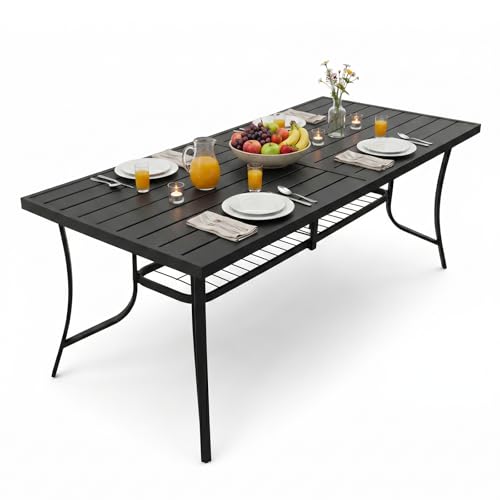
8 Person Outdoor Dining Table: The Complete Buying Guide
Everything you need to choose a large outdoor dining table that seats eight comfortably — materials, dimensions, umbrella options, and layout planning.
Why an 8 person outdoor dining table matters: A table for eight turns a patio into a true gathering space. It is the piece that hosts family dinners, weekend brunches, and celebrations. But sizing, material, and shape all affect how well it works in your yard. This guide walks you through the decision points so you can buy with confidence — whether you prefer a classic rectangular set or a space-saving round design.
Why Choose an 8 Person Outdoor Dining Table?
An 8 person outdoor dining table is the natural next step for households that regularly entertain. A six-seat table feels generous for everyday use, but the moment guests arrive, it becomes a juggling act of folding chairs and borrowed stools. A table built for eight solves that problem permanently. It also anchors the patio visually — a large table creates a defined dining zone that makes the surrounding furniture arrangement feel intentional rather than accidental.
Beyond entertaining, a large table supports everyday life. It works as a homework station, a craft surface, a buffet for outdoor parties, and a quiet spot for morning coffee. The key is choosing a design that fits your patio's footprint and matches the way you actually use the space. If you are still mapping out the overall layout, our outdoor living guide covers how dining, lounging, and shade zones fit together.
How Many People Really Fit at an 8-Seat Table?
An 8 person outdoor dining table is designed so each guest has roughly 24 inches of table edge. That allowance covers a dinner plate, glassware, and elbow room. Rectangular tables usually seat three along each long side and one at each end, totaling eight. Round tables seat eight evenly around the perimeter, which is more convivial but demands a wider patio. If your guest list sometimes grows to ten, consider a design with extra length or a bench that tucks under the table.
Sizing and Shape: Getting the Footprint Right
Measure first, shop second. An 8 person table that fits your guest list but not your patio becomes a permanent obstacle. Use the following guidelines as a starting point.
| Shape | Typical Dimensions | Best For | Trade-off |
|---|---|---|---|
| Rectangular | 84–96 in. long × 36–40 in. wide | Narrow patios, formal dining, efficient seating | End seats feel slightly separated from the group |
| Round | ~60 in. diameter | Square patios, conversation-focused spaces | Larger overall footprint for the same seat count |
| Oval | 84–96 in. long × 42–48 in. wide | Softening hard rectangular patios | Slightly harder to source matching chairs |
Whatever shape you choose, leave at least 36 inches of clearance between the table edge and any wall, railing, or planter. That space lets chairs slide out without bumping into obstacles. If your patio is tighter than that, consider a high-top or counter-height configuration, which can change how the table interacts with surrounding furniture — our guide to a bar height option for eight explores that layout in detail.
Round vs. Rectangular for Eight Guests
A round 8 person outdoor dining table creates a natural conversation circle, so nobody feels stuck at the far end. The trade-off is footprint: a 60-inch round table pushes chairs outward in every direction, which can crowd a patio. Rectangular tables seat eight more efficiently along straight edges and fit neatly against a wall or railing. If your patio is long and narrow, rectangular is almost always the smarter choice. If it is square and centrally placed, round creates a stronger focal point.
Materials: What Lasts Outdoors
An 8 person outdoor dining table is a long-term investment, so material choice matters more than almost any other factor. The tabletop and frame face sun, rain, temperature swings, and occasional spills. Here is how the main options compare.
- Cast aluminum: The most forgiving choice for most climates. It will not rust, it is lighter than iron, and powder-coated finishes resist fading. Mid-range and premium cast aluminum sets often include intricate detailing that mimics wrought iron without the maintenance. This is our default recommendation for coastal and humid regions.
- Powder-coated steel: Strong and stable, with a smooth finish that shrugs off scratches. Steel is heavier than aluminum, which helps a large table stay put in wind, but it requires more care if the coating chips. Look for a rust-proof finish and touch up any nicks promptly.
- Teak and hardwoods: Beautiful, warm, and naturally rot-resistant. High-grade teak ages to a silver-gray patina and lasts for decades. The trade-off is seasonal oiling if you want to keep the original honey tone. Wood tables also expand and contract with humidity, so joints need to be well engineered.
- Wicker and resin: Lightweight and often entry-level, these tables are easy to move but more susceptible to UV fading and frame flex over time. They work well in covered patios or as a starter-tier option for renters.
- Glass tops: Popular for a modern look and easy cleaning. Glass requires a sturdy frame and careful handling, and it can show water spots. It pairs well with aluminum and steel bases.
If you are comparing frame types in more depth, our material guides on metal vs. aluminum furniture and wood furniture care break down maintenance routines by material.
Umbrella Compatibility and Shade Planning
A table this large sits in the sun for most of the day, so shade is not optional. There are three common approaches:
- Center umbrella hole: The most common setup. A single market umbrella through the center of the table shades the middle, but guests at the ends may sit in sun. This works best with a rectangular table and a large canopy. Confirm the hole diameter matches your pole and that the base sits under the table, not on top of it.
- Offset or cantilever umbrella: The pole stands beside the table, so the tabletop stays clear and the canopy can be repositioned as the sun moves. This is ideal for round tables and for families who want an unobstructed surface.
- Pergola or overhead structure: If you already have a covered patio, an umbrella may be unnecessary. If you are planning a structure, our pergola guide covers sizing and shade coverage.
If you want the table and umbrella bundled together, a dedicated set is often easier to coordinate. Our roundup of 8 person tables with umbrella covers designs that include the hole and base, while the umbrella-hole table guide focuses on hole placement and pole clearance.
Seating: Chairs, Benches, and Swivel Options
An 8 person outdoor dining table needs seating that matches its scale. Standard dining chairs are the most flexible choice, but benches and swivel chairs each have a place.
Dining Chairs
A full set of eight matching chairs gives a clean, formal look. Stackable chairs are easier to store in winter, while non-stackable chairs with thicker cushions are more comfortable for long dinners. Check that the chair seat height matches the table height — standard dining tables pair with 18-inch seat height, counter-height with 24-inch, and bar-height with 28–30-inch.
Benches
A bench along one long side seats three or four and tucks completely under the table when not in use, which is a real advantage on smaller patios. The trade-off is that benches are less comfortable for older guests and harder to get in and out of. Mixed seating — one bench plus chairs — is a common compromise. Our guides to an 8-seat set with bench and an 8-seater with bench and chairs compare the layouts.
Swivel and Rocker Chairs
Swivel chairs make it easier to join conversations at either end of a long table without pushing back from the table. They are especially useful when the table sits near a lounge area. If you like the idea of motion, a swivel-chair set illustrates the mechanism, and the same design language scales up to larger configurations.
Layout and Clearance Planning
Before you commit to a design, sketch your patio to scale. Mark the table, then add 36 inches on every side for chair pull-out. That buffer is the difference between a table that feels generous and one that feels cramped.
Consider traffic flow next. If the dining table sits between the patio door and the lounge area, leave a clear walking path that does not require guests to squeeze past seated diners. A rectangular table aligned with the longest axis of the patio usually preserves the most open floor space. If you also plan to add a fire pit or conversation zone, our 8 person table with fire pit guide shows how the two zones can coexist.
Small or Narrow Patios
If the footprint is tight, a counter-height or bar-height table can help because the taller profile changes sightlines and often pairs with narrower stools. Explore bar-height dining for eight for that approach. Alternatively, a round table placed at the center of a square patio can reduce awkward corners.
Care and Longevity
A large table sees more wear than a small one simply because more people use it. A few habits extend its life significantly:
- Cover the table during long stretches of bad weather, especially if the frame is steel or the top is glass.
- Wipe spills promptly, particularly acidic drinks and sauces, which can stain stone, wood, and some powder coats.
- Oil wooden tables at the start and end of the season if you want to preserve the original tone.
- Touch up chips in powder-coated metal before rust can start.
- Store cushions indoors during off-season to prevent mildew and UV fading.
For a full seasonal routine, see our weatherproofing guide and outdoor care hub. If you store furniture over winter, the winter storage guide covers covers, stacking, and cushion care.
Ready to Compare 8 Person Dining Tables?
Browse our curated selection below — each option is chosen for durability, seating comfort, and long-term outdoor performance.
Frequently Asked Questions
What size outdoor dining table seats 8 people comfortably?
An 8 person outdoor dining table typically measures between 84 and 96 inches in length when rectangular, or around 60 inches in diameter when round. Rectangular tables generally offer the most efficient use of space because they align seating along the long sides. Round tables create a more conversational atmosphere but require a larger footprint to seat eight. Always allow at least 24 inches of table width per seated guest and leave 36 inches of clearance around the table for chair pull-out.
Is a round or rectangular 8 person outdoor dining table better?
Rectangular tables suit narrow patios and formal dining because they maximize seating along straight edges. Round tables encourage conversation and work well in square or open-plan spaces, but a large round table can push chairs further into walking paths. If your patio is long and narrow, choose rectangular. If your patio is square and centrally placed, a round table creates a balanced focal point.
Which material lasts longest for a large outdoor dining table?
Cast aluminum and powder-coated steel offer the best balance of durability and weather resistance for an 8 person outdoor dining table. Teak and other high-grade hardwoods resist rot and insects but require periodic oiling. Wicker and resin are lighter and easier to move but may fade under intense UV exposure. For coastal or humid climates, aluminum with a rust-proof finish is the most forgiving choice.
Does an 8 person outdoor dining table need an umbrella hole?
An umbrella hole is highly recommended for an 8 person table because the large surface area sits in full sun for most of the day. A center umbrella hole accommodates a standard market umbrella, while some designs use an offset umbrella or a cantilever frame so the pole does not obstruct the tabletop. Confirm the hole diameter matches your umbrella pole and that a base with sufficient weight is placed under the table.
Can an 8 person dining set fit on a small patio?
It can, but the shape matters. A rectangular table aligned with the longest axis of the patio preserves the most walking space. Counter-height and bar-height configurations can also help by changing how the table interacts with surrounding furniture. Measure the table footprint plus 36 inches on each side before ordering, and consider a bench on one side to keep chairs from blocking paths.