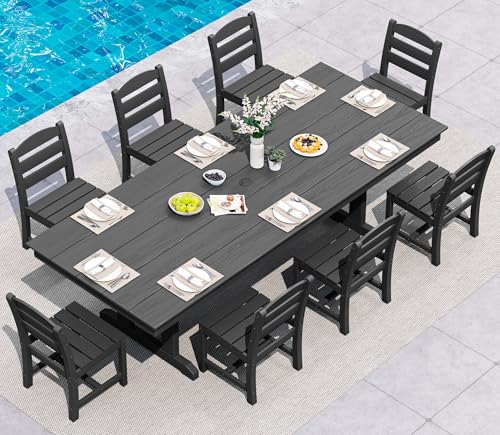
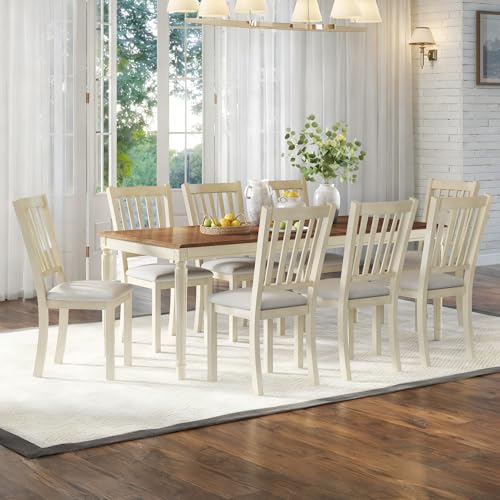
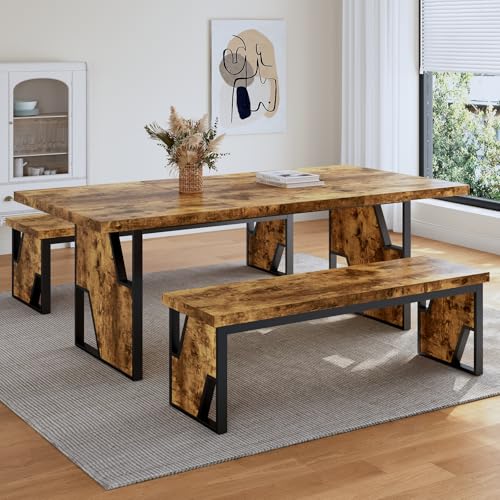
8 Seater Dining Table with Bench and Chairs: The Complete Guide
Everything you need to choose, arrange, and care for a large outdoor dining set that seats eight comfortably — from sizing and materials to bench layouts and long-term maintenance.
Researching before you buy? You already know an 8 seater dining table with bench and chairs fits your household. This guide closes the remaining gaps: how much room you need, which materials hold up outdoors, how bench seating compares with individual chairs, and how to keep the set looking sharp season after season. Read it end to end and you will be ready to choose with confidence.
Why Choose an 8 Seater Dining Table with Bench and Chairs?
An 8 seat dining table set with bench is one of the most efficient ways to host a full table outdoors. Bench seating along the long sides removes the gaps between chairs, so you seat more people in less linear space than an all-chair layout. That density is exactly what makes this configuration popular for extended families, regular entertaining, and households that mix adults and children at the same table.
The hybrid approach — two benches on the long sides plus two chairs at the ends — also gives you flexibility. Chairs at the heads of the table provide back support for guests who linger, while benches invite kids and casual diners to slide in together. If your priority is a formal dining feel, an 8 seater outdoor dining table and chairs layout with all chairs is a valid alternative, but it demands more floor space. Many buyers also cross-shop 8 person outdoor dining table and chairs sets when they want a classic look with individual seats.
Sizing and Space Planning: How Much Room Do You Actually Need?
The most common mistake with an 8 seater dining table with bench and chairs is underestimating the footprint once people are seated. The table is only part of the equation — benches project outward when guests slide in, and chairs at the ends need pull-out room. Use the baseline dimensions below as your starting point.
| Element | Typical Dimension | Why It Matters |
|---|---|---|
| Table length | 94–118 inches | Seats three per long side plus one per end; shorter tables crowd bench seating |
| Table width | 40–44 inches | Allows serving platters in the center without blocking plates |
| Clearance per side | 36 inches minimum | Bench pull-out and chair push-back space |
| Total patio footprint | ~12 ft × 10 ft | Comfortable circulation around an 8 seater set |
| Seating space per adult | 24 inches linear | Below this, shoulders touch and dining feels cramped |
If your patio falls short of the ideal footprint, consider a round table configuration. An 8 seater outdoor dining table and chairs set built around a round top can sometimes fit tighter corners, though rectangular tables generally make better use of bench seating. For patios that are long but shallow, a 8 person outdoor dining table in a narrow rectangular profile is the more practical pick.
Mark the table footprint on your patio with painter's tape, then place temporary chairs and a bench-sized box in position. Walk the perimeter. If you cannot pass behind a seated guest without turning sideways, the set is too large for the space.
Bench vs Chairs: Which Seating Mix Works Best?
There is no universally correct answer, but the trade-offs are predictable. Weigh them against how you actually use the table.
Advantages of bench seating
- Seating density: benches fit three adults per side where chairs might fit two comfortably.
- Clean visual line: a continuous bench reads as built-in furniture and suits modern, rustic, and coastal styles.
- Family-friendly: children can slide in easily, and there are no chair legs to trip over.
- Storage potential: some bench designs include lift-up seats for cushion or tableware storage.
Advantages of individual chairs
- Back support: critical for long dinners and older guests.
- Easy entry and exit: no need to ask a neighbor to shift.
- Flexibility: chairs can be moved to other areas of the patio or brought indoors.
- Personal space: armrests and defined seats reduce shoulder contact.
A practical compromise is the hybrid layout: benches on the long sides, chairs at the ends. It gives you six bench seats and two supported end seats, which suits most mixed-age groups. If you lean toward an all-chair setup, an 8 seat dining table set with bench configuration can still be adapted later by adding chairs as your needs change.
Materials: Matching the Set to Your Climate
An 8 seater dining table with bench and chairs is a long-term purchase, so material choice matters more than almost any other decision. The table below maps common outdoor materials to their market tier and climate fit.
| Material | Market Tier | Best For | Watch-Outs |
|---|---|---|---|
| Powder-coated aluminum | Mid-range to premium | Humid, coastal, and rainy climates | Check weld quality and coating thickness |
| Teak and tight-grain hardwood | Premium to luxury | Dry climates and covered patios | Requires seasonal sealing to prevent graying |
| HDPE and high-grade resin | Entry-level to mid-range | Family patios with heavy daily use | Heavier than aluminum; verify UV stabilization |
| Cast aluminum | Mid-tier to high-end tier | Windy exposed patios needing weight | Inspect for rust-proof finish on joints |
| Wrought iron | High-end tier to luxury | Traditional and formal designs | Heavy to move; needs rust-proof finish maintenance |
| Acacia and eucalyptus | Entry-level to mid-range | Covered or seasonal-use patios | More prone to checking without regular oiling |
For most homeowners, powder-coated aluminum frames hit the sweet spot: light enough to rearrange, durable enough to leave out year-round, and available in finishes that mimic wood grain. If you want the warmth of real timber, teak is the long-term investment that ages well when maintained. Resin sets are the practical starter tier for busy families — they tolerate spills and rough handling better than wood.
Table Shapes for an Eight-Seat Layout
Rectangular tops are the default for bench seating because the straight edge gives benches a stable bearing surface. A 94-inch rectangular table seats three per side comfortably; stretch to 118 inches and you gain elbow room without adding another place setting. Oval tables soften the look and reduce corner collisions on tight patios, but benches need to follow the curve or be replaced with chairs.
Round and square tops are less efficient for bench seating but work well when you prefer chairs all around. An 8 seater patio table and chairs for sale set with a large round top can fit an awkward corner where a rectangle will not, and it encourages conversation across the table. If your heart is set on a round eight-seat arrangement, an 8 person outdoor dining table with umbrella often pairs a center hole with a wide top that keeps shade over the whole group.
Shade, Umbrellas, and Accessory Planning
A table this large needs deliberate shade planning. An umbrella centered over an eight-seat table casts a circle that may leave the end chairs exposed. Offset cantilever umbrellas are often the better solution because the pole sits outside the seating perimeter and the canopy can be tilted as the sun moves. If you prefer a through-table umbrella, confirm the table includes a pre-drilled hole and a stable base collar — an 8 person outdoor table with umbrella hole is the specification to look for in product descriptions.
Other accessories worth budgeting for alongside the set include seat cushions (bench cushions improve comfort dramatically on long dinners), a weatherproof cover sized to the full table and bench footprint, and a lazy Susan or center runner for serving. If your patio is exposed, add tie-down straps for bench cushions so they stay put in wind.
Setup and Layout: Getting the Arrangement Right
Place the table first, then position benches and chairs around it. Leave at least 36 inches between the bench edge and any wall, planter, or railing. If the patio has a traffic path to a door or grill, widen that side to 48 inches so guests do not squeeze past diners. Keep the grill and serving area on the opposite side of the table from the main entry point to reduce crossing traffic during meals.
For a more tailored look, an 8 person outdoor dining table and chairs set with a bench on one side and chairs on the other creates a visual anchor against a wall or railing, while the open bench side faces the yard. If your patio is part of a larger outdoor kitchen zone, an 8 person outdoor dining table with fire pit layout can extend evening use, though it requires additional clearance for the fire feature.
Care and Maintenance for a Large Dining Set
An eight-seat set has more surfaces to maintain than a small bistro table, so build a simple routine around the seasons:
- Weekly: wipe frames and tabletop with mild soap and water; rinse and dry to prevent water spots.
- Monthly: check bolts on bench frames and chair legs; tighten any that have loosened with temperature swings.
- Seasonally: clean and condition wood surfaces; inspect powder-coated and cast aluminum frames for chips and touch up promptly.
- Before winter: store cushions indoors, cover the set with a breathable weatherproof cover, and move the umbrella canopy inside if removable.
- Annually: reapply sealant or oil to hardwood, and replace any worn glides or feet that have flattened.
Cushions are the fastest-wearing component. Choose quick-dry foam and solution-dyed acrylic fabrics, and store them during heavy rain. If your set stays outdoors year-round, a cover that extends below the bench frames protects the legs from standing water.
Common Buying Mistakes to Avoid
- Ordering before measuring the path to the patio: an assembled eight-seat table may not fit through a side gate or doorway. Confirm that the largest piece ships flat-packed or can be partially disassembled.
- Ignoring bench projection: benches add several inches beyond the table edge when guests are seated. Tape out the full occupied footprint, not just the tabletop.
- Skipping the umbrella base: a wide table needs a heavy base or offset anchor; a lightweight base will tip in wind.
- Choosing style over material fit: a beautiful wood set in a humid, uncovered climate will need far more maintenance than an aluminum set.
- Forgetting storage: bench cushions are bulky. Plan a storage bench, deck box, or indoor closet before the set arrives.
Frequently Asked Questions
What size patio do I need for an 8 seater dining table with bench and chairs?
Plan for a footprint of roughly 12 feet by 10 feet. The table itself runs 94 to 118 inches long and 40 to 44 inches wide, and you need at least 36 inches of clearance on every side for bench pull-out and chair push-back. If the space is tighter, consider a round table or an eight-person set with chairs only.
Is a bench better than individual chairs for an eight-seat table?
Benches seat more people per linear foot and create a cleaner look, while chairs offer better back support and easier entry. Most buyers find a hybrid layout — benches on the long sides, chairs at the ends — gives the best balance for mixed groups.
Which materials last longest outdoors?
Powder-coated aluminum and cast aluminum are the most weather-resistant mid-range to premium choices. Teak is a luxury material that lasts decades with seasonal sealing. HDPE and high-grade resin are durable entry-level to mid-range options that resist moisture and UV exposure with minimal care.
Can eight adults actually fit at a bench-and-chair set?
Yes, when the table is at least 94 inches long. Three adults per long side plus one at each end is the standard arrangement. Below 94 inches, bench seating becomes crowded and shoulder contact is likely.
How do I keep the set stable in wind?
Choose a heavier frame material for exposed patios, anchor the umbrella with a weighted base or offset stand, and secure bench cushions with tie-down straps. During storms, remove the umbrella canopy and cover the set to reduce wind load.
Bottom line: an 8 seater dining table with bench and chairs is the most space-efficient way to host a full outdoor dinner, provided you measure the occupied footprint — not just the table — before ordering. Match the material to your climate, choose a hybrid bench-and-chair layout for the best comfort-to-density ratio, and build a simple seasonal care routine.
Once those boxes are ticked, you are ready to compare specific sets. Use the recommended products below to shortlist options that fit your patio, then check dimensions, material, and warranty details on each listing before you commit.