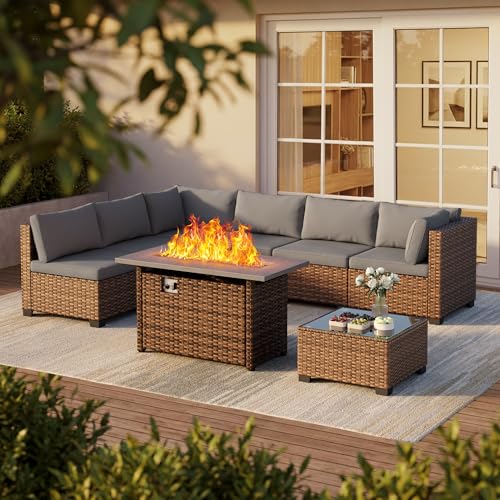
8 Person Patio Table with Fire Pit: The Complete Buying Guide
Everything you need to know before choosing a large outdoor dining table with an integrated fire pit — sizing, materials, safety, fuel types, and setup.
Why Choose an 8-Person Patio Table with Fire Pit?
An eight-person patio dining table is the anchor of a serious outdoor entertaining space. When you add an integrated fire pit, the table stops being seasonal furniture and becomes a year-round gathering point. Instead of clearing the plates and retreating indoors when the evening cools, guests stay seated, conversation continues, and the fire extends the usable hours of your patio well into the shoulder seasons.
This category sits at the intersection of two product families: large-scale outdoor dining and fire features. That combination creates specific considerations that a standard dining set does not require — heat clearance around seating, fuel accessibility, tabletop material tolerance to radiant heat, and how the fire element interacts with serving dishes and children. This guide walks through each of those factors so you can evaluate options with confidence rather than guesswork.
If your research is still at the comparison stage between different configurations, our broader guide on 8 person outdoor dining table with fire pit options covers the landscape of formats, while this page goes deeper into the practical decision criteria. For households leaning toward a rectangular or oval footprint rather than a dedicated fire table, the overview of 8 person outdoor dining table layouts is a useful companion read.
Sizing & Space Planning for Eight Seats
The single most common mistake with an eight-seat fire pit dining table is underestimating the total footprint. The tabletop itself is only part of the equation. You must account for chair pull-out space, walking clearance behind occupied chairs, and a safety buffer around the heat source.
Typical Table Dimensions
- Rectangular tables: commonly 94–110 inches long and 40–44 inches wide, seating three per long side plus one at each end.
- Oval tables: similar length to rectangular but with softer corner clearance, which helps in tighter patios.
- Round tables: generally 60–72 inches in diameter for eight seats; a fire pit insert naturally suits a round or square footprint.
Recommended Clearances
| Clearance Zone | Recommended Distance | Why It Matters |
|---|---|---|
| Chair pull-out behind seat | 24–30 inches | Allows guests to stand and sit without scraping walls or planters |
| Walking path behind chairs | 36 inches minimum | Serving access and safe circulation during gatherings |
| Buffer around fire element | Follow manufacturer specification | Varies by flame size and tabletop material; always defer to the manual |
As a planning baseline, budget a total patio zone of roughly 12 x 10 feet for a rectangular eight-seat fire pit table with comfortable circulation. Round configurations can sometimes fit into a tighter square zone because the corners are not occupied by chair backs.
Measure your space before you fall in love with a specific model. Take the table dimensions, add the chair depth on both long sides, then add the walking path. If the result exceeds your patio, consider a slightly smaller seating count or an oval/round format. Buyers planning a full ensemble — seating, shade, and storage — often find our 8 person patio dining set with umbrella breakdown helpful for cross-checking shade coverage against table size.
Fire Pit Types: Propane, Natural Gas & Wood
The fuel source shapes daily usability more than almost any other decision. Each option carries a distinct set of trade-offs around convenience, installation, and ambience.
Propane Fire Pit Tables
The most common configuration for eight-person tables. A concealed tank (typically housed under the table or in a side cabinet) feeds a burner ring set into the tabletop. Ignition is usually push-button or electronic.
Advantages
- No permanent gas line required
- Instant on/off with adjustable flame height
- Portable if you rearrange your patio layout
- Clean burn with minimal ash or smoke
Considerations
- Tank must be refilled periodically
- Tank housing adds weight and occupies under-table space
- Flame output drops in very cold weather
Natural Gas Fire Pit Tables
Hardwired to a household gas line, these models eliminate refills entirely and are the choice for households that use the fire feature nightly. Installation requires a licensed professional and a gas line routed to the patio.
Advantages
- Unlimited burn time without refills
- Steady flame output in cold conditions
- No tank storage or replacement logistics
Considerations
- Professional installation is mandatory
- The table becomes a fixed feature — repositioning is impractical
- Municipal permits may apply in some regions
Wood-Burning Fire Pit Tables
Rarer in the eight-seat category but valued for authentic crackle and aroma. Wood units in dining-table format must be designed with a raised fire bowl and generous heat shielding so the tabletop surface stays usable.
Advantages
- Traditional campfire atmosphere
- No fuel line or tank infrastructure
- Works during power outages
Considerations
- Ash cleanup after every use
- Smoke and spark management required
- Larger safety clearance than gas models
- Check local burn regulations before purchasing
Table Materials Compared
An eight-person table is a substantial piece of furniture, and the material determines weight, weather tolerance, maintenance rhythm, and how the tabletop handles radiant heat from the burner. The comparison below uses neutral quality tiers rather than any numeric figures.
| Material | Market Tier | Best For | Maintenance Rhythm |
|---|---|---|---|
| Powder-coated aluminum | mid-range | Humid or coastal climates; households wanting low upkeep | Wipe down; inspect coating annually |
| Cast aluminum | premium | Windy exposures; buyers wanting ornate detailing with stability | Occasional touch-up of finish; seasonal cleaning |
| Wrought iron / steel | premium | Traditional styling; heavy, anchored layouts | Rust inspection; periodic re-sealing recommended |
| Teak and hardwoods | luxury | Natural aesthetics; covered or semi-sheltered patios | Annual oiling; keep away from direct burner proximity |
| High-density resin / HDPE | essential tier | Entry-level setups; casual use and easy relocation | Soap-and-water cleaning; UV fade monitoring |
| Stone or concrete composite tops | high-end tier | Architectural patios; heat-tolerant surfaces | Seal porous surfaces; avoid abrasive cleaners |
How Material Choice Interacts with the Fire Element
Heat is the differentiator in this category. Glass tabletop inserts require generous distance from the burner and are generally reserved for low-flame linear designs. Solid stone and cast metal tops tolerate closer burner placement. Wood tops should only appear on models where the burner is housed in a separate central bowl with a metal collar shielding the wood.
For buyers weighing frame construction in more detail, the comparison of cast aluminum outdoor dining sets explains how alloy density affects stability at larger seat counts. Frame rigidity matters more at eight seats than at four, because the table span is longer and any wobble becomes noticeable at the ends.
Safety Features & Clearance Rules
A fire feature inside a dining surface demands respect for the manufacturer's clearance specification. Those numbers are not marketing suggestions — they are derived from flame size, radiant heat output, and the ignition characteristics of surrounding materials.
Features to Verify Before Purchase
- Flame height control: a regulator or valve that lets you run a low flame during meals and a fuller flame afterward.
- Heat shield or collar: a metal ring or raised bowl separating the burner from the tabletop and any nearby place settings.
- Auto shut-off or thermocouple: cuts gas flow if the flame extinguishes unexpectedly.
- Secure tank housing: a latched compartment that prevents the propane tank from shifting.
- Drainage and ventilation: gas compartments must vent to prevent accumulation.
- Child and pet considerations: a raised burner is safer than a flush one; glass fire media should be avoided where small hands reach.
Placement Rules
- Never position the table beneath a low, combustible overhead structure such as a fabric umbrella canopy or untreated pergola slats.
- Keep the fire element clear of wind-blown curtains, decorative fabric, and lightweight table linens.
- Confirm the surface beneath the table tolerates heat — some composite decking requires a barrier mat.
- Maintain the manufacturer's minimum distance from walls, railings, and planters on all sides.
If your patio includes overhead structures, cross-reference the fire feature placement against the shade and structure guidance in our patio umbrella resource before finalizing the layout, and check structural coverage options if you plan to add a permanent roof element.
Key Features to Look For
Beyond fuel type and material, several design details separate a table that works well in daily life from one that merely looks impressive in a showroom.
Tabletop Configuration
Determine whether the fire element is central and permanent, or whether it uses a removable lid that converts the surface into a flat dining area. A removable lid adds versatility — you can serve a full spread without the burner in the way, then lift the lid after the meal. Permanent burners keep the fire visible but consume tabletop real estate.
Seating Compatibility
An eight-seat table needs eight chairs that fit the apron height and legroom. Verify chair seat height against table apron clearance, and confirm whether the table accommodates standard stacking chairs, swivel chairs, or benches. Some hosts prefer a mixed arrangement with a bench on one long side; check that the bench height works with the tabletop edge.
Storage and Access
Propane models need a tank door that opens without moving chairs or lifting the tabletop. Natural gas models need a valve accessible without crawling underneath. Wood models need an ash removal path that does not require disassembly.
Weather and Covering
Confirm whether the manufacturer offers a fitted cover, and whether the burner assembly should be covered separately. Burner pans that collect water degrade quickly; a slight slope or drainage channel is a useful detail. For broader seasonal protection routines, see our weatherproofing guide.
Assembly and Delivery
An eight-seat table with a fire element ships in multiple cartons and can weigh substantially. Check whether delivery includes room-of-choice placement and whether assembly requires two people. Review the delivery and assembly guide for what to expect and how to inspect for transit damage on arrival.
Setup, Care & Maintenance
A fire pit dining table rewards a small amount of routine attention with years of reliable service. Build these habits into your seasonal calendar.
Initial Setup
- Assemble on a level surface and confirm all four corners rest firmly without rocking.
- Leak-test gas connections with soapy water before first ignition.
- Run the burner on low for a short initial period to burn off manufacturing residue, outdoors and away from guests.
- Verify the clearance zone is free of combustible material.
Routine Care
- Wipe the tabletop after meals; avoid abrasive pads on coated metals and stone.
- Cover the burner when not in use to prevent debris and moisture accumulation.
- Inspect burner ports for blockages at the start of each season.
- Check fasteners on chairs and table legs periodically, especially on larger frames.
- Store propane tanks upright and in a ventilated area when the table is out of service.
Seasonal Transition
Before winter, clean the tabletop thoroughly, disconnect and store the propane tank, cover the burner assembly, and inspect the frame for coating damage. Buyers in cold climates should review the winter storage guide for a detailed checklist. Households in coastal or humid areas should also read the notes on rust removal to catch finish failures early.
If your patio also includes a lounge zone alongside the dining area, coordinating the two is easier when both share a material family. The overview of outdoor sectional with fire pit arrangements shows how seating and fire features can be planned as a single cohesive layout.
Ready to Compare Options?
Browse the recommended fire pit dining tables below, or explore related configurations to find the format that fits your patio.
Frequently Asked Questions
How much patio space does an eight-person fire pit table need?
Plan for roughly a 12 x 10 foot zone as a baseline. That includes the table, chair pull-out space on both long sides, and a walking path behind occupied chairs. Round and oval formats can fit slightly tighter footprints because the corners are not occupied.
Is a propane or natural gas fire pit table better for daily use?
Natural gas suits frequent, nightly use because there are no refills and the flame output stays steady in cold weather. Propane suits occasional use and layouts that may change, since no permanent gas line is required.
Can I use the table for dining while the fire is lit?
Yes, provided you run a low flame and follow the manufacturer's instructions. Many models include a removable lid that converts the fire element into a flat serving surface, which is convenient during the meal itself.
What tabletop material tolerates the fire element best?
Stone and concrete composite tops, cast metal, and powder-coated aluminum are the most heat-tolerant. Glass inserts are generally limited to low-flame linear designs, and wood tops require models with a raised, shielded burner bowl.
How many chairs fit at an eight-person dining table?
Rectangular tables usually seat three per long side plus one at each end. Round tables seat eight evenly around a 60–72 inch diameter. Confirm chair width against the table apron before finalizing the chair count.
Do I need professional installation?
Propane models assemble like standard furniture. Natural gas models require a licensed professional to run and connect the gas line, and local permits may apply.
How do I protect the table in winter?
Clean and dry the surface, disconnect and store the propane tank upright in a ventilated area, cover the burner assembly, and inspect the frame for coating damage before the cold season.