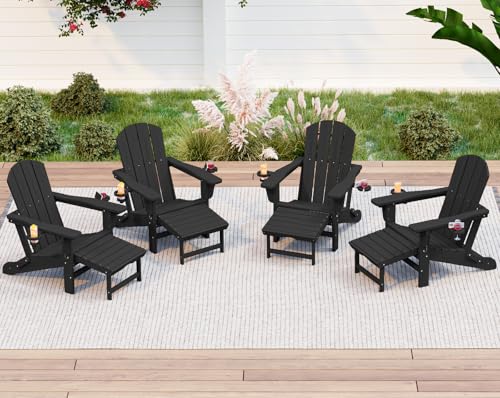
Adirondack Chairs With Adjustable Backrest: The Complete Buying Guide
Discover how a reclining backrest transforms the classic Adirondack chair into an all-day comfort seat for your patio, deck, or garden.
Why adjustable backrests matter: The traditional Adirondack chair has a fixed, deeply reclined back — great for lounging but limiting for reading, dining, or conversation. A model with an adjustable backrest lets you shift between upright, relaxed, and fully reclined positions, so a single chair serves multiple moods and activities throughout the day.
What Makes an Adirondack Chair "Adjustable"?
A standard Adirondack chair is built around one fixed angle: a wide, low seat paired with a backrest that leans far enough to encourage sinking in. An adjustable backrest introduces a mechanism — usually a set of notches, a pin-and-bracket system, or a ratcheting hinge — that lets the back move through several recline positions. Some designs also include an adjustable footrest or a flip-up cup holder, turning the chair into a true multi-position lounger.
The practical benefit is versatility. You can sit upright for morning coffee, recline for an afternoon nap, and angle the back slightly forward for a better view of the garden. For households that share seating, an adjustable backrest means one chair can suit different body types and preferences without buying multiple fixed-position models.
Key Features to Evaluate Before You Buy
Recline Mechanism
Notch-and-pin systems are the most common and easiest to repair. Ratcheting hinges offer smoother, more granular adjustment but add complexity. Choose a mechanism that locks firmly in every position.
Material & Finish
HDPE recycled plastic and teak resist weather best. Cedar and fir offer natural warmth but need periodic sealing. Aluminum frames are the lightest option for frequent repositioning.
Weight Capacity
Adjustable mechanisms add stress points. Look for reinforced brackets and a stated capacity that comfortably exceeds the primary user's weight, especially on entry-level models.
Armrest & Seat Width
Wide, flat armrests are a hallmark of the Adirondack style — check that they stay level when the back reclines so drinks and books rest securely.
Footrest Integration
Some adjustable models pair the backrest with a sliding or flip-up footrest. If you plan to nap outdoors, this combination is worth prioritizing.
Assembly & Hardware
Stainless-steel hardware resists rust far better than zinc-plated screws. Check whether the adjustable mechanism arrives pre-assembled or requires alignment during setup.
Comparing Tiers of Adjustable Adirondack Chairs
Adjustable Adirondack chairs fall into a few broad quality tiers. The table below describes what you can typically expect at each level — use it to match a chair to how often you plan to use it and how exposed your outdoor space is to the elements.
| Tier | Best For | Typical Construction | Mechanism Quality |
|---|---|---|---|
| Entry-level | Occasional use, covered porches | Thinner plastic or softwood, basic hardware | Simple notch-and-pin, fewer positions |
| Mid-range | Everyday family use, sun-exposed decks | HDPE or sealed cedar, stainless hardware | Multi-position pin system with reinforced brackets |
| Premium | Frequent use, harsh weather, shared seating | Thick HDPE or teak, marine-grade fasteners | Ratcheting hinge, smooth and precise |
| Luxury | Design-led patios, long-term investment | Solid teak or premium resin, hidden hardware | Engineered multi-position recline with locking detents |
Material Choices: Which Holds Up Best?
High-density polyethylene (HDPE) is the most forgiving material for adjustable chairs. It does not splinter, resists moisture, and holds color well under UV exposure. Because the adjustable mechanism creates moving parts, a material that does not warp or swell is a real advantage — HDPE stays dimensionally stable through humidity and temperature swings.
Teak is the premium natural choice. Its natural oils make it naturally weather-resistant, and it develops a silver patina if left untreated. Teak adjustable Adirondack chairs are heavier, which is actually helpful — a heavier chair stays put when you recline against the backrest.
Cedar and fir offer a classic look and a lighter weight, but they need re-sealing every season or two. If your adjustable chair lives on an exposed deck, budget time for maintenance. Aluminum frames are the lightest and easiest to move, though they can feel less solid when fully reclined; look for reinforced pivot points.
If you are outfitting a broader seating area, our guides to cozy outdoor chairs for small spaces and garden chairs can help you balance an adjustable Adirondack with complementary seating.
Comfort and Ergonomics: What to Look For
An adjustable backrest is only as good as the geometry around it. The seat should be deep enough to support the thighs without cutting behind the knees, and the front edge should be gently rounded or contoured. Armrests should sit at a height that lets your shoulders relax — roughly level with the seat when you are upright.
When the back reclines, watch for two things: whether the lumbar area stays supported, and whether the mechanism locks without wobble. A well-designed chair keeps the backrest rigid in every position. If you plan to use the chair for reading or tablet use, prioritize models with at least one near-upright setting.
Cushions are optional on Adirondack chairs, but a thin seat pad can improve comfort on firmer HDPE seats. If you prefer a plusher setup, our guide to outdoor chair cushions covers fabrics that hold up to sun and rain.
A Practical Buying Checklist
Pairing Adjustable Adirondacks With the Rest of Your Patio
Adirondack chairs work best as a conversational cluster — two chairs angled toward each other with a small side table between them. If you are building a full outdoor room, an adjustable Adirondack can sit alongside a garden bench or a rocking chair with cushions for a relaxed, mixed-seating look.
For dining-adjacent spaces, keep the Adirondack cluster separate from the table zone. A three-piece bistro set or a dining set for four handles meals, while the Adirondacks take over for after-dinner lounging. If you are working with a compact balcony, a folding outdoor chair can supplement the Adirondack when guests arrive.
Shade matters too. A reclining chair invites long sessions in the sun, so consider a cantilever umbrella with tilt and rotation to keep the glare off your reading material as the afternoon progresses.
Frequently Asked Questions
Are adjustable Adirondack chairs comfortable for tall people?
They can be, but seat depth and back height matter more than the recline mechanism. Look for models with a taller back and a seat depth that supports the thighs. Adjustable backrests help because tall users can choose a less reclined position that keeps their head supported.
Can the adjustable mechanism rust?
It depends on the hardware. Stainless-steel and marine-grade components resist rust well; zinc-plated or painted steel parts are more vulnerable over time. If your chair stays outdoors in a humid climate, prioritize stainless hardware.
Do I need a cushion with an adjustable Adirondack chair?
Not necessarily. HDPE and teak seats are comfortable for shorter sessions. A thin seat pad improves longer lounging, and a headrest cushion helps when fully reclined. Choose quick-dry outdoor fabrics if the chair is exposed to rain.
How much space do I need behind an adjustable chair?
Plan for at least 12 inches of clearance behind the backrest so it can recline fully without hitting a wall, railing, or planter. On a narrow balcony, measure the reclined footprint, not just the upright one.
Ready to Upgrade Your Outdoor Seating?
Browse our curated selection of adjustable Adirondack chairs and find the recline range, material, and build quality that fits your patio lifestyle.