Benches with Backs for Entryway: The Complete Buying Guide
Turn your entryway into a welcoming, organized space with a bench that offers comfort, support, and smart storage. Learn how to choose the right size, material, and style before you buy.
Why an entryway bench with a back matters: The entryway is the first and last space you use every day, yet it is often the most overlooked. A bench with a back provides a comfortable spot to sit while putting on shoes, a natural drop zone for bags and keys, and a visual anchor that makes the space feel intentional. This guide walks you through every decision so you can buy with confidence.
Why Choose a Bench with a Back for Your Entryway
A backless bench may look sleek, but a bench with a back delivers practical advantages that matter in a high-use entryway. The backrest supports your lower back when you sit to tie shoes or wait for a ride, and it creates a clear visual boundary that helps define the entry zone. For households with older adults or anyone who needs extra support, a backrest is a meaningful comfort upgrade.
Beyond comfort, a backrest gives you more styling flexibility. You can lean a cushion against it, drape a throw over the top, or use the back panel as a backdrop for hooks and wall decor. If you are also considering other entryway seating, the principles in our broader outdoor furniture buying guide apply equally well indoors — focus on proportion, durability, and daily usability first.
Entryway benches with backs come in three broad configurations: freestanding benches, wall-mounted or floating benches, and storage benches with lift-up seats. Each solves a different problem, so the right choice depends on your floor space, storage needs, and how much traffic the entryway sees.
How to Measure and Size Your Entryway Bench
Sizing is the most common mistake buyers make. A bench that is too deep blocks the walkway, and one that is too wide crowds the door swing. Work through these measurements before you shop:
- Clear walking path: Keep at least 36 inches of unobstructed floor between the bench and the opposite wall or door.
- Bench width: Most standard entryways suit a bench 36 to 48 inches wide. Wide foyers and mudrooms can handle 50 to 60 inches.
- Bench depth: Aim for 14 to 18 inches. Deeper benches eat into the walkway; shallower benches feel unstable.
- Seat height: A seat height of 17 to 19 inches suits most adults. If the bench is for children, a lower seat of 14 to 16 inches works better.
- Back height: A backrest 14 to 20 inches above the seat provides meaningful lumbar support without feeling imposing in a small space.
Also check door swing clearance, baseboard depth, and any nearby outlets or light switches. If your entryway doubles as a mudroom, measure the width of the largest item you plan to store under the bench, such as a boot tray or a basket.
Materials Compared: Which Build Suits Your Entryway
The material you choose affects durability, maintenance, and style. Entryways see wet shoes, damp coats, and constant traffic, so pick a build that handles moisture and wear.
| Material | Market Tier | Best For | Considerations |
|---|---|---|---|
| Solid hardwood (oak, ash, birch) | premium | High-traffic family entryways | Durable construction; seal against moisture near exterior doors |
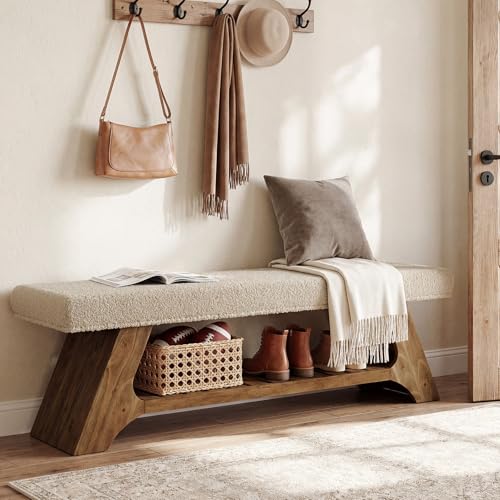
| Upholstered bench with hardwood frame | mid-range | Comfort-focused seating and sitting rooms | Choose stain-resistant, wipe-clean fabric for entryway use |
| Metal frame (steel or aluminum) | mid-tier | Industrial and modern interiors | Look for a rust-proof finish and reinforced joints |
| Rattan or wicker | entry-level | Coastal and bohemian styles | Best in covered, dry entryways; avoid direct rain exposure |
| Engineered wood with veneer | starter tier | Light-use apartments and rentals | Solid choice for the tier; check edge sealing for moisture resistance |
If your entryway opens directly to the outdoors and sees rain or snow, a sealed hardwood or powder-coated metal frame holds up best. For covered porches and sunrooms, an all-weather resin wicker option can work, similar to the materials discussed in our all-weather wicker patio furniture guide.
Storage Features: Making the Bench Work Harder
Entryway clutter is the enemy of a calm space, and a storage bench is the most efficient fix. The most common configurations are:
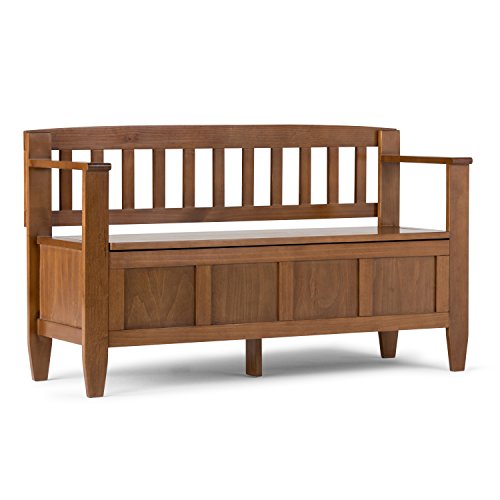
- Lift-top storage: The seat hinges up to reveal a deep compartment for seasonal items, blankets, or off-season shoes.
- Flip-up seat with divided compartments: Keeps shoes organized and accessible without lifting a heavy lid.
- Open cubbies below the seat: Ideal for everyday shoes, baskets, and bags that need to be grabbed quickly.
- Drawer storage: Conceals smaller items such as gloves, keys, and pet supplies.
If storage is your priority, compare the layout carefully. Our guide to benches with cushions and storage covers how cushion thickness interacts with lid clearance, which is a common frustration point when the cushion is too bulky to close properly.
Style and Design: Matching Your Entryway
The bench should feel like it belongs in the space, not like an afterthought. Consider the existing flooring, wall color, and the style of the door and trim.
Farmhouse and Rustic
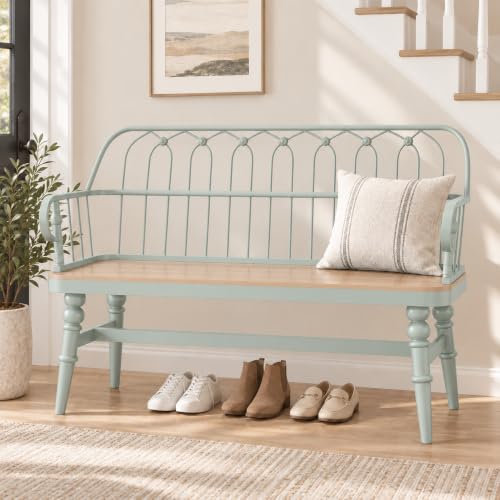
Solid wood benches with a slatted back, warm honey or walnut finishes, and visible grain pair naturally with shiplap walls and wide-plank floors. A lower back keeps the look airy while still providing support. For a coordinated look, carry the same wood tone into a console or coat rack nearby.
Modern and Minimalist
Clean lines, a low-profile back, and a metal or pale wood frame suit contemporary homes. Upholstered benches in a neutral fabric add softness without visual clutter. Floating or wall-mounted benches are a strong choice in narrow hallways because they leave the floor visually open.
Coastal and Bohemian
Rattan, cane, and light-toned wood bring a relaxed feel. Pair a woven bench with a natural fiber rug and a few textured baskets. If you enjoy layering natural materials, the styling ideas in our stained concrete patio guide translate well to indoor-outdoor entry transitions.
Traditional and Transitional
An upholstered bench with a gently curved back, nailhead trim, or turned legs adds a polished touch. Choose a durable, easy-clean fabric and a hardwood frame for longevity.
Comfort Details That Make a Difference
A bench with a back is already more comfortable than a backless design, but a few details separate a good bench from a great one:
- Seat cushion density: High-density foam holds its shape. Low-density foam feels soft on day one but flattens quickly in a daily-use entryway.
- Backrest angle: A slight recline of 5 to 10 degrees is more comfortable than a perfectly vertical back.
- Removable, washable covers: Essential for entryways where wet coats and muddy shoes are a daily reality.
- Armrests: Helpful for older adults or anyone who needs assistance standing up, but they add width — measure carefully.
- Non-slip feet: Protect hard floors and keep the bench stable on tile or stone.
How to Style and Organize Your Entryway Bench
Once the bench is in place, a few simple additions turn it into a functional drop zone:
- Above the bench: Install a hook rack or a row of individual hooks at a reachable height for coats and bags.
- On the seat: Use a slim cushion or a folded throw rather than a thick pad that eats into seating depth.
- Under the bench: Slide in a shallow basket for shoes and a tray for keys and mail.
- Beside the bench: Add a small umbrella stand or a tall basket for hats and scarves.
- Lighting: A wall sconce or a small lamp on a nearby console makes the space feel finished and usable after dark.
If you are furnishing a rental or a compact apartment, the space-saving ideas in our small-space lounge furniture guide offer useful parallels for compact entry layouts.
Tier Comparison: Choosing the Right Level for Your Needs
Entryway benches span a wide range of build quality. Use this tier framework to align your expectations with what each level typically delivers.
| Tier | Typical Construction | Best For | Lifespan Expectation |
|---|---|---|---|
| starter tier | Engineered wood or thin metal frame, basic hardware | Rentals, light use, temporary setups | Short to medium term |
| mid-range | Solid wood frame, upholstered seat, standard hinges | Most family entryways | Medium to long term |
| premium | Kiln-dried hardwood, reinforced joinery, quality upholstery | High-traffic homes and long-term use | Long term |
| luxury | Hand-finished hardwood, custom upholstery, premium hardware | Design-led interiors and statement entryways | Very long term |
Mid-range models usually offer the best balance for everyday entryway use: they provide a solid build and comfortable seating without the premium characteristics of high-end tier pieces. If your entryway is the primary daily access point for a busy household, investing in a premium or luxury build is a worthwhile long-term investment.
Frequently Asked Questions
What size bench with a back should I choose for my entryway?
Measure your entryway width first and leave at least 36 inches of clear walking space. A bench between 36 and 48 inches wide works well for most standard entryways, while longer benches of 50 to 60 inches suit wide foyers or mudrooms. Always account for door swing clearance and consider a bench depth of 14 to 18 inches to keep the walkway open.
Which material is best for an entryway bench with a back?
Solid wood such as oak, ash, or birch offers the most durable construction for high-traffic entryways, while upholstered benches with hardwood frames provide comfort for seating. Metal frames are a solid choice for industrial and modern styles, and rattan or wicker works well for coastal or bohemian themes. Choose a weather-resistant finish if the bench sits near an exterior door.
Do I need a storage bench for my entryway?
A storage bench is highly practical if your entryway lacks closets. Lift-top and flip-up seat designs hide shoes, gloves, and bags, while open cubbies keep everyday items accessible. For clutter-prone households, a bench with built-in storage combines seating and organization in one footprint.
How do I style a bench with a back in a small entryway?
Choose a slim bench with a low back and a narrow depth to preserve walking room. Wall-mounted or floating benches work well in tight spaces, and a bench in a light color visually opens the area. Pair it with a wall hook rack and a small tray for keys, and avoid bulky cushions that eat into the seating depth.
Are benches with backs comfortable for daily use?
Yes, a backrest provides lumbar support that makes a bench far more comfortable than a backless design, especially when putting on shoes or waiting by the door. Look for a back height of 14 to 20 inches above the seat and a slightly reclined angle. An upholstered or cushioned seat adds further comfort for longer sitting.
Final Checklist Before You Buy
- Measured the entryway width and confirmed at least 36 inches of clear walking space.
- Checked door swing clearance and baseboard depth.
- Selected a bench depth of 14 to 18 inches and a seat height of 17 to 19 inches.
- Chosen a material that suits the moisture level and traffic in your entryway.
- Decided between lift-top, flip-up, cubby, or drawer storage.
- Confirmed the back height and angle provide real lumbar support.
- Verified the cushion cover is removable and washable.
- Planned hooks, baskets, and lighting to complete the drop zone.
Ready to Find Your Entryway Bench?
Browse our curated selection of benches with backs that combine comfort, storage, and durable construction for real-world entryway use.
Explore Options Below