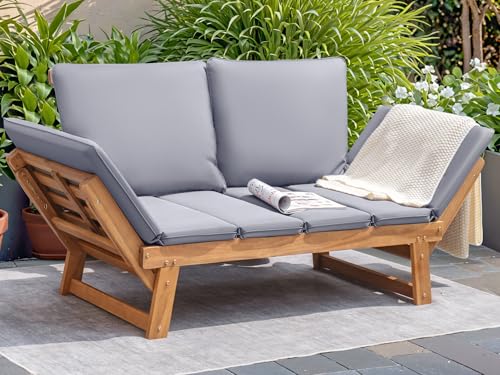
Outdoor Lounge Furniture for Small Spaces
Compact sofas, folding chairs, modular sectionals, and clever storage solutions that turn balconies, decks, and petite patios into comfortable lounging retreats.
Explore Buying GuideQuick Summary: Small spaces demand furniture that earns its footprint. The best outdoor lounge furniture for small spaces combines a compact profile with real comfort — think deep-seat loveseats scaled down to two seats, bistro-height conversation sets, and modular pieces that reconfigure as your needs change. This guide walks you through the categories, materials, and layout strategies that consistently work in tight outdoor areas.
Why Small-Space Lounge Furniture Needs a Different Approach
A generous backyard absorbs large sectionals, chaise lounges, and side tables without much planning. A balcony or a narrow deck does not. Every piece of outdoor lounge furniture for small spaces has to justify its footprint, and the difference between a comfortable retreat and a cluttered corner usually comes down to three factors: seat depth, frame geometry, and how the pieces store or fold when not in use.
The good news is that the market has matured considerably. Manufacturers now build genuinely comfortable compact sofas, armchairs with removable backs, and modular conversation sets that seat four people in roughly the same floor area that a traditional three-seater once demanded. This guide explains what to look for, which categories deliver the most usable seating per square foot, and how to arrange everything so the space still feels open.
Comfort vs. Footprint: Finding the Balance
The single biggest misconception about small-space lounging is that compact automatically means uncomfortable. In practice, seat depth matters far more than overall width. A two-seat loveseat with a generous 24-inch seat depth will feel substantially more comfortable than a three-seat sofa with a shallow 20-inch depth, and it frees up a meaningful strip of walkway. When you evaluate any candidate, measure the seat depth, seat height, and armrest width before anything else.
Frame geometry is the second lever. Chairs with tapered or recessed legs visually open up a space, while solid skirted bases look grounded but heavy. For balconies especially, exposed-leg designs make the floor plane readable and the room feel larger. You can see the same principle applied throughout our outdoor lounging guides: airy silhouettes consistently read better in confined areas.
The Core Categories That Work in Tight Spaces
Not every lounge furniture category scales down gracefully. These six consistently deliver usable comfort without swallowing the floor plan.
1. Two-Seat Loveseats and Compact Sofas
A properly scaled loveseat is the anchor of most small outdoor lounges. Look for models under 60 inches wide, with cushions that can be removed for storage. All-weather construction matters here because compact pieces often stay outdoors year-round — browse all-weather wicker patio furniture if you want a woven look that tolerates rain and sun without annual re-sealing. For a coordinated seating-plus-coffee-table arrangement, a 3-piece patio set is often the most efficient way to buy a complete conversation zone in one decision.
Pay attention to cushion thickness. Deep, plush cushions add comfort but also add visual bulk. A medium-firm cushion around 4 inches thick strikes a good balance in small spaces and dries faster after rain.
2. Modular and Sectional Pieces
Modular lounge systems let you start with two seats and add a corner or an ottoman later. In a small space this flexibility is valuable: you can arrange an L-shape against two walls on a narrow patio, then break it apart into separate chairs when guests arrive. Compact sectionals built for tight areas typically use clip-together bases rather than fixed frames, which keeps each module manageable to move.
If your patio is genuinely narrow, a two-piece sectional with a low back profile works better than a full three-seat configuration. Pair it with a slim coffee table or a pair of nesting side tables rather than a full dining-height table.
3. Folding and Stackable Lounge Chairs
Folding chairs have shed their temporary-furniture reputation. High-quality folding lounge chairs now use powder-coated aluminum frames, weather-resistant sling fabric, and locking hinges that feel solid under load. The advantage is obvious: two chairs fold flat and store in a closet or behind a door when the balcony needs to serve another purpose. Stackable lawn chairs offer a similar benefit without the folding mechanism, and they tend to be more comfortable for extended sitting because the frame is rigid.
Folding designs are also the easiest category to move between a patio and a lawn or campsite, which adds value if you entertain in multiple spots.
4. Bistro and Balcony Sets
A bistro set — typically two chairs and a small round table — remains the most space-efficient way to create a sit-down zone on a balcony. Modern bistro chairs often recline slightly and include removable cushions, so they function as lounge seating rather than purely dining seating. The round table doubles as a surface for drinks, a book, or a small planter.
For a slightly more relaxed posture, look for bistro chairs with a back angle of around 100–105 degrees. Upright dining chairs are fine for meals but tiring for an afternoon of reading. Browse the 2 chairs and table category for compact paired sets that lean toward lounging.
5. Corner and Wedge Seating
Corners are dead space in most small patios unless you deliberately furnish them. A corner lounge chair or a wedge module converts that dead zone into a usable seat and often improves the flow of the whole layout. Corner units work best when the patio has two adjacent walls or railings to nestle against; on an open balcony, a freestanding corner chair can feel stranded.
Pair corner seating with a small round table rather than a rectangular one. Round tables have no sharp corners to navigate around in tight circulation paths and visually soften the arrangement.
6. Ottomans, Poufs, and Dual-Purpose Pieces
In a small lounge, every piece should ideally serve two functions. An ottoman can be a footrest, a spare seat, and a surface for a tray. A storage bench can hold cushions and double as seating. Look for pieces with removable tops or integrated trays. If you plan to leave cushions outside, consider outdoor furniture with storage so cushions have a dry home without eating into closet space.
Comparison: Which Category Fits Your Space?
The table below summarizes how each category performs across the dimensions that matter most in small outdoor areas. Tier descriptors reflect relative market positioning and build quality, not specific figures.
| Category | Best For | Seats | Typical Tier | Storage Behavior |
|---|---|---|---|---|
| Two-seat loveseat | Balconies and narrow decks | 2 | Mid-range to premium | Fixed frame; cushions removable |
| Modular sectional | L-shaped patios and flexible layouts | 2–4 | Premium to luxury | Clips apart into modules |
| Folding lounge chair | Multi-use balconies and renters | 1 each | Entry-level to mid-range | Folds flat |
| Stackable chair | Frequent reconfiguration | 1 each | Mid-range | Stacks 3–5 high |
| Bistro set | Smallest balconies | 2 | Essential to balanced tier | Chairs often fold or stack |
| Corner / wedge seat | Patios with two walls | 1–2 | Mid-range to premium | Fixed; cushions removable |
| Storage ottoman | Any small lounge | 1–2 | Essential to top-tier | Internal storage cavity |
Materials That Hold Up in Tight, Exposed Spaces
Small patios and balconies are usually more exposed than large covered decks. Wind funnels between buildings, rain reaches further under eaves, and sun reflects off nearby walls. Material choice therefore matters more, not less, in compact areas.
Aluminum Frames
Powder-coated aluminum is the default recommendation for small-space lounge furniture. It is light enough to move single-handedly, will not rust, and holds a finish well. High-grade powder coating resists chipping, and aluminum tolerates the temperature swings common on balconies. For a deeper look at frame comparisons, see our notes on metal vs aluminum furniture.
All-Weather Wicker and Resin
Woven resin over an aluminum frame gives you the visual warmth of natural wicker without the maintenance. It resists UV fading and does not absorb water. This is a strong choice if your small space is a focal point visible from indoors. Our all-weather resin wicker patio furniture overview covers what to check in the weave density and frame thickness.
Teak and Hardwood
Teak weathers gracefully and is dense enough to stay put in wind. It is heavier than aluminum, which is a drawback if you need to move furniture frequently, but an advantage on exposed balconies where lightweight pieces can shift. Browse teak garden chairs if you want a natural-material lounger that will patina rather than degrade.
Fabrics and Cushions
Look for solution-dyed acrylic or similar outdoor-grade fabrics with a UPF rating. In small spaces, cushions are often the largest soft surface and the most visible, so choose quick-drying fills. Removable, zippered covers make seasonal cleaning practical. Our outdoor cushion guide explains fill types and drying behavior in more detail.
Layout Strategies for Compact Outdoor Lounges
Furniture choice gets you halfway. Arrangement determines whether the space feels intentional or crowded.
The Two-Zone Rule
In any small lounge, aim for no more than two functional zones: a seating zone and a surface zone. A loveseat plus two side tables is one zone. A loveseat, two chairs, a coffee table, and a planter is already pushing the limit. Resist the urge to fill every corner; visual breathing room is what makes compact areas feel comfortable.
Float vs. Wall-Aligned
On a narrow balcony, wall-aligned arrangements preserve the central walkway and work best. On a square patio, floating the seating slightly away from the walls (with a walkway behind) can actually make the space feel larger by creating depth. Test both by sliding furniture into position before committing to a layout.
Vertical and Visual Tricks
Low-profile furniture keeps sightlines open. A glass or slatted coffee table reads lighter than a solid wood block. A rug can define the lounge zone but should not extend to the walls, which makes the floor look smaller. Mirrors on a balcony wall can double perceived depth, and a vertical planter or trellis draws the eye upward without consuming floor area.
If your space is a long, narrow balcony, consider a 3-piece wicker patio set arranged along one railing with the table between the chairs. This pattern keeps the walking path clear and gives each seat a view outward.
Storage and Seasonal Management
In a small space, storage is not an afterthought — it is part of the furniture plan. Cushions left out in the rain degrade quickly, and there is rarely a shed nearby on a balcony.
Options worth considering:
- Storage benches: Seat two people and hold folded cushions or throws. A bench with a lift-up lid is the most space-efficient storage seat.
- Furniture with built-in storage: Some loveseats and coffee tables include compartments under the seat or tabletop. See outdoor furniture with built-in cushion storage for what to look for.
- Folding and stacking pieces: Chairs that fold flat can move indoors during storm season, freeing the balcony entirely.
- Cover strategy: A fitted cover is often more practical than moving furniture. Choose breathable covers to avoid trapped moisture.
During winter or prolonged rain, stacking chairs against one wall and covering the loveseat can free the floor for other uses. This reversibility is one of the strongest arguments for a mixed arrangement of a fixed loveseat plus folding or stacking chairs.
What to Check Before You Buy
- Measure the delivery path: A loveseat that fits on the balcony is useless if it cannot pass through the stairwell or doorway. Check the narrowest point of the route and compare it against the packaged dimensions.
- Confirm seat depth and height: These two numbers determine comfort more than width. Aim for at least 22–24 inches of seat depth for lounging.
- Check the weight: On upper-floor balconies, lighter furniture is easier to move and less of a load concern. Aluminum frames are typically the lightest durable option.
- Review the frame warranty: Frame warranties of several years signal confidence in the construction. Cushion warranties are usually shorter, which is normal.
- Verify cushion care instructions: Removable, machine-washable covers extend the life of any small-space lounge considerably.
- Think about wind: Exposed balconies and rooftop patios experience stronger gusts than ground-level patios. Heavier pieces or a way to secure lightweight chairs matters.
Frequently Asked Questions
How do I choose lounge furniture for a very small balcony?
Start with a bistro set or a compact two-seat loveseat, then add one folding or stacking chair only if the walkway remains clear. Prioritize pieces with removable cushions and exposed legs so the floor reads as continuous. Measure the walkway before buying anything else.
Is a loveseat or two separate chairs better for a small patio?
Two chairs offer more flexibility and are easier to rearrange, while a loveseat provides a more sociable, connected seating experience. On narrow balconies, two chairs along one railing often work better. On square patios, a loveseat plus one accent chair is a strong combination.
What materials are best for small outdoor lounge furniture?
Powder-coated aluminum frames with all-weather resin wicker or outdoor-grade fabric cushions are the most practical combination. Aluminum resists rust and stays light enough to move, while resin wicker handles sun and rain without maintenance. Teak is a good alternative if you prefer natural wood and do not need to move pieces often.
Can modular furniture work on a small balcony?
Yes, provided the modules are individually manageable and clip together rather than using a single large frame. Two-seat modular configurations arranged as an L-shape can fit narrow balconies, and you can separate the modules when you need extra walkway.
How do I protect small-space lounge furniture from rain?
Choose quick-dry cushions with removable covers, store cushions in a storage bench when not in use, and use a breathable fitted cover on the frame during extended wet periods. Folding or stacking chairs can be brought indoors entirely.
How much clearance should I leave around lounge furniture?
Leave at least 24 inches of walkway in front of seating where people need to pass, and 18 inches as an absolute minimum in very tight balconies where the seating faces outward. Avoid placing furniture so close to a railing that it blocks the view or creates a safety hazard.
Putting It Together: A Sample Small-Space Layout
Here is a layout that works on a typical 8-by-10-foot balcony or a compact ground-floor patio:
- Anchor: A two-seat loveseat (under 60 inches wide) placed along the longer wall or railing.
- Second seat: One folding or stacking lounge chair angled toward the loveseat, or a second matching chair if space allows.
- Surface: A small round side table between the seats, or a nesting pair if you need flexibility.
- Storage: A storage bench or ottoman that doubles as a footrest and holds cushions.
- Softening: An outdoor rug sized to sit just under the front legs of the furniture, not extending to the walls.
- Greenery: One vertical planter or a tall narrow pot in a corner to draw the eye upward.
This arrangement seats three comfortably, leaves a clear central walkway, and can be dismantled for cleaning or winter storage in minutes. It also scales: adding a second chair or swapping the side table for a slightly larger coffee table does not require starting over.
Ready to Furnish Your Small Outdoor Lounge?
Browse our curated selection of compact outdoor lounge furniture below, hand-picked for balconies, decks, and petite patios.
View Recommended Products