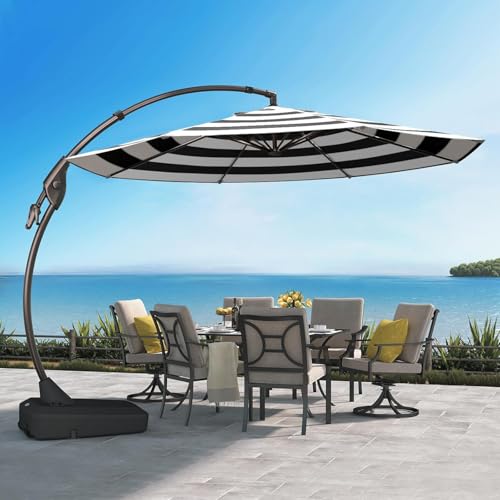
Black and White Striped Cantilever Umbrella: The Complete Buying Guide
A cantilever umbrella in black and white stripes is one of the most versatile shade solutions for a modern patio. It clears the space beneath the canopy, follows the sun, and adds graphic contrast to almost any outdoor setting. This guide explains how to choose the right frame, fabric, base, and size before you buy.
Why this guide matters: If you already know you want a black and white striped cantilever umbrella, the remaining decisions are technical. Frame material, arm reach, hub mechanics, canopy fabric, and base weight all affect stability, lifespan, and how well the umbrella suits your patio. The sections below walk through each factor in plain language so you can compare models with confidence and pick the one that fits your space.
How a Cantilever Umbrella Differs from a Market Umbrella
A traditional market umbrella drops its pole through the center of a table, which limits where you can place furniture and often blocks sightlines. A cantilever umbrella, sometimes called an offset umbrella, mounts the canopy on a side arm supported by a single vertical pole. The result is an open, unobstructed area underneath, so you can position a dining set, a sectional, or a pair of lounge chairs without working around a central post.
That convenience comes with a trade-off: the side-mounted design places leverage on the pole and base, so cantilever umbrellas demand a heavier, better-engineered base than market umbrellas. They also tend to use a crank and tilt mechanism that lets you rotate or angle the canopy as the sun moves. When shopping, look for a smooth crank, a locking tilt, and a hub that feels solid rather than loose.
Frame Types and Build Quality
The frame determines how the umbrella handles wind, how smoothly it opens, and how long it lasts. Cantilever frames are commonly made from aluminum, steel, or a combination of both. Aluminum is lighter and resists rust well, which makes it a popular choice for coastal patios. Steel is stronger for a given thickness but needs a rust-proof finish to survive wet climates. Many mid-range and premium models use aluminum ribs with a reinforced hub and a powder-coated finish.
Pay attention to the arm and the hub. A single-piece cast hub with sealed bearings will open and rotate more smoothly than a riveted assembly. Thicker ribs reduce canopy sag, especially on larger canopies. If your patio is exposed to gusty conditions, look for a model described as heavy-duty or commercial-grade, with a vented canopy and a base that accepts added weight.
| Frame Tier | Typical Build | Best For |
|---|---|---|
| Entry-Level | Thinner aluminum or steel ribs, basic crank, lighter base | Sheltered patios, balconies, seasonal use |
| Mid-Range | Aluminum frame with reinforced hub, smoother tilt, weighted base options | Everyday residential use, dining and lounge areas |
| Premium | Heavy-duty aluminum, sealed bearings, wind vent, robust crank and tilt | Exposed patios, larger canopies, frequent use |
| Luxury | Cast aluminum or marine-grade components, precision mechanics, designer fabric | High-end outdoor rooms and hospitality settings |
Canopy Fabric: What the Stripes Are Made Of
The black and white stripe pattern is only as good as the fabric beneath it. Solution-dyed acrylic is the benchmark for outdoor canopies because the color runs through the fiber rather than sitting on the surface, so it resists fading and holds its contrast through repeated sun exposure. Polyester is common at entry-level, often with a water-repellent coating; it performs well for a few seasons but may fade faster than acrylic.
A vent at the top of the canopy is worth prioritizing. The vent lets hot air escape and reduces the sail effect during gusts, which lowers stress on the frame and base. Check whether the fabric is removable and machine-washable or spot-clean only, and confirm whether a fitted cover is included or sold separately. A cover extends the life of the stripes considerably during long idle periods.
Base Options and Stability
Because the pole sits to one side, the base must counteract the canopy's leverage. Cantilever bases typically come in cross-plate, wheeled, or in-ground styles. Cross-plate bases are the most common for residential patios and often accept sand, water, or paving slabs to reach the recommended weight. Wheeled bases make it easier to reposition the umbrella but still need sufficient weight once in place. In-ground sleeves offer the most stability but require permanent installation.
Always match the base to the specific model. A base designed for a smaller offset umbrella may not support a larger canopy, even if the pole diameter fits. If your patio is windy, choose a heavier base and consider anchoring it or placing it in a sheltered corner. Never leave the umbrella open during storms or high winds, regardless of the base.
Sizing and Placement
Measure the seating area you want to shade, then add a little overlap so the shadow reaches the edges of your furniture. Round canopies in the eight-to-ten-foot range suit bistro sets and small lounge groupings. Ten-to-thirteen-foot round canopies and rectangular options cover larger dining tables and sectionals. Also check the arm reach and the height of the canopy at the lowest point, so it clears your furniture and the people using it.
Think about where the pole will sit. The pole and base occupy floor space on one side, so plan a clear spot that does not block a walkway or a door. If you are pairing the umbrella with a dining set, check that the table height and chair backs fit comfortably under the canopy. For bar-height arrangements, confirm the canopy height accommodates taller seating; a bar-height table and chairs with an umbrella hole can guide your layout planning even though a cantilever umbrella does not use a center hole.
Rotation and Tilt
A crank-and-tilt mechanism lets you angle the canopy as the sun moves. Test the lock at each position; a firm lock keeps the canopy from drifting on breezy afternoons.
Wind Vent
A vented canopy releases hot air and reduces lift during gusts. It is one of the most effective design features for improving stability without adding weight.
Fabric Grade
Solution-dyed acrylic holds black and white contrast best. Polyester is a solid entry-level choice but may fade faster under intense sun.
Storage Cover
A fitted cover protects the stripes and the mechanism during long idle periods. Confirm whether it is included or sold separately before you buy.
Matching the Umbrella to Your Patio Style
Black and white stripes are graphic by nature, so they work best when the surrounding palette gives them room to breathe. Pair the umbrella with neutral furniture, natural wood tones, or solid cushions in charcoal, sand, or sage. If you want a coordinated look, black and white striped cushions for chairs or a bench tie the shade to the seating without overwhelming the space. A striped outdoor bench cushion is an easy way to echo the canopy on a porch or garden bench.
If your patio leans modern, keep the base and frame finish consistent with other metal accents. For a coastal or transitional look, the stripes work well against white or weathered wood. If you are still deciding between a cantilever and a market umbrella, compare a striped patio umbrella with base against the cantilever option to see which footprint suits your furniture layout.
Pre-Purchase Checklist
- Measure the shade footprint: confirm the canopy covers the seating area with a small overlap.
- Check arm reach and clearance: make sure the canopy clears chairs, tables, and people.
- Confirm the base weight requirement: match the base to the model and plan how you will fill or anchor it.
- Verify the fabric: solution-dyed acrylic is the most fade-resistant option for strong contrast stripes.
- Test the mechanism: smooth crank, firm tilt lock, and a solid hub are signs of better build quality.
- Plan storage: a fitted cover or indoor storage protects the canopy during the off-season.
Frequently Asked Questions
What is a cantilever umbrella?
A cantilever umbrella, also called an offset umbrella, uses a side-mounted arm to suspend the canopy over a seating area. Because the pole sits off to the side rather than through the center of a table, it frees up the space beneath the canopy and can be rotated or tilted to follow the sun.
How much wind can a black and white striped cantilever umbrella handle?
Wind tolerance depends on the frame, the base weight, and whether the canopy is vented. Most residential cantilever umbrellas are designed for light to moderate breezes and should be closed during gusts. A heavy-duty base, a reinforced hub, and a wind vent all improve stability, but no umbrella should be left open in a storm.
Do I need a special base for a cantilever umbrella?
Yes. Cantilever umbrellas place leverage on the side pole, so they require a weighted base designed for the model. Many bases accept sand, water, or paving slabs to reach the recommended weight. Never substitute a lightweight base from a market umbrella, and always follow the manufacturer's weight guidance.
Can a striped cantilever umbrella be left outside all year?
The frame and fabric are usually weather-resistant, but extended exposure to sun, rain, and frost shortens the life of any umbrella. Closing it during storms and using a fitted cover during long idle periods will protect the canopy and mechanism. In snowy climates, store the umbrella indoors for the off-season.
What size cantilever umbrella do I need?
Measure the seating area you want to shade, then add a little overlap so the shadow covers the edges. Round canopies around eight to ten feet suit a bistro or lounge set, while ten to thirteen feet or rectangular canopies suit larger dining and sectional arrangements. Check the arm reach so the canopy clears your furniture.
Related Reading
- Black and White Cantilever Patio Umbrella
- Black and White Striped Umbrella with Base
- Black and White Rectangular Patio Umbrella
- Black and White Outdoor Umbrella with Lights
- Black and White Patio Umbrella with Lights
- Black and White Outdoor Umbrella with Stand
- Big Umbrella for Patio
- Beach Umbrella Stand