
Black Dining Room Bench: The Complete Buying Guide
Everything you need to know before choosing a black bench for your dining table — sizing, materials, comfort, style pairings, and practical tips for a space that looks intentional and works beautifully every day.
START THE GUIDEWhy a black dining room bench? A black bench is one of the most versatile seating upgrades you can make. It anchors a dining table visually, frees up wall space compared with a row of chairs, and slides neatly underneath when the room needs to breathe. This guide walks you through the decisions that matter most so you can choose with confidence.
Why Choose a Black Bench for Your Dining Room
Black is a grounding color. In a dining room it creates contrast against light walls, warm wood floors, and pale table linens, giving the space a composed, deliberate look. A bench also changes how a dining room functions. Instead of a rigid row of individual chairs, a bench invites people to slide in, settle down, and sit closer together — which is exactly what you want for family meals and casual gatherings.
Beyond aesthetics, a bench is practical. Backless designs tuck completely under the table, which makes small dining rooms feel larger and keeps walkways clear. Benches also tend to seat more people per linear foot than chairs, making them a smart choice for households that regularly host guests. And because black works with nearly every palette — from warm farmhouse to crisp modern — the bench stays relevant even if you redecorate the room later.
If you are still comparing seating formats for your dining area, our guide to a bench for the dining room covers the broader trade-offs between benches and chairs, while the ideas below focus specifically on the black variant.
Key Decisions Before You Buy
1. Sizing and Proportion
The most common mistake is choosing a bench that is too long or too short for the table. As a general rule, aim for a bench that is roughly 12 to 18 inches shorter than the table so it tucks in without crowding the legs. For a standard six-person table, a bench between 48 and 60 inches works well on one side. Very long tables benefit from a bench that spans most of the length, while compact tables pair best with a shorter bench plus two chairs on the opposite side.
- Seat height: Match the bench seat height to your table's chair height so everyone sits at a comfortable level. Standard dining seat height is around 18 inches.
- Depth: A seat depth of 14 to 16 inches is comfortable for most adults; deeper benches feel loungier but take up more floor space.
- Clearance: Leave enough knee room so the bench does not press against the table apron.
2. Material and Finish
The material determines how the bench ages, how it feels, and how much maintenance it needs. Black finishes are available across wood, metal, upholstery, and mixed-material designs.
- Solid wood: A classic choice that can be refinished over time. Painted or lacquered black hardwood resists everyday wear and suits traditional and modern rooms alike.
- Metal: Powder-coated steel or iron is heavy-duty and stable, with a clean industrial look. Matte black metal hides fingerprints better than gloss.
- Upholstered: Fabric or leather benches add softness and comfort. Performance fabrics are a practical pick for family dining rooms.
- Mixed materials: Wood seats on metal frames, or upholstered tops on wooden bases, combine durability with visual warmth.
For households with young children or pets, choose finishes that resist scratches and stains — matte powder-coated metal and sealed painted hardwood are the most forgiving in daily use.
3. Backrest or Backless
Backless benches are the most space-efficient and visually light option. They slide fully under the table and keep sightlines open, which is ideal for small dining rooms and open-plan layouts. Benches with a low back or a slight curve offer more support for longer meals and work well against a wall. If you want the flexibility of a bench without giving up back support, look for designs with a shallow backrest that still tucks under the table.
4. Comfort and Cushioning
Comfort is where benches can divide opinion. Solid wood benches are perfectly fine for casual meals but can feel firm during long dinners. Upholstered benches and those with removable cushions offer the best support. A common compromise is a wooden bench paired with a fitted bench cushion or a striped bench cushion that adds padding and a touch of pattern without changing the bench itself.
If the bench will be used daily, prioritize a supportive seat with a slight curve or a firm foam cushion. If it is mostly for occasional hosting, a simple wooden seat is entirely adequate.
5. Storage and Function
Some black dining benches include hidden storage under the seat — useful for napkins, table linens, board games, or kids' craft supplies. Storage benches are slightly taller and bulkier, so check the dimensions carefully against your table and floor space. If storage is not a priority, a slim backless bench keeps the room feeling open.
Black Bench Styles and Their Best Pairings
| Style | Best For | Pairs Well With | Tier |
|---|---|---|---|
| Backless solid wood | Small dining rooms, casual family meals | Wood dining tables, warm neutral walls, woven placemats | Essential tier |
| Upholstered bench | Long dinners, formal dining rooms, comfort-first homes | Glass or dark wood tables, pendant lighting, soft rugs | Mid-range |
| Metal frame bench | Industrial, modern, and loft-style dining rooms | Metal or reclaimed wood tables, exposed brick, leather chairs | Mid-tier |
| Storage bench | Family homes needing extra organization | Farmhouse tables, bench seating nooks, mudroom-adjacent dining | Premium |
| Bench with low back | Dining rooms where the bench sits against a wall | Banquette-style layouts, cottage and transitional rooms | High-end tier |
If you are pairing a black bench with a matching table, our guide to a black dining table with bench and chairs shows how to balance the full set. For a coordinated room, a black dining room table set with bench takes the guesswork out of mixing finishes.
How to Style a Black Dining Bench
A black bench is a strong visual element, so the goal is to balance it rather than compete with it. A few practical styling rules help the bench feel like part of a considered room:
- Balance dark with light: Pair the bench with a lighter table, pale walls, or a textured rug so the black reads as an accent rather than a heavy block.
- Mix seating types: A bench on one side and chairs on the other creates rhythm and gives guests a choice of seating.
- Use texture: Add a cushion, a woven runner, or a soft throw to soften the bench's lines and add warmth.
- Keep the tabletop simple: A dark bench already anchors the room; let a bowl, candles, or a single vase do the rest.
- Repeat the black elsewhere: Small repeat accents — chair frames, lighting fixtures, or a dining room bench in the same tone — make the bench look intentional.
Small-Space and Open-Plan Considerations
Black benches are especially useful in compact dining areas. A backless bench slides entirely under the table, which frees up floor space and keeps walkways clear. In open-plan homes, the bench's low profile preserves sightlines between the kitchen, dining area, and living room, so the dining zone does not feel like a barrier.
For small rooms, choose a bench that matches the table's length closely and avoid bulky storage models unless you genuinely need the extra organization. A slim metal frame with a wooden seat is a good compromise: light in appearance but stable in daily use.
Durability and Care
How long a black bench stays looking its best depends on the finish and how it is used. A few habits extend its life:
- Wipe spills promptly on painted or lacquered wood to prevent moisture from working into the finish.
- Use felt pads under the legs on hardwood floors to prevent scratches.
- Dust metal frames regularly and touch up any chips in powder coating to avoid rust spots.
- Rotate cushions and spot-clean upholstery according to the manufacturer's care label.
- Tighten hardware periodically on assembly-style benches to keep the frame solid.
Entry-level benches usually use simpler joinery and thinner finishes, while mid-range and top-tier models tend to offer reinforced frames, better hardware, and more durable coatings. If the bench will be used daily by a family, investing in a stronger frame and a sealed finish is a long-term decision worth making.
Common Mistakes to Avoid
- Buying without measuring: Check both the bench length and the table length, plus the clearance for legs and knees.
- Ignoring seat height: A bench that is too low or too high makes every meal uncomfortable.
- Choosing gloss black for busy homes: Gloss shows fingerprints and smudges; matte finishes are more forgiving.
- Skipping a cushion: If the bench is for long dinners, a cushion is not optional.
- Overloading the room: A dark bench plus dark chairs plus a dark table can make a small room feel heavy — introduce lighter elements.
Frequently Asked Questions
What size black dining room bench should I choose for my table?
A general rule is to choose a bench that is 12 to 18 inches shorter than your dining table so it tucks in neatly without blocking legs or chairs. For a standard six-person table, a bench between 48 and 60 inches works well for one side, while longer tables benefit from a bench that spans most of the length.
Is a black dining room bench comfortable for long meals?
Comfort depends on the seat type. Upholstered or cushioned benches offer the best support for long dinners and gatherings, while solid wood benches suit shorter meals and casual use. Adding a removable cushion to a wooden bench is a simple way to improve comfort without changing the design.
Which black bench finish is best for a family dining room?
Powder-coated metal and lacquered or painted hardwood finishes are the most practical for busy households because they resist scratches, stains, and everyday wear. Matte finishes hide fingerprints better than high-gloss ones, and sealed solid wood can be refinished over time if needed.
Can a black dining room bench work in a small dining space?
Yes. A backless black bench is one of the most space-efficient seating options because it slides completely under the table when not in use. Pairing a bench on one side with two chairs on the other keeps the room visually open while still seating four people comfortably.
Recommended Black Dining Room Benches
⚠️ AFFILIATE DISCLOSURE: This website contains affiliate links. As an Amazon Associate, we earn from qualifying purchases. If you make a purchase through these links, we may receive a small commission at no additional cost to you. Read our full affiliate policy.
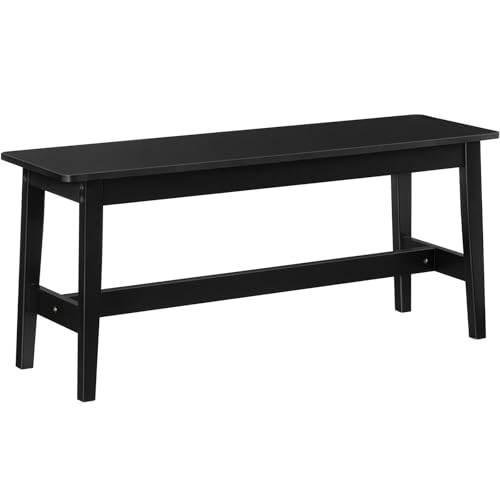
HOOBRO 39.3'' Bamboo Dining Bench, Farmhouse Kitchen Table Bench, Kitchen & Living Room Furniture, Easy to Assemble, Sturdy and Stable, Black BK03CD01G2
Check price on Amazon
Plank+Beam Classic Dining Bench, 60 Inch, Black Wirebrush | Non-Toxic Finishes, Farmhouse Design, Elegant Details, Easy Assembly, Quick Setup, Solid Wood
Check price on Amazon
STHOUYN Black Faux Leather Benches Set of 2, 58 Inch Padded Seats | STHOUYN Dining Room Bench, Extra Long Cushioned Seating, Waiting Room Bench, Entryway, Kitchen or Bedside Use
Check price on Amazon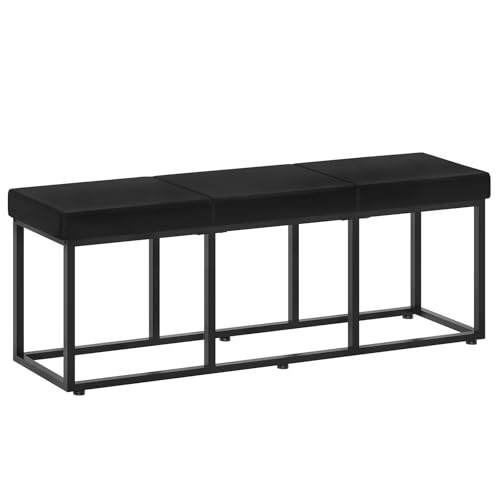
HOOBRO Dining Bench, Dining Room Bench with PU Leather Upholstered Seat, for Kitchen, Living Room, Hallway, Entryway, Bedroom, Black BB46CD01
Check price on Amazon
Signature Design by Ashley 1-Piece Wood Dining Bench, 48" 2-Tone Farmhouse | Sturdy Solid Wood Frame with Mango Veneer and MDF Substrate Seat, Space-Saving 48-Inch Profile, Wildenauer Series
Check price on Amazon
Boraam Shaker Backless Wood Bench - Black Finish
Check price on Amazon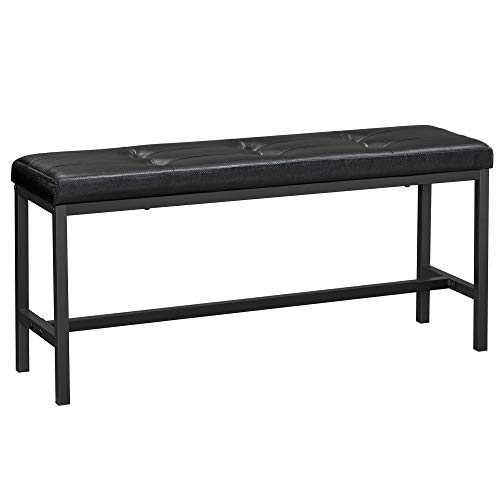
VASAGLE Dining Table Bench, Ottoman Bench | PU Leather Padded Seat, Steel Frame, for Dining Room, Living Room, Hallway, Bedroom, Black UKTB034B81
Check price on Amazon