
Bench for Dining Room: The Complete Buying & Style Guide
A dining bench is one of the most practical and space-smart seating choices you can add to a dining room. This guide walks you through bench sizes, styles, materials, comfort factors, and layout ideas so you can choose with confidence.
Start the GuideWhy a dining bench deserves a place at your table: Benches let you seat more people in the same footprint, slide neatly under the table when the meal is over, and bring a relaxed, gathered-around-the-table feel that chairs alone can't match. Whether you are outfitting a casual kitchen nook, a farmhouse dining room, or a compact apartment, there is a bench format that fits your space and your routine.
What Exactly Is a Dining Room Bench?
A dining room bench is a long, backless or back-supported seat designed to pair with a dining table. Instead of individual chairs, the bench runs along one side of the table and lets several people sit shoulder to shoulder. Most dining benches are built to the same seat height as standard dining chairs, so they work alongside chairs without any height mismatch.
The format is flexible. You can place a bench on one long side of a rectangular table and keep chairs on the opposite side. In a corner nook, an L-shaped built-in bench wraps the table and turns a dead corner into the most popular seat in the house. In an open-plan dining area, a bench with a low back helps keep sightlines clear while still offering support.
Because a bench is a shared seat, it also changes the social dynamic of a meal. Kids can slide in easily, adults can shift position without pushing a chair back, and the table feels less formal. That relaxed feel is exactly why benches have moved from porches and picnic tables into everyday dining rooms.
Why Homeowners Choose a Dining Bench
Before you start comparing models, it helps to understand the practical reasons a bench often outperforms a full set of chairs:
- More seating per linear foot: A bench typically seats one more person than the same length of individual chairs, which matters when you host family dinners or holidays.
- Space-saving footprint: Backless benches tuck completely under the table, freeing up walking space in smaller dining rooms and kitchens.
- Visual openness: A low or backless bench keeps the room from feeling crowded with chair backs, which is a big advantage in open-plan layouts.
- Built-in storage options: Many benches include a lift-up seat or drawers, giving you a place for table linens, board games, or seasonal items.
- Design versatility: Benches work in farmhouse, modern, coastal, and industrial interiors, and they pair naturally with almost any table shape.
- Kid-friendly seating: Children can climb onto a bench easily, and there are no chair legs to trip over in the walkway.
Types of Dining Room Benches
Dining benches fall into a handful of clear categories. Each one solves a different problem, so the right choice depends on how you use your dining room and how much room you have.
Backless Benches
The most common and most versatile type. A backless bench slides fully under the table, making it ideal for compact dining rooms and kitchen nooks. It works well for casual meals and quick breakfasts. The trade-off is that it offers no back support, so it is less suited to long dinners or for guests who need lumbar support.
Benches With a Backrest
These look and function more like a long sofa for the dining table. A backrest adds comfort for longer meals and gives the dining area a more anchored, furniture-like appearance. Benches with backs are a strong choice for a formal dining room or for older family members who prefer support. They take up more depth, so measure your walkway carefully.
Upholstered Benches
Fully upholstered benches bring softness and a premium feel to a dining room. They are comfortable for lingering meals and can be covered in performance fabrics that resist spills. Upholstered benches suit modern, transitional, and glam interiors, and they pair well with glass or metal tables that need a warm counterpoint.
Storage Benches
A storage bench combines seating with hidden capacity. Lift-up seat models are the most common and give you a large compartment for tablecloths, placemats, or seasonal decor. Drawer-front benches are another option. Storage benches are especially useful in small dining rooms where every cubic foot counts.
Corner and Nook Benches
Corner benches are designed for a dedicated breakfast nook or a dining alcove. They usually combine a long bench with a shorter return piece to form an L-shape. This arrangement seats more people in a compact footprint and turns an awkward corner into a cozy feature. Many corner benches are built-in or modular.
Convertible and Multi-Use Benches
Some benches are designed to do double duty. A bench that folds out into a picnic table, for example, is handy for flexible households. Convertible designs are less common in a formal dining room but can be a smart fit for a multipurpose space.
How to Choose the Right Bench Size
Size is the single most important decision when buying a dining bench. A bench that is too short leaves gaps at the table ends, while an oversized bench crowds the walkway and makes the table feel out of balance.
Seat Width per Person
A practical rule is to allow about 24 inches of seat width per adult. That gives each person enough elbow room without feeling squeezed. Children need less, but planning for adult width keeps the bench useful for years.
| Bench Length | Comfortable Seating | Best For |
|---|---|---|
| 36 to 48 inches | 2 adults | Small kitchen nooks and two-person tables |
| 48 to 60 inches | 2 to 3 adults | Standard rectangular dining tables for four |
| 60 to 72 inches | 3 adults | Family dining tables for six |
| 72 to 84 inches | 3 to 4 adults | Large dining tables and holiday hosting |
Seat Height and Table Clearance
For a standard dining table that stands about 30 inches high, the bench seat should sit around 17 to 19 inches from the floor. That leaves roughly 11 to 13 inches between the seat and the tabletop, which is comfortable for most adults. If your table is a counter-height or bar-height model, you will need a matching tall bench rather than a standard one.
Depth and Walkway Space
A backless bench is usually 12 to 16 inches deep, while a bench with a backrest is closer to 20 to 24 inches deep. In a dining room, leave at least 30 to 36 inches of clear space behind the bench so people can pull it out and walk past comfortably. If your room is tight, favor a backless bench that tucks under the table.
Pro Tip: Measure the Table First
Write down your table length and height before you shop. Aim for a bench that is roughly two-thirds to three-quarters the length of the table it sits against. This keeps the proportions balanced and leaves room for chairs at the ends if you use them.
Materials: Which Bench Builds Last?
The material affects durability, comfort, and how the bench fits your interior style. Here is how the main options compare.
Solid Wood
Wood is the classic dining bench material. Oak, maple, and walnut bring warmth and can be refinished over time, which makes them a long-term investment. Solid wood handles daily use well, though it benefits from a protective sealant and should be kept away from standing water. Wood suits farmhouse, traditional, and Scandinavian interiors.
Metal Frames
Steel and aluminum frames are durable, easy to wipe clean, and often used in industrial and modern designs. A metal-framed bench with a wood or upholstered seat balances strength and comfort. Look for a rust-resistant finish if the bench sits near a kitchen or a humid space.
Upholstered and Padded Benches
An upholstered bench pairs a hardwood or metal frame with foam padding and fabric. It is the most comfortable option for long meals. Performance fabrics resist stains and are a smart choice for households with children. Check that the foam is high-density, since low-density foam compresses quickly and flattens the seat.
Engineered Wood and Composites
Engineered wood benches are stable, consistent, and often used in storage bench designs. They are a practical choice for a starter-tier dining room or a rental. The finish matters most here, so choose one with a durable laminate or veneer that resists chipping.
Matching the Bench to Your Dining Room Style
A bench should feel like it belongs in the room, not like an afterthought. Use these pairings as a starting point.
Farmhouse and Rustic
A solid wood bench in a warm natural finish is the natural partner for a farmhouse table. Add a fabric cushion in a neutral tone for comfort. This pairing works especially well with a long rectangular table and a woven or vintage-inspired centerpiece.
Modern and Minimalist
Look for a clean-lined bench with a slim metal frame and a simple wood or upholstered seat. A backless design keeps the room uncluttered. Neutral colors and straight legs reinforce the minimalist look.
Coastal and Casual
Light wood, whitewashed finishes, and soft blue or sand-toned cushions suit a coastal dining room. A bench with a low back can echo the relaxed feel of a beach house without looking out of place in a city home.
Industrial and Loft
Pair a metal-framed bench with a reclaimed wood top or a leather-upholstered seat. The mix of raw metal and warm texture fits loft apartments and open-plan kitchens.
Comfort Factors Most Buyers Overlook
A bench looks simple, but comfort depends on several small details. Check these before you commit:
- Seat padding: A thin wooden seat is fine for short meals but hard on long dinners. A bench with at least an inch of high-density foam is noticeably more comfortable.
- Backrest angle: If you choose a bench with a back, a slight recline is more comfortable than a perfectly vertical back.
- Edge shape: Rounded seat edges reduce pressure on the back of the legs, especially for taller adults.
- Footrest or stretcher: A lower stretcher bar gives shorter diners a place to rest their feet and adds structural rigidity.
- Weight capacity: Check the rated capacity, especially for storage benches where the lid must support seated weight.
- Movement: Glides or felt pads under the legs protect hardwood floors and make the bench easier to slide.
Dining Room Layout Ideas With a Bench
How you place the bench matters as much as which bench you buy. These layouts work in real homes:
Bench Plus Chairs
The classic arrangement: a bench on one long side of a rectangular table and chairs on the other. This balances the room, keeps the bench side visually open, and makes it easy for kids to sit together.
Corner Nook
An L-shaped bench in a corner turns an awkward alcove into a cozy breakfast spot. Pair it with a round or small rectangular table and two chairs on the open sides. This is one of the most space-efficient dining layouts.
Bench on Both Long Sides
Two benches facing each other create a communal, beer-garden feel. This works well for casual dining rooms and large families. Use a backless bench on the wall side to save depth and a backed bench on the open side for comfort.
Bench as a Room Divider
In an open-plan space, a bench with a low back can gently separate the dining zone from the living area without blocking the view. Keep the back low so sightlines stay open.
Dining Bench Buying Checklist
Use this checklist to compare options side by side before you decide. It focuses on fit, function, and build quality rather than marketing claims.
| What to Check | Why It Matters | Target |
|---|---|---|
| Seat height | Comfort and table clearance | 17 to 19 inches for a standard 30-inch table |
| Seat width per person | Prevents crowding at meals | About 24 inches per adult |
| Bench length vs table length | Visual balance and chair clearance | Roughly two-thirds to three-quarters of the table length |
| Depth | Walkway space and tuck-under ability | 12 to 16 inches backless, 20 to 24 inches with a back |
| Frame material | Durability and style | Solid wood, high-grade steel, or a reinforced composite |
| Seat padding | Comfort on longer meals | High-density foam at least one inch thick |
| Storage (if needed) | Hidden capacity in small rooms | Lift-up lid with a sturdy hinge or smooth-glide drawers |
| Weight capacity | Safety and longevity | Rated for the number of people you plan to seat |
| Finish and edges | Comfort and floor protection | Rounded edges and protective glides |
Tier Guide Without the Guesswork
In general, entry-level benches use simpler joinery and lighter frames, mid-range models add solid wood or high-density foam, and premium and luxury benches bring reinforced frames, refined upholstery, and finer finishes. Choose the tier that matches how often you host and how long you expect to keep the bench.
Keeping Your Dining Bench in Great Shape
A dining bench takes daily wear, so a little routine care goes a long way.
- Wood benches: Dust weekly and wipe spills promptly. Reapply a wood conditioner or sealant once or twice a year to keep the finish protected.
- Upholstered benches: Vacuum the fabric regularly and blot spills rather than rubbing. Use a fabric-safe cleaner and check the care label before treating stains.
- Metal frames: Wipe with a damp cloth and dry immediately. Touch up any chips in the finish to prevent corrosion.
- Storage benches: Avoid overloading the compartment and check hinges and hardware periodically for looseness.
- Floor protection: Add felt pads or glides to the feet to prevent scratches and make the bench easier to move.
Frequently Asked Questions
How long should a dining room bench be?
A general guideline is to allow around 24 inches of seat width per adult. For a bench that seats three adults, look for a length of roughly 60 to 72 inches. Always measure your table length first so the bench fits proportionally and leaves room for chairs on the opposite side.
Is a bench comfortable for everyday dining?
Yes, when chosen correctly. An upholstered bench with foam padding and a supportive backrest can be very comfortable. Backless benches suit casual meals and quick seating, while benches with backs are better for longer dinners and for older family members.
What height should a dining bench be?
For a standard 30-inch dining table, the bench seat should sit around 17 to 19 inches from the floor. This leaves roughly 11 to 13 inches of clearance between the seat and the tabletop, which is comfortable for most adults.
Can a dining bench be used with a rectangular table?
Absolutely. A bench is a natural fit for one long side of a rectangular dining table, with chairs on the opposite side. This arrangement keeps the room visually open and makes it easy to slide the bench underneath the table when not in use.
How do I care for a wooden dining bench?
Dust regularly with a soft cloth and wipe spills promptly. Reapply a wood conditioner or sealant once or twice a year to protect the finish. Keep the bench away from direct heat sources and prolonged moisture, which can cause warping or cracking.
Related Dining and Seating Guides
If you are building out your dining space, these related guides can help you complete the look:
- Black dining room bench — a bold, grounded look for modern and industrial dining rooms.
- Black dining table with bench and chairs — a coordinated set that keeps proportions consistent.
- Black dining room table set with bench — a complete set for a cohesive dining room.
- Black kitchen table with bench and chairs — a compact option for casual kitchen dining.
- Benches for entryway — carry the bench idea into your entry for practical seating and storage.
- Benches with cushions and storage — combine comfort with hidden capacity.
- Benches with backs for entryway — extra support for a busy drop zone.
- Bar-height outdoor dining set for 6 — extend the bench-and-table idea to an outdoor dining space.
- Bistro table and chairs indoor — a small-space alternative for casual dining corners.
- Bench picnic table — a classic bench-and-table pairing for outdoor entertaining.
Ready to Choose Your Dining Bench?
Use the buying checklist above, measure your table, and pick the bench tier that matches how you live. A well-chosen bench will serve your dining room for years.
Explore Bench OptionsRecommended Dining Room Benches & Seating
⚠️ AFFILIATE DISCLOSURE: This website contains affiliate links. As an Amazon Associate, we earn from qualifying purchases. If you make a purchase through these links, we may receive a small commission at no additional cost to you. Read our full affiliate policy.
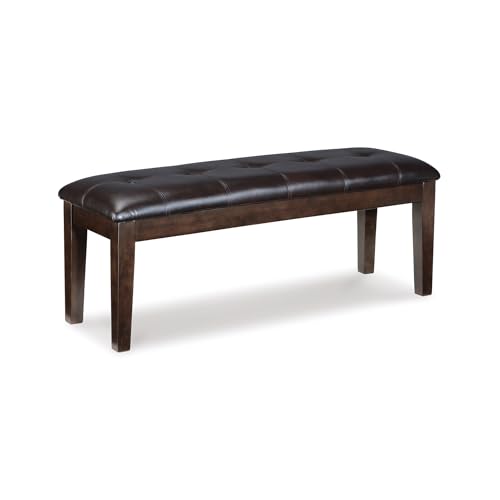
Signature Design by Ashley Haddigan 1-Piece Dining Bench, Faux Leather | Upholstered Button Tufted Seat, Wood and Engineered Wood Frame, 18.75 in Seat Height, 2-Person Capacity, Dark Brown Finish
Check price on Amazon
Signature Design by Ashley 1-Piece Wood Dining Bench, 48" 2-Tone Farmhouse | Sturdy Solid Wood Frame with Mango Veneer and MDF Substrate Seat, Space-Saving 48-Inch Profile, Wildenauer Series
Check price on Amazon
HOOBRO 39.3'' Bamboo Dining Bench, Farmhouse Kitchen Table Bench, Kitchen & Living Room Furniture, Easy to Assemble, Sturdy and Stable, Mocha MA03CD01G2
Check price on Amazon
Signature Design by Ashley Ralene Tufted Upholstered Dining Room Bench, Medium Brown
Check price on Amazon
HNY Farmhouse Upholstered Dining Bench Seat, 45" Linen Entryway Bench with Natural Wood Legs, Mid Century Modern End of Bed Bench for Kitchen Bedroom Living Room Hallway, for 2-3 Person, Beige
Check price on Amazon
FUQARHY 59” Farmhouse Dining Bench Pair of 2, Long Kitchen Benches, Walnut | 6-8 Person, Long Kitchen Table Benches, Entryway Bench, Indoor Bench Walnut
Check price on Amazon
Plank+Beam Classic Dining Bench, 60 Inch, Black Wirebrush | Non-Toxic Finishes, Farmhouse Design, Elegant Details, Easy Assembly, Quick Setup, Solid Wood
Check price on Amazon