Benches for Entryway: The Complete Buying Guide
An entryway bench is one of the hardest-working pieces in any home. It gives you a place to sit while pulling on shoes, keeps bags and jackets off the floor, and sets the tone for the rest of your interior. This guide walks you through bench types, materials, storage configurations, and sizing rules so you can choose a model that fits your space, your habits, and your style with confidence.
Start With Function: How Will You Use It?
Before comparing styles, think about the daily routine in your entryway. A household with young children benefits from a bench with open shoe storage and a wipe-clean seat. A single professional in a small apartment may only need a slim upholstered bench for bag drops and quick sits. And a mudroom-style entry with heavy outdoor gear calls for a reinforced frame and a durable, easy-to-clean surface.
- Seating first: Confirm you need a sit-down spot for shoe changes rather than pure storage.
- Storage needs: Decide between open shelves, baskets, drawers, or a lift-up compartment.
- Traffic flow: Measure the walking path and confirm clearance before choosing depth.
- Wall space: Note where hooks, mirrors, or a console can sit above the bench.
- Climate: Wet coats and boots call for moisture-tolerant finishes and breathable storage.
Entryway Bench Types Compared
Entryway benches fall into a handful of recognizable categories. Each type suits a different balance of seating comfort, storage capacity, and footprint. The table below summarizes how they compare so you can narrow the field quickly.
| Bench Type | Best For | Storage | Tier Positioning |
|---|---|---|---|
| Storage Bench | Families and busy households | Lift-up seat or drawers | Essential to mid-tier |
| Open-Shelf Bench | Shoe organization and airing | Open shelves and racks | Essential tier |
| Upholstered Bench | Comfort seating and style focus | Minimal or none | Mid-range to premium |
| Wooden Bench | Classic, durable everyday use | Model dependent | Mid-tier to high-end tier |
| Metal Frame Bench | Industrial and modern interiors | Shelf or basket add-ons | Essential to mid-tier |
| Wall-Mounted Bench | Very narrow hallways | Under-bench baskets | Starter to mid-tier |
| Corner Bench | Odd layouts and extra seating | Integrated or open | Mid-range to premium |
Bench Styles and What They Suit
Open-Shelf Shoe Bench
A simple frame with two or three slatted shelves. Air circulates around shoes, and everything stays visible. A strong choice for households that want order without drawer hardware.
Lift-Up Storage Bench
A hinged seat conceals a large compartment for bags, gloves, and seasonal gear. Look for soft-close hinges and a reinforced lid rated for adult weight.
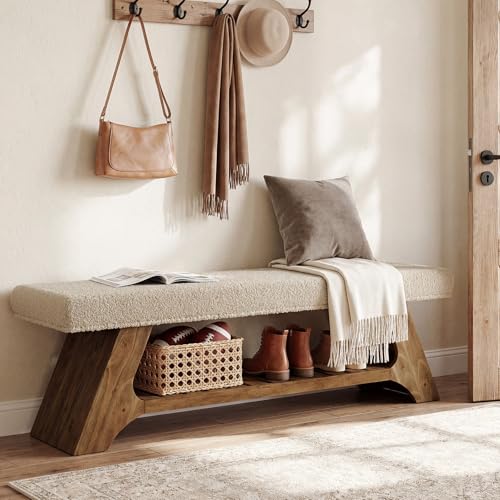
Upholstered Entry Bench
Padded seats in performance fabric or leather make the entryway feel finished. Best when storage lives elsewhere, such as a closet or wall hooks.
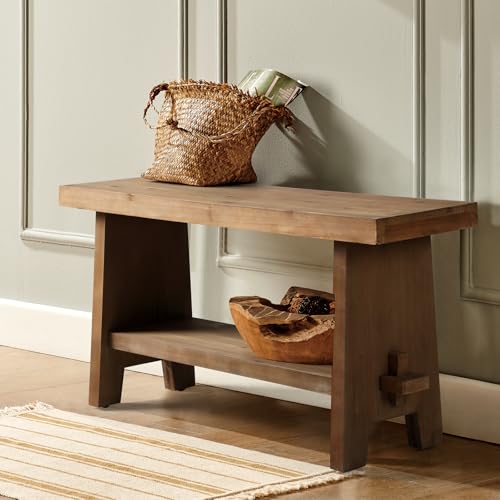
Solid Wood Bench
Oak, teak, and walnut benches bring warmth and long-term durability. Sealed finishes and reinforced joinery make them a worthwhile investment in high-traffic entries.
Metal Frame Bench
Powder-coated steel frames pair with wood or upholstered seats. The look suits industrial and modern homes, and the frame resists knocks and scuffs.
Wall-Mounted Folding Bench
Folds flat against the wall when not in use. Ideal for narrow hallways and apartments where every inch of clearance matters.
Materials: Durability Where It Counts
Entryways take a beating. Wet umbrellas, gritty shoes, and constant contact mean the bench surface and frame need to hold up. Solid wood with a sealed finish offers the best blend of warmth and resilience. Powder-coated metal frames resist chipping and support heavier loads. Upholstery should be a performance fabric or treated leather, especially in homes with pets or children. Avoid untreated softwoods and light linen weaves in high-traffic entries unless you plan to protect them.
For homes where the entry connects directly to a patio or garden, moisture management matters. A sealed wooden or metal bench handles humidity better than unfinished composite. If your entryway doubles as a transition to outdoor living, consider pairing the bench with a durable outdoor rug to trap grit before it reaches the bench area.
Sizing and Placement Rules
The most common entryway bench mistake is choosing one that is too deep. Standard bench depth runs 15 to 18 inches, which leaves room to sit without protruding into the walking path. Seat height of 17 to 19 inches suits most adults. Aim for at least 36 inches of clear walking space in front of the bench. In narrow hallways, a wall-mounted or slim bench under 12 inches deep keeps traffic flowing.
- Measure twice: Record wall length, doorway swing, and closet clearance.
- Check the walkway: Leave 36 inches of clear path wherever possible.
- Match the wall: A bench that spans 60 to 75 percent of the wall looks balanced.
- Plan vertically: Hooks, a mirror, or a shelf above the bench adds function without extra floor space.
- Confirm load rating: Storage benches should support the weight of an adult sitting on the lid.
Storage Options That Actually Work
Storage is where entryway benches earn their keep, but not all storage is equal. Open shelves are fastest for daily shoe swaps. Lift-up compartments hide clutter but require clearing the seat to open. Drawers keep small items contained but need clearance to pull out. Baskets under an open bench offer flexible, breathable storage for hats, gloves, and scarves.
A practical combination is a bench with a lower shoe shelf plus two woven baskets. This keeps daily shoes accessible while containing softer items. If your entry also serves as a drop zone for pet gear or gardening supplies, choose a bench with a wipe-clean top and a shelf height that fits standard storage bins. For homes with adjacent outdoor spaces, a small outdoor console table can extend the same organized approach just outside the door.
Matching Your Interior Style
Entry benches should feel like a natural extension of the home. In modern interiors, a metal frame with a wood seat or a floating wall-mounted bench keeps sightlines clean. Coastal and farmhouse homes suit whitewashed wood or woven rattan details. Traditional interiors benefit from solid wood with turned legs and a neutral upholstered cushion. Whatever the style, keep the palette consistent with adjacent rooms so the entry reads as a deliberate transition rather than an afterthought.
If your entry opens onto a covered porch, coordinate the bench with the porch palette. A garden bench or metal bench placed just outside can create a unified indoor-outdoor zone. Similarly, a teak outdoor bench works well on a sheltered porch where its natural oils handle humidity.
Common Buying Mistakes to Avoid
- Ignoring depth: A bench that is too deep turns a hallway into an obstacle course.
- Skipping the load rating: Storage benches must support seated adult weight, not just belongings.
- Choosing delicate fabric: Entry upholstery needs to resist abrasion and occasional moisture.
- Forgetting assembly clearance: Confirm the bench fits through doorways and stairwells during delivery.
- Overfilling the top: A bench is seating first. Keep decor minimal so it stays usable.
- Ignoring wall anchors: Tall or narrow benches should be anchored for safety.
A Simple Selection Framework
First, measure your entryway and note the walking path. Second, decide whether seating or storage is the priority. Third, choose a material that matches your climate and cleaning habits. Fourth, select a tier that matches your durability expectations: entry-level models suit light use, mid-range models add better hardware and finishes, and premium or high-end tier models deliver long-term resilience in busy homes. Finally, layer in hooks, baskets, and a rug to complete the zone.
If your entry connects to an outdoor living area, plan the transition carefully. A durable patio setup and a weather-ready weatherproofing routine help protect both indoor and outdoor furnishings. For homes with a small side entry, a compact outdoor small table and a narrow bench can share the same footprint without crowding.
Frequently Asked Questions
What size entryway bench should I choose?
Measure your entryway first. Leave at least 36 inches of walking clearance. Standard bench depth is 15 to 18 inches, and seat height typically ranges from 17 to 19 inches for comfortable sitting.
Is storage essential in an entryway bench?
Not always, but storage adds real function. Shoe shelves, lift-up seats, and baskets help contain clutter. If your entryway is tight, choose an open-shelf model or wall-mounted option to keep the floor clear.
Which materials suit high-traffic entryways?
Solid wood, metal frames, and performance upholstery handle daily use well. Look for sealed finishes, reinforced joinery, and fabrics labeled for indoor-outdoor or high-traffic use to resist wear and moisture.
How do I style an entryway bench without a lot of space?
Use a narrow bench or a wall-mounted folding bench. Keep the top surface minimal with a tray, hook strip, or small basket. Vertical storage above the bench maximizes function without crowding the floor.
Ready to Complete Your Entryway?
Pair your bench with the right rug, hooks, and storage to turn a transition zone into a functional, welcoming space. Browse our curated recommendations below to compare designs, sizes, and finishes side by side.
Explore Bench Options