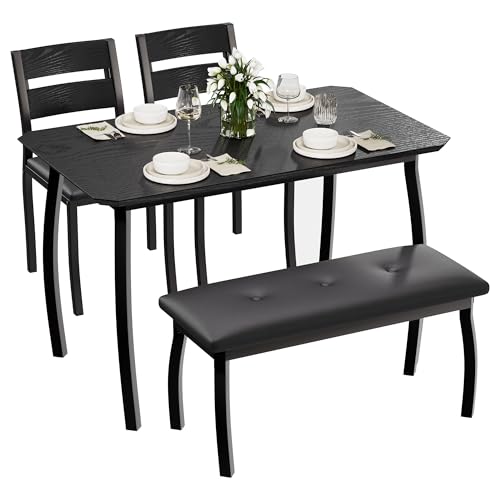
Black Kitchen Table with Bench and Chairs: The Complete Guide
A black kitchen table with bench and chairs delivers a bold, cohesive dining setup that saves space and seats more people. Learn how to choose the right size, material, and layout for your home.
Why this combination works: A black kitchen table with bench and chairs solves a common dining problem. Benches tuck entirely under the table to free up floor space, while chairs give guests a backrest and individual seating. The unified black finish makes mixed seating look intentional rather than mismatched, and it hides scuffs and spills better than pale wood or white finishes. This guide walks you through everything you need to decide before you buy.
What to Look for in a Black Kitchen Table Set
Before comparing specific sets, understand the four factors that determine whether a table and bench combination will actually work in your kitchen. Each one affects comfort, durability, and how the set fits your daily routine.
Size and Seating Capacity
A typical rectangular kitchen table measures 60 to 72 inches long and 36 to 40 inches wide. With a bench on one long side and two chairs on the other, that footprint seats four comfortably, or six when you add chairs at the ends. Measure your floor space and leave at least 36 inches of clearance on all sides so chairs can pull out and people can walk behind the bench. If your kitchen is tight, look for a black dining room table set with bench that pairs a narrower table with a backless bench that slides fully underneath.
Materials and Finish Durability
The material determines how the set ages in a busy kitchen. Solid wood and wood veneer bring warmth and can be refinished, but require coasters and periodic sealing. Powder-coated steel and aluminum resist scratches, moisture, and heat, making them the most practical option for households with children. Matte black laminate over MDF is common in entry-level sets and wipes clean easily, though edges can chip over time. Whichever you choose, verify the finish is described as scratch-resistant and moisture-resistant before you commit.
Bench Style and Comfort
Benches come in three main forms: backless, backed, and upholstered. Backless benches offer the cleanest lines and store completely under the table, but lack lower-back support. Backed benches resemble a sofa frame and are more comfortable for long meals, though they cannot slide under the table. Upholstered bench pads add cushioning and are easy to wipe down if the fabric is treated for spills. For everyday family use, a backless bench with a removable cushion balances space savings and comfort.
Chair Compatibility
Chairs paired with a bench should have a seat height that matches the bench within an inch, usually 17 to 19 inches from floor to seat. Mismatched heights make the table feel uneven and are uncomfortable for guests. Many black table sets pair slat-back or spindle chairs with a matching bench; if you are buying components separately, check that the chair seat depth leaves knee room under the table apron. For a coordinated look, see the full range of black dining table with bench and chairs options before mixing pieces.
Black Kitchen Table Configurations Compared
Not every black table and bench setup suits every kitchen. The table below compares the most common configurations by tier, best use case, and trade-offs so you can match a layout to your room.
| Configuration | Tier | Best For | Trade-offs |
|---|---|---|---|
| Rectangular table, one bench, two chairs | Essential tier | Small kitchens, families of four | Limited end seating; bench must sit against a wall or open side |
| Rectangular table, two benches | Balanced tier | Large families, casual dining | No back support; less comfortable for elderly guests |
| Round table, curved bench, two chairs | Mid-tier | Breakfast nooks, bay windows | Curved benches fit fewer people than straight benches of equal length |
| Extendable table, bench, four chairs | High-end tier | Homes that host holidays | Extension mechanism adds complexity and weight |
| Counter-height table, tall bench, stools | Premium | Open-plan kitchens with island adjacency | Higher seats are harder for children and older adults to climb |
Space Planning and Layout Tips
A black table anchors the room visually, so placement matters more than with lighter finishes. Position the bench against a wall or in an open area where people can step over it rather than pull it out. Keep at least 12 to 15 inches between the bench back and the wall for legroom. If the bench sits in the middle of the room, choose a backless design so guests can swing their legs over instead of sliding out sideways. For narrow kitchens, consider a black dining room bench that is 12 to 14 inches deep rather than the standard 15 to 17 inches; the reduced depth preserves walkway space without sacrificing seating.
Lighting is the second consideration. Black surfaces absorb light, so a dark table can make a dim kitchen feel smaller. Hang a pendant or linear fixture directly above the table center and aim for 30 to 36 inches of clearance between the fixture bottom and the tabletop. If your kitchen lacks overhead wiring, a plug-in pendant or a pair of wall sconces on either side of the table works as well.
Pros and Cons of Black Kitchen Table Sets
Advantages
- Hides scratches, scuffs, and everyday spills better than light finishes
- Bench seats more people than individual chairs in the same footprint
- Bench tucks under the table to free floor space in small kitchens
- Creates a cohesive look without matching every piece exactly
- Pairs well with both modern and farmhouse interiors
Considerations
- Dark surfaces show dust and fingerprints between cleanings
- Benches lack back support unless you choose a backed model
- Guests on a bench must slide rather than pull out to leave
- Black can make small, dim kitchens feel enclosed
- Cheaper laminates may chip at edges with heavy use
Care and Maintenance
A black finish is forgiving, but it still needs routine care to stay even. Wipe the tabletop with a damp microfiber cloth after meals and dry immediately to prevent water rings. Avoid abrasive cleaners and scouring pads, which leave dull patches that are visible on dark surfaces. For wood and veneer, apply a furniture wax or sealer every three to six months depending on humidity. For metal frames, check joints and touch up any chips with matching black enamel to prevent rust. Cushions on the bench should be vacuumed monthly and spot-cleaned with a mild detergent solution; remove them during humid seasons to let the bench frame breathe.
Ready to Compare Black Table and Bench Sets?
Review recommended sets, seating capacities, and material options in one place before you decide.
Explore Recommended SetsFrequently Asked Questions
What are the benefits of a black kitchen table with bench and chairs?
A black kitchen table with bench and chairs offers a cohesive, modern look while maximizing seating capacity. The bench tucks neatly under the table to save floor space, and black finishes hide everyday wear better than lighter colors. The combination provides flexible seating for both family meals and entertaining.
How do I choose the right size black kitchen table with bench and chairs?
Measure your available floor area and allow at least 36 inches of clearance on all sides for chair pull-out. For bench seating, leave 12 to 15 inches of clearance behind the bench. A standard rectangular table seats four to six, while a bench on one side can add two more places without extending the table footprint.
What materials work best for a black kitchen table and bench set?
Solid wood and wood veneer offer warmth and durability for formal or farmhouse settings. Powder-coated steel and aluminum are excellent for modern, industrial, or high-traffic kitchens because they resist scratches and moisture. MDF with a matte black laminate is a solid choice for entry-level sets where easy cleaning matters most.
Can a bench be used with a black kitchen table for everyday meals?
Yes. Benches are comfortable for everyday meals, especially when fitted with a supportive cushion or upholstered pad. They encourage family members to slide in together and are ideal for kids. However, benches work best against a wall or in open layouts where guests can step over rather than pull out.