
Cantilever Patio Umbrella with LED Lights: The Complete Buyer's Guide
Extend your outdoor evenings with shade that doubles as ambient lighting. Learn how LED cantilever umbrellas work, what features matter, and how to choose the right model for your patio.
Jump to Buying ChecklistWhat Is a Cantilever Patio Umbrella with LED Lights?
A cantilever patio umbrella — also called an offset umbrella — suspends its canopy from a side-mounted arm rather than a center pole. This design keeps the area beneath the canopy free of obstructions, making it ideal for dining tables, lounge sets, and conversational seating. When you add integrated LED lights to the ribs or hub, the umbrella becomes a dual-purpose fixture: shade by day, ambient lighting by night.
Models in this category range from entry-level designs with basic solar-powered strips to premium and luxury builds featuring rechargeable battery packs, dimmable LEDs, and commercial-grade aluminum frames. The lighting is typically embedded along the umbrella ribs or housed in a central hub, casting a soft downward glow that illuminates the table and seating area without harsh glare.
Key takeaway: A cantilever umbrella with LED lights eliminates the need for separate patio lighting near your seating zone, reduces tripping hazards from cords, and lets you extend outdoor gatherings well past sunset.
Why Choose a Cantilever Umbrella with LED Lights?
Homeowners researching this category usually want three things: unobstructed shade, evening usability, and a clean look. Here is how LED cantilever umbrellas deliver on each front.
Unobstructed Shade Coverage
Because the pole sits off to the side, you can position the canopy directly over a dining table or conversation set without a center pole cutting through the space. This is especially valuable for dining tables with umbrella holes that would otherwise require a traditional center-pole model — though with a cantilever you can also skip the hole entirely and place the base beside the table.
Evening Ambiance Without Extra Fixtures
Integrated LEDs mean you do not need to run extension cords, install hardwired lighting, or place lanterns on the table. Many models offer warm-white light that flatters outdoor furniture and creates a relaxed dinner-party atmosphere. If you enjoy hosting, pairing an LED umbrella with outdoor lighting along pathways or fences creates layered illumination.
Flexible Positioning
Cantilever umbrellas typically rotate 360 degrees and tilt to block low-angle sun. That flexibility lets you follow the shade throughout the day — or angle the canopy away when you want open sky. Models with tilt and rotation mechanisms offer the most adjustability.
Space Efficiency
On smaller patios or balconies, an offset umbrella frees up floor space beneath the canopy. You can tuck seating right under the shade without working around a pole. Pair one with a compact small patio layout to maximize usable area.
LED Lighting Options Explained
The lighting system is the defining feature of this category, and not all LED setups are equal. Here is what you will encounter across the market.
Solar-Powered LED Strips
Solar panels mounted on top of the canopy charge a small battery during the day, powering LED strips along the ribs at night. These are common in entry-level and mid-range models. Advantages include no wiring and no need to recharge manually. The trade-off: brightness can diminish on overcast days, and battery lifespan varies. If solar is your priority, look at a dedicated cantilever umbrella with solar lights for models designed around this setup.
Rechargeable Battery Packs
Some mid-tier and high-end tier umbrellas use removable or built-in lithium battery packs that you charge via USB or a standard outlet. These typically deliver brighter, more consistent light and often include dimming controls. The battery pack may sit in the umbrella hub or clip to the frame.
Hardwired or Plug-In LEDs
Less common in residential models, but some professional-grade umbrellas offer plug-in LED systems. These provide the most reliable power but require an outdoor outlet near the umbrella base.
Light Color and Brightness
Most LED umbrellas use warm-white LEDs (around 2700K–3000K) to create a cozy glow. Brightness is typically measured in lumens, though many consumer listings omit this figure. As a rule, premium models offer brighter, more evenly distributed light with better diffusers. If dimming matters to you, confirm the model includes a dimmer switch or remote.
| Lighting Type | Typical Tier | Best For | Considerations |
|---|---|---|---|
| Solar LED strips | Entry-level to mid-range | Effortless setup, no wiring | Brightness varies with sun exposure |
| Rechargeable battery | Mid-tier to high-end tier | Consistent brightness, dimming | Requires periodic recharging |
| Plug-in / hardwired | Professional-grade | Permanent installations | Needs outdoor outlet nearby |
Frame Materials & Durability
The frame determines how well the umbrella withstands wind, sun, and seasonal changes. Cantilever umbrellas place more stress on the arm and base than center-pole designs, so material quality matters.
Aluminum
Powder-coated aluminum is the most common frame material in this category. It resists rust, stays relatively lightweight, and handles wind well when paired with a proper base. Premium models use thicker gauge aluminum and reinforced joints for added stability. Look for cast aluminum components in higher-end builds where the hub and crank housing benefit from extra strength.
Steel
Steel frames are strong and often found in entry-level to mid-range umbrellas, but they require a rust-proof finish to survive outdoor exposure. If you choose steel, confirm the coating is described as rust-resistant or rust-proof.
Wood
Wooden cantilever umbrellas exist but are less common with integrated LEDs because of wiring considerations. They suit rustic or bohemian design themes but demand more maintenance.
Durability tip: Check the wind rating if listed. Many quality cantilever umbrellas are rated for 15–25 mph winds when properly anchored. Always close the canopy during storms or high-wind events, regardless of rating.
Base Types & Weighting
Because the pole is offset, the base must counterbalance the canopy. Base design is one of the most overlooked — and most important — parts of choosing a cantilever umbrella.
Weighted Plate Bases
These use stacked plates or a filled reservoir (with sand or water) to anchor the umbrella. Many models ship with a base that you fill on-site, which keeps shipping manageable. A cantilever umbrella with weighted base is the most straightforward option for patios where you cannot bolt into the ground.
Rolling Bases
Wheels or casters let you reposition the umbrella as the sun moves or when you rearrange furniture. This is handy on large decks. Consider a cantilever umbrella with rolling base if you like to reconfigure your layout seasonally. Just note that wheeled bases still need adequate weight to stay stable.
In-Ground and Fixed Bases
Some premium models offer bases that anchor into concrete or soil. These provide the most stability but reduce portability. They suit permanent installations where the umbrella stays in one spot.
How Much Weight Do You Need?
Weight requirements vary by canopy size and wind exposure. As a general rule, larger canopies and windier locations demand heavier bases. Manufacturers typically specify the minimum fill weight — follow it. If your patio is exposed to gusts, consider upgrading to a heavier base or adding sand rather than water, since sand is denser.
Canopy Fabric & Weather Resistance
The canopy takes the brunt of sun, rain, and debris. Most quality umbrellas use solution-dyed polyester or acrylic fabric with UV-resistant treatments.
Polyester
Common in entry-level and mid-range umbrellas, polyester is durable and resists fading when solution-dyed. It dries relatively quickly but may need re-treating for water resistance over time.
Acrylic
Acrylic fabrics, often found in premium and luxury models, offer excellent UV resistance and color retention. They feel softer and tend to last longer in harsh sun. Many acrylic canopies are also water-repellent.
Color Considerations
Lighter canopy colors reflect heat and stay cooler underneath, while darker colors absorb heat but hide stains better. If your patio leans toward a monochrome look, a black or charcoal canopy pairs well; for a brighter feel, consider a bold color that complements your cushions and decor.
Sizing for Your Space
Cantilever umbrellas typically range from 8 feet to 11 feet in canopy diameter (or equivalent rectangular dimensions). Here is how to think about sizing.
Measure Your Seating Area
The canopy should extend slightly beyond the seating area to shade it fully as the sun moves. For a standard 6-person dining table, an 10-foot canopy is a common fit. For a lounge set with a sofa and chairs, measure the full footprint and add a foot or two on each side.
Account for the Base
The base sits beside the seating area, not under the canopy center. Make sure you have room for the base footprint — some rolling bases are quite wide. On a tight balcony, a compact model with a smaller base may be the better fit.
Check Clearance Height
Confirm the canopy height clears the heads of taller guests and does not collide with nearby structures. Most cantilever umbrellas offer adjustable height, but the arm and hub need vertical clearance too.
Buying Checklist
Use this checklist to compare models side by side. It focuses on features that affect daily use and long-term durability.
- Lighting type: Solar, rechargeable, or plug-in — match to your patio's power access and how often you entertain after dark.
- Rotation and tilt: Confirm the umbrella rotates and tilts if you want to follow the sun. A tilt-and-rotation model offers the most flexibility.
- Frame material: Aluminum for rust resistance; check coating quality if steel.
- Base type: Weighted, rolling, or fixed. Ensure the base is included or budget for one separately — many umbrellas are sold without a base.
- Canopy fabric: Solution-dyed polyester or acrylic with UV treatment.
- Wind rating: Look for a stated wind rating and follow the manufacturer's guidance on closing the canopy.
- Warranty: Check the warranty and returns policy for frame, canopy, and LED components separately.
- Assembly: Review the delivery and assembly details — some models require two people and a few hours.
Care & Maintenance Tips
With basic care, a quality cantilever umbrella can last many seasons. These habits make the biggest difference.
Clean the Canopy Regularly
Rinse the canopy with a hose and mild soap a few times per season. Avoid abrasive cleaners that strip UV treatments. Let it dry fully before closing to prevent mildew. If your canopy is removable, check whether it is machine-washable — many are not.
Store During Off-Season
If you live in a region with harsh winters, close and cover the umbrella, or store the canopy indoors. Follow the winter storage guide for your climate.
Protect the LEDs
Check the wiring and battery compartment periodically for moisture. Solar panels should be wiped clean so they charge efficiently. If your model uses a rechargeable pack, follow the manufacturer's charging guidance to extend battery life.
Secure the Base
Recheck the base weight at the start of each season. If you fill with water, drain and refill before winter to prevent freezing damage. Sand-filled bases are less prone to freezing issues.
Frequently Asked Questions
Do cantilever umbrellas with LED lights require an electrical outlet?
How much wind can a cantilever umbrella handle?
Can I use a cantilever umbrella over a dining table?
Are LED cantilever umbrellas worth the upgrade over standard models?
How do I choose between a solar and rechargeable LED umbrella?
Does the base come with the umbrella?
Ready to Choose Your LED Cantilever Umbrella?
You now have the framework to compare models with confidence. Focus on lighting type, base stability, frame material, and canopy fabric — those four factors drive most of the day-to-day experience. Browse the recommended models below, and cross-reference your shortlist against the buying checklist above.
Recommended Cantilever Patio Umbrellas with LED Lights
⚠️ AFFILIATE DISCLOSURE: This website contains affiliate links. As an Amazon Associate, we earn from qualifying purchases. If you make a purchase through these links, we may receive a small commission at no additional cost to you. Read our full affiliate policy.
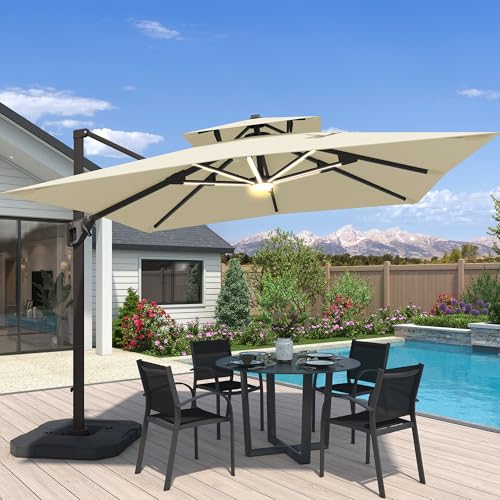
CoolCover by Han 10x10 FT Outdoor Cantilever Patio Umbrella with LED Lights | Aluminum Frame, Waterproof & UV-Protective Fabric, 360-degree Rotation, 7 Level Tilt, for Pool Garden Deck, Beige
Check price on Amazon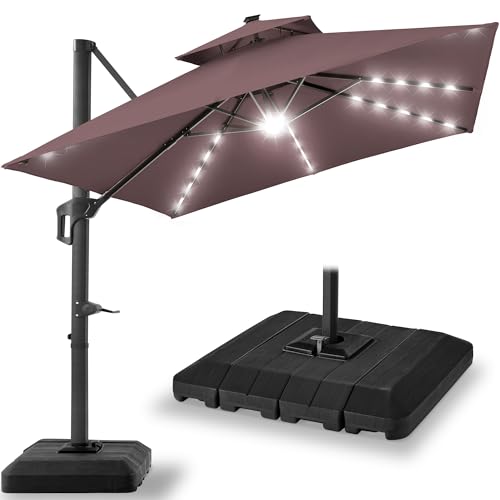
Best Choice Products 10x10ft Cantilever Patio Umbrella w/Base Included | Deep Taupe, Solar LED Lights, 360 Rotation, Large Offset Hanging Outdoor Shade for Deck, Pool, Backyard w/Stand
Check price on Amazon
Kantilevee 10 X 13 FT Cantilever Patio Umbrella with Base and Led Lights | Weighted Base Included, Aluminum Frame, Waterproof Canopy, Large Rectangle Outdoor Umbrellas, 360-degree Rotation, Beige
Check price on Amazon
MEVBC 10x13FT Cantilever Patio Umbrella with LED Lights and Base Included | 360° Rotation, Aluminum Frame, Outdoor Rectangular Umbrellas,Waterproof Fabric, for Backyard Garden Pool Deck, Beige
Check price on Amazon
MEVBC 10 X 13 FT Cantilever Outdoor Patio Umbrella with LED Lights | 360° Rotation, Aluminum Frame, Offset Rectangular Umbrellas,Waterproof Fabric, for Backyard Garden Pool Deck, Beige
Check price on Amazon