Black Outdoor Dining Table with Umbrella Hole: The Complete Guide
Everything you need to know before choosing a black outdoor dining table with a built-in umbrella hole — materials, sizes, styles, and the features that matter most for long-term outdoor use.
Explore the ComparisonWhy this guide matters: A black outdoor dining table with an umbrella hole is one of the most practical and versatile investments you can make for a patio. The dark finish anchors a dining area visually, while the umbrella hole lets you add shade without a separate freestanding base. This guide walks you through the decisions that separate a table you will enjoy for a decade from one you will want to replace in two seasons.
Why Choose a Black Outdoor Dining Table?
Black is one of the most forgiving finishes in outdoor furniture. It hides minor scuffs, resists the sun-fading that plagues lighter colors, and pairs naturally with nearly every patio material — from blue stone patios to brick patios. A black frame also creates strong contrast against greenery, making plantings and garden decor stand out.
From a design standpoint, a black table works across multiple aesthetics. It suits a modern patio layout with clean lines, a rustic farmhouse setting when paired with natural wood accents, and even a bohemian outdoor space when softened with textured cushions and woven accessories. If you want to coordinate seating, a matching set of black patio chairs or black rattan dining chairs keeps the look cohesive.
The Umbrella Hole: What It Actually Does
An umbrella hole is a pre-drilled opening in the center of the tabletop that accepts a patio umbrella pole. It solves two problems at once: it eliminates the need for a separate umbrella stand taking up floor space, and it places shade directly over the dining surface where you need it most.
There are a few specifications worth checking before you commit to any table:
- Hole diameter: Most umbrella poles are 1.5 inches (38 mm), but some are 1.375 inches or 2 inches. Confirm the hole size matches your umbrella, or plan to use a reducer ring.
- Table height compatibility: Standard dining-height tables (28–30 inches) accept standard umbrella poles. Counter-height and bar-height tables require longer poles and sometimes a different hole position.
- Base requirement: Even with a center hole, most umbrellas still need a weighted base underneath the table to prevent tipping in wind. Check whether the table has clearance underneath for a base plate.
- Hole cover: Many tables ship with a cap or plug so the hole can be closed when the umbrella is not in use — a small detail that prevents crumbs and rain from falling through.
Materials: What Black Tables Are Actually Made Of
The finish may look the same in photos, but the underlying material determines how the table performs over years of sun, rain, and temperature swings. Here is how the main options compare.
Powder-Coated Aluminum
Aluminum is the most common frame material for mid-range and premium black outdoor dining tables. It is lightweight enough to move, will not rust, and accepts a powder-coated black finish that resists chipping better than paint. A powder-coated aluminum table is a solid choice for coastal areas where salt air destroys steel. Look for reinforced joints and a frame wall thickness that feels substantial rather than tinny.
Cast Aluminum
Cast aluminum tables are heavier and more ornate, often featuring decorative lattice or scrollwork. The casting process allows detailed patterns that would be impossible with tubular frames. These tables sit at the high-end tier and are frequently paired with matching cast aluminum patio chairs. They handle wind well because of their weight, but they are difficult to move alone.
Wrought Iron and Steel
Wrought iron offers a classic, heirloom look, but it requires a genuinely rust-proof finish to survive outdoors. A black wrought iron table with glass top shows how elegant the material can be in a living-room-style setting; the same construction scaled up to dining height makes a striking patio centerpiece. Steel is stronger than aluminum but heavier and more vulnerable to rust if the coating is scratched. Check for a warranty that explicitly covers rust-through.
Wood
Black-painted or ebonized wood tables offer warmth that metal cannot match. The trade-off is maintenance: painted wood needs touch-ups, and solid wood moves with humidity. A wood table works best under a covered porch or pergola rather than fully exposed to the elements.
Plastic and Resin
Entry-level resin tables are lightweight, weatherproof, and easy to clean. They will not match the rigidity or longevity of metal, but for a starter patio or a rental space they are a practical option. Many resin tables are molded in one piece, which eliminates joint failures entirely.
| Material | Tier | Best For | Key Consideration |
|---|---|---|---|
| Powder-coated aluminum | Mid-range to premium | Everyday outdoor dining, coastal climates | Rust-proof; check frame thickness |
| Cast aluminum | High-end tier | Windy sites, decorative traditional style | Heavy; hard to move alone |
| Wrought iron / steel | Premium to luxury | Classic look, sheltered patios | Requires intact rust-proof finish |
| Wood (painted black) | Mid-tier | Covered porches, warm aesthetics | Needs periodic refinishing |
| Resin / plastic | Entry-level | Rentals, starter patios, low maintenance | Lighter build; less rigid |
Size and Shape: Matching the Table to Your Space
The umbrella hole sits at the center of the table, which means the table shape affects how the umbrella shades the seating. A round table with a center hole distributes shade evenly around all seats. A rectangular table does the same but with a longer footprint.
Round Tables
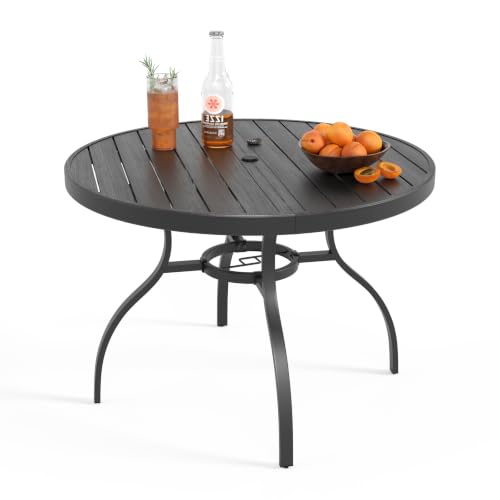
A black round outdoor dining table for 6 is the most space-efficient option for a square or circular patio. Everyone sits within easy conversation distance, and the center umbrella covers the whole group. Round tables generally need about 36 inches of clearance on all sides for chairs to pull out comfortably.
Rectangular Tables
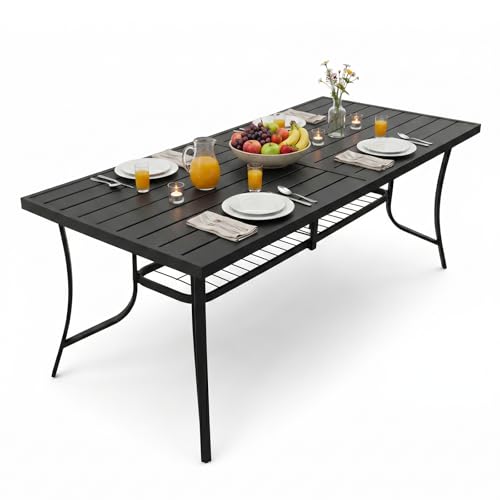
Rectangular tables suit narrow patios and long, linear dining areas. A six-seat rectangular table typically measures around 60–72 inches long and 36–40 inches wide. If you are seating eight, look at cast aluminum sets built for larger groups, such as cast aluminum outdoor dining sets for 8, which often include a center-hole table and matching chairs as a package.
Square Tables
Square tables split the difference: they seat four comfortably and six in a pinch, and they fit neatly against a wall or in a corner when not in use. A center umbrella hole works just as well here as on a round table.
Features That Separate Good Tables from Great Ones
Once you have settled on material and size, these details determine long-term satisfaction:
- Umbrella hole cover: A removable cap keeps the surface usable and flat when the umbrella is down.
- Reinforced hole collar: A metal or plastic ring around the hole prevents water intrusion into a hollow frame and stops the pole from wearing the finish.
- Adjustable feet: Glides or levelers compensate for slightly uneven patio surfaces — a common issue on brick and stone patios.
- Rust-proof hardware: Stainless steel or coated bolts at the joints outlast zinc-plated fasteners.
- Drainage channels: Some tabletops have subtle grooves that channel rainwater away from the umbrella hole.
- Stackable or folding design: Useful if you store the table seasonally or need to clear the patio for events.
For a complete dining setup, consider pairing your table with a matching black outdoor dining chairs set of 4 or a larger set of 6. If comfort is a priority, black outdoor dining chairs with cushions soften metal seating for longer meals.
Coordinating Your Black Table with the Rest of the Patio
A black table is a neutral anchor, which makes it easy to build a cohesive look around it. A few coordination strategies work especially well:
- Add contrast with cushions: Black outdoor furniture with white cushions creates a crisp, high-contrast look; grey cushions read as more understated, and red cushions add a bold accent.
- Mix in wicker or rattan: A black wicker patio set alongside a black dining table ties the seating areas together.
- Ground the space with a rug: An outdoor rug under the table defines the dining zone and keeps chair legs from scratching the patio surface.
- Extend the seating: A black outdoor bench along one side of a rectangular table maximizes seating without crowding the table with chairs.
If you are furnishing the whole patio rather than just the dining area, browsing a broader black outdoor furniture collection helps you keep finishes consistent across seating, dining, and lounging zones. A black sectional couch with pull-out bed or a pair of black outdoor rocking chairs can round out the space.
Care and Maintenance for a Black Finish
Black finishes hide dirt well, but they are not maintenance-free. A few habits extend the life of the table significantly:
- Wipe spills promptly. Acidic drinks and sauces can etch powder coating if left overnight.
- Cover the table in winter. A breathable furniture cover prevents standing water and reduces UV exposure during the off-season. If you use a center umbrella, remove it before covering the table.
- Touch up chips early. A small chip in powder coating exposes bare metal to moisture. A matching touch-up pen costs little and prevents rust from spreading.
- Clean the umbrella hole. Debris and water can collect in the hole collar. Flush it occasionally and confirm the cover seals properly.
- Store cushions separately. Even weather-resistant cushions last longer when brought inside during heavy rain or winter storage.
For deeper cleaning and protection guidance, our general outdoor furniture care resources cover cleaners, sealants, and seasonal routines in more detail.
Common Mistakes to Avoid
- Buying the table before the umbrella. Confirm the hole diameter and pole length match your umbrella model, especially for counter-height tables.
- Skipping the umbrella base. A center hole alone does not prevent tipping. Always use a weighted base rated for your umbrella size.
- Ignoring wind exposure. On an open, windy patio, a heavy cast aluminum table is more stable than a lightweight aluminum one.
- Forgetting clearance for chair pull-out. A table that fits the patio but leaves no room to push chairs back will feel cramped every meal.
- Overlooking assembly requirements. Large cast aluminum and wrought iron tables often ship in heavy sections. Check whether assembly is required and plan for two people.
Frequently Asked Questions
Can I add an umbrella hole to a table that does not have one?
It is possible on some materials — aluminum and wood can be drilled with the right tools and a hole saw — but it voids most warranties and can compromise the structural integrity of the tabletop. A factory-cut hole is always the safer choice if shade is a priority.
Do I still need an umbrella base if my table has a hole?
Yes, in almost all cases. The hole stabilizes the pole at table height, but the umbrella still needs a weighted base underneath to prevent tipping in wind. Some tables include a base; many do not.
What is the standard umbrella hole size?
Most center-pole patio umbrellas use a 1.5-inch diameter pole, so tables are typically drilled at 1.5 inches or slightly larger. If your pole is a different size, a reducer ring can adapt the fit.
Will a black table get too hot in direct sun?
Dark surfaces absorb more heat than light ones, so a black metal table can feel warm to the touch in peak afternoon sun. In practice, the umbrella itself shades most of the tabletop, and powder-coated finishes dissipate heat faster than bare metal.
How many people can a black outdoor dining table with umbrella hole seat?
It depends on the table size. Round tables around 48 inches seat four; 54–60 inch rounds seat six. Rectangular tables 60–72 inches long seat six, and 84 inches and up seat eight. Always check the manufacturer's stated seating capacity.
What is the best material for a black table in a coastal area?
Powder-coated aluminum is the most reliable choice near salt water because it cannot rust. Cast aluminum also performs well if the coating stays intact. Avoid uncoated steel and wrought iron in coastal climates.