Black Outdoor Bench: The Complete Buying Guide
A black outdoor bench is one of the most versatile seating pieces you can add to a patio, porch, garden, or entryway. It anchors a space visually, pairs easily with almost any color palette, and works across design styles from modern minimalism to classic cottage. This guide walks you through materials, styles, sizing, and care so you can choose with confidence.
Explore Materials & StylesWhy a black outdoor bench? Black is the great neutral of outdoor design. It recedes into the background when you want greenery to lead, yet holds its own as a focal point when styled deliberately. It hides scuffs better than white, resists looking dated longer than bright colors, and complements both natural wood tones and contemporary metals. The key is matching the bench's material and finish to your climate, your usage, and your existing outdoor furniture.
Bench Materials: What Black Finish Really Means
A "black outdoor bench" can be made from very different materials, and each behaves differently in sun, rain, and frost. Understanding the substrate behind the black finish is the single most important buying decision you will make.
Powder-Coated Steel
Steel benches with a powder-coated black finish are a popular starting point. They offer a solid build and a clean, uniform look. The coating resists scratches and fading when cared for, but any chip exposes bare metal to rust. Best for covered porches and mild climates, or for buyers willing to touch up chips annually.
Cast Aluminum
Cast aluminum is naturally rust-resistant and often finished in matte or satin black. It is lighter than steel yet sturdy, and it can be molded into ornate patterns or clean modern lines. This is a strong balanced-tier choice for coastal and humid regions where steel tends to struggle.
Painted or Stained Wood
Hardwoods such as teak, acacia, and eucalyptus can be finished in black stain or paint. Wood offers warmth and a traditional silhouette, and it can be refinished over time. Painted wood needs periodic recoating; stained wood shows grain and ages gracefully. A solid choice for classic and rustic settings.
All-Weather Wicker / Resin
Black resin wicker over an aluminum frame delivers the woven look without the maintenance of natural rattan. It is lightweight, weather-resistant, and comfortable with cushions. High-end tier versions use tighter weaves and reinforced frames that hold shape for years.
Cast Iron & Heavy-Duty Metal
Cast iron benches are the traditional park bench in black. They are extremely heavy-duty, stable, and long-lasting, but they require rust protection and are difficult to move. Choose these when permanence and a classic look matter more than portability.
Concrete & Composite
Black-stained concrete or composite benches suit modern landscapes and public-facing entryways. They are heavy, stable, and resist tipping. Composite materials can mimic wood grain while avoiding rot. These are best for fixed installations where weight is not a concern.
Popular Black Bench Styles & Where They Fit
Style affects both the look of your space and how comfortable the bench is for daily use. Here is how the most common black bench styles compare.
- Backless benches — Low-profile and easy to tuck under a table or against a wall. Ideal for entryways, foot-of-bed placement on covered porches, and small patios where visual clutter is a concern.
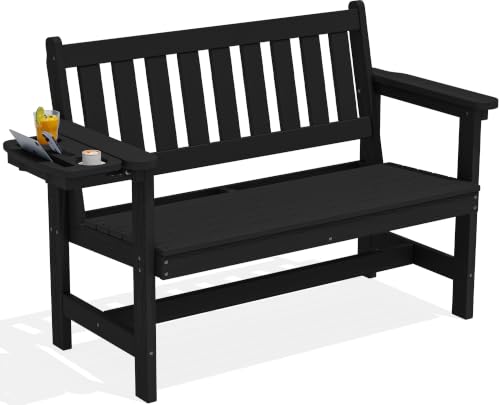
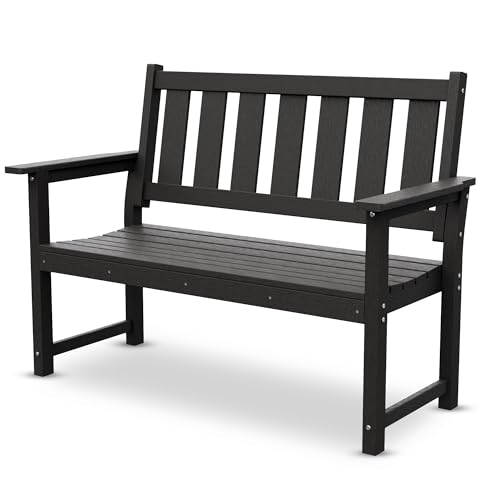
- Benches with backs — More comfortable for lingering. A black bench with a slatted or curved back reads as intentional seating rather than a utility piece. Good for garden viewing spots and conversation areas.
- Storage benches — Combine seating with concealed storage for cushions, tools, or shoes. If you are furnishing a deck, pairing a storage bench with other pieces that offer outdoor furniture with storage keeps the space organized and reduces clutter.
- Glider and swing benches — A black metal glider bench adds motion and relaxation. These work best with a level surface and enough clearance. For standalone swinging options, see swing with stand.
- Convertible bench-to-table designs — Some black benches fold out into a picnic table, which is useful for compact yards and multifunctional patios.
- Tree benches and curved benches — Wrap-around designs suit large gardens and create a natural gathering point around a trunk or fire feature.
Material Comparison at a Glance
| Tier | Material | Best For | Maintenance Level |
|---|---|---|---|
| Entry-level | Powder-coated steel | Covered porches, mild climates | Touch up chips annually |
| Mid-range | Cast aluminum | Coastal, humid, sunny regions | Low — wipe down seasonally |
| Mid-range | Painted / stained wood | Classic and rustic gardens | Moderate — recoat every 1–2 years |
| Premium | All-weather resin wicker | Comfort-focused seating areas | Low — rinse and dry |
| Premium | Cast iron | Permanent park-style installations | Moderate — rust inspection |
| Mid-range | Concrete / composite | Modern landscapes, entryways | Low — occasional cleaning |
Sizing and Placement Tips
A black bench can visually weigh down a space if it is the wrong scale. Use these guidelines before you order:
- Measure the walkway clearance. Leave at least 36 inches of clear path in front of a bench placed along a wall or railing.
- Match seat height to use. Standard seating height is around 17–18 inches; dining-height benches run higher and should pair with the right table. If you are building a full dining zone, review outdoor furniture table and chairs with umbrella for coordinated setups.
- Account for depth. A bench with a back needs 24–28 inches of depth; backless benches need less and can sit flush against walls.
- Anchor small spaces. In compact patios, a black bench against a plain wall creates a focal point without adding visual noise. Pair it with a small side table rather than a full dining set.
- Consider the view. Place garden benches where the seat faces something worth looking at — a flower bed, a water feature, or a fire pit.
Caring for a Black Outdoor Bench
Black finishes show dust and water spots more than you might expect, but they are easy to maintain when you follow a simple routine.
- Clean with mild soap and water. Avoid abrasive pads on powder-coated and painted surfaces; they dull the finish and invite rust.
- Inspect for chips. On steel and cast iron, touch up any chip promptly with matching black enamel to stop rust from spreading.
- Protect wood finishes. Reapply stain or exterior paint on a schedule appropriate to your climate, and keep the bench off direct soil contact.
- Cover or store in off-season. A fitted cover reduces UV fading and keeps debris out of joints. If the bench is lightweight, store it in a shed or garage during harsh winters.
- Check fasteners. Tighten bolts and screws at the start of each season to keep the bench stable.
Pairing a Black Bench With Other Outdoor Furniture
Black is forgiving, which makes it easy to integrate a bench into an existing setup. A few pairing ideas:
- Place a black bench opposite a outdoor furniture set with swivel chairs to create a conversation circle.
- Use a backless black bench as seating on one side of a high-top dining table and chairs for a casual, pub-style arrangement.
- Add a black bench near an outdoor kitchen as a resting spot while cooking.
- For a lounge-focused layout, position a black bench at the edge of a seating zone built around outdoor lounge furniture for small spaces.
- In a full backyard build, a bench can complement a larger outdoor living room setup without competing for attention.
Frequently Asked Questions
Is a black outdoor bench hard to keep clean?
Not especially. Black does show dust and water spots, but a quick wipe with mild soap and water restores the surface. The bigger maintenance concern is chips on painted steel or cast iron, which should be touched up to prevent rust.
Will a black bench fade in the sun?
Powder-coated and high-quality painted finishes resist fading well. Lower-tier painted finishes can chalk or fade after several seasons of direct sun. Choosing a mid-range or premium finish with UV-resistant coating reduces this risk.
Can a black bench stay outside all year?
It depends on the material. Cast aluminum and all-weather resin wicker handle year-round exposure well. Painted wood and steel benefit from a cover during winter or extended rain. Cast iron should be inspected regularly for rust.
What size black bench is best for a small patio?
For tight spaces, a backless bench around 36–48 inches wide is usually the most flexible. It can double as seating and as a low surface for plants or a tray, and it tucks against a wall without blocking circulation.
Should I add cushions to a black outdoor bench?
Cushions add comfort and soften the bench's visual weight. Use quick-dry, fade-resistant outdoor cushions and store them when not in use to extend their life. A black bench also pairs well with bold cushion colors for contrast.
Final Thoughts
A black outdoor bench is a durable, design-flexible investment that works in almost any outdoor setting. Decide first on material based on your climate and how much maintenance you want, then choose a style that fits your seating needs and space. Whether you are furnishing a compact balcony, a family patio, or a large garden, the right black bench will anchor the space and stay useful for years.