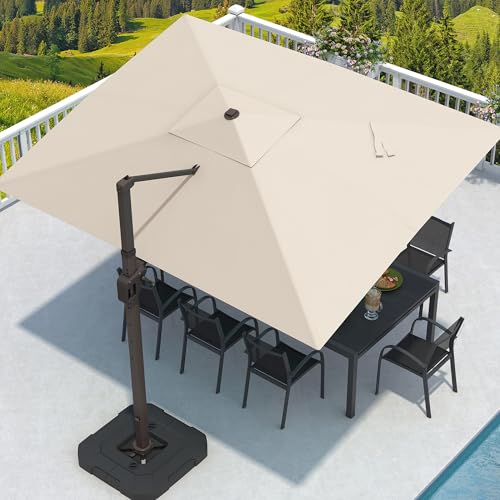
Cantilever Rectangular Umbrella with Base: The Complete Buying Guide
Everything you need to know about choosing a cantilever rectangular umbrella with base — canopy coverage, frame construction, base stability, fabric durability, and setup considerations for a shade solution that truly fits your patio.
Explore Top PicksWhy this guide matters: A cantilever rectangular umbrella with base is one of the most versatile shade investments you can make for a patio, deck, or poolside area. Unlike center-pole umbrellas, the offset design keeps the space beneath the canopy completely open — perfect for dining sets, lounge groupings, and outdoor kitchens. This guide walks you through every decision point so you can choose with confidence.
What Exactly Is a Cantilever Rectangular Umbrella with Base?
A cantilever rectangular umbrella with base combines three key elements: a rectangular canopy, a side-mounted cantilever arm, and an integrated base. The cantilever arm extends the canopy outward from a vertical support, eliminating the center pole that typically obstructs table space. The base anchors the entire structure, providing the counterbalance needed to keep the umbrella stable.
This configuration is especially popular for rectangular dining tables and long lounge areas because the rectangular canopy aligns naturally with the table shape, delivering more efficient shade coverage than a round canopy of similar span. If you are comparing frame and base options more broadly, the cantilever umbrella base guide offers a deeper look at anchor systems and weight distribution.
Key Components That Determine Quality
Understanding the anatomy of a cantilever rectangular umbrella with base helps you evaluate models across different market tiers — from entry-level to premium and commercial-grade. Here are the components that matter most:
- Frame material: Aluminum frames with powder-coated or rust-proof finishes are the standard for residential use. High-grade steel offers strength but requires vigilant rust prevention. Premium and commercial-grade models often use thicker aluminum wall thickness and reinforced joints.
- Cantilever arm and mechanism: Look for smooth crank and tilt systems. Mid-range and top-tier models typically feature dual-action rotation and infinite tilt positions, while starter-tier models may offer simpler single-axis adjustment.
- Canopy fabric: Solution-dyed acrylic and high-grade polyester are the benchmarks for UV resistance and colorfastness. Premium fabrics often carry multi-year fade warranties and water-repellent treatments.
- Base system: The base is the unsung hero. Plate bases, cross bases, and fillable bases (sand or water) each serve different needs. Heavier bases and wider footprints improve stability, particularly for larger rectangular canopies.
- Ribs and struts: Fiberglass or steel ribs support the canopy. Reinforced struts and double-layer stress points distinguish durable construction from lighter-duty builds.
Base Weight and Stability: Getting It Right
The base is what separates a stable, long-lasting installation from a wobbly one. Most residential cantilever umbrellas require a base weight in the range of roughly 100 to 200 pounds, though larger rectangular canopies may demand more. Fillable bases — designed to be filled with sand or water — are a practical solution because they are easier to move when empty and can be weighted more heavily once positioned.
Wind exposure is the critical variable. A patio that catches open breezes will benefit from a heavier base and a wider footprint. Some models include wheeled bases for repositioning, but remember that mobility and maximum stability are often trade-offs. For a deeper dive into weighting strategies, see the guide on cantilever patio umbrellas with weighted bases and the comparison of cantilever umbrellas with weighted base included.
Comparing Cantilever Rectangular Umbrella Tiers
The table below summarizes how features typically differ across market tiers. Use it to align your expectations with the category you are shopping in — without relying on numeric figures that change over time.
| Feature | Entry-Level | Mid-Range | Premium / Top-Tier |
|---|---|---|---|
| Frame material | Thinner aluminum, basic powder coat | Reinforced aluminum, rust-resistant finish | Heavy-duty aluminum or commercial-grade steel, premium coating |
| Canopy fabric | Standard polyester | Solution-dyed polyester or acrylic blend | High-grade solution-dyed acrylic with fade warranty |
| Rotation & tilt | Single-axis tilt, manual crank | Dual-axis rotation, smooth crank | 360-degree rotation, infinite tilt, foot-pedal controls |
| Base system | Basic plate base, limited fill capacity | Fillable cross base with sand/water option | Heavy-duty fillable base with wheeled mobility option |
| Best for | Occasional shade in sheltered areas | Regular daily use on family patios | High-wind exposure, commercial or hospitality settings |
Rectangular vs. Round Canopies: Which Fits Your Space?
Rectangular canopies are the natural choice for long dining tables, sectional lounge arrangements, and rectangular pool decks. They deliver shade exactly where it is needed without overhanging into walkways. Round canopies, by contrast, suit conversation sets and circular tables. If your layout is oriented around a long table, a rectangular canopy will almost always provide more usable shade per square foot of fabric.
If you are still deciding between umbrella styles, explore the broader range of cantilever patio umbrellas in black and white for a neutral look that pairs well with many patio color schemes, or browse outdoor lighting ideas to complement your shade setup in the evening.
Setup and Placement Considerations
Placement determines how well a cantilever rectangular umbrella with base performs. Because the support column sits to one side, you need enough clearance for the base and the arm's swing path. Position the base so that the canopy covers the intended area when the arm is fully extended — and verify that the arm does not collide with furniture, railings, or walls when rotating.
- Clearance: Ensure the base footprint does not block walkways or create a tripping hazard.
- Wind direction: Orient the umbrella so the canopy edge faces prevailing winds whenever possible.
- Anchoring: On windy decks, consider bolting the base or using additional weights beyond the fill capacity.
- Storage: Choose a model with a foldable canopy and a fitted cover to protect the fabric during off-season months.
For related shade and structure options, browse cantilever umbrellas with tilt and rotation and cantilever patio umbrellas with solar lights for evening ambiance without additional wiring.
Care and Maintenance for Long-Term Performance
A cantilever rectangular umbrella with base is a long-term investment, and a modest maintenance routine will keep it looking sharp and functioning smoothly for many seasons. Clean the canopy with mild soap and water, rinse thoroughly, and allow it to air-dry fully before closing. Lubricate the crank and tilt mechanisms annually, and inspect the base for cracks or corrosion — especially if it is filled with water and exposed to freezing temperatures.
During high-wind events, close the canopy and secure the arm. If you live in a region with harsh winters, empty the base fill and store the umbrella indoors or under a fitted cover. For broader weatherproofing strategies, the weatherproofing guide covers protective treatments for outdoor furniture and shade structures alike.
Common Buying Mistakes to Avoid
- Underestimating base weight: A canopy that is too large for its base will wobble or tip. Always follow the manufacturer's minimum weight recommendation.
- Ignoring wind exposure: A sheltered courtyard and an open rooftop have very different stability requirements.
- Choosing fabric by look alone: Color is important, but UV resistance and fade warranty matter more for longevity.
- Skipping the clearance check: Measure the arm's swing path before committing to a placement location.
- Overlooking storage: A cover and a folding mechanism make off-season storage far easier.
Frequently Asked Questions
What is a cantilever rectangular umbrella with base?
A cantilever rectangular umbrella with base is an offset shade structure featuring a rectangular canopy supported by a side-mounted arm rather than a center pole. The integrated base anchors the umbrella and provides stability, allowing the canopy to cover a wider rectangular area without obstructing the space beneath it.
How much base weight does a cantilever umbrella need?
Most manufacturers specify a minimum base weight that ranges from roughly 100 to 200 pounds for residential models, with larger canopies requiring more. Always follow the manufacturer's recommendation and consider using sand or water-filled bases for additional stability in windy locations.
Can a cantilever rectangular umbrella be left outside in winter?
It is best to close the canopy and store the umbrella or use a fitted cover during winter. Prolonged exposure to snow, ice, and high winds can stress the frame and fabric. Removing the base or emptying water/sand fill also helps prevent cracking from freezing temperatures.
What canopy fabric is best for a cantilever umbrella?
Solution-dyed acrylic and high-grade polyester fabrics offer excellent UV resistance and color retention. Look for fabrics treated for water repellency and mildew resistance. Premium fabrics often carry multi-year fade warranties, making them a worthwhile investment for long-term outdoor use.
Ready to decide? Now that you understand frame construction, base weighting, canopy fabric, and placement, you have everything you need to evaluate a cantilever rectangular umbrella with base confidently. Compare the recommended models below, check availability, and choose the tier that matches your patio's exposure and usage patterns.