Cantilever Umbrella with Weighted Base Included: The Complete Buyer's Guide
Everything you need to know about choosing a cantilever umbrella that comes with a weighted base—stability, coverage, materials, and expert setup tips for your outdoor space.
Why this guide matters: A cantilever umbrella with a weighted base included eliminates the guesswork of pairing an offset umbrella with the correct counterweight. This guide walks you through what to look for, how stability works, and which features matter most so you can buy with confidence.
What Is a Cantilever Umbrella with Weighted Base Included?
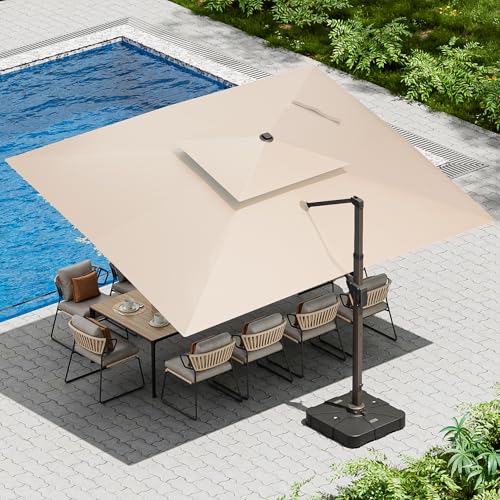
A cantilever umbrella with weighted base included is an offset shade solution where the umbrella canopy extends from a side-mounted arm rather than a center pole. The "weighted base included" part means the manufacturer ships a base designed to hold counterweights—often sand, water, or solid plates—so the umbrella stays anchored without a center pole obstructing your seating area.
This design is particularly valuable for patios where a traditional center-pole umbrella would block views, interfere with table placement, or limit furniture arrangement. Because the base sits off to the side, you can position seating, dining tables, and loungers directly under the canopy without a pole in the way.
Why the Weighted Base Matters More Than You Think
Cantilever umbrellas are inherently top-heavy: the canopy and arm extend outward, creating leverage that a lightweight base cannot counteract. A base that is too light can allow the umbrella to tip in gusty conditions. When the weighted base is included, the manufacturer has already engineered the counterweight requirement to match the umbrella's span and arm length.
Key stability factors include:
- Base weight capacity: Bases that accept sand or water typically reach higher counterweight than hollow plastic bases.
- Base footprint: A wider base spreads load and reduces tipping risk.
- Wheels or handles: Many weighted bases include casters for repositioning—useful when you want to move shade throughout the day.
- Locking mechanism: Some bases lock the umbrella mast in place to prevent rotation during wind.
If you are comparing base styles, our guide to cantilever umbrella base options breaks down fill materials and footprint considerations in more detail.
Types of Weighted Bases You Will Encounter
Manufacturers typically offer three base categories when a weighted base is included:
| Tier | Base Type | Best For |
|---|---|---|
| Entry-level | Fillable plastic base (sand or water) | Calm, sheltered patios and occasional use |
| Mid-range | Reinforced polymer or steel-frame fillable base | Regular seasonal use with moderate wind exposure |
| Premium | Solid weighted plates or commercial-grade steel base | Exposed locations and daily use |
Mid-range and premium bases generally offer smoother rotation mechanisms and better corrosion resistance. If your patio is windy, prioritize a base that accepts high counterweight and pairs with a locking mast collar.
Canopy Fabric and Frame Construction
The umbrella's canopy and frame determine how long the product performs under sun and rain. Look for solution-dyed polyester or acrylic fabrics with UV resistance ratings; these resist fading better than basic polyester. Frames in powder-coated aluminum resist rust, while steel frames offer rigidity but require more attention to finish integrity.
Ribs and arm joints are stress points. Reinforced rib pockets and double-walled arm connectors are markers of a solid build. For a broader look at frame materials, see our comparison of metal and aluminum outdoor furniture.
Features to Prioritize When Buying
- Tilt and rotation: Crank or pedal systems let you angle the canopy as the sun moves. Models with tilt and rotation offer the most flexibility.
- Wind vent: A vented canopy reduces lift and improves airflow.
- Solar or LED lighting: Integrated lights extend evening use. See solar-lit cantilever umbrellas for examples.
- Rolling base: If you plan to reposition shade, a rolling base makes moving easier.
- Coverage shape: Rectangular canopies suit dining sets; octagonal canopies suit lounge arrangements.
Setup and Placement Best Practices
Place the base so the canopy extends over the seating area without the arm overhanging walkways. Fill the base to its recommended capacity—under-filling is the most common cause of instability. If your patio surface is sloped, use shims or a leveling pad under the base. For patios attached to a house, ensure the umbrella does not contact the roofline when tilted.
If you are also planning shade near a dining table, note that offset umbrellas pair well with tables that do not require a center hole—our guide to dining tables with umbrella holes explains when a center-pole option may still be preferable.
Care and Maintenance for Longevity
Close and secure the umbrella during high winds, and store the canopy in a cover during off-season months. Wipe the frame with mild soap and water, and inspect the base fill periodically—sand can settle, and water-filled bases can develop algae if left stagnant. For seasonal protection strategies, see our weatherproofing guide.
Common Buying Mistakes to Avoid
- Assuming any base works: bases are matched to specific umbrella spans and arm lengths.
- Under-filling the base: always fill to capacity.
- Ignoring wind exposure: exposed patios need higher counterweight and locking mechanisms.
- Overlooking canopy fabric: UV resistance directly affects lifespan and color retention.
Frequently Asked Questions
Can I use a cantilever umbrella without filling the base?
No—an unfilled base will not provide adequate counterweight, and the umbrella may tip in light wind. Always fill the base to the manufacturer's recommended capacity.
How much counterweight do I need?
Follow the manufacturer's specification. As a general rule, larger canopies and longer arms require more counterweight. Fillable bases that accept sand typically hold more weight than water-only bases.
Can a cantilever umbrella with weighted base be moved?
Yes, if the base includes wheels or handles. Empty or drain the base before moving to reduce weight and prevent strain.
Are weighted bases weather-resistant?
Most modern bases are UV-stabilized and rust-resistant, but inspect annually for cracks or corrosion. Draining water-filled bases before winter helps prevent freeze damage.
Does the included base work on all patio surfaces?
Most bases work on concrete, stone, and composite decking. On soft surfaces like grass or gravel, use a solid pad under the base to distribute weight.
Final Thoughts
A cantilever umbrella with a weighted base included is a practical choice for patios where flexible shade and unobstructed seating matter. Focus on base fill capacity, canopy fabric quality, and tilt/rotation features to match your space. For more shade options, explore our patio umbrella buying guide or compare LED-lit cantilever models for evening entertaining.