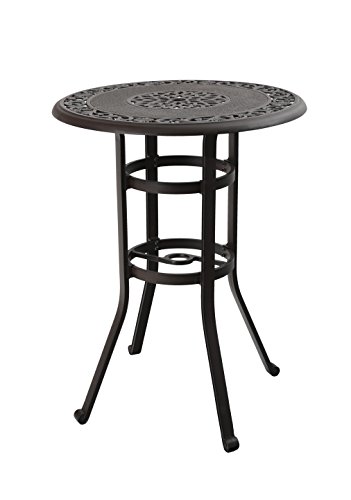
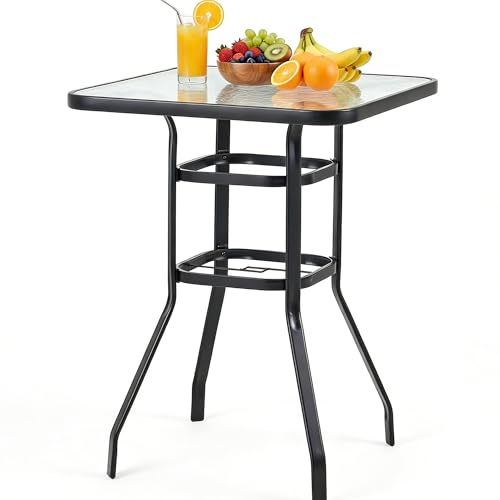
Counter Height Patio Table with Umbrella Hole: The Complete Buying Guide
Everything you need to choose a tall outdoor dining table with built-in shade compatibility — from frame materials and stability to umbrella sizing and seating pairing.
Start the GuideWhy this table type deserves a closer look. A counter height patio table with umbrella hole sits in a sweet spot between standard dining tables and bar-height setups. It lifts the dining surface to a comfortable standing-lean height, pairs naturally with counter stools, and — most importantly — includes a pre-drilled center opening that lets you mount a patio umbrella without a freestanding base eating into your floor space.
If you are comparing tall outdoor table options, this guide breaks down the decision into practical parts: how the umbrella hole actually works, which materials hold up outdoors, what to check for stability, how to size the umbrella, and how to plan seating and clearance around the table.
What Exactly Is a Counter Height Patio Table with Umbrella Hole?
A counter height patio table is an outdoor dining surface that typically stands between 34 and 36 inches tall — noticeably higher than a standard 28-to-30-inch patio dining table, but lower than a 40-to-42-inch bar height table. The umbrella hole is a center opening, usually 1.5 to 2 inches in diameter, drilled through the tabletop and often through a support ring underneath, designed to accept a standard patio umbrella pole.
The combination matters because the two features solve different problems at once. The taller surface improves sightlines and makes standing conversations easier, while the integrated umbrella hole provides shade exactly where you dine without a separate umbrella stand. For a broader look at tall outdoor dining surfaces, you can also explore the general counter height outdoor table category to understand how this variant fits into the wider market.
How the umbrella hole is constructed
Not all umbrella holes are equal. The better designs include three elements: a reinforced rim around the opening to prevent cracking, a metal or composite support collar under the tabletop that guides the pole, and a compatible table base or umbrella holder that keeps the pole vertical. Entry-level models sometimes offer only a drilled opening with no reinforcement, which is fine for light use but less durable over many seasons.
- Reinforced rim: Prevents splintering on wood and stress cracks on composite and concrete surfaces.
- Support collar: A metal ring under the table that stabilizes the pole and reduces wobble.
- Umbrella holder or base compatibility: Some tables include an integrated holder; others expect a weighted base beneath the table.
- Drainage: Outdoors, water can pool around the opening — look for a snug collar or drainage channel.
Quick check: Before buying, confirm the hole diameter. Most umbrella poles are 1.5 inches, but some are 1.875 inches. A table with a 2-inch opening plus a reducing collar is the most flexible option.
Why Choose Counter Height Over Standard or Bar Height?
The height decision shapes how the table feels in daily use. Counter height is often the most versatile middle ground for patios, decks, and covered porches. Here is how the three common heights compare in practice.
| Height Category | Typical Tabletop Height | Best For | Seating Pairing |
|---|---|---|---|
| Standard dining height | 28–30 inches | Traditional family dining, relaxed lounging, easy access for children and older adults | Standard dining chairs (17–19 inch seat height) |
| Counter height | 34–36 inches | Casual dining, standing conversations, sightline over railings, smaller footprints | Counter stools (24–26 inch seat height) |
| Bar height | 40–42 inches | Entertaining, cocktail-style gatherings, patio bars | Bar stools (28–30 inch seat height) |
Counter height tends to win for outdoor spaces because it raises the dining surface above typical deck railings, giving a more open view, while keeping the seat-to-table gap comfortable for full meals. It also reads as more contemporary than standard height without the perched feel of bar height. If your space is tight or you want a table that works for both meals and casual leaning, this height category is often the practical pick.
Frame and Tabletop Materials Compared
Outdoor furniture lives through sun, rain, and temperature swings, so material choice is the single biggest factor in longevity. The table below compares the common options using a consistent tier system — entry-level, mid-range, and premium — rather than specific figures.
| Material | Market Tier | Weather Resistance | Maintenance Needs | Best For |
|---|---|---|---|---|
| Powder-coated aluminum | Entry-level to mid-range | Good — rust-resistant when coating is intact | Wipe down; inspect for chips | Lightweight setups, balconies, frequent rearranging |
| Steel with rust-proof finish | Mid-range | Very good — heavy-duty and stable | Touch up scratches; store in harsh winters | Windy locations, larger tabletops needing weight |
| Teak or acacia hardwood | Mid-range to premium | Excellent with seasonal sealing | Oil or seal annually; clean mildew | Natural look, covered patios, long-term investment |
| High-density polyethylene (HDPE) | Mid-range | Excellent — UV-stable and moisture-proof | Soap and water; no sealing | Coastal climates, low-maintenance households |
| Concrete or composite stone | Premium to luxury | Exceptional — very heavy and durable | Seal periodically; avoid harsh acids | Permanent placements, high-wind areas, statement pieces |
If you want the visual weight and permanence of stone, a concrete outdoor dining table with umbrella hole is the closest comparison point — it shares the umbrella-hole functionality but sits in a much heavier, permanent category. For most homeowners, the practical choice is aluminum or steel for the frame with an HDPE, composite, or wood-look tabletop.
Tabletop surface considerations
- Slatted tops: Drain water quickly and stay cooler in direct sun; crumbs fall through, which is a plus outdoors.
- Solid tops: Easier to wipe and better for drinks and place settings, but can pool water around the umbrella hole if drainage is poor.
- Glass tops: Visually light and easy to clean, but heavier and more vulnerable to impact; ensure tempered glass and a reinforced hole rim.
- Tile or mosaic: Attractive and heat-tolerant, but grout lines need periodic cleaning in humid climates.
Stability and Wind: The Umbrella Factor
An umbrella turns a table into a sail. The taller the table, the higher the pivot point, and the more leverage wind applies to the table and pole. This is the most overlooked part of buying a counter height table with an umbrella hole — and the most important for safety and long-term durability.
What to look for in a stable setup
- Wide base footprint: Legs or a pedestal that extend outward, not straight down, resist tipping better.
- Weighted umbrella base: A base rated for your umbrella size, placed under the table, is essential. Integrated holders help but do not replace weight.
- Thick tabletop: A heavier top lowers the center of gravity and reduces vibration in wind.
- Cross-bracing or apron supports: Look for structural bracing beneath the tabletop, especially around the umbrella collar.
- Ventilated canopy: Umbrellas with a top vent release wind pressure and reduce lift.
Practical rule: In exposed, windy locations, close or lower the umbrella when not in use. Even a well-weighted table can be stressed by a gust catching a fully open canopy.
If your patio is frequently breezy, consider a table with a heavier frame and a lower-profile tabletop. Some buyers in high-wind areas also look at counter height fire pit table and chairs configurations, where the added mass of a fire feature further anchors the setup — though the trade-off is a different kind of centerpiece.
How to Size the Umbrella for Your Table
The umbrella should shade the table and the people seated around it, not just the center. A simple guideline: the canopy should extend 2 to 3 feet beyond each edge of the tabletop.
| Table Seating Capacity | Typical Table Shape | Recommended Canopy Size | Notes |
|---|---|---|---|
| 2–4 people | Round or square | 7.5–9 feet | 9 feet is the most versatile for four-person setups |
| 4–6 people | Round, square, or small rectangular | 9–10 feet | Ensure canopy clears nearby walls or railings |
| 6–8 people | Rectangular or oval | 10–11 feet, or two smaller umbrellas | Two umbrellas often shade a long table more evenly |
Also check pole height and clearance. A counter height table needs a pole tall enough that the canopy sits well above head height when seated on a 24-to-26-inch stool. Most standard patio umbrellas work, but confirm the pole length and the crank mechanism reach before committing.
Pairing Counter Stools and Chairs
The seat-to-table gap is what makes or breaks comfort at counter height. Aim for roughly 9 to 11 inches between the top of the seat and the underside of the tabletop. Too little and your legs feel pinched; too much and you are reaching for your plate.
- Counter stools: 24 to 26 inch seat height is the standard match. Backless stools keep sightlines open; low-back stools add comfort for longer meals.
- Stools with footrests: At counter height, a footrest is not optional — it prevents leg fatigue and keeps posture stable.
- Swivel vs. fixed: Swivel stools make it easier to get in and out around a table with a center umbrella pole.
- Chair alternatives: Some counter height sets use tall dining chairs rather than stools; confirm the seat height matches the table before mixing pieces.
If you are building a full set, browsing counter height metal bar stools with backs gives a sense of the back-supported options that work well for dining rather than short social sits. For a coordinated package, a counter height dining table set with bench can be a space-efficient alternative that keeps one side flush against a wall or railing.
Space Planning: Clearance and Layout
Counter height tables often work in tighter footprints because stools tuck under more easily than full dining chairs. Still, plan for comfortable movement around the table.
- Chair pull-out space: Allow 24 to 30 inches from the table edge to the nearest wall or railing so stools can slide out.
- Walkway clearance: Keep at least 36 inches for main traffic paths behind seated guests.
- Umbrella swing room: The canopy extends well beyond the table — check that it clears roofs, pergolas, and nearby trees.
- Sun path: Note where afternoon sun hits. A slightly off-center table placement can maximize shade without moving the umbrella constantly.
On smaller balconies or compact decks, a round counter height table with a single central umbrella is often the most efficient layout. Rectangular versions suit narrow patios along a wall. If your space is genuinely tight, comparing with a corner dining set layout can help you decide whether a corner arrangement or a freestanding counter table fits better.
Features Worth Prioritizing
Beyond the umbrella hole itself, a few details separate a table that lasts from one that frustrates. Prioritize these based on how you will actually use the space.
- Reinforced umbrella collar: The single most important durability feature around the hole.
- Adjustable feet or leveling glides: Essential for uneven decks and stone patios.
- Weather-resistant hardware: Stainless or coated fasteners resist rust at joints and hinges.
- Folding or nesting capability: Useful for seasonal storage or small spaces.
- Integrated umbrella holder: Convenient, but verify it accepts your pole diameter and pairs with a weighted base.
- Easy-clean surface: Slatted or smooth composite tops are simpler to maintain than intricate tile.
Market Tiers: What Changes as You Move Up
Using a consistent tier system helps set expectations without tying the guide to any specific figures. Here is how counter height patio tables with umbrella holes generally differ across the market.
| Tier | Frame and Build | Umbrella Hole Quality | Best For |
|---|---|---|---|
| Entry-level | Lighter aluminum or resin; simpler joints | Basic drilled opening, sometimes without reinforcement | Occasional use, covered patios, first outdoor setup |
| Mid-range | Powder-coated steel or HDPE; sturdier bracing | Reinforced rim and support collar | Regular family dining, mixed weather exposure |
| Premium | Heavy-gauge steel, solid hardwood, or composite stone | Machined collar, integrated holder compatibility | Frequent entertaining, windy sites, long-term use |
| Luxury / commercial-grade | Cast aluminum, concrete, or marine-grade materials | Engineered umbrella system with drainage | Permanent installations, hospitality settings, statement patios |
A mid-range table is usually the balanced choice: it offers a reinforced umbrella hole, a stable frame, and a surface that tolerates year-round outdoor conditions without the weight and permanence of concrete. If you are furnishing a covered porch, the entry-level tier can be a sensible starting point. For exposed, windy patios, the premium tier is a worthwhile investment.
Care and Maintenance for Longevity
A counter height table with an umbrella hole has one extra maintenance point: the opening itself. Small issues around the hole can grow into bigger ones if ignored.
- Clean the collar: Debris and water can collect around the umbrella opening; wipe it after rain.
- Inspect the rim: Check for cracks or splintering, especially on wood and composite tops.
- Store the umbrella: Remove and store the canopy in off-season or before storms to reduce stress on the table.
- Seal wood annually: A fresh coat of outdoor sealant protects against moisture and UV fading.
- Touch up metal finishes: Small chips in powder coating invite rust; address them promptly.
- Cover when idle: A fitted cover protects the surface and the umbrella collar from standing water.
If you want a deeper maintenance reference, the broader outdoor care section covers seasonal routines for different materials. The main takeaway is simple: the umbrella hole area deserves the same attention as the tabletop, because it is the one feature unique to this table type.
Common Buying Mistakes to Avoid
- Ignoring the umbrella base: The table does not replace a weighted base. Plan for both.
- Choosing a canopy that is too small: Undersized umbrellas leave diners in the sun and make the table feel exposed.
- Mismatching stool height: Confirm the seat height before buying stools separately.
- Overlooking wind exposure: On open decks, prioritize frame weight and a ventilated canopy.
- Skipping the collar check: A cheaply drilled hole without reinforcement is the most common failure point.
- Forgetting overhead clearance: Umbrellas need room to open under pergolas and awnings.
Frequently Asked Questions
What is a counter height patio table with umbrella hole?
What height stool pairs with a counter height patio table?
How large should the umbrella be for a counter height table?
Does a counter height table with umbrella hole need a weighted base?
Can I use a standard patio umbrella with a counter height table?
Ready to Compare Options?
Now that you know what to check — umbrella hole construction, frame stability, canopy sizing, and stool pairing — explore curated counter height patio tables with umbrella holes to find the configuration that fits your space.
Explore Recommended Tables