
Deep Seating Sectional Outdoor Furniture: The Complete Buying Guide
Learn how to choose a deep seating sectional that fits your patio, suits your climate, and holds up season after season. A research-first guide covering frames, cushions, modularity, layout, and care.
Explore Recommended OptionsWhy this guide matters: Deep seating sectional outdoor furniture is one of the most substantial outdoor purchases a homeowner makes. Unlike a single lounge chair, a sectional defines the entire social zone of a patio. The right choice delivers years of daily comfort; the wrong one means sagging cushions, rusted joints, and an awkward footprint that crowds your walkways.
This page walks through the decision points that actually matter — frame construction, cushion density and fill, modular flexibility, sizing math, and climate-specific durability — so you can shortlist with confidence before you commit.
What Is Deep Seating Sectional Outdoor Furniture?
A deep seating sectional combines two design ideas. The "deep seating" element refers to a seat depth that runs roughly 25 to 30 inches or more — enough to tuck your legs up or lean back against a tall, thick back cushion. The "sectional" element refers to modular or connected pieces that form an L-shape, U-shape, or a long straight run. Together, they produce the outdoor equivalent of a living-room sofa, built for lingering rather than perching.
That distinction matters because standard patio seating is designed around upright dining or occasional sitting. A deep seat changes the posture entirely: you sink in, the back cushion supports your shoulders, and the conversation pit feel takes over. If your goal is a patio where people stay for hours, deep seating is the category to study — and its dedicated deep seating overview covers the broader family of products beyond sectionals alone.
Why Choose a Sectional Over Individual Seats?
Individual lounge chairs are flexible, but they scatter. A sectional anchors a space. Because the pieces connect, there is no repeated shifting when guests arrive, no gaps between seats, and no endless rearranging before a gathering. The arrangement also reads as intentional — it tells guests where the social zone is.
- Seating density: A single L-shaped sectional typically seats four to six people in the footprint of three separate chairs, with better conversation flow.
- Stability: Connected pieces resist wind lift and daily nudging far better than freestanding armchairs.
- Visual cohesion: Matching cushions, frames, and arm profiles create a pulled-together look without extra styling effort.
- Reconfigurability: Modular sectionals can be split into separate seats or reshaped season to season as your patio use changes.
For homeowners comparing layout options, the related category of outdoor conversation sets is worth a look as an alternative when a full sectional feels oversized for the space.
Frame Materials: The Backbone of Longevity
The frame determines whether your sectional survives a decade of rain, sun, and temperature swings — or starts wobbling after two seasons. Three materials dominate the market, each with real trade-offs.
Powder-Coated Aluminum
Aluminum is the default choice for deep seating sectionals, and for good reason. It does not rust, it is light enough to reposition alone, and a quality powder coat resists chipping and UV fading. Mid-range and premium aluminum frames are welded at the joints rather than bolted, which eliminates the loosening that plagues entry-level builds. The main caveat: thin-walled aluminum can dent, so check gauge or wall thickness specifications when comparing products.
High-Grade Steel
Steel frames are heavier and generally stronger, making them a good fit for windy rooftops or large U-shaped configurations that need extra rigidity. The trade-off is weight and rust risk. Only consider steel if the finish is a full powder coat over galvanized or rust-proofed metal, and be prepared to inspect and touch up any chips promptly. High-end tier steel sectionals are built to last, but they demand more vigilance.
Resin Wicker Over Aluminum
Wicker-wrapped sectionals pair a rust-resistant aluminum core with a woven resin skin. The look is warmer and more traditional than bare metal. Durability hinges on weave tightness and UV stabilization — cheap wicker cracks and fades, while premium resin wicker holds color for years. If you like the woven aesthetic, compare high-quality resin wicker patio furniture as a starting reference point for what good construction looks like.
| Frame Material | Weather Resistance | Weight & Portability | Best For |
|---|---|---|---|
| Powder-coated aluminum | Excellent — no rust, resists UV fading | Light to moderate | Most climates; balconies and patios where pieces are repositioned |
| High-grade steel | Good if coating stays intact; rust risk at chips | Heavy | Windy exposures; large fixed configurations |
| Resin wicker over aluminum | Very good with UV-stabilized, tight weave | Moderate | Traditional or coastal styling; covered patios |
Cushion Construction: Where Comfort Is Won or Lost
A deep seating sectional lives or dies by its cushions. The frame can be flawless, but if the seat cushion collapses after a season, the furniture feels worn. Focus on three things: foam density, core construction, and fabric performance.
Foam Density and Core
Seat cushions typically use polyurethane foam rated by density. Higher-density foam (measured in pounds per cubic foot) resists compression and keeps its shape longer. Mid-tier sectionals generally use a firmer core with a softer top layer; top-tier builds sometimes add a wrapped fiber or memory-foam layer for a plush feel without sacrificing support. Quick-dry open-cell foam is a practical upgrade for rainy climates because water drains through rather than pooling inside the cushion.
Back Cushions
Back cushions are usually filled with polyester fiber, sometimes in a bagged or channeled design that resists clumping. Loose fiber feels softest but needs occasional fluffing; bagged fiber holds its loft better. Some premium sectionals use a foam-fiber hybrid for the back, which maintains shape with less maintenance.
Fabric Performance
Solution-dyed acrylic and olefin fabrics are the outdoor standards — they resist fading, mildew, and water absorption. Look for tight weaves and stain-resistant finishes. Removable, zippered covers are a major practical advantage because they can be laundered or replaced independently. If you already own a frame and only need new covers, deep seating replacement cushions for outdoor furniture is a useful reference for sizing and fill options.
Essential Tier
Basic foam cores, standard acrylic fabric, and sewn-in covers. Adequate for covered patios with light use, though cushions may need replacement sooner.
Balanced Tier
Higher-density foam with a soft top layer, solution-dyed fabric, and zippered removable covers. The sweet spot for most households that want daily comfort and reasonable longevity.
Top-Tier
Quick-dry or multi-layer foam, wrapped fiber backs, premium solution-dyed fabric, and reinforced stitching. Built for heavy use and harsh sun exposure.
Modularity and Configuration Options
Sectionals are sold in two broad formats: fixed-shape and modular. A fixed L-shape is simpler and often more rigid, with fewer joints to loosen. Modular pieces connect with brackets or clips and can be rearranged into different footprints — an L today, a straight run tomorrow, a U-shape for a big gathering. If flexibility matters, confirm that the connector hardware is included and that the pieces are designed to sit flush in multiple orientations.
- L-shape: The classic corner layout. Works in most rectangular patios and defines a conversation zone efficiently.
- U-shape: Best for larger spaces and fire-pit arrangements. Requires more clearance on three sides.
- Straight run: Ideal for narrow patios or along a wall. Can be split into two facing sofas.
- With chaise: Adds a lounge extension for one person. Check that the chaise depth does not block walkways.
Corner pieces, armless chairs, and ottomans are the building blocks. An ottoman doubles as a coffee table with a tray and as extra seating when guests arrive — a small piece that adds a lot of utility.
Sizing and Layout: Measure Before You Commit
The most common sectional mistake is buying too large for the patio. A sectional looks smaller in a showroom than it does on a real patio. Before ordering, tape out the footprint on the ground with painter's tape and walk around it. Confirm three numbers:
- Overall footprint: The full length and depth of the assembled configuration, including back cushions that lean outward.
- Walkway clearance: Leave at least 18 inches between the sectional and any wall, railing, or door for comfortable passage.
- Coffee table spacing: Plan roughly 14 to 18 inches between the seat front and a coffee table or fire pit edge.
For narrow or compact patios, a curved or angled layout can preserve flow better than a rigid L. If your space is tight, the ideas in curved patio furniture show how gentle arcs keep walkways open. For balconies and small decks, outdoor conversation sets for small spaces offers scaled-down alternatives that still deliver the deep seating feel.
Quick layout sanity check
If the taped footprint leaves less than 30 inches of open floor in front of the sectional, you will likely feel cramped once people are seated with drinks and side tables. Either downsize the configuration or choose a slim-profile arm design.
Climate and Exposure Considerations
Where you live shapes which materials and cushions make sense. Coastal areas bring salt air, which punishes steel and low-grade hardware — aluminum and marine-grade stainless fasteners are the safer bet. Humid climates favor quick-dry foam and breathable fabrics to prevent mildew. Intense sun exposure demands solution-dyed fabric and UV-stabilized wicker, or fading will appear within a couple of seasons. In cold-winter regions, consider whether the sectional will be stored or left out under covers; lighter aluminum pieces are far easier to move into a garage or shed.
No sectional is fully maintenance-free outdoors. A quality cover and a seasonal cleaning routine extend life dramatically. The practical steps in our broader guidance on outdoor care apply directly to deep seating frames and cushions.
Shopping Checklist: What to Verify Before You Order
- Frame warranty: Look for multi-year coverage on the frame; cushion warranties are usually shorter and separate.
- Welded vs. bolted joints: Welded aluminum joints are more rigid and less prone to loosening.
- Connector hardware: Confirm brackets or clips are included for every modular piece.
- Cushion cover zippers: Removable covers make cleaning and replacement far easier.
- Foam specification: Ask for density or quick-dry details; vague descriptions are a warning sign.
- Assembly requirements: Some sectionals ship mostly assembled; others require significant bolt-together work.
- Delivery access: Large pieces may not fit through narrow gates or stairwells — measure the path, not just the patio.
Recommended Deep Seating Sectional Outdoor Furniture
⚠️ AFFILIATE DISCLOSURE: This website contains affiliate links. As an Amazon Associate, we earn from qualifying purchases. If you make a purchase through these links, we may receive a small commission at no additional cost to you. Read our full affiliate policy.
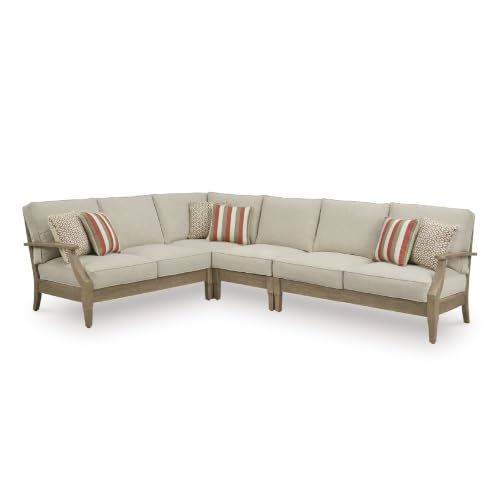
Signature Design by Ashley 4-Piece L-Shape Outdoor Sectional, Wood, Beige | Wood Patio Furniture Set, Eucalyptus Frame, Solution-Dyed Nuvella Fabric, All-Weather Foam Cushions, Clare View Series
Check price on Amazon
PHI VILLA 4 Piece Wicker Patio Sectional Furniture Set 8.7" Thick Cushions | L-Shaped HDPE Patio Conversation Sets, Waterproof Deep Seating Heavy Duty Modular Outdoor Sectional Sofa for Backyard Deck
Check price on Amazon
Aluminum Patio Furniture Set, Oversized Outside Furniture for Seasons | Outdoor Furniture Set with 27.5" Deep Seating & 3.2" Wide Armrest, Patio Sectional Sofa with 10" Back Cushion, Light Gray
Check price on Amazon
HOOOWOOO Sectional Patio Furniture Set with Fire Pit Table,10 Pieces Wicker Outdoor Furniture L Shaped Couch,Outside Conversation Set Extra Deep Seat Sofa Wide Arm Swivel Chair Solar Table,Beige
Check price on Amazon
Vexwalx Outdoor Furniture Set, 8 Seats Patio Sectional Furniture Set, Gray | Aluminum L Shaped Patio Couch, 4 Pcs Patio Conversation Sets with Coffee Table, 25.2" Deep Seat, for Backyard, Porch, Deck
Check price on Amazon
LayinSun 9-Piece Wicker Rattan Patio Furniture Set, Deep Seating Outdoor Modular Sectional Sofa Conversation Set with Thick Cushions for Lawn, Garden
Check price on Amazon
Sophia & William HDPE Patio Furniture Set, 2 Pieces Beige | Deep Seating Modern Outdoor Couch Patio Sectional Sofa Set with 9.8" Cushions
Check price on Amazon
MuaMelop 14-Piece Patio Furniture Cushions Set, Replacement Outdoor Cushions for 6-Seat Patio Sectional, Waterproof & Fade Resistant Deep Seat Cushion for Outdoor Sofa, Navy Blue
Check price on AmazonFrequently Asked Questions
What defines deep seating sectional outdoor furniture?
Deep seating sectionals use a seat depth of roughly 25 to 30 inches or more, paired with thick back cushions and modular pieces that connect into an L, U, or straight configuration. The extra depth and cushioning create a lounge-like feel rather than an upright dining posture.
How do I measure a patio for a sectional?
Measure the available footprint, then subtract at least 18 inches of walkway clearance on every open side. Account for the recline angle of the back cushions and any chaise extension. A masking-tape outline on the patio surface confirms the size before you order.
Which frame material lasts longest outdoors?
Powder-coated aluminum is generally the most weather-resilient frame because it resists rust and stays relatively light. High-grade steel is stronger but heavier and requires intact coating. Resin wicker over aluminum offers a woven look with good durability when the weave is tight and UV-stabilized.
Are deep seating cushions comfortable for lounging?
Yes. Deep seating cushions typically use a foam core with a wrapped fiber or memory-foam layer. Higher-density foam holds its shape longer, while a softer top layer adds comfort. Quick-dry foam with an open-cell structure is preferable for outdoor use because it releases water faster after rain.
Can a sectional be reconfigured later?
Modular sectionals are designed for reconfiguration. Individual pieces usually connect with bracket or clip systems, so you can switch from an L-shape to a straight run or a U-shape. Confirm that connectors are included and that the frame finish matches across pieces if you plan to expand later.
Bottom line: The best deep seating sectional is the one that fits your actual patio footprint, matches your climate, and uses a frame and cushion construction you can verify — not the one with the most marketing language. Measure first, compare tier by tier, and prioritize frame durability and cushion density over styling extras. Get those fundamentals right and the sectional will earn its place as the centerpiece of your outdoor space for years.