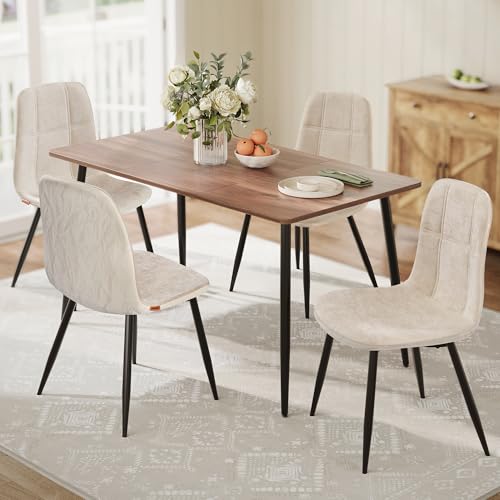
Dining Room Chairs Set of 4 with Bench: The Complete Buying Guide
Everything you need to know about choosing a coordinated four-chair-and-bench dining set — from seating ergonomics and materials to layout planning and tier comparisons — so you can furnish your dining room with confidence.
Start ExploringWhy this set matters: A dining room chairs set of 4 with bench is one of the most practical seating combinations for modern households. It seats six people comfortably, keeps sightlines open on one side of the table, and lets you tuck the bench underneath to reclaim floor space. Whether you are furnishing a first home, upgrading a family dining room, or refreshing a farmhouse-style kitchen, understanding how chairs and benches work together is the key to a cohesive, long-lasting result.
What Is a Dining Room Chairs Set of 4 with Bench?
A dining room chairs set of 4 with bench is a matched seating package that pairs four individual dining chairs with one long bench. The four chairs typically occupy one long side of the table plus the two ends, while the bench runs along the opposite long side. Together, these pieces usually seat six adults, making the arrangement one of the most space-efficient ways to host family dinners and casual gatherings.
The concept blends the formality of traditional dining chairs with the relaxed, communal feel of bench seating. That combination is why the configuration appears so often in farmhouse dining rooms, transitional spaces, and contemporary open-plan homes. If you are exploring a broader furniture direction, our guide to a farmhouse dining table with bench covers how table and bench styles reinforce one another.
The set can be sold as a bundled package or assembled piece by piece. Many buyers start with a table they love, then add a coordinated group of chairs and a bench that share the same finish, wood species, or upholstery family. Either route works, provided the seat heights, proportions, and visual weight are balanced across all six seats.
Why Choose Four Chairs and a Bench Instead of Six Chairs?
Six matching chairs are a classic choice, but a four-chair-plus-bench configuration offers distinct advantages that matter in real homes.
- Space efficiency: A bench tucks completely under the table, freeing up floor area on one side. In smaller dining rooms, that recovered clearance can be the difference between a comfortable walkway and a cramped one. Our guide to dining bench seat options explains how to size one correctly.
- More seating per footprint: A single bench can seat two to three people, compared with two chairs occupying the same length. That makes the set ideal for families with children or frequent guests.
- Visual lightness: Open space beneath a bench keeps the room from feeling crowded, especially when the bench has a simple frame rather than a solid panel.
- Relaxed social dynamic: Bench seating encourages side-by-side conversation and a more casual, convivial atmosphere than a fully formal chair arrangement.
- Style cohesion: A matched set removes the guesswork of mixing finishes and proportions, giving the dining room a unified look from day one.
The trade-off is individual adjustability: bench sitters share a single surface and cannot fine-tune their own seat depth the way chair users can. For households where long, formal dinners are the norm, a bench with a supportive backrest and adequate seat depth helps close that gap.
Understanding Quality Tiers Without the Guesswork
Dining sets span a wide spectrum of construction quality. Instead of focusing on numbers, it helps to classify sets by tier so you can match the build to your household's daily demands. The three tiers below describe relative market position and construction character.
Essential Tier
Entry-level sets built for light-to-moderate use. Frames are often engineered wood or thinner metal tubing, and upholstery is basic. A solid choice for guest rooms, second homes, or first apartments where the set sees occasional use.
Balanced Tier
Mid-range sets with solid wood or reinforced metal frames, better joinery, and denser cushion foam. These are well-specified for the category and typically the sweet spot for everyday family dining.
Premium Tier
High-end and luxury sets featuring hardwood construction, mortise-and-tenon joinery, performance upholstery, and refined finishes. A long-term investment for households that entertain often and value craftsmanship.
Within each tier, look for the details that signal build quality: corner blocks at frame joints, kiln-dried hardwood, reinforced stretchers on benches, and seat cushions with high-density foam rather than loose fill. A balanced-tier set with excellent joinery often outlasts an entry-level set with decorative flourishes.
Materials: Wood, Metal, and Upholstery Compared
The material mix determines not only the look of the set but also how it wears over years of daily use.
| Material | Best For | Durability Notes | Maintenance |
|---|---|---|---|
| Solid hardwood | Traditional and farmhouse styles | Can be refinished; resists wear when sealed | Dust regularly; re-oil or reseal periodically |
| Engineered wood | Entry-level and balanced-tier sets | Stable but not repairable if chipped | Wipe clean; avoid prolonged moisture |
| Metal (steel or aluminum) | Modern and industrial interiors | Heavy-duty when powder-coated; rust-proof finish matters | Wipe with damp cloth; check for scratches |
| Upholstered seats | Comfort-focused dining rooms | Performance fabrics resist stains; foam density drives longevity | Vacuum; spot-clean per fabric care label |
| Wicker and rattan | Coastal and bohemian styles | Resin wicker is more weather-tolerant than natural | Dust with brush; avoid direct sun exposure |
If your dining room doubles as a workspace or homework station, prioritize easy-clean surfaces and durable finishes. For a broader look at chair options that pair well with a bench, our guide to a metal dining room chairs set of 4 explores how metal seating balances a wooden bench and table.
Sizing and Layout: Getting the Proportions Right
Even a beautifully made set feels wrong if the proportions do not fit the room. Work through these measurements before you commit.
- Table length: A set of four chairs plus a bench generally needs a table at least 60 to 72 inches long to seat six without crowding. Longer tables give bench sitters more elbow room.
- Seat height match: Standard dining tables are about 30 inches high, so chairs and benches should have seat heights around 17 to 19 inches. Mismatched heights force awkward posture.
- Bench length: A bench should be slightly shorter than the table so it can tuck underneath. Leave at least a few inches of overhang on each end for knee clearance.
- Walkway clearance: Allow roughly 24 inches between the table edge and the nearest wall or furniture so chairs and bench users can pull out comfortably.
- Bench access: If the bench sits against a wall, people must slide in from the ends. Confirm that the end clearance is wide enough for an adult to pass.
For rooms with a fixed table already in place, measure the existing footprint first, then choose chairs and a bench that fit within the available pull-out zone. Our measurement guide offers a step-by-step method for mapping a dining room before ordering furniture.
Style Pairings: Making Four Chairs and a Bench Look Intentional
A matched set is the easiest route to a cohesive room, but the configuration also supports thoughtful mixing. The key is to keep at least one design element consistent — finish, wood tone, or silhouette — while varying another.
A farmhouse dining room often pairs a distressed wood table with a matching bench and four spindle-back chairs. If you prefer a slightly more curated look, our guide to a farmhouse table with bench and 4 chairs shows how finish consistency ties the pieces together. For a lighter, more contemporary feel, consider a table with a bench and four chairs in a painted finish, or explore the farmhouse kitchen table with bench and chairs layout for open-plan kitchens.
When mixing, keep the bench visually lighter than the table and chairs. A slatted bench next to solid-back chairs prevents the seating from feeling heavy. Similarly, if the chairs are upholstered, choose a bench with a simple wooden or metal frame to avoid visual clutter.
Buying Checklist: What to Verify Before You Order
- Confirm the seat heights of both chairs and bench match the table height.
- Check that the bench length leaves knee clearance at both ends of the table.
- Review frame joinery: corner blocks, stretchers, and reinforced legs signal solid build.
- Ask about foam density and fabric ratings if the seats are upholstered.
- Verify the finish is sealed and suitable for the room's humidity and traffic.
- Measure doorways and stairwells to ensure the pieces can be delivered and assembled.
- Read the warranty terms for frame, finish, and upholstery separately.
Frequently Asked Questions
What is a dining room chairs set of 4 with bench?
It is a coordinated dining set that includes four individual chairs and one bench, typically designed to seat six people around a dining table. The bench usually sits on one long side of the table while the four chairs occupy the opposite side and the two ends.
Is a bench with four chairs practical for everyday dining?
Yes. A bench is practical for families because it seats multiple people in a compact footprint and tucks neatly under the table. For everyday use, choose a bench with a supportive seat depth and a backrest if comfort for longer meals is a priority.
What materials are best for a dining room chairs set of 4 with bench?
Solid wood, metal, and upholstered combinations are the most common. Solid wood offers a traditional look and can be refinished, metal provides durability and a modern profile, and upholstered seats add comfort. The best choice depends on your household traffic, style preference, and maintenance routine.
How do I measure a dining space for a chairs and bench set?
Measure the table footprint and add at least 24 inches of clearance on each side for chair pull-out and walkway space. For a bench, allow extra room at the ends so people can slide in and out comfortably. Always confirm the combined table and seating dimensions before ordering.
Can I mix a bench from one brand with chairs from another?
Yes, provided the seat heights, wood tones, and visual weight are compatible. Keep at least one element consistent — such as finish or leg style — so the set reads as intentional rather than mismatched. Testing proportions in the room before finalizing helps avoid surprises.