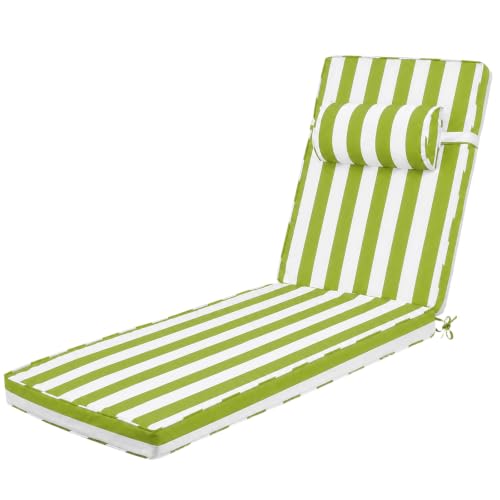
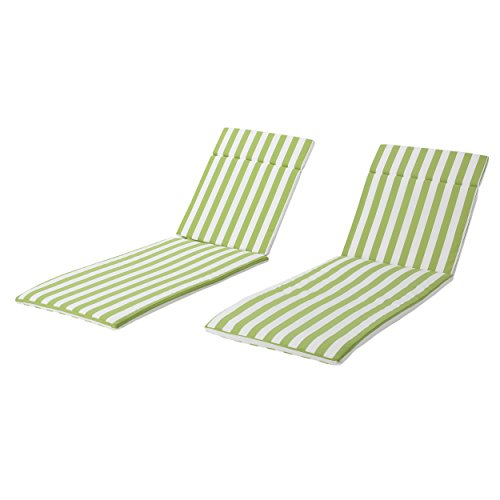
Green and White Striped Chaise Lounge Cushions
Everything you need to choose the right striped cushion for your chaise lounge — fabric, fit, comfort tiers, and long-term care.
Green and white striped chaise lounge cushions bring a fresh, classic look to any outdoor seating area, but the striped pattern also makes fabric quality and construction easier to judge. Misaligned stripes, thin filling, or fading dye are far more visible on a two-tone cushion than on a solid one. This guide explains what separates a durable striped cushion from one that will look tired after a single season, so you can compare options with confidence before you buy.
Why Green and White Stripes Work Outdoors
Green and white is one of the most versatile color pairings in outdoor design. Deep forest and olive greens blend naturally with foliage, lawn, and timber, while white stripes keep the cushion from reading as heavy or dark against a pale frame. The contrast also helps a chaise lounge stand out on a busy pool deck, where solid neutral cushions tend to disappear visually.
Beyond aesthetics, stripes are a practical quality indicator. A well-made cushion keeps the green and white bands crisp and aligned across seams, welts, and piping. If the stripes drift or the white sections look gray, that usually signals a cheaper fabric or poor cutting tolerance. When you evaluate cushions, treat stripe alignment as a proxy for overall manufacturing care.
Striped cushions also coordinate easily with other outdoor pieces. Pairing them with a comfortable chaise lounge frame in teak, white aluminum, or dark wicker is straightforward, and the pattern holds its own next to deep seating sofas and outdoor accent tables without clashing. If you are building a full lounging zone, striped chaise cushions can anchor the palette while the surrounding furniture stays quiet and neutral.
Fabric Types: What Holds Green and White Stripes Best
The fabric determines how long the stripes stay vivid, how quickly the cushion dries after rain, and whether mildew becomes a recurring problem. Green and white is a demanding combination because white shows every stain and green shows every fade. The four fabric families below cover the realistic options you will encounter.
Solution-Dyed Acrylic
Solution-dyed acrylic is the benchmark for outdoor cushions. The pigment is added to the fiber before it is spun, so the color runs through the entire yarn rather than sitting on the surface. This makes the green stripes far more resistant to UV fading and keeps the white sections brighter for longer. Acrylic also breathes well, which reduces condensation and mildew risk. Cushions in this category sit in the premium and luxury tiers, and they are the sensible choice for full-sun patios and poolside layouts.
Solution-Dyed Polyester
Solution-dyed polyester performs close to acrylic on fade resistance and generally dries faster. It is slightly stiffer to the touch, but modern finishes have closed much of the comfort gap. Mid-range to high-end tier cushions frequently use this fabric because it balances durability with a smoother hand feel. If your chaise sits in direct afternoon sun, polyester is a strong pick.
Olefin
Olefin is naturally water-resistant and mildew-resistant, which suits humid climates and covered porches that still catch moisture. It holds color well but can pill and flatten over time. Olefin cushions occupy the balanced tier — a solid choice for the category when the lounger is used seasonally rather than year-round.
Standard Polyester with Printed Stripes
Printed stripes on piece-dyed polyester are the entry-level option. The pattern sits on the surface, so it is more vulnerable to abrasion and fading, and the white sections may yellow. These cushions work well on screened porches or under pergolas where direct sun and rain are limited. They are not the right fit for an exposed pool deck.
Getting the Fit Right: Measuring for Striped Cushions
Chaise lounge frames vary more than most buyers expect, and a striped cushion that is slightly too narrow will show gaps and bunch at the seams. Before comparing cushions, measure your frame carefully.
- Seat width: Measure at the widest point of the seat rails. Standard widths cluster around common frame sizes, but confirm rather than assume.
- Full length: Measure from the front edge of the seat to the very top of the backrest when it is reclined flat.
- Thickness allowance: Check the distance between the frame rails. A cushion that is too thick will not sit flush; one that is too thin will slide.
- Hinge point: If your chaise backrest adjusts, the cushion needs a flex point or segmented construction that aligns with the hinge. A single rigid cushion on an adjustable frame will strain the fabric at the fold.
- Tie-downs: Look for reinforced ties or straps. Striped cushions on a sloped chaise slide more readily than flat-seat cushions, and ties prevent constant readjustment.
If you are still deciding on the frame itself, our guide to chaise lounge chairs for outdoor use covers frame materials and reclining mechanisms, which affect which cushion shapes will fit. Buyers replacing cushions on a folding frame should also review folding beach lounge chair considerations, since those frames often use narrower cushions than residential patio loungers.
Comfort Tiers and Filling Options
Filling determines how a cushion feels and how it ages. Striped cushions are often judged on appearance alone, but the filling is what you actually sit on for hours. Use the comparison below to match a tier to your usage.
| Tier | Typical Filling | Best For |
|---|---|---|
| Entry-level | Standard polyester fiber fill | Occasional use, covered porches, seasonal lounging |
| Mid-range | High-loft polyester fiber or medium-density foam core with fiber wrap | Regular weekend use, family patios, mixed sun and shade |
| Premium | High-resilience foam core with polyester wrap and welded seams | Daily use, poolside, full-sun exposure, heavier users |
| Luxury | Dual-density foam with moisture barrier and solution-dyed shell | Year-round outdoor living, high-end frame pairings, long-term investment |
Foam-core cushions hold their shape better over time and are less prone to the "flattened pillow" look that afflicts loose fiber fill. Fiber-only cushions feel softer initially but compress faster, especially under a striped cover where any sagging disrupts the stripe alignment. If your chaise is used daily, a mid-range or premium foam-core cushion is usually the better long-term choice.
Thickness is a separate variable from tier. Thin cushions suit low-profile modern frames, while thicker cushions add height and softness but can crowd the backrest when the chaise is fully reclined. Match thickness to your frame rather than assuming thicker is always more comfortable.
Construction Details That Matter
Two striped cushions can look identical online and perform very differently after a season outdoors. These construction features are worth checking before you commit.
- Welting and piping: Piped edges hold their shape and reinforce the stripe transition. Unpiped edges fray faster at stress points.
- Seam construction: Double-stitched or taped seams resist splitting under tension. Look for reinforced stitching at the corners and tie attachment points.
- Zippers: A hidden, rust-resistant zipper makes covers removable for washing. Cheap zippers are the first component to fail on outdoor cushions.
- Mildew treatment: An antimicrobial finish on the filling and shell helps in humid climates, though it does not replace proper drying.
- Water repellency: A water-repellent finish causes rain to bead and roll off rather than soak in. It is especially useful for poolside loungers.
Stripe alignment across these features is a quick quality test. On a well-built cushion, the green and white bands run continuously across the piping and meet cleanly at the corners. If the pattern jumps at seams, the manufacturer cut pieces without matching the repeat, and the same lack of care often extends to the hidden construction.
Care and Maintenance for Striped Cushions
Green and white cushions show dirt and fading more readily than dark solid colors, so a light maintenance routine pays off quickly. The steps below keep the stripes crisp without overworking the fabric.
- Brush off loose debris weekly with a soft brush before it works into the weave.
- Spot clean promptly with mild soap and water. Avoid bleach on the green sections, as it can dull the dye even on solution-dyed fabrics.
- Dry thoroughly before replacing covers. Trapped moisture is the main cause of mildew in the filling.
- Rotate cushions between loungers so sun exposure is even and fading develops uniformly.
- Store or cover during off-season to protect the white stripes from pollen, leaf tannins, and UV damage.
For owners of multiple cushion types, the storage and cleaning principles in our deep seating replacement cushions guide apply to chaise cushions as well, particularly for foam-core pieces that need airflow during storage.
Coordinating Striped Cushions With the Rest of Your Patio
Green and white stripes are bold enough to be the focal point of a lounging area, which means the surrounding pieces should support rather than compete. A few coordination rules keep the look intentional.
On a modern frame, pair striped chaise cushions with quiet modern outdoor furniture in charcoal, white, or natural aluminum. On a rustic or farmhouse patio, the stripes work alongside timber seating such as a farmhouse table with bench or a modern outdoor bench, provided the wood tones lean warm rather than red. If your chaise sits near a dining zone, a dining outdoor patio set in a neutral frame keeps the striped cushions as the visual anchor.
For tighter spaces, striped cushions on a single chaise can define a small lounging corner without overwhelming it. Our outdoor conversation sets for small spaces guide covers how to layer seating without clutter. If you prefer the opposite approach — solids on the chaise and pattern elsewhere — a metal chair with cushions in a complementary solid tone keeps the palette balanced.
Compare Green and White Striped Chaise Cushions
Browse fabric options, sizes, and comfort tiers in one place. Check availability and features before you decide.
View Recommended OptionsFrequently Asked Questions
What is the best fabric for green and white striped chaise lounge cushions?
Solution-dyed acrylic and solution-dyed polyester are the most reliable fabrics for outdoor striped cushions. They resist fading, mildew, and moisture while holding color in the green and white stripes. Olefin is a balanced-tier option, while standard polyester is best suited to covered porches.
How do I measure my chaise lounge for a replacement cushion?
Measure the seat width at the widest point, the full length from the front edge to the top of the backrest, and the thickness of the frame rails. Also check whether the backrest is adjustable, since hinged cushions need a flex point that matches the frame.
Do green and white striped cushions fade in direct sun?
Striped cushions made from solution-dyed acrylic or polyester resist UV fading far better than piece-dyed fabrics. Dark green stripes are generally more fade-resistant than bright lime tones. Rotating cushions and using covers during peak sun extends color life.
Are striped chaise cushions suitable for poolside use?
Yes, provided the fabric is quick-drying and mildew-resistant and the filling is open-cell foam or polyester fiber. A water-repellent finish and removable zippered cover make poolside use much easier to maintain.
Should I choose a single cushion or two separate cushions for a chaise lounge?
Single hinged cushions suit adjustable backrests and give a cleaner striped look. Two-piece designs are easier to wash and replace but can shift on sloped frames. Choose based on your frame's hinge and how often the backrest position changes.