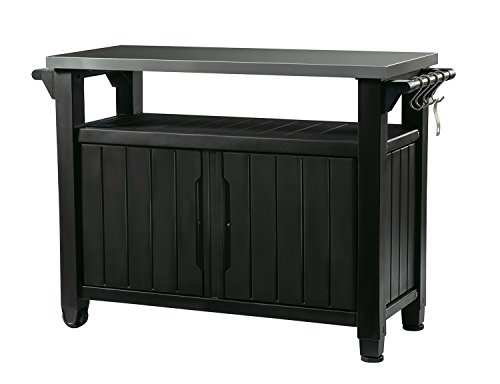
What Is a Grill Table Outdoor?
A grill table outdoor is a purpose-built prep and staging surface designed to sit beside, around, or integrated with your grill. It differs from a generic patio table in three ways: it is sized around the grill's working zone, it is built from heat- and weather-tolerant materials, and it usually includes storage for tools, fuel, and accessories. You will find three broad formats on the market today:
- Freestanding prep tables — a standalone table placed next to an existing grill. Best when your grill already has its own cart and you simply need more surface.
- Grill carts with integrated shelves — a movable unit that combines the grill, fold-down side shelves, and drawer storage in one footprint. Ideal for compact patios and cooks who like to reposition their station.
- Built-in or modular outdoor kitchen tables — permanent or semi-permanent structures with stainless tops, cabinet storage, and cutouts for built-in grills. The top-tier choice for serious entertainers.
If you are still mapping out the wider cooking zone, our guide to grills and smokers pairs naturally with this article and helps you plan the whole station around your chosen cooker.
Why Invest in a Dedicated Outdoor Grill Table?
Experienced backyard cooks rarely regret adding a prep station. The benefits compound over a season of use:
Workflow efficiency
Everything sits within arm's reach, so you stop walking between the kitchen and the grill mid-cook. Fewer trips mean fewer chances to burn something.
Food safety
A separate surface lets you keep raw proteins away from cooked food and ready-to-eat sides, which is one of the most practical hygiene upgrades you can make outdoors.
Heat management
A heat-resistant top gives you a safe landing zone for hot trays and tongs, keeping them off plastic side tables that can warp or melt.
Organized storage
Drawers, hooks, and lower shelves corral tools, charcoal, propane accessories, and foil so your patio stays tidy between cooks.
Entertaining presence
A well-chosen station becomes a natural gathering point. Guests can plate food, mix drinks, and chat while you cook.
Long-term durability
A stainless or HDPE station is a long-term investment that outlasts several rounds of flimsy folding tables.
How to Choose the Right Grill Table: A Step-by-Step Guide
Buying a grill table is mostly a measurement and material exercise. Work through these steps in order and you will narrow the field quickly.
Material Tiers Compared: What Each Level Delivers
Instead of shopping by brand, it helps to shop by tier. The table below uses a single consistent classification — entry-level, mid-range, premium, and luxury — so you can compare build quality across listings.
| Market Tier | Typical Build | Best For | Durability Notes |
|---|---|---|---|
| Entry-level | Powder-coated steel frame with resin or thin metal top | Occasional cooks, renters, small balconies | Lightweight and easy to move; finish can chip over time and needs seasonal inspection |
| Mid-range | Galvanized steel or aluminum frame with stainless or HDPE top | Regular weekend grillers with a standard patio | Solid build with rust-resistant hardware; a good balance of weight, storage, and weather tolerance |
| Premium | Stainless steel frame and top, sealed drawers, locking casters | Frequent hosts and year-round outdoor cooks | Heavy-duty construction with welded joints; low maintenance and highly heat tolerant |
| Luxury / built-in | Commercial-grade stainless modular units with integrated grill cutouts | Permanent outdoor kitchens and serious entertainers | Flagship-tier durability designed for permanent exposure; best specified with professional installation |
Most homeowners land in the mid-range to premium bands. If the table will live outside all season and double as a serving station, moving up a tier usually pays for itself in longevity. Our broader guide to garden furniture that can be left outside all year covers the same weather-tolerance principles for the rest of your patio.
Tabletop Materials in Detail
Stainless Steel
Stainless steel is the reference standard for grill-adjacent surfaces. It tolerates high heat, resists rust when the grade is appropriate, and wipes clean in seconds. It is also the easiest surface to sanitize after handling raw meat. The trade-offs are weight, a slightly clinical look, and the need to avoid abrasive cleaners that dull the finish. For a dedicated prep station, stainless is the most practical premium choice.
Solid Wood (Teak, Acacia, Eucalyptus)
Wood brings warmth and pairs beautifully with timber decking and rattan furniture. Hard, oily species such as teak handle moisture best; acacia and eucalyptus are solid mid-range alternatives when sealed and maintained. Wood is gentler on knives and ideal for a cutting surface, but it needs periodic oiling and should not sit in standing water. Removable wooden boards are the smart compromise — bring them inside after cooking.
HDPE (High-Density Polyethylene)
HDPE is the engineered-polymer option that has quietly become a favorite for outdoor stations. It does not rot, splinter, absorb moisture, or attract insects, and it cleans up with soap and water. It is not heat-resistant enough to rest a hot cast-iron pan directly on, so pair it with trivets. For humid and coastal climates, HDPE is one of the most durable choices available.
Powder-Coated Steel
Powder coating delivers a clean, uniform finish over a steel frame. It is a common mid-range choice for carts and side tables. The coating is durable but not indestructible — chips expose the steel underneath, which is where rust begins. Inspect and touch up the finish each season and this tier will serve well for years.
Footprint, Height, and Ergonomic Checks
Comfort while cooking is underrated. Three measurements matter most:
- Tabletop height. Standard grill work surfaces sit around 36 inches, which suits most standing cooks. If your grill is lower or higher, match the table to it so you are not bending awkwardly between the two.
- Reach depth. A top depth of 20 to 24 inches is enough for a cutting board, a tray, and a utensil crock without forcing you to lean across a deep surface.
- Clearance around the lid. Confirm that the grill's lid opens fully without hitting the table, and that you can stand between them without brushing hot metal.
For small balconies, a narrow side table roughly 20 by 30 inches is often the realistic maximum. On a standard patio you can accommodate a full cart with fold-down shelves. If you are also outfitting a seating zone nearby, the garden set guides on this site can help you keep the proportions consistent across the whole outdoor space.
Storage and Accessory Features Worth Having
Storage is where grill tables differentiate themselves. Prioritize these features based on what you actually keep outdoors:
- Sealed drawers keep utensils and foil dry in rain and dew; open shelves collect water and debris.
- Tool hooks and magnetic strips keep tongs and spatulas off the work surface and within reach.
- Lower shelf or cabinet for charcoal bags, propane accessories, or a spare fuel canister.
- Side rails or towel bars for a grill towel and heat-resistant gloves.
- Locking casters so the station stays put during cooking but rolls away for cleaning.
- Integrated trash or drip tray to catch scraps and grease rather than letting them reach the patio surface.
Pair the station with a solid set of tools and you will notice the difference immediately. Our grills and smokers guide covers the cooker side of the setup in more depth.
Weather Resistance and Seasonal Care
An outdoor grill table takes a beating from sun, rain, and grease. A few habits keep it in shape:
- Cover the station when it is not in use, especially during the off-season.
- Wipe down stainless tops after each cook to prevent grease buildup and staining.
- Oil wooden tops two to three times per season and store removable boards indoors.
- Touch up powder-coated frames at the first sign of chipping.
- Check fasteners and welds each spring; tighten or replace as needed.
- Keep drainage channels clear so water does not pool on the tabletop.
If your patio also holds lounge or dining pieces, the same care routine applies. See our garden furniture you can leave out all year reference for a season-by-season checklist.
Common Mistakes to Avoid
- Buying before measuring. A table that crowds the grill or blocks the walkway becomes a nuisance rather than an asset.
- Choosing a top that cannot take heat. Resin and thin metal tops warp under hot trays; check the heat rating before you buy.
- Ignoring the frame. A beautiful top on a flimsy frame will not survive two seasons outdoors.
- Overlooking storage. Without drawers or hooks, tools end up on the ground or on the grill lid.
- Forgetting portability. A heavy station without casters is difficult to clean around and impossible to store.
- Skipping the cover. Even a premium station benefits from a fitted cover during the off-season.
Frequently Asked Questions
What is a grill table outdoor and why do I need one?
A grill table outdoor is a dedicated prep and staging surface placed beside or around your grill. It keeps raw ingredients, utensils, sauces, and finished plates off the ground and away from the hot cooking zone. A good grill table reduces trips to the kitchen, improves food safety by separating raw and cooked items, and turns a lone grill into a complete outdoor cooking station.
What material is best for an outdoor grill table?
Stainless steel offers the best balance of heat resistance, rust resistance, and easy cleaning, making it the top-tier choice for serious outdoor cooks. Powder-coated steel is a solid mid-range option if the finish is intact. Solid wood and HDPE are excellent for the tabletop if you prefer a warmer look, but the frame should be galvanized or stainless. Avoid untreated particleboard and low-grade resin in exposed locations.
How much space do I need for a grill table?
Allow at least 24 to 36 inches of clear walkway between the grill and the prep table for safe movement. A compact side table of roughly 20 by 30 inches fits small balconies, while a full grill cart with fold-down shelves works well on standard patios. Measure your grill footprint first, then choose a table that leaves the lid fully openable and keeps the prep zone outside the direct heat plume.
Can a grill table stay outside all year?
Stainless steel and HDPE models can generally remain outdoors year-round with minimal care. Powder-coated steel and wood benefit from a fitted cover during the off-season. Whichever tier you choose, inspect fasteners and welds each season, keep the tabletop drained, and store removable wooden cutting boards indoors to prevent warping and mildew.
Should I choose a freestanding table or a grill cart?
A freestanding grill table is ideal when your grill already has its own cart and you mainly need extra prep surface and storage nearby. A grill cart with integrated side shelves suits cooks who want one movable unit combining the grill, prep area, and tool storage. Choose based on whether you value flexibility and portability or a consolidated, permanent cooking station.