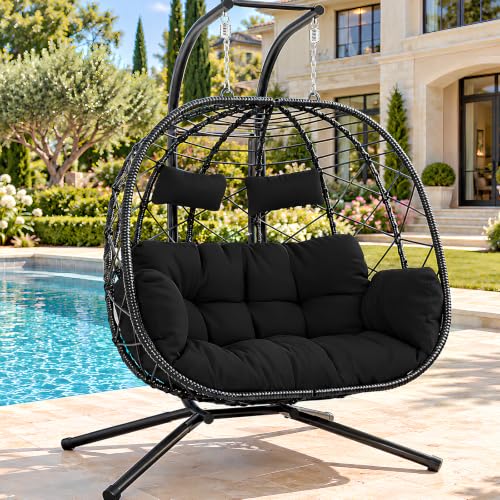
2-Person Hanging Chair with Stand: The Complete Buying Guide
Everything you need to know before choosing a double hanging chair with a freestanding frame — weight ratings, frame materials, fabric care, and safe placement for your patio or garden.
Explore Recommended PicksWhy this guide matters: A two-person hanging chair is a bigger investment than a single swing — both in space and in structural demands. This guide walks you through the exact specifications that separate a safe, long-lasting double hanging chair from one that wobbles, sags, or wears out after a single season.
What Makes a 2-Person Hanging Chair Different
A double hanging chair distributes twice the load of a single swing across the same suspension point, which means the stand frame, the hanging mechanism, and the seat fabric all need to be rated for the combined weight of two adults. That single fact drives almost every buying decision you will make.
The most common mistake buyers make is choosing a beautiful chair and then pairing it with an undersized stand. The chair and the frame are a system — the lower of the two weight ratings is the one that actually applies. A mid-range double chair rated for 450 pounds is only as safe as the stand holding it, so always match the two components from the same manufacturer or verify that both ratings comfortably exceed your expected combined load.
Beyond safety, double hanging chairs differ from single models in swing dynamics. A wider seat creates more momentum, so stands for two-person models use heavier bases, wider leg spreads, or weighted feet to prevent tipping. If you are still exploring single-seat options, our guide to a hammock chair with stand covers lighter alternatives, while the hanging chair with stand and cushion page explains how cushion bundles affect fit and comfort.
Frame Materials: Steel, Aluminum, and Wood
The stand is the foundation of the entire setup. Three materials dominate the market, and each suits a different setting.
- Powder-coated steel — the most common choice for mid-range and premium double stands. Heavy, stable, and resistant to rust when the coating is intact. Best for permanent placement on a patio or deck.
- Aluminum — lighter and fully rust-proof, which makes it a good fit for coastal areas and for anyone who needs to move the stand seasonally. Entry-level aluminum frames can flex more under load, so look for reinforced joints on two-person models.
- Wood (teak, acacia, eucalyptus) — the luxury-tier option. Warm, natural appearance that suits rustic and bohemian patios. Requires occasional oiling and should be stored or covered in harsh winters.
Regardless of material, check that the base uses a four-point leg spread rather than a single central post. Four legs distribute the swing momentum far better on a two-person chair, and the wider footprint is the single biggest factor in tip-over resistance.
Hanging Mechanism and Suspension
The connection between chair and stand deserves close attention. Quality two-person setups use one of three suspension styles:
- Chain and carabiner — simple, adjustable, and easy to replace. Look for galvanized or stainless hardware on outdoor models.
- Spring hook — adds a gentle bounce and reduces stress on the frame welds. Popular on premium egg chairs.
- Integrated swivel — lets the chair rotate 360 degrees. A nice upgrade for conversation areas, but the swivel bearing must be rated for the full double load.
Whichever style you choose, confirm the hardware is included and rated. A top-tier frame paired with entry-level hardware is a weak link waiting to fail. Also check that the hanging point sits directly above the chair's center of gravity — off-center hangers cause the chair to tilt and put uneven strain on one side of the frame.
Fabric and Cushion Considerations
The seat material determines comfort, weather resistance, and how long the chair looks good. The three tiers below are a useful shorthand when comparing models.
| Tier | Typical Materials | Best For | Maintenance |
|---|---|---|---|
| Essential tier | Polyester canvas, basic woven rope | Covered porches and seasonal use | Spot clean, store in winter |
| Balanced tier | Solution-dyed acrylic, UV-stabilized woven resin | Year-round patios with moderate sun | Hose down, occasional deep clean |
| Top-tier | Marine-grade acrylic, hand-woven all-weather wicker | Full sun, coastal, and high-use settings | Minimal; cover only in extreme weather |
Cushions on a two-person chair are usually sold separately or bundled. Foam density matters more than thickness — a high-density foam pad that is two inches thick will outlast a soft four-inch pad by several seasons. Removable, machine-washable covers are a worthwhile convenience on any tier. For a broader look at matching cushions to your furniture, see our outdoor chair cushions set of 2 guide.
Space Planning and Placement
A double hanging chair needs more room than most people expect. Plan for the following clearances:
- Footprint: roughly 4 to 5 feet of diameter for the stand base.
- Swing clearance: at least 2 feet on all sides so the chair does not strike walls, railings, or planters.
- Overhead clearance: 7.5 to 8 feet for most freestanding stands.
- Surface: a hard, level surface such as a deck, patio slab, or compacted gravel. Soft soil or thick grass allows the legs to sink and destabilize the frame.
On a balcony, verify the floor load rating before adding a heavy steel stand — some older balconies are not rated for the concentrated weight of a two-person swing. If space is tight, a double chair may not be the right fit; our cozy outdoor chairs for small spaces collection offers compact alternatives that still feel generous.
Placement tip
Position the stand so the chair swings parallel to a view rather than toward it. This lets both occupants enjoy the view without turning, and it keeps the swing arc away from walkways where guests might pass.
Safety Checklist Before You Buy
Run through these checks before committing to any model:
- Combined weight rating comfortably exceeds your expected two-adult load, ideally by 20 percent.
- Stand and chair are sold as a matched set, or both ratings are clearly published.
- All suspension hardware is included and rated for the full load.
- The base is a four-leg design with a wide, stable footprint.
- The frame finish is described as rust-proof or powder-coated, not simply painted.
- Assembly instructions are available online — a good sign of a well-documented product.
- Warranty covers both the frame and the hanging mechanism.
Care and Longevity
A double hanging chair will last many seasons if you protect the two components that fail first: the fabric and the suspension hardware. Cover the chair during heavy rain and winter, inspect the carabiner or spring hook each season for wear, and touch up any scratches in the powder coating before rust can start. Wooden frames benefit from a light oiling once a year.
If you are furnishing a wider relaxation area around the chair, our outdoor hammocks guide and lounge furniture collection show how swing seating pairs with loungers, side tables, and conversation pieces. For a structured approach to the whole space, the minimalist deck layout ideas are especially useful when a single statement piece needs to carry the design.
Ready to Compare Models?
Browse our curated selection of two-person hanging chairs with stands below and find the configuration that matches your space and load requirements.
Frequently Asked Questions
How much weight can a 2-person hanging chair with stand hold?
Most quality double hanging chairs support between 400 and 550 pounds when paired with a matching stand. Always check the manufacturer's combined weight rating for both the chair and the frame, since the lowest rating governs safe use.
Do I need to anchor the stand to the ground?
Freestanding stands are designed to be stable without permanent anchoring, but on windy decks or uneven surfaces, ground stakes or weighted base plates add meaningful safety. Never place a stand on soft soil without stabilization.
Can a 2-person hanging chair stay outside all year?
Powder-coated steel frames handle weather well, but cushions and fabric seats should be covered or stored during heavy rain and winter. A fitted cover protects both the frame finish and the hanging mechanism.
What ceiling height or clearance do I need?
A freestanding stand typically needs about 7.5 to 8 feet of overhead clearance and roughly 4 to 5 feet of footprint space. Leave at least 2 feet of swing clearance on all sides so the chair does not bump walls or railings.